




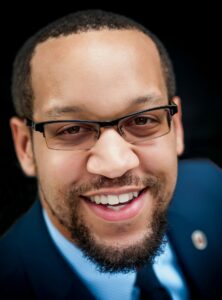
Today we’d like to introduce you to Jacque-Corey Cormier.
Hi Jacque-Corey, so excited to have you on the platform. So before we get into questions about your work-life, maybe you can bring our readers up to speed on your story and how you got to where you are today?
I was born and raised in DeKalb County with my family roots from Louisiana (hence the super French name). I started my educational and professional voyage outside of the classroom during my youth, where I casually recognized differences between where I grew up in DeKalb County compared to those literally a couple of miles up the road. Many of us do not need a master’s degree to be aware of socioeconomic differences across communities, from the access to healthier food options and sidewalks to public transportation options and package store locations. I did not know the term yet, but I was identifying social determinants of health. For Decatur, it was as the late Shawty Lo exclaimed, “It must be two sides!” I did not initially think about my career being linked to public health, as I was more interested in the psychological aspect of how one’s background, physical features, and behaviors influenced other people’s attitudes and behaviors towards them. During my undergraduate studies at Morehouse College, I learned that there were terms, theories, and research which explained my experiences and thought processes surrounding issues of discrimination, liberation, and prosocial development. I learned terms such as identity orchestration, Sankofa, critical consciousness, social cognitive theory, community-based participatory research, and self-actualization.
I completed my Master of Science in Experimental Psychology at Georgia Southern University. While living in Statesboro, Georgia, I worked as a professional mover where I traveled across the state. This was my first extended experience outside of Metro Atlanta as I was immersed into deep “Joe-Jah”. I enjoyed the hospitality of and thoughtful discussions with folks who had a different worldview than I. It was revealing how some of our brothers and sisters from rural areas perceived critical social issues and approaches to sustainable solutions. While completing my master’s degree at Georgia Southern University, I started to really think about how I wanted my professional time spent and research utilized. Why can I not conduct research with a community, for that community, and apply that research for positive, life-altering solutions? Thus, I decided to pursue my PhD in Community Psychology at Georgia State University (both schools are the real GSU to me) where the focus was on social interventions and community-engaged research. I did not think much of it at first, but I tended to gravitate toward health-related opportunities for my academics and work. For instance, I volunteered with multiple community organizations (shouts out to the 21st Century Leaders positive youth development organization) and a South Atlanta coalition, revamped a recidivism intervention program for the Georgia Department of Juvenile Justice and worked as a certified group fitness instructor.
As much as I loved program development and evaluation consulting, my passion for teaching and student engagement drove what career jobs I applied for as I completed my dissertation and PhD program. After earning my PhD in Community Psychology, I was a part-time instructor at three different institutions along with community research consulting. Time management and work-life balance was challenging. I accepted a clinical assistant professorship in the Georgia State University School of Public Health (SPH) as the position was a teaching focus rather than exclusively a research position. Community psychology and public health are so much intertwined that Georgia State University now offers a Master of Public Health/Community Psychology PhD dual degree. Since starting in SPH, I have contributed to student success and research by creating classes, transforming established courses, contributing to our concerted diversity, equity, and inclusion efforts, forming research and project initiatives with numerous community organizations, and mentoring current and prospective students.
How I started with the work I do was through critically thinking about my surroundings and the needs of the people in my community. Where I am today is through the grace of God, family, prayer, optimistic-oriented action, and service to others.
Can you talk to us a bit about the challenges and lessons you’ve learned along the way. Looking back would you say it’s been easy or smooth in retrospect?
Of course, there were struggles to earning letters behind my name and an office with a narrow window (it beats the “closet-style” offices I had throughout graduate school). I was pleased when I was accepted into Morehouse College and astounded to be invited to join the John H. Hopps Jr. Scholars program: geared towards “increasing the participation of underrepresented minority students in scientific research and ensuring minority participation in emerging scientific and technological fields”. I experienced “imposter syndrome” multiple times being in classes where the professor frankly stated, “As you all already know…” or “I know in high school you learned…” and a lot of my Morehouse brothers purposefully nodded their heads. I sometimes questioned if my academic prowess was comparable to my brothers and would be enough to prepare me for the next steps in my professional journey. Looking back at it, I probably exaggerated other people’s preparedness and their career competencies compared to my own. I learned that dedication and self-efficacy are better signs of success and fortitude than current skills. What I appreciated about my trek towards doctorate status was that the Hopps Scholars program steered me through academia and graduate school preparation; nonetheless, knowing the courses and distance of a triathlon does not make the race any less strenuous.
Even though I looked at multiple graduate programs, I needed an excellent program that was financially viable. Thus, I applied to and was accepted into Georgia Southern University’s Master of Science in Experimental Psychology program. I did not initially feel ecstatic about moving to Statesboro, Georgia as it was not where I anticipated my academic journey to take me. There were benefits to being at Georgia Southern University; I was removed from the comforts of my urban hometown setting, it had an abundance of resources while still having personable faculty and a lively student life. While in Statesboro, I was still able to attend a variety of musical concerts, plays, and many events hosted on campus. I also look fondly back at my GATA days as that is where I met my wife.
After Georgia Southern University, I then started my Community Psychology PhD program at Georgia State University. Being in any PhD program is a long, extensive process, but not just due to the workload. It takes 5-7 years to complete most doctoral programs. During that time frame, one may have friends and family who advance in their own journeys saying things like, “Wow, you still in school”, “Why you stressin’ over a paper”, and “Oh, you not really working then”. Although it is a good thing to have non-graduate student friends in your tribe, it can be challenging and taxing to get them to understand the purpose of your pursuits.
In addition, time kept moving forward with births, deaths, and other life milestones that I had to navigate while living primarily on graduate living stipends (you should always seek out various streams of income). While some young professionals have a form of disposable income, graduate students are extremely limited on how many financial corners they can cut for themselves. For me, it was relying on free food events and happy hours for some meals (great networking experience, mind you), no destination vacations, thrift store dress clothes, and sewing up clothes when it ripped rather than buying new ones. Graduate school is not for those who lack time and financial management skills.
Thanks for sharing that. So, maybe next you can tell us a bit more about your work?
I am a Clinical Assistant Professor of health policy and behavioral sciences in the School of Public Health at Georgia State University. I have taught and created courses addressing public health research methods, community-based participatory research approaches, the introduction to public health, signature/applied experiences, leadership, cultural competencies, and professional/career development.
When you sign up for a college-level course, I am likely not who you assumed your professor to be. I have been told by senior students and recent alumni that I was either their youngest, only Black, and/or only male professor during their college years. I bring into the classroom not only my personal background but also my community psychology perspective to cover the application of public health concepts. My in-class references to pop culture and multimedia usage allow me to provide a unique experience for my students. I also create experiences for my students as I have them apply concepts outside of the classroom, e.g., partner with community organizations, ride MARTA to recognize the role of transportation on health, conduct brief survey research on campus, and give their elevator pitch while in an elevator. I have cultivated relationships with multi-level organizations to provide professional public health consulting experiences for my students. Separately and across different semesters, I have had my graduate students and senior undergraduate students partner with approximately 35 different organizations, including the Commissioned Corps of the U.S. Public Health Service, Atlanta Community Food Bank, and interstate ones such as the Gullah/Geechee Nation.
My research and consulting services incorporate community psychology and community-based participatory approaches to provide program development, implementation and evaluation strategies to organizations and agencies primarily serving historically marginalized populations. I facilitate research data management training and academic-community collaborations to address social determinants of health, program evaluation, and civic engagement building. In 2022, I became a member of the Southern Urban Research for Growth & Equity (SURGE) project team which “aims to identify the most pressing health and equity issues…to develop and implement interventions and policies”. I recently wrote a book chapter for Dr. David Wall Rice’s 2022 book entitled, Black Lives, Balance, and the Psychology of Self Stories. I am humbled and grateful when current and former students reach out to thank me for how I taught a course, mentored them outside of the classroom, or encouraged them to seek fulfillment in their professional pursuits.
What do you like and dislike about the city?
Likes o Home of the Rev. Dr. Martin Luther King, Jr.
o Various festivals, conferences, parades, celebrations, and sporting events geared towards different niche cultures and identities
o Numerous live music venues and events
o Truly the “city in the forest”
o Atlanta radio station options
o A plethora of lemon pepper wing options, competition breeds competence
o The modern hip-hop mecca
o Reinvigorated empty built spaces for the live-work-play community model
o Home of the Atlanta University Center
Dislikes
o Traffic, period.
o We need to critically think about how residents in historic areas are being priced out of their dwellings through practices akin to gentrification.
o Sometimes people will correct me when I call the Mercedes Benz Stadium “the dome”. They should know what I am talking about.
Contact Info:
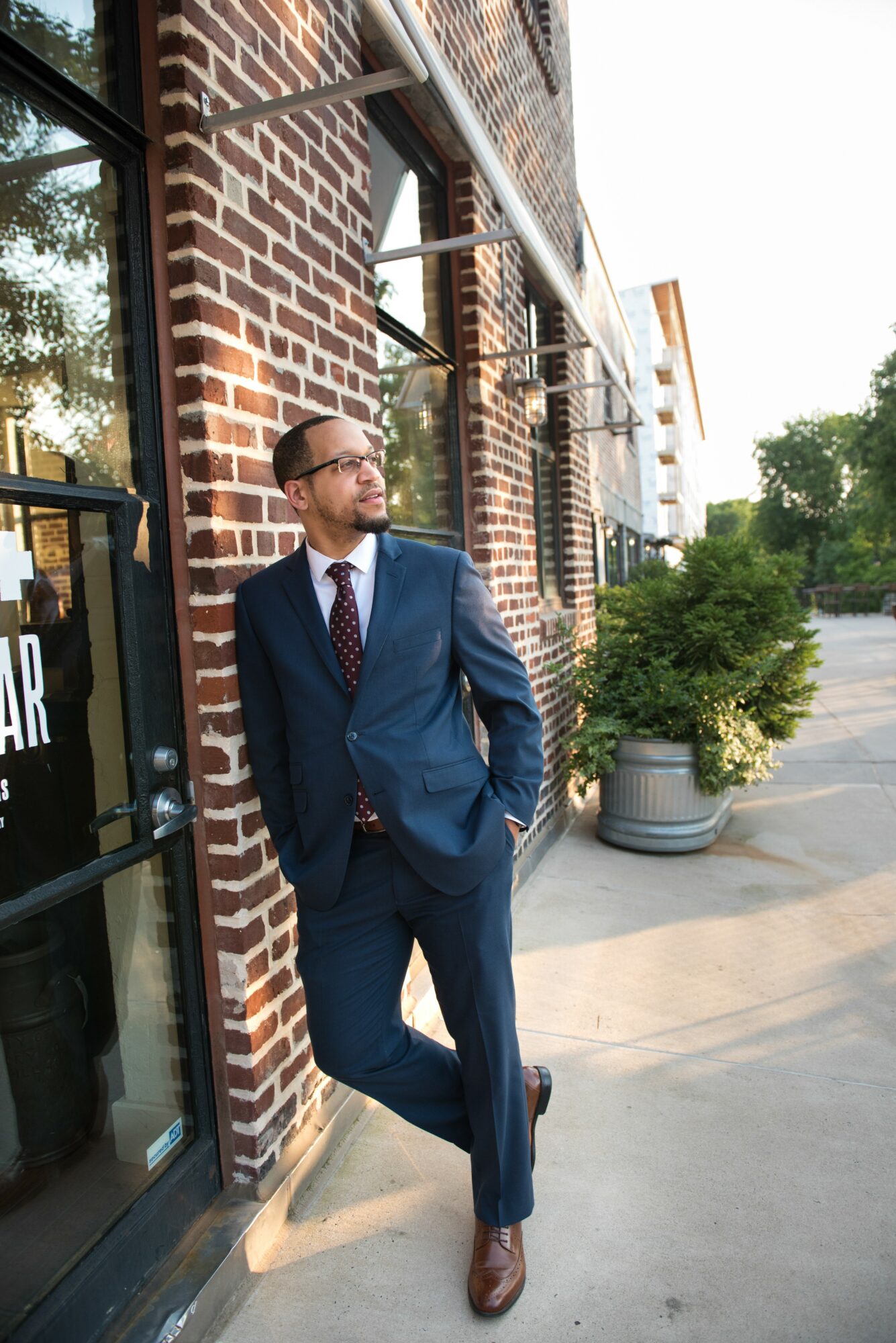 Image Credits
Anthony Truth Gary