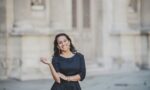



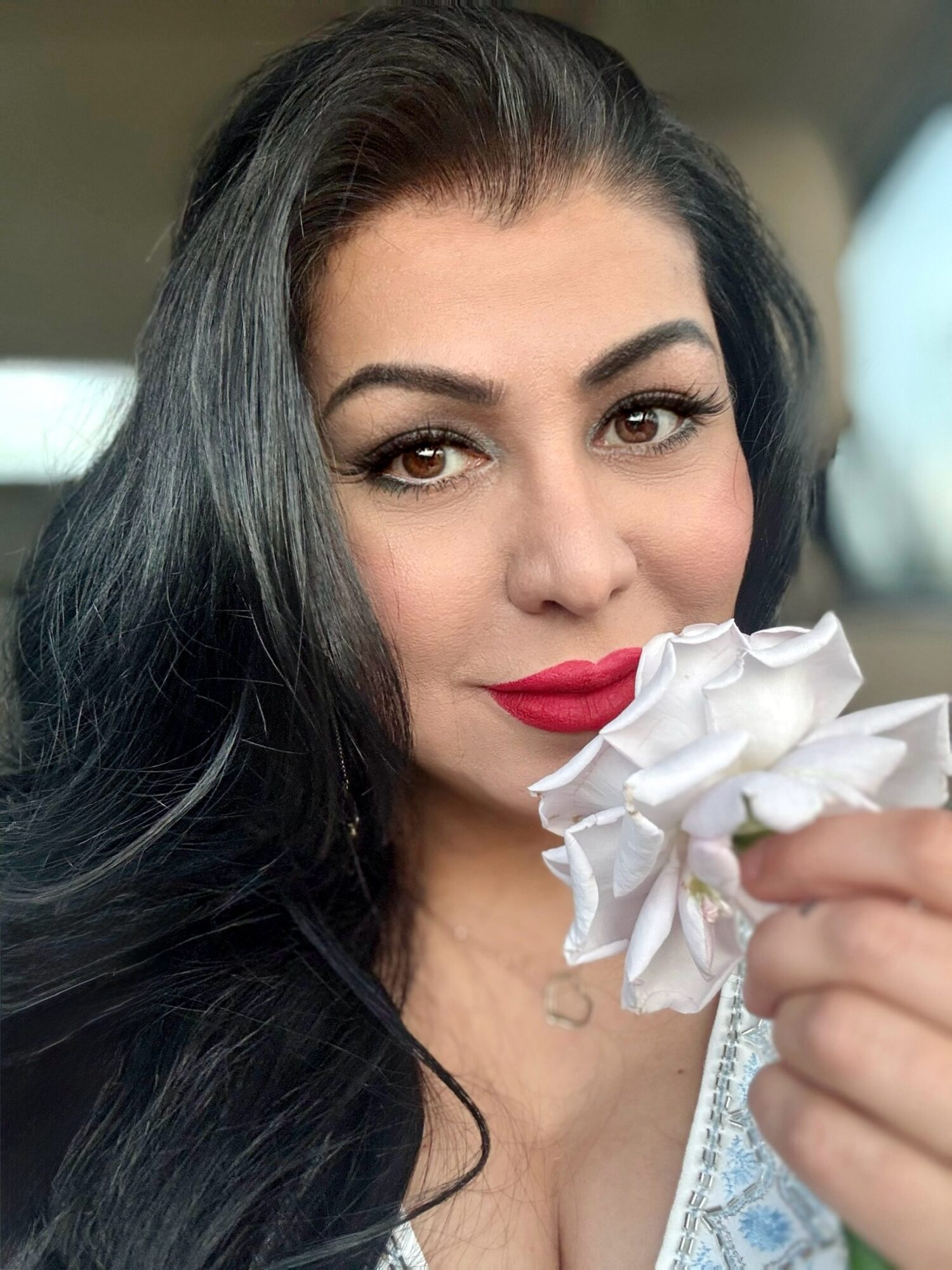
Today we’d like to introduce you to Fariba Molavi.
Hi Fariba, thanks for sharing your story with us. To start, maybe you can tell our readers some of your backstory.
I was born in the enchanting city of Isfahan, Iran a land where art, color, pattern, architecture, poetry, history, nature, humanity, mysticism, and philosophy are intricately interwoven.
I grew up in a family where culture, knowledge, and a love for beauty infused the very fabric of our lives with meaning.
My father was passionate about Iranian history and literature; he wrote poetry, chronicled his memories, and possessed an extraordinary skill in clothing design and tailoring. His refined vision whether in the lines of stitched fabric or his contemplation on culture and the world permeated every corner of our home. A calm, learned, and kind man devoted to his family, his heart beat for serving others.
My mother was equally remarkable: compassionate, wise, and full of love. She wrote stories and poems for children, published her works , and devoted herself not only to her own children “my older sister, me and my younger brother” but also to serving other children and the elderly in need through charity. She was a strong, artistic woman enamored with nature’s beauty. She taught me how to observe the world with care, love and wonder.
Together, my parents were my first teachers of kindness, imagination, humanism, and aesthetic sensitivity.
My childhood unfolded in cities steeped in history and art where architecture breathed life and beauty in the simplest details: arched alleys, mud brick and gilded domes, tinted glass, carpets patterned with gardens and flowers, turquoise pools, traditional tiling and brick houses with white-plastered courtyards. Nevertheless Tehran “Capital of Iran” where I grew up, was a place of modernity and tradition coexisting in the fabric of the city, museums, galleries, libraries, city squares and parks.
These colorful beauties were my silent, enduring mentors in art.
For as long as I can remember, art has flowed through my veins. We lived in an old, historic house in Isfahan, with a beautiful courtyard, tall white walls, and a large turquoise pool at its center, surrounded by flower pots, the shade of mulberry and pomegranate trees, and garden beds filled with roses. It was there that I shaped my own little world with charcoal, colored chalk, and paper even drawing on the floors and walls. I would sit for hours, capturing the alleys, domes, stained-glass windows, carpets, cats, birds, and the people of the streets and bazaars and everything around me guided by my imagination and memory. What might have seemed like childish play was, in truth, infused with dreams and emotions that surged deep within me.
The Storm of Revolution in Iran “1979”, Deep Wounds
My childhood coincided with 1979 Islamic Revolution, days heavy with anxiety and uncertainty.
The Islamic Revolution brought an end to Pahlavi Dynasty and replaced Iran’s monarchy with the Islamic Republic in Iran by overthrowing the monarchy and establishing a new government, the revolution gave rise to a theocratic and radical Islamic regime that imposed strict religious authority over all aspects of society. The regime consolidated power through religious, ideological, and security institutions, systematically curbing women’s rights, freedom of expression, personal freedoms, and any form of civil dissent. Even today, it is recognized as a government defined by radical Islamism, tight control, intimidation, and the suppression of all opposing voices.
In my childhood eyes, these changes were striking and frightening. The sense of freedom and flourishing that had existed under the Pahlavi era seemed to vanish completely. From the mandatory hijab imposed on me as a young girl, to the pervasive atmosphere of censorship, religious indoctrination, and radical clerical rule in schools and society, intolerance and restrictions became the norm especially for women. It was a world where voices were silenced and dreams took on the color of fear. That period forced me to reflect more on the meaning of freedom, identity, and humanity. Perhaps it was in those years that the roots of my thoughtful, introspective approach to art began to take shape.
Yet an even deeper tragedy struck me and my family. My father was imprisoned for his believe in the Baha’i faith for years. Our once lively, light-filled home fell silent.
My mother’s quiet strength, protective embrace and her ineffable love became my refuge, anchoring me and my siblings amid the uncertainty and fear that settled deep in my being.
Shortly afterward, the Iran-Iraq War erupted eight years of terror, sirens, nights in shelters, and witnessing the suffering and death of fellow citizens. The world outside was dark, unsafe, and chaotic.
In that darkness, I found solace in my mother’s arms, my sister and brother’s love and the embrace of my colored pencils.
My childhood and adolescence unfolded between two worlds: the luminous, free thinking environment of our home, where respect, love for humanity, gender equality, and human unity were foundational; and the outside world in the society heavy with oppression, patriarchy, religious rigidity, and prejudice.
On the one hand the vibrant and enduring culture of Iran, rich with poetry, visual storytelling, philosophy, rich civilizes history and a profound sense of humanity; on the other hand a world marked by challenges and limitations, where hardship shaped my resilience and determination.
This dual experience has made art for me far more than mere expression. It became a way to convey ethical values, inner truths, and the timeless wisdom embedded in Iranian culture. The lessons of this living, dynamic heritage continues to guide my work, allowing me to weave together reflection, emotion, and visual narrative in every creation.
In this dichotomy, art became both refuge and a means to persevere. Since early childhood when I started to draw painting is a sanctuary, a voice capable of speaking even when words could not and brings happiness to my own soul and to those around me. I had fallen love with painting.
Finding My Voice, Shaping Identity
Despite economic constraints, I began to study design seriously through books and magazines, becoming my own student and teacher.
Along this path, my mother and older sister were great sources of encouragement. My sister would occasionally paint with me, though her main interests were in literature, poetry, and music. Today, she works professionally in floral design, decoration and craft. I’m so blesses that She moved to Atlanta recently. My younger brother was also interested in design, and I always tried to guide him in drawing, which inspired him to pursue industrial design in his youth. He currently lives in Iran with his wife and daughter.
By age fifteen, with the encouragement of an art instructor, my path became clearer. I taught painting and drawing to children during summer breaks. This experience helped me understand the art of teaching while deepening my own mastery in art.
I rigorously pursued drawing, visual arts, realism, and hyper realism, culminating in my first painting exhibition “Windows of the Garden Alley”. The sale of my works allowed me to rent a small space to continue teaching at age eighteen.
Gradually, my works embraced deeper themes: Iranian architecture and gardens, the imaginative world of children, and most importantly, women and freedom. In my paintings, the presence and strength of women emerge in the strands of disheveled hair, in the figures and rays of color I cast upon them, often with blue tones and the subtle influence of Iranian art. Color became my voice; the brush, my bell. Women in my works are always free unveiled, human, loving, and resilient.
I dreamed of studying architecture formally but was barred from attending university due to my belief in Baha’i faith. I studied basic architecture in the Baha’i Institute for Higher Education (BIHE) a none profit, underground university in Iran that provides higher education to Baha’i youth who have been denied access to public universities.
As I enhanced my art skills, I created more art works professionally and held numerous exhibitions across Iran. Yet, constraints persisted: restrictions on education, publishing children’s books, and hosting exhibitions.
In 2002, I held a painting exhibition based on the world of children at the Institute for the Intellectual Development of Children and Young Adults, earning recognition from UNICEF. Meanwhile, as I was teaching painting at a private art academy, I also was awarded a two year contract to work at this Institute. In this role, I taught art to children and trained the center’s instructors. Unfortunately, due to restrictions imposed by the government officials, I was not allowed to continue my contract work.
Despite all the limitations, as a woman and as a free-thinking human being in art and society, I never gave up or lost hope. I devoted my entire being to art.
I traveled to different cities and historical sites, and through these journeys, I felt more in harmony with the culture and history of Iran. In seeking to create new artworks, I looked for meaning within the heart of history, in the symbolism of soil and flowers. These experiences became a source of inspiration, guiding and motivating my artistic vision.
Later, my work drew inspiration from Iranian gardens and architecture. The collection, “The Essence of Memory,” is a series of watercolor paintings on the old manuscripts, which has been recognized and awarded by the Iranian Ministry of Cultural Heritage and the Tehran Annual Visual Arts Exhibition.
Eventually, in 2006, I made the difficult decision to migrate, leaving behind my family with a mix of grief and hope. I moved to Austria. In Vienna, my exhibition on Iranian architecture “The Essence of Memory” was lauded by the Austrian Center for Oriental Studies.
By 2008, When I moved to the United States, I faced many challenges; adapting to a new culture, learning new systems, and rebuilding my life both personally and professionally. Despite these difficulties, I stayed determined and resilient. I continued to follow my passion for arts, using it to connect with new communities and to express my identity. Through perseverance, I overcame the hardships of migration and have always cherished my identity and heritage.
Starting a new chapter of my artistic and academic journey at the first day in college in California brought both joy and a bittersweet ache in my heart, a dream I had longed for but was denied by the regime in my home country, Iran.
I carry the hope that one day, the limitations and barriers faced in Iran and by its people will be lifted, allowing freedom, creativity, and expression to flourish. Living in the United States has filled me with gratitude for the freedom to create, to learn, and to follow my own path I peace.
I studied interior design and photography, received scholarships and awards in interior design during my academic years and exhibited my photographs widely, earning recognition and awards from different academic institutions. I continued my education in architecture in Southern California Institute of Architect. During my education in Architectural Design I completed the art collection “The Essence of Memory”.
While studying, I worked as an Art instructor teaching drawing and painting to children and adults at various art centers in Los Angeles, California. After graduating from college, I continued working as an interior designer at reputable design firms, including Armony Design Company where I gained highly valuable experience in the field.
My passion for photography began in my teens, evolving from amateur street and landscape shots into a profound visual pursuit after formal art studies. I came to see photography not as freezing a moment but as revealing the subtle truths within it the shimmer of light, the silence of forgotten corners, and the delicate space between presence and absence.
Over time, it became an extension of my fine art practice, intertwining with painting and illustration to explore humanity’s inner layers its memories, solitude, courage, and social wounds. In every image, I seek vulnerability and resilience; the women I photograph, like those in my paintings, embody steadfastness, poetic beauty, and fearlessness.
In my fine art illustration, I strive to create a world where reality and imagination intertwine; boundaries dissolve, and the viewer becomes a participant in the narrative rather than a mere observer. The use of natural light, muted tones, layered transparency, and at times, minimal or richly detailed compositions form the visual language through which I communicate.
As a conceptual artist, painter, and designer, I began exploring the hidden layers of meaning and human experience from my earliest childhood. Each of my works to this day serves as a bridge between idea, emotion, and material, reflecting a journey that has evolved from childlike curiosity and a poetic view of the world to a profound and complex artistic expression. My works are not merely images or forms; they are experiences that invite the viewer to reflect, engage with emotion, and connect with both inner and outer worlds.
To date, I have created several collections of conceptual painting and fine art photography, utilizing a variety of materials and digital tools. Each work reflects trajectory of my lived experience, artistic journey, human experiences, explorations of femininity, liberation, and conceptual inquiry. Some of my -notable collection include:
-The Essence of Memory, “Painting-Watercolor”
-Woman, Life, Freedom, “Fine Art”
-Souls and Threads, “Fine Art Photography”
-Complicity to Simplicity, “Mixed Media”
-Whisper of Red, “Fine Art Photography”
-Endless Drops, “Digital Art”
– MeowGraphy, “Fine Art Photography”- Book Illustration
-The Garden Breeze, “Painting, Fine Art” – Book Illustration
– Open Hands, “Painting, Fine Art” – Book Illustration
– The Blue World, “Painting, Illustration”
– Lizard and Friends, “Painting, Illustration” – Children’s Book
-White Eagle, “Painting, Illustration” – Children’s Book
– Delia’s Morning, “Painting, Illustration” – Children’s Book
….
One of my most beloved bodies of art work is my conceptual painting series from “Complicity to Simplicity” created with thread.
This Collection exists at the intersection of painting, relief, and sculpture, mixed-media works woven with white threads over dark layered surfaces, reflecting the complexities of the human soul.
This project remains ongoing, and I am preparing for an upcoming exhibition to share this evolving work with the world.
My artistic collections began to take shape during the years after I stepped away from formal education and university, dedicating myself fully to art and design. This period, especially during and after the COVID pandemic, awakened a renewed creative energy within me and provided the opportunity to develop and present my conceptual works.
For me, each image is a spiritual exploration: a search for memory, a recollection of lost homes, and a re-examination of womanhood, nature, and identity. In much of my work, the human body appears as a landscape its folds, lines, and shadows as poetic as mountains, soil, and horizons.
I created a fine art collection inspired by the concept of women’s freedom, drawing from the “Women, Life, Freedom” movement that emerged during the Iranian protests in 2022. Two of my standout pieces, (Girl with a Pearl Earring, She is Our Voice) and (Freedom Phoenix) received The Future Art Awards from M Philanthropy in 2022 and 2023 and have been exhibited at the Asian Art Museum in San Francisco.
Interior Design and Spatial Philosophy “La Mer Interior Design”
After completing my studies in interior design, I began my professional journey as an interior designer at reputable firms in Los Angeles, gaining years of experience on diverse and challenging projects. I had always dreamed of running my own business, and in 2017 I founded La Mer in California. Following my marriage and relocation to Atlanta in 2021, with the encouragement and support of my husband, I continued La Mer interior Design’s work in 2022, focusing on creating sustainable, artistic, and inspiring spaces.
In my interior design, I adhere to the principles of Green Design, a philosophy that places respect for nature and environmental preservation at the heart of the creative process. Every choice, from materials to color and lighting, is made with careful consideration to minimize impact on the environment while maximizing harmony with nature.
The spaces I create are not only aesthetically engaging but also efficient in terms of sustainability and ergonomics; functionality, comfort, and the well-being of inhabitants are seamlessly integrated with respect for nature. The use of natural light, living plants, recyclable materials, and flexible floor plans are all part of my design language, aiming to craft environments where people can breathe, feel their presence, and engage with their surroundings.
This approach allows me to establish an emotional connection between space and the human spirit. Every frame, every corner, and every lighting choice is an opportunity to balance function and beauty, human experience and reverence for nature. For me, interior design is not merely shaping a place it is creating a sustainable life in harmony with the natural world.
In residential and commercial projects, I approach space planning and lighting both natural and artificial with meticulous care to ensure environments are not only functional but also emotionally resonant. Kitchens, for example, are designed around flow, accessibility, and human interaction, creating spaces that are efficient, beautiful, and welcoming.
In commercial projects, I consider the city’s culture, urban context, and social dynamics, shaping spaces that foster human connection while honoring privacy and respect for environment and nature.
Art in these environments is never mere decoration; it is a central, meaningful presence that animates the space. The goal is to create immersive experiences where people feel seen, connected, and inspired.
Every space, whether residential or commercial, carries a spirit, it is alive, and design must respond to the human experience at its core.
Art, Nature, and the Bonds We Share
My love for nature and animals has been with me since childhood, inseparable from a deep respect for the environment. From my earliest years, I found myself drawn to helping rescuing injured animals, supporting shelters, and volunteering with animal welfare organizations. These actions became a core part of who I am, driven not by obligation but by genuine care and dedication.
This connection to nature has profoundly influenced my artistic work, especially my illustration projects for children. In every book I have created, cats hold a special place not always present in the story, yet always symbolizing curiosity, freedom, gentleness, and the vital bond between humans and the natural world.
For me, art and the environment are inseparable reflections of life itself. Every line, every color, and every image becomes an opportunity to highlight our connection to nature, to honor and protect living beings, and to express the empathy and responsibility that guide my actions. This approach elevates my work beyond aesthetics, carrying a deeper ethical and human message: to nurture life, protect it, and coexist harmoniously with the world around us,
Cultivating Compassion: Serving Humanity Through Art and Action
From an early age, my love for people has been inseparable from my creative journey. I have always felt drawn to support others through education, nonprofit work, helping children in need, or engaging with the wider community.
This empathy flows naturally into my art: the care, attention, and sensitivity I bring to each creation mirror the compassion I extend to others. By nurturing kindness and understanding, we enrich both the lives of those around us and our own humanity. Deeply committed to human rights, I use my work whether visual art, illustration, or public engagement as a platform to bear witness, spark dialogue, and advocate for justice and equality.
My art works reflect the resilience of marginalized communities, amplifies women’s voices, and honors those often unheard. For me, creating art is not only expression; it is an act of bearing witness and contributing to the enduring pursuit of human dignity and freedom.
And in conclusion;
I believe that a good designer is someone who:
Faces opposition and pressure as a calm warrior.
Is a conqueror of beauty and an elevating force in human life.
Breathes their spirit into buildings and spaces.
Learns from mistakes.
Revives the goodness of nature and place in their designs.
Creates beauty even in scarcity.
Guides the shaping of spaces like a benevolent empire.
Builds a land as vast as the human heart.
Secretly, Sows the seed of kindness into brick and mortar.
Cultivates ethics.
Softens the passage of time.
Elevates the quality of lives.
This is, in essence, the spirit of a designer…
And my dialogue with you.
Fariba Molavi
November 20, 2025
Atlanta, GA
We all face challenges, but looking back would you describe it as a relatively smooth road?
No, my path has never been smooth. My life has unfolded like a winding road marked with repeated migrations, continual restarts, and the constant effort to find my true voice amid different cultures and cities. Art became my refuge very early on, a language I could trust. But that language was shaped in silence, in hardship, in the years when I had no choice but to rebuild myself from the ground up. My childhood coincided with the tumultuous Iranian Revolution.
Years filled with fear and deprivation. A home once bright with conversation and laughter shifted overnight into a space of waiting, worry, and quiet resilience. Both my parents were arrested because of their belief in Baha’i faith; my father remained in prison for years, with long stretches when we had no news of him at all.
Soon after, the war began air raid sirens, shelters, nights thick with fear, a society collapsing into censorship and silence. It was during those years that I understood the world is not always just yet art can be a doorway, a thin slit through which light insists on entering.
As a teenager, despite my deep love for art and architecture, I was denied access to higher education because I was a Baha’i.
In a society that demanded women’s silence and suffocated their dreams, I had to carve my own path learning from books passed secretly, practicing endlessly, painting on any scrap of paper I could find. That was when I realized my art wasn’t a privilege; it was a necessity. A form of stillness that kept my spirit alive.
Migration brought its own set of challenges: Austria first, then the United States. New beginnings, new languages, new cultural landscapes and the effort to rebuild a professional identity that had been stifled in my homeland. Yet no matter where I stood, art remained the thread that held my life together a way to transform pain into meaning, and hardship into creation.
The sudden and unimaginable loss of my mother during my first year of migration to Austria burned my heart and left me in a vast emptiness. Ten years later, in 2019, my father also passed away, adding another layer of grief and sorrow. Facing these losses alone, while navigating the challenges of migration, brought profound trials moments of disorientation, struggle, and resilience that shaped my experience of life far from my homeland.
Along this journey, I learned that art is not merely the pursuit of beauty, nor decoration, nor flattery. Art is a jolt an awakening something that moves a person from simply being to truly becoming. Perhaps that is why I always dip my brush first into my thoughts and emotions before I ever touch paint to canvas. Each piece is a form of revelation, an opening of knots that were held in silence for years. And through it all, pain was present.
But I learned, as (Margot Bickel) so beautifully expresses:
“Love Begets Love,
Love Creates Life,
Life cultivates suffering,
Suffering whispers fear,
Fear accompanies Courage,
Courage Carries Confidence,
Confidence whispers Hope,
Hope Gives Life,
Life invites Love,
Love Begets Love.”
And I have lived with this truth. Wherever there was love; love for humanity, for art, for nature a path appeared. And wherever there was suffering, something meaningful was born something worth expressing, worth transforming. I have always wanted my art not just to be seen, but to stir something quietly, yet unmistakably. And through every chapter of my life, compassion, empathy, and love for others have been my driving forces. If my work can offer even a moment of reflection, awakening, or solace, then every struggle has found its purpose.
Thanks – so what else should our readers know about your work and what you’re currently focused on?
I am a conceptual artist, painter, illustrator, and interior designer but at the heart of it all, my true work is creating worlds where spirit, material, and the human experience are reimagined.
My artistic journey spans conceptual paintings, fine art photography, illustration, and interior design shaped by architectural and philosophical thinking.
In painting, I am deeply committed to meaning.
Whether in my hyper-realistic portraits infused with subtle elements of Iranian art and architecture, or in my conceptual series like Complicity to Simplicity works sculpted with thread, a material that lived quietly within me for years until the day it revealed itself as a language my focus is always on the inner truth.
For me, thread is not merely a medium; it is a metaphor for connection, tension, release, and the invisible bonds that weave human souls together. I continue to develop this series, preparing for an upcoming exhibition.
In fine art photography and illustration, I strive to transform every image into a “tangible moment” a place where light, texture, emotion, and silence come together to reveal an inner truth. My photographs often seek to move beyond appearance, toward identity, womanhood, liberation, and the unspoken narratives of the spirit.
What I am most proud of is that my work is born from lived experience from migration, resilience, womanhood, hope, and the pursuit of meaning.
My pieces have been exhibited across several countries; my Women, Life, Freedom series received international awards, and Pearl’s Rebellion was shown at the San Francisco Asian Art Museum.
But my true pride is not in accolades it is in knowing that my work has sparked reflection, touched people, and ignited something within them.
My passion for photography began in my teenage years. When I turned eighteen, my sister gifted me a professional camera, and I started capturing the streets, alleys, and landscapes of my city as an amateur. But as I delved deeper into the concepts and foundations of visual arts, I realized that photography should not be merely about freezing a moment.
After pursuing professional studies in college, I learned to look beyond appearances in every frame, seeking hidden truths that breathe in the subtlest layers: in the shimmer of light on skin, in the forgotten shadows of a room, in the pause of a gaze, and in the delicate threshold between being and nothingness.
This perspective transformed photography into another tool for my fine art practice, merging with painting and illustration to create works that explore the inner layers of humanity and its relationship with nature, objects, memory, solitude, courage, and the wounds of time. In each photograph, I search not only for a body or a face, but for vulnerability and resilience. As in my paintings, the women in my photographs embody a steadfast, poetic, and fearless presence.
In my fine art illustration, I strive to create a world where reality and imagination intertwine; boundaries dissolve, and the viewer becomes a participant in the narrative rather than a mere observer. The use of natural light, muted tones, layered transparency, and at times, minimal or richly detailed compositions forms the visual language through which I communicate.
For me, each image is a spiritual exploration: a search for memory, a recollection of lost homes, and a re-examination of womanhood, nature, and identity. In much of my work, the human body appears as a landscape its folds, lines, and shadows as poetic as mountains, soil, and horizons.
Sometimes, my photographs resemble fragments of a dream: the viewer may not know where they are, yet they feel that they are exactly where they should be. This is why my fine art photography is an extension of my painting a second language for telling a single truth, a language of light, silence, and noble melancholy.
I do not believe in art and design “beauty for the sake of beauty”.
For me, art must move it must shift perception, emotion, and consciousness.
Every piece of art I create is an effort to connect an inner light to the outer world:
to turn silence into voice, knots into release, and pain into meaning.
Alongside my visual arts practice, I have worked for many years in interior design shaping space, light, and architectural flow to create environments where people can breathe, reflect, and feel their own presence. To me, every space is a living organism; architecture is our conversation with the world, and art is the light that carries that conversation forward. In my projects, I never treat art as decoration it is the pulse, the concept, the emotional identity of the space.
At La Mer Interior Design, as the founder and lead designer, my work begins with one essential act: listening. I believe interior design is not about decorating a room, but about interpreting the lives, emotions, and rhythms of the people who inhabit it. A space should feel like a true reflection of its owners their memories, their routines, and the atmosphere they want to live in.
My first conversations with clients are never just technical briefings; they are an entry into their world. I try to understand what brings them comfort, what inspires them, and what emotional tone they want a space to carry. From these conversations, a clear narrative begins to emerge a story that becomes the foundation of the design.
For me, beauty only matters when it works hand in hand with function. Every choice light, material, texture, and flow must serve real moments of living: quiet mornings, gatherings with friends, working from home, playful children, or caring for an elder. Light is central to my process; it reveals the soul of a room, shapes emotion, and binds materials together into a coherent whole.
Art also plays a vital role in my designs. It’s never an accessory; it is the voice of the space. Whether selecting existing pieces or creating custom work, art becomes the element that anchors identity and brings depth to the environment.
Execution is where discipline meets vision. I value precision, clear coordination, honest materials, and respect for every detail. And even after a project is complete, I remain connected because a space is successful only when it continues to support and uplift the people who call it home.
In essence, interior design for me is a journey between people and place a collaboration built on trust, meaning, and the quiet beauty of thoughtful living.
As an awarded interior designer, I remain deeply committed to nature and the quiet logic within it. Every space I create begins with a clear concept a place where functionality, beauty, ergonomics, and the flow of energy exist in harmony. For many years, I have incorporated principles of green design and sustainable thinking into my projects not only out of respect for the environment, but to shape spaces that are healthier, more breathable, and more aligned with the human spirit.
I see every interior as a living entity, one that forms an emotional dialogue with the people who inhabit it. Every line, every light, every form and color must have the power to touch the inner self. My goal has always been to design spaces that are not only aesthetically refined and practical, but also healing, poetic, and in tune with the deeper nature of human experience.
Do you have any advice for those just starting out?
To those artist and designers who are just beginning, I would say: stay true to yourself, honor nature, and never fear the path of creativity and learning. Art is an act of creation, but it is not merely about beauty. It is a gentle nudge that moves a person from “being” to “becoming.”
Understanding art history, learning from the masters who came before, and drawing inspiration from them will light your way. Working with different tools, materials, and techniques allows you to find your own voice and shape your unique expression. And yet, this journey of learning and creating never truly ends every day brings a chance for growth, discovery, and new experiences.
A true artist channels joy and sorrow, love and hope, silence and inner voice into their work. Your art can awaken hearts, speak to the human spirit, and build bridges connecting, inspiring, and stirring those who encounter it.
I wish I could have spent my childhood painting more; not amid war, not in the turmoil of revolution, and not under the shadow of anger, oppression, and censorship in my homeland.
I wish those early years had been shaped by color and imagination rather than fear and unrest. Yet, it was precisely those experiences that forged me, deepened my vision, and transformed art into a refuge, a voice, and a truth that nothing could ever silence
Contact Info:
- Website: www.Faribamolavi.com And www.Lamerinteriordesign.com
- Instagram: https://instagram.com/faribaart And https://instagram.com/faribamolavi1
- Facebook: https://www.facebook.com/FaribaMolavi
- LinkedIn: Fariba Molavi
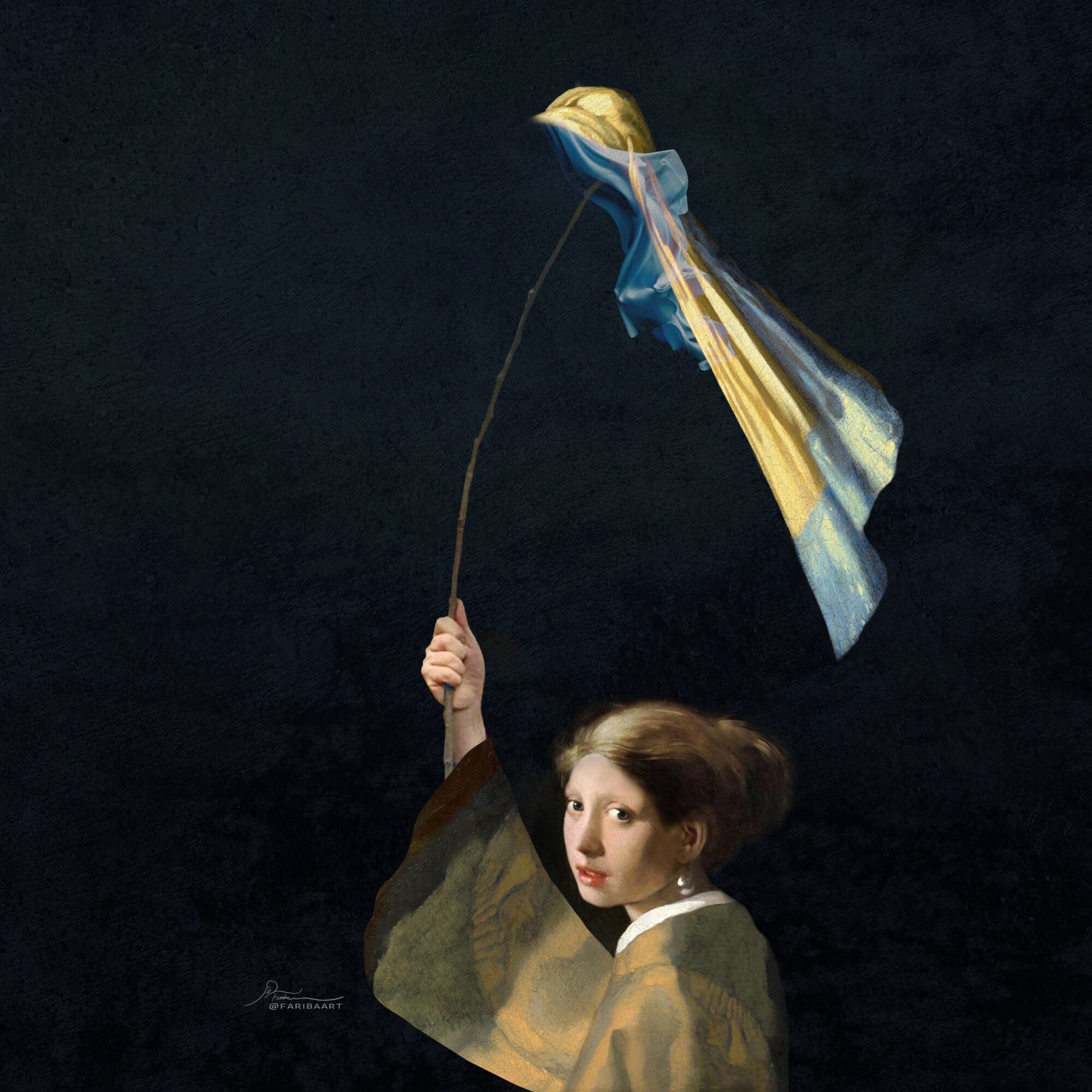
Image Credits
Fariba Molavi