






Today we’d like to introduce you to Shane Tepper.
Hi Shane, thanks for sharing your story with us. To start, maybe you can tell our readers some of your backstory.
I’ve had a pretty nonlinear path, but there’s a clear thread running through all of it: I’ve always been drawn to work where creativity and problem-solving come together.
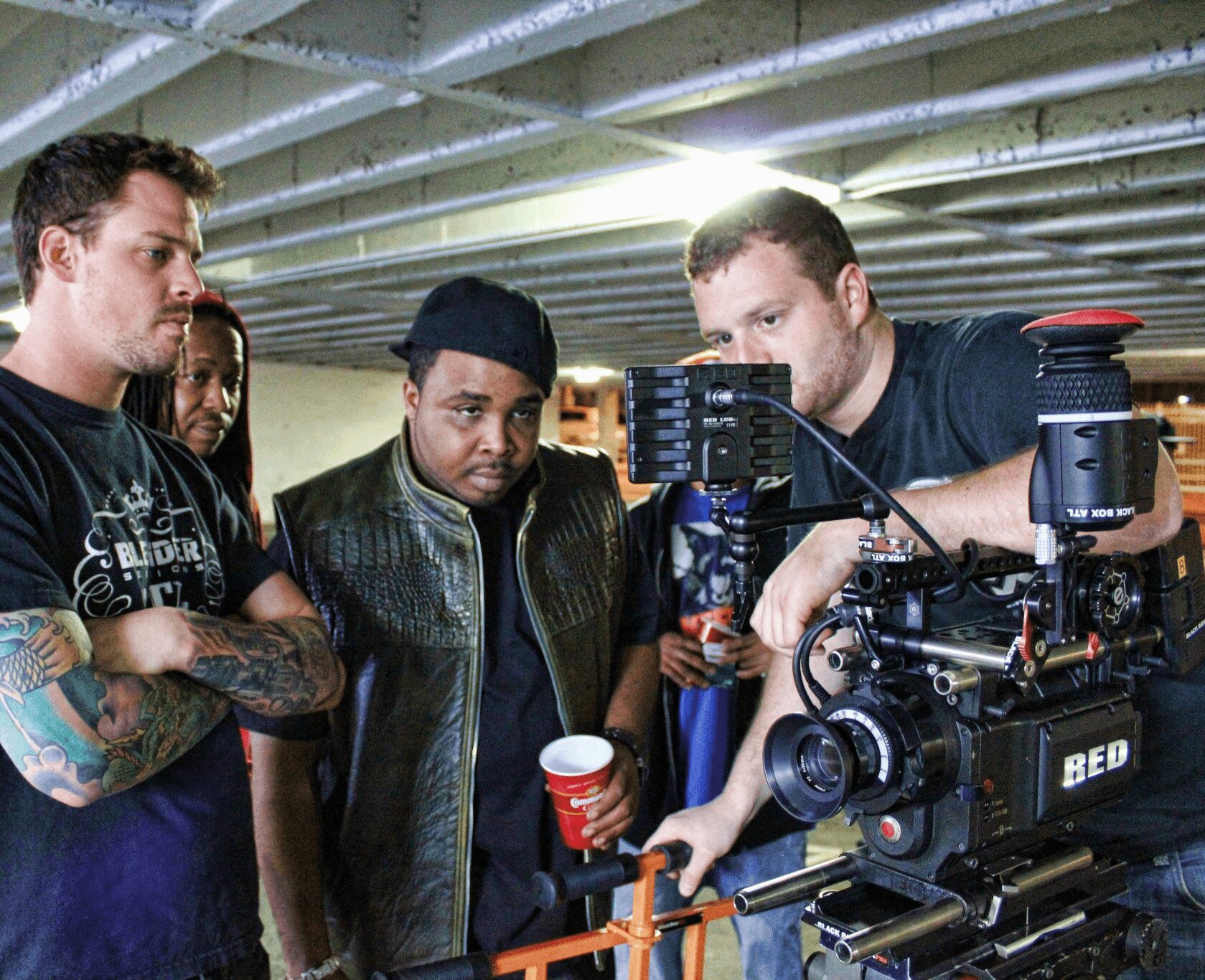
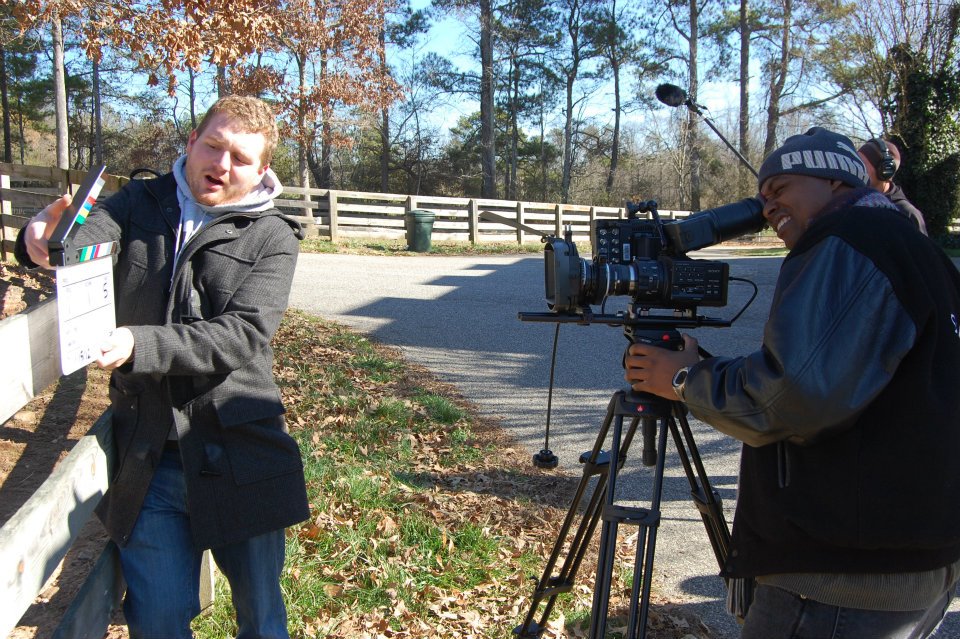
After college, I moved home and started in what at the time was Atlanta’s booming film industry, working first as a production assistant (as every newcomer does), then as a freelancer in the camera department on other people’s projects. That was my first crash course in large-scale creative collaboration, being part of a team who helps someone else’s vision actually make it onto the screen. It taught me discipline, taste, and how to operate inside someone else’s world while still bringing something valuable of my own to the table.
From there, I launched my own video production company doing client work. Now I wasn’t just helping execute ideas, I was shaping them. I was writing, directing, producing, and turning loose concepts into real, finished work. That phase is where I realized I loved the combination of storytelling and strategy just as much as I loved the filmmaking process itself.
Eventually I wanted to take those creative muscles to a broader canvas, so I sold my half of the business to my partner and transitioned into advertising, specifically copywriting. Campaign-level creative work let me zoom out and think about narrative at the brand level: how companies communicate, what they stand for, how you build something people actually care about and remember. That chapter took me to San Francisco for an agency role, which ended up changing the entire trajectory of my career.
While I was there, I got recruited by a company in the fintech space, and that’s where everything began snapping into place. I went deep into full-funnel marketing, product messaging, go-to-market strategy, thought leadership, the whole ecosystem. Over time I moved into lead and director-level roles, and I became the person companies leaned on to translate complex systems into stories their buyers could understand. It was still storytelling, just with different stakes.
My current venture, Revelation, is the natural extension of all of that. It’s the moment where the creative background, the strategic lens, and the tech experience all converge. As Chief Strategy Officer, I’m still doing what I’ve always done: making sense of the things people don’t see, finding the narrative that actually matters, and building something that helps others do their best work. The medium has changed, but the through-line never did.
Can you talk to us a bit about the challenges and lessons you’ve learned along the way. Looking back would you say it’s been easy or smooth in retrospect?
Smooth? Hardly. Interesting? Absolutely.
The early film years were a grind. Freelance film work means long days, unpredictable income, and constantly having to prove yourself. It taught me resilience, but it also filled me with a sense of…let’s call it creative stagnation. That’s what nudged me toward starting my own production company. I wanted more ownership over the ideas.
Running a production company was its own education. I loved the work, but I had no idea how to run a business at first. I made pretty much every mistake you make when you jump into entrepreneurship too early. Pricing wrong, saying yes to everything, assuming my creative talent alone would solve operational problems. (It didn’t.)
Advertising expanded the canvas, and I’m genuinely grateful for that chapter. I got to work with talented teams, ship big campaigns, and think more strategically than ever before about storytelling. But over time, the stakes still felt small. Campaigns came and went. We’d hit our benchmarks, get the impressions, engagement, accolades, all of it, and yet I kept asking myself, “Okay…so what?” The work didn’t feel defining.
Tech was where the stakes went up. I took on roles that forced me to learn in real time. I was responsible for the narrative across the entire funnel: product, positioning, customer education and retention. And as I moved up the ladder into director-level work, I kept bumping into the same systemic problem: smart people making decisions with partial visibility because their systems simply couldn’t agree with each other. These observations became Revelation.
Founding a company is exhilarating. You carry every decision. You become comfortable with ambiguity and uncertainty. You learn how to sell a vision.
So no, the road wasn’t smooth, but I wouldn’t have wanted it any other way. Every chapter forced me to grow in ways I didn’t see at the time. And all those friction points along the way are the reason I’m able to build what I’m building now.
Great, so let’s talk business. Can you tell our readers more about what you do and what you think sets you apart from others?
Revelation is a tech company I’ve cofounded to solve a problem that almost every modern business now faces: people aren’t just Googling anymore. They’re asking ChatGPT, Perplexity, and other AI tools for recommendations, ideas, and buying advice. And most brands have no idea how they’re being represented in those conversations.
The first thing Revelation does is help companies understand how they show up inside AI. The extent to which they’re being surfaced when buyers ask questions, how accurately they’re described, and whether they appear in the recommendations that shape early purchase decisions. That’s one side of the business: making AI visibility measurable and improving the narrative these tools tell about a brand.
The second part is where it gets even more interesting. Visibility only matters if it leads to positive business outcomes. So Revelation also helps companies connect external signals, such as the ways AI talks about them but also other things like what competitors are doing, to what’s actually happening inside the business in terms of customer engagement and revenue performance.
What sets us apart is the combination of those two things. Plenty of companies measure marketing metrics. Plenty track internal performance. Almost no one connects the outer world of brand discovery with the inner world of how a business actually closes deals in order to optimize the entire process. Revelation builds that bridge.
What I’m most proud of is that we’ve taken something invisible and made it understandable. We’re giving brands a clear picture of how they’re perceived in the places where modern decisions start, and then showing how those perceptions translate into real opportunities or missed ones.
For your readers, the simplest way to put it is this: Revelation helps brands make sure they’re being talked about accurately and showing up where brand evaluation and decision-making actually happen today. Behind the scenes, it ties those external conversations to real pipeline so teams can see which stories and channels are working and so they can more efficiently focus their efforts. It’s tech, but it’s in service of clarity and better outcomes. These are things every creative person understands intuitively.
How do you think about luck?
The Roman philosopher Seneca said that luck is what happens when preparation meets opportunity. The opportunities themselves often arrive unexpectedly, but what you do with them is entirely on you.
A lot of the meaningful turns in my career started that way. Getting my first real breaks in the film world came from being around people who took their craft seriously and were willing to give a hardworking young crew member a shot. Moving into advertising happened because I’d built storytelling skills that translated. Getting recruited into tech was another moment where timing and readiness lined up. I didn’t plan for it, but at each stage, I had the creative and strategic foundation to step into something bigger.
Revelation exists because of the same kind of luck. Meeting my co-founder, Robert, through an unexpected introduction was fortunate. But the months of conversing, thinking, experimenting, and building were the prepared parts. That’s why the opportunity actually locked into place.
So yes, I’ve absolutely benefited from luck. But the older I get, the more I see luck as something the individual can shape to a large extent. You can’t control when a door opens, but you can control whether you’re ready to walk through it, and what you bring with you once you do.
Contact Info:
- Website: https://www.revelationhq.com/
- LinkedIn: https://www.linkedin.com/in/shanehtepper/

Popular
-

Darren Paltrowitz on Blending Investigation, Media, and Culture to Uncover the Stories Behind the Stories
-

Naeemah Jade on Redefining Networking Through Trust, Proximity, and Intentional Community
-

Dr. Cortnie Baity on Expanding Beyond Therapy to Build Scalable Tools for Intentional Living and Relationships
-

Dr. Shameka Campbell on Embracing a New Identity and Guiding Others Toward Purpose and Spiritual Breakthrough
-

ATL’s Most Inspiring Stories
-

Kareem “Reemo Meerak” Tyson on Building The C.U.T.S. Podcast and Creating a Space Where Culture Lives and Breathes