






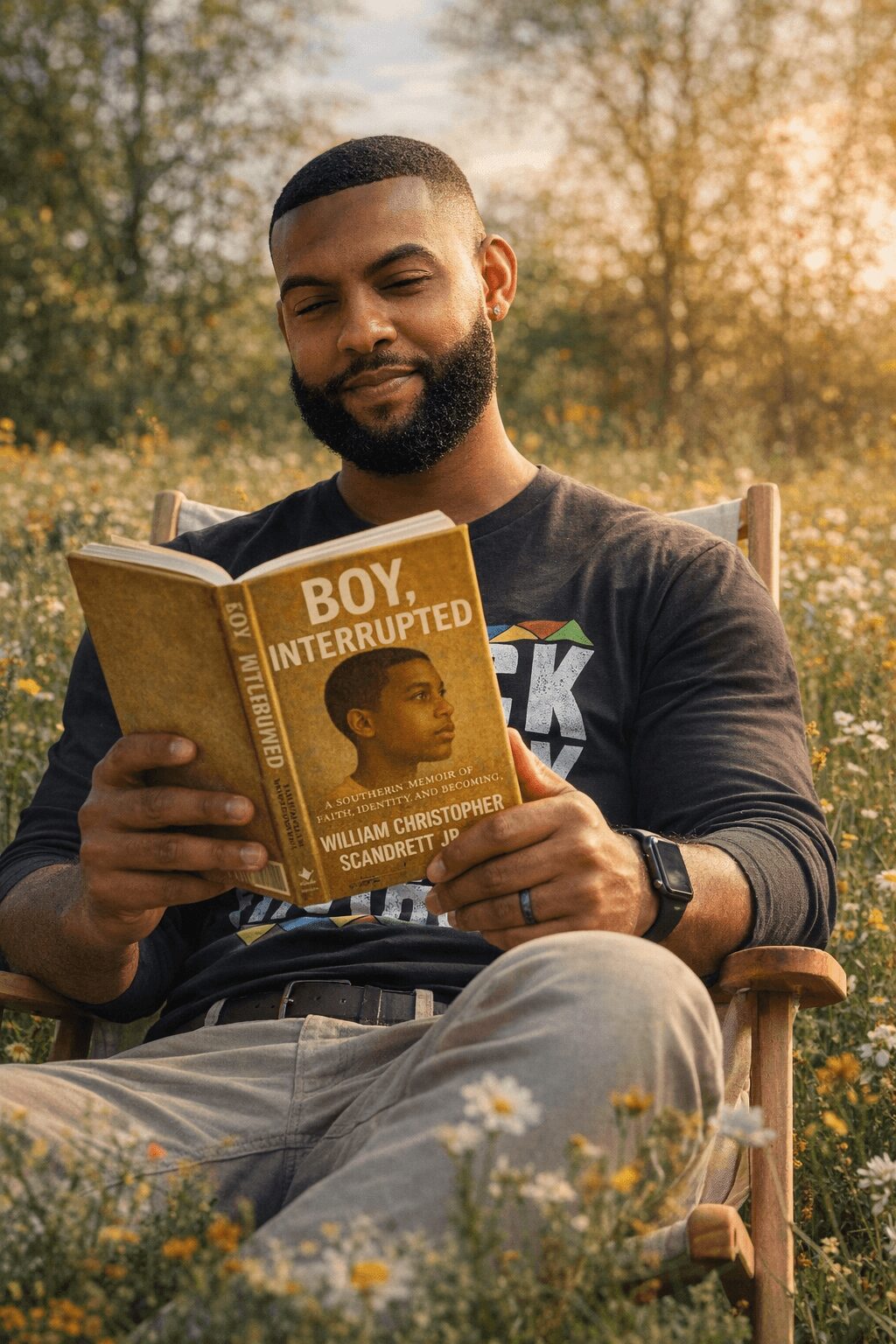
William Christopher Scandrett M.S. shared their story and experiences with us recently and you can find our conversation below.
William Christopher, so good to connect and we’re excited to share your story and insights with our audience. There’s a ton to learn from your story, but let’s start with a warm up before we get into the heart of the interview. What is something outside of work that is bringing you joy lately?
Lately, I’ve been finding a lot of joy in slowing down outdoors—spending time in my garden, being around plants, and reconnecting with nature. It’s grounding for me and gives me space to reflect creatively. I’ve also been pouring energy into writing and creative projects outside of work, which has been deeply fulfilling. Those moments help me recharge and come back to my work more present and intentional.
Can you briefly introduce yourself and share what makes you or your brand unique?
My name is William Christopher “Chris” Scandrett, and I’m an educator, author, and creative entrepreneur based in the South. By day, I work in education, teaching geoscience and robotics through hands-on, project-based learning that blends environmental science, technology, and storytelling. At the heart of my work—both in and out of the classroom—is a deep belief in curiosity, creativity, and the power of lived experience as a tool for growth and healing.
I’m also the author of a memoir, Boy, Interrupted: A Southern Memoir of Faith, Identity, and Becoming, a deeply personal coming-of-age story that explores faith, identity, trauma, and resilience through the lens of growing up Black, queer, and Southern. The book traces my journey from a fractured childhood in rural Georgia to adulthood shaped by education, spirituality, and self-reclamation. It’s written for anyone who has ever felt interrupted by life—and is learning how to become whole again.
In tandem with the memoir, I founded Swift Creek Publishing House, an independent publishing imprint created to help others tell their stories with intention and integrity. Swift Creek exists to demystify publishing and empower emerging writers—especially those whose voices are often marginalized—to move from idea to printed book without losing ownership of their narrative.
At this season of my life, I’m working at the intersection of education, storytelling, and publishing—building meaningful work that invites reflection, honors truth, and reminds people that their stories matter.
Amazing, so let’s take a moment to go back in time. What did you believe about yourself as a child that you no longer believe?
As a child, I believed that something was fundamentally wrong with me—that I was too much in some ways and not enough in others. I carried the idea that my sensitivity, curiosity, and differences were liabilities rather than strengths. Over time, and through faith, education, and healing, I’ve learned that those very qualities are what allow me to connect, create, and lead with empathy. What I once saw as weakness, I now understand as wisdom in the making.
What fear has held you back the most in your life?
The fear that held me back the most was the belief that telling the truth about who I am would cost me belonging—faith, family, community, or love. For a long time, I learned how to survive by staying quiet, making myself smaller, and carrying parts of my story alone. Boy, Interrupted was born from confronting that fear head-on. Writing it taught me that honesty isn’t abandonment—it’s liberation. What once felt too dangerous to name became the very thing that set me free.
Next, maybe we can discuss some of your foundational philosophies and views? What important truth do very few people agree with you on?
An important truth I hold is that healing doesn’t come from avoiding hard conversations—it comes from telling the truth with compassion. We often confuse silence with peace and discomfort with division, but I’ve learned that what we refuse to name quietly shapes us anyway. Boy, Interrupted is rooted in this belief: that honesty, even when it’s uncomfortable, is a form of love—and that truth, when held with grace, doesn’t destroy community, it deepens it.
Okay, we’ve made it essentially to the end. One last question before you go. What is the story you hope people tell about you when you’re gone?
I hope people say that I told the truth—gently but courageously—and that I made space for others to do the same. That I took what was once broken or silenced and turned it into something useful, hopeful, and healing. If my story is remembered, I want it to be as someone who lived with faith, curiosity, and compassion, and who reminded others—through teaching, writing, and presence—that interruption isn’t the end of the story, it’s often where becoming begins.
Contact Info:
- Website: https://www.envirbro.com
- Instagram: https://www.instagram.com/envirobro/
- Linkedin: https://www.linkedin.com/in/william-christopher-scandrett-m-s-6a69b1126/
- Facebook: https://www.facebook.com/envirobrollc/
- Other: https://linktr.ee/EnviroBro



Popular
-

Hidden Gems: Local Businesses & Creatives You Should Know
-

ATL’s Most Inspiring Stories
-

Portraits of Atlanta
-

Dr. Hildiah Martin-Suggs Is Building Second Chances for Youth Who Were Almost Lost in the System
-

From Showing Up to Seeing His Face on a Billboard: Anthony Green Is Just Getting Started
-

Wayne Smith Jr on Survival, Psychological Thrillers, and the Cost of Staying Alive