




Today we’d like to introduce you to Camisha Butler.
Hi Camisha, thanks for joining us today. We’d love for you to start by introducing yourself.
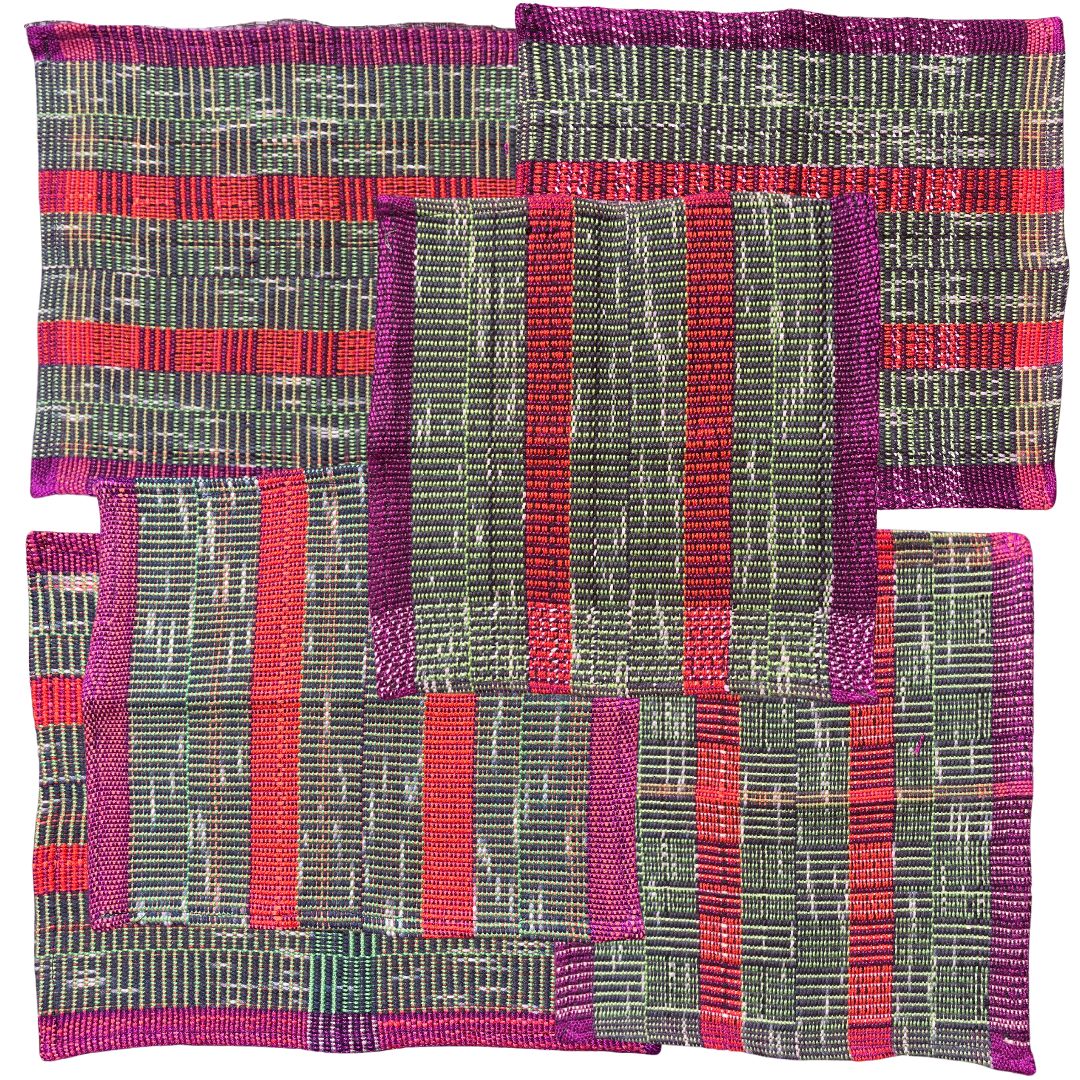
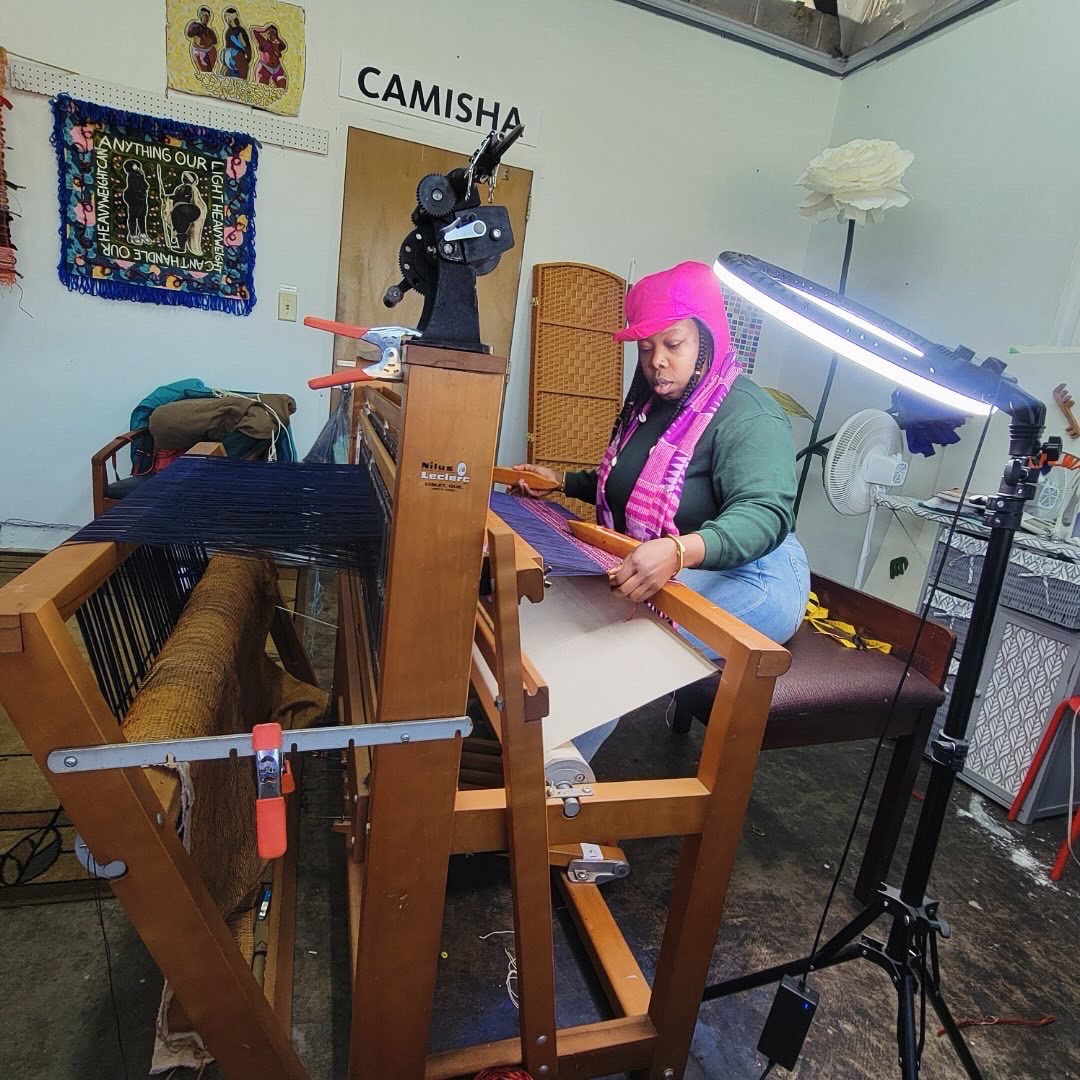
My entry into fiber art has been unorthodox but deeply intuitive. I have sewn for most of my life, first making clothing for myself at the age of 12 and later earning a Master’s degree in Fashion Design, where I discovered fashion theory and the cultural power of style and textiles. During the pandemic, while working as a flight attendant, I felt a strong return to embroidery, which I first learned as a child. That moment shifted my practice. I began combining my art background with my fiber knowledge, moving from constructing garments, to working on the surface, and ultimately to weaving and making the actual textile itself. This evolution led me to a contemplative, material-based practice where principle is just as important as the medium itself.
Can you talk to us a bit about the challenges and lessons you’ve learned along the way. Looking back would you say it’s been easy or smooth in retrospect?
I’ve come to learn that the road will be the road. At times it’s smooth, and at other moments the view ahead becomes unclear. Much of what I’ve encountered are necessary growing pains, like, learning how to recognize which direction actually aligns with the work I’m meant to make. So much of being an artist is actually more than the art itself.
Thanks – so what else should our readers know about your work and what you’re currently focused on?
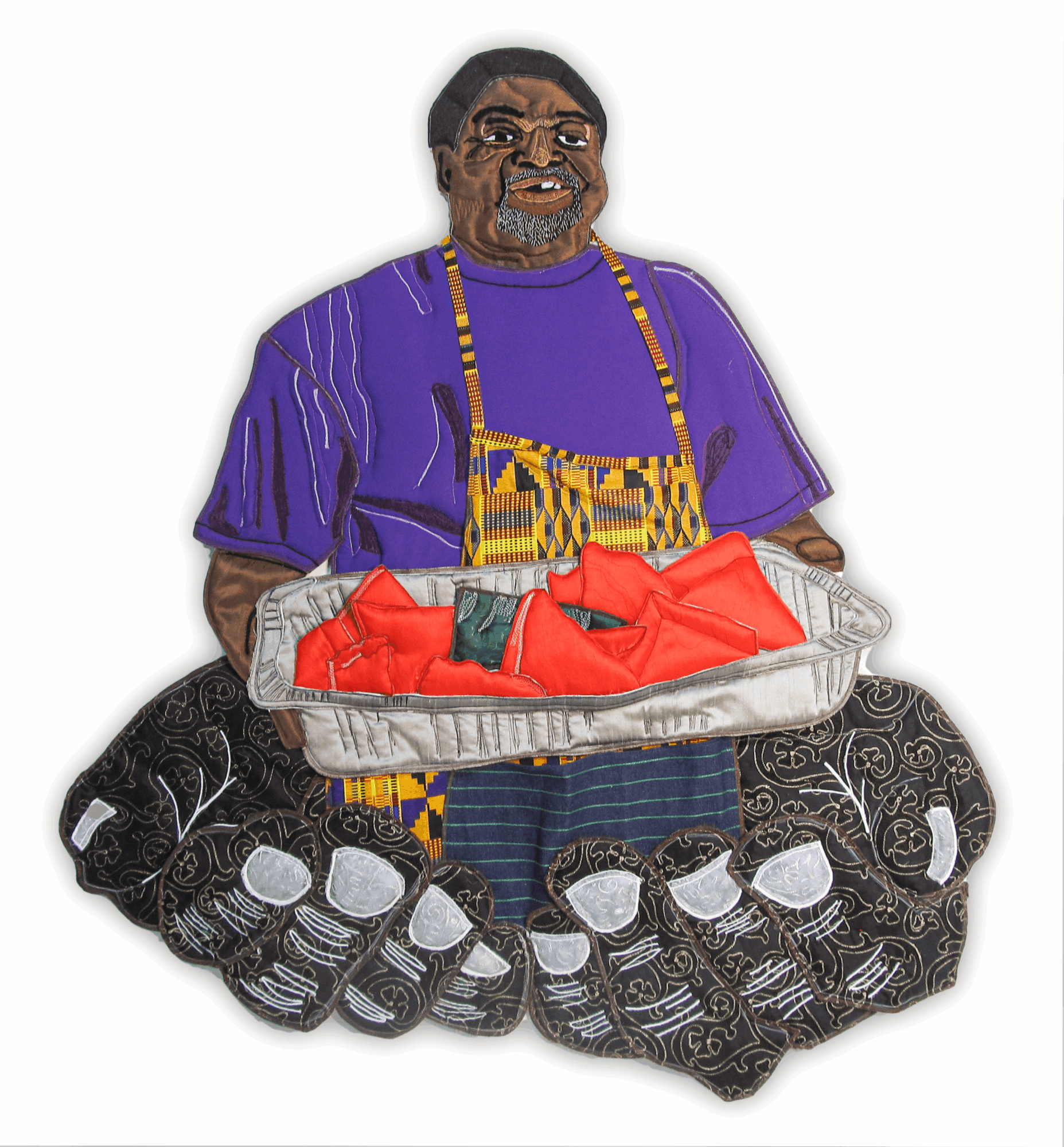
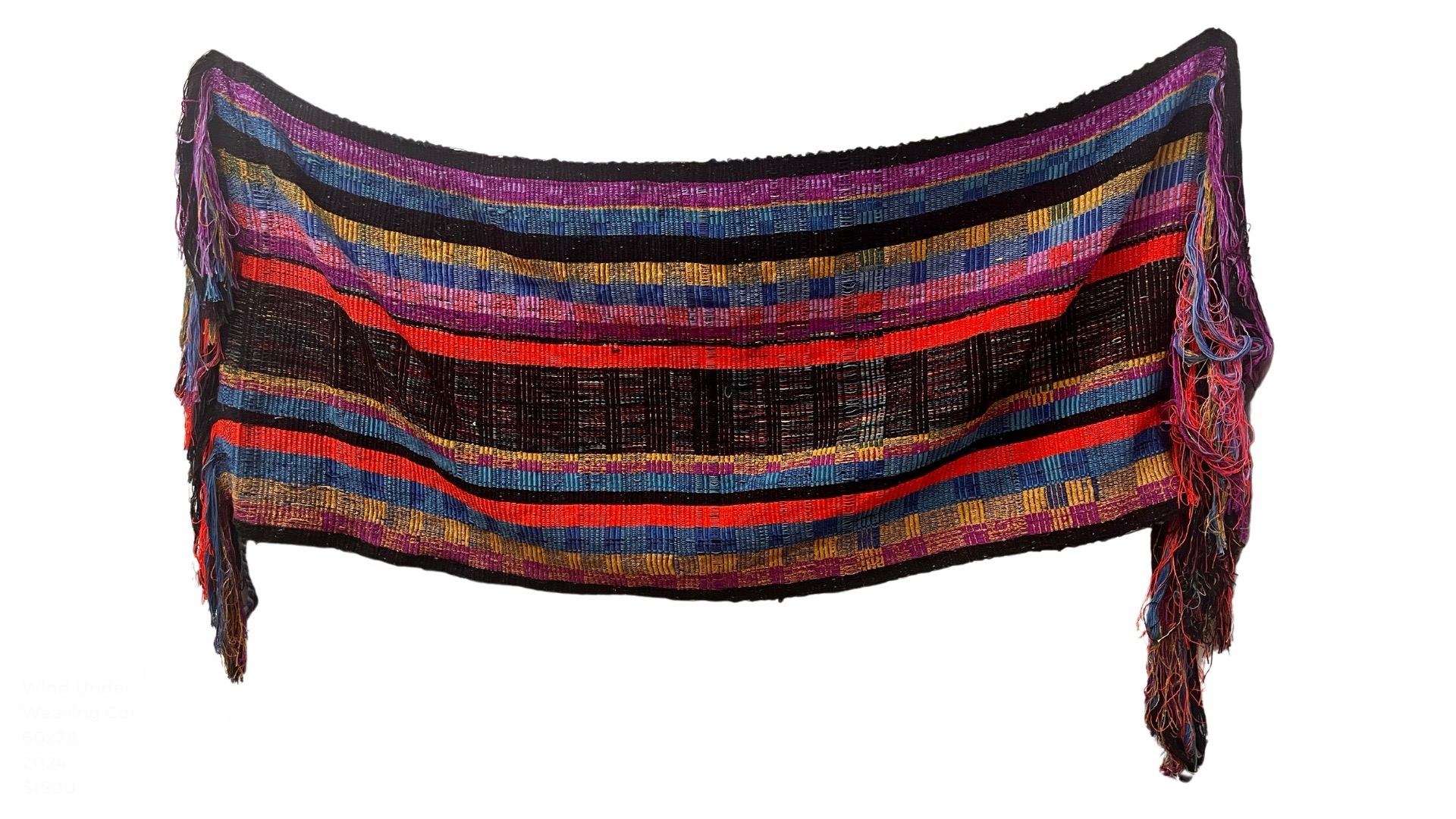
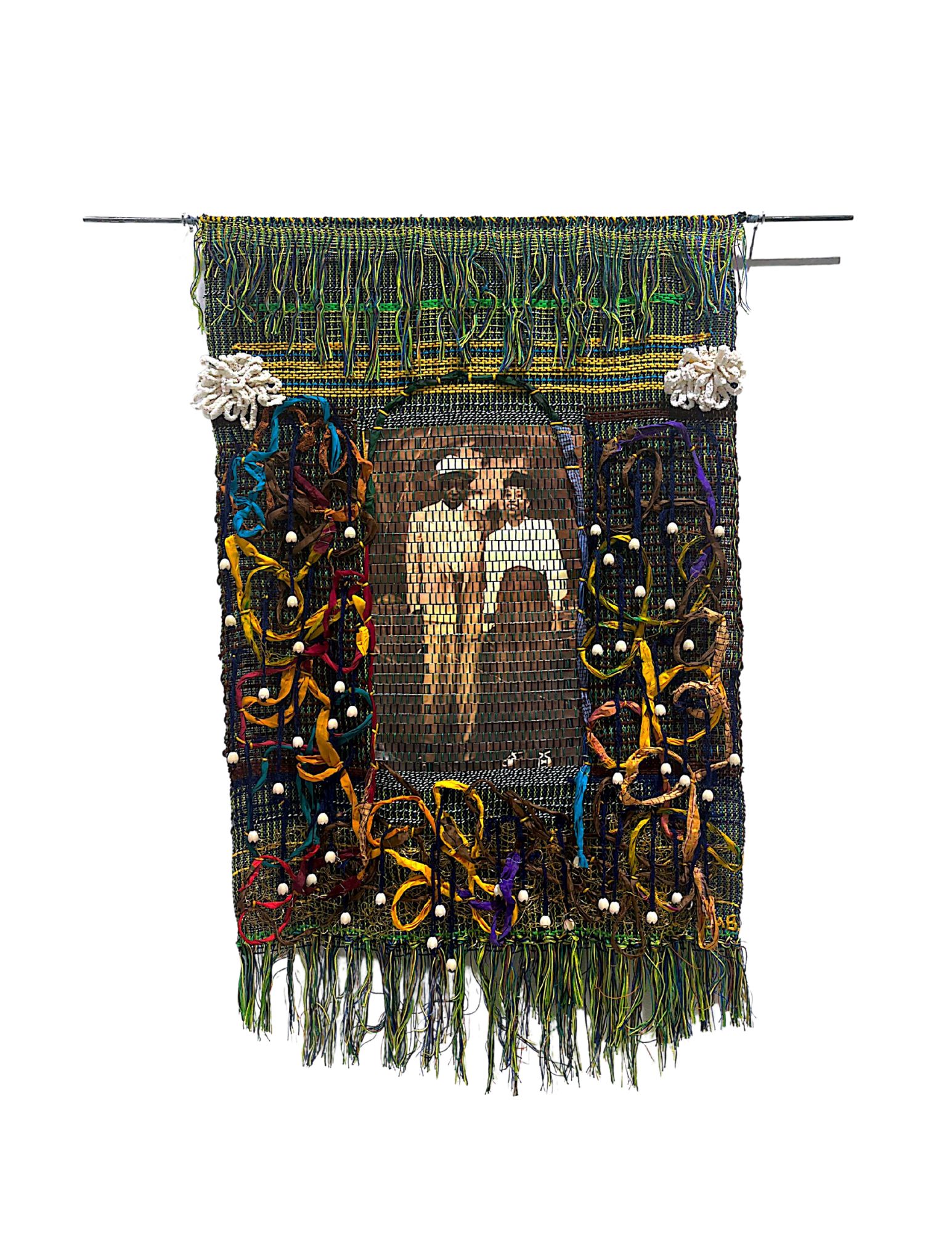
I am a contemporary craft artist. I work primarily with textile-based processes: weaving, embroidery, quilting, and soft sculpture. I use domestic materials to explore memory, labor, and cultural value.
I am known for creating texturally complex and colorful works that treat craft as a conceptual language. My work draws from Black Southern craft traditions as forms of knowledge and resistance. What I’m most proud of is my ability to balance visual impact with intellectual rigor. I do not separate making from thinking and I insist the relationship is necessary.. I am preserving as student and teacher.
What sets me apart is that I approach craft as infrastructure as a critical system through which culture is shaped, not a marginal one. I am not afraid to frame my practice within the framework of craft. There is a philosophy and language embedded in what I do and while I am not always there to vocally communicate it, I feel it is felt in my work.
Do you any memories from childhood that you can share with us?
I feel like I went to a candy factory during summer camp once. It wasn’t like an “eat everything” Willy Wonka type situation, but very close. The fact that I’m not sure if I actually did go or if it was a dream makes it a favorite because it reminds me that at some point memories and fantasies and dreams can all become the same thing over time. I want to say I did go and I had a great time.
Contact Info:
- Instagram: https://instagram.com/nutellabrownbaby