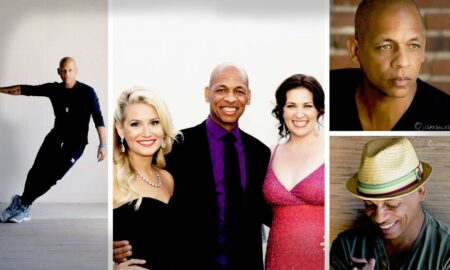

Today we’d like to introduce you to Scott Lansing.
So, before we jump into specific questions about the business, why don’t you give us some details about you and your story.
Growing up, I was living on the outskirts of Washington, DC. It wasn’t a hotbed for film at the time… My middle school offered an experimental media class that looked at how films were made. We broke down “Jaws,” shot for shot, and I was amazed by how a scene was composed. For eight weeks, we studied different movies. Every Wednesday, I recall.
I remember the class was loud and overall the kids were disinterested, except for me and one other buddy. We sat in the front. By the end of the class, I knew this is what I wanted to do. In the evenings, I used to go to my neighbor’s house. His parents had a pretty “hands off “approach when it came to his tv and video access. We would bike to Erol’s (video store) come home and binge watch every horror film we could rent. We would marvel at the special effects, edit, and sound. I fell in love with prosthetic makeup design and thought that was my calling.
As a kid, there weren’t a lot of ways for me to get my hands on professional film or TV equipment. The only job I could find that paid and that I could touch expensive camera equipment was shooting town council meetings for the city once a week. It was super lame but it paid minimum wage and they would let a 15-year-old run the camera. There, I was exposed to the process of local government. I also worked at a photo processing store.
I took the money from the two gigs and bought my first super 8 camera. I convinced my friends that we should write and shoot a comedy about a freshman’s first day. With the support of my civics class teacher, we shot our first short film. We showed it at the end of the year and were graded for it. At the end of the film, several freshmen got in a gunfight with the administrators at the school. A comedy mind you. I recall we got an A on the project and that scene got lots of laughs. I found the film years later. It was a little shocking seeing how time had changed things. It was my first inclination of film being a time capsule of sorts. It was crazy watching it. With all the shootings in classrooms of the last few years, it was my first sense of film preservation as a necessity because it showed how times, attitude and behaviors had changed.
Later in college, I organized a shoot and directed my first 16mm film with classmates and some professionals in key positions, to make sure we shot it right. The Proffesional DP I had hired ended up hiring me later, the summer I graduated, to dolly grip an Indy feature he was involved with, called “Green Visionary”. As a dolly grip, I had to build and level a dolly track multiple times in the North Carolina summer heat on a horse farm. It was my first introduction to the challenges of indy filmmaking. I recall the director falling in love with the 30ft exterior dolly track shot. He wanted it everywhere.
So there I was on my hands and knees, in 90-degree heat, leveling dolly track for 14 hours a day- welcome to the world of cinema. It was a good lesson. Later, I landed a gig as a camera assist working on 70mm motion simulation films in Sarasota, Florida. It was for a circus equipment company that decided to go into the cinema, Omni Films. I got to handle some Mitchell cameras and work with the monstrous 70mm projectors. When they got bought out by Iwerks films, I decided to leave and move to Atlanta. In the late 90s, it was booming in post-production.
I worked as an assistant at Editworks slinging tapes, getting lunches and doing chyron for post-production sessions. I couldn’t see very well for a couple months, not realizing I needed glasses. So, to get me out of the way, they moved me to night film loader for the new avid systems. It was a great gig at that point. I was good with clients but I sucked at chyron, organizing tape stock and taking food orders – which were the skills needed for the day editor assist jobs. But at night, I was left alone to watch the films. The late 90s were a great time to be working night shift in the ATL because the town felt like it was open 24 hours.
I ended up leaving Editworks, and going to the newly built, Turner Studios and was offered and opportunity to edit for World Championship Wrestling. It was great. The producers let me try out insane effects and graphic treatments so I really got to work the Avid. I did that for about 8 months until WCW was sold. I was left with no client. Then one week an editor, who was regularly booked with Turner Classic Movies, got sick and I was asked to fill in for TCM. At the end of the week, head producer Chris Merrifield, a creative genius of sorts, asked me if I wanted to be booked with them full-time. I had found my place.
From that point on I worked with TCM, almost exclusively, doing their monthly commercial music videos, “This month on TCM” incorporating thousands of hours of films into a two-minute concept music video promoting programming each month. We received a lot of great feedback each month from viewers and award alike. I still get asked about them today. My company still works with TCM. I have created some of my proudest projects with them. It has been an amazing relationship.
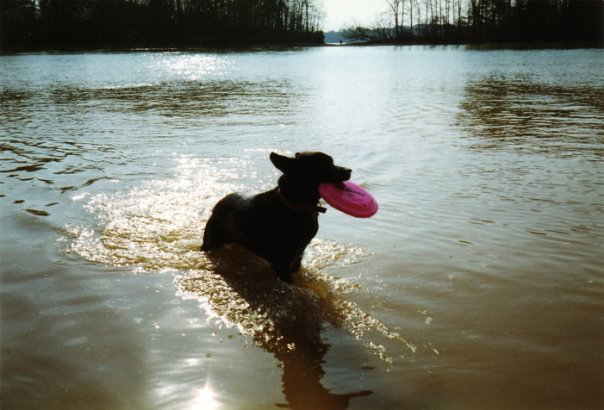
When I decided to leave Turner Studios, my wife, Jen- a super talented graphic designer- and I started a production company, called Sabotage Film Group. We named it after our dog, Sabotage. We always had a goal to make it as a film company. At night I would freelance shoot in the rock clubs in Atlanta. We worked with some killer local bands in their infancy, doing music video shoots on shoestring budgets. Bands like Mastodon, Tiger Tiger, Trances Arc, Minus Driver, Injected, Cat Power and Quiethounds.
I would also shoot live death metal shows with Director Kip Bissell at Tapout TV for bands that came through the old Masquerade. bands like Cannibal Corpse, Nile, Dying Fetus, The Black Dahlia Murder, Daath, to name a few. I loved music video and live show work. It was a rush to shoot and edit.
Right now, Sabotage Film Group creates a tv show every couple months or so with my edit assist Zach Bromberg called “VideoDrome” for producer Andrew Alonso of Filmstruck. We shoot here in Atlanta at Videodrome, one of the last Blue Ray and DVD stores in the southeast. Its a fun, loose shoot with lots of room to experiment. Filmstruck has been an exciting collaberation that has come out of our many years of creating with longtime friend, Director of Program Production Scott Mcgee. He has always allowed us to try new things and directions in our work with Filmstruck and TCM before that. It has been a great relationship.
In the past 12 years, as an Atlanta company, we’ve been working on both short and long-formats, from tv to documentary, narrative drama, comedy, and horror. South Carolina Director Chris White and I have worked on 3 of his films together and hoping a fourth is in the works. We also did all the graphics for Kiki Wilson’s award-winning documentary feature, “Robert Shaw: Man of Many Voices.” It was an honor to work on a film about the man who had such a tremendous impact on the orchestral history in Altanta and it was a pleasure to work with the talented award winning editor, Amy Linton.
Recently, I’ve been shooting and editing with director David Barnhart of Barnhart Films on his social justice documentaries. To date, we have released three award-winning social justice shorts and a feature, “Trigger- the Ripple Effect of Gun Violence” which is currently in negotiations for distribution. At the moment, we are in final post-production on a feature documentary on the Flint water crisis. Earlier this year, we won “Best Documentary Short” for David’s film “To Breathe Free” at the Beaufort Film Festival and we’ve received three “Impact DOCS Awards” – a social issue documentary competition that focuses on films “impacting the world.” It’s incredibly rewarding to shoot and edit these films with David who is an amazing storyteller, and shooter.
In 2018, I was co-editor with award winning director Matt Hinton on his rock doc “Parallel Love” on the rock band Luxury. The Covellite Film Festival awarded, “Parallel Love” with the “Best in Fest” award in September 2018.“Parallel Love” was also just recently accepted in the St. Louis International Film Festival. It has been an amazing year so far. We also took “Best Dramatic Short” for a film on mother’s of gun violence, called “Silencer.” – a collaboration with Director, Ahmed Lucan and long-time friend and talented filmmaker, Willie Giles.
We’re always bombarded by how great it is to pursue your passion, etc – but we’ve spoken with enough people to know that it’s not always easy. Overall, would you say things have been easy for you?
The process of filmmaking has been a struggle that, in many ways, has gotten easier with the more experience we’ve gained. Being independent forces you to wear many different hats – trying to find and create consistent work to pay your bills and purchase equipment, while networking and keeping up with contacts, contracts, insurance, the business and especially evolving technologies.
We know that filmmaking is about adaptability, staying enthusiastic and staying committed to the work no matter what comes at you. I never phone it in, I’m always committed to doing the best I can do within the parameters of my budgets and time allotted.
I also look for great and talented people to work with, people who are better than me at what they do. I don’t try to do it all anymore- I know what I do and I stick to it. I direct, I edit, and I shoot. Editing is my favorite.
So let’s switch gears a bit and go into the Sabotage Film Group story. Tell us more about the business.
As a company, I’m most proud of what we accomplish, time and time again, as a result of our creative drive. I’ve always been an indy filmmaker at heart. My expectation and approach to any project is to see it in a different light than other creatives.
We often get hired to fix narratives that aren’t working, for whatever reason, and to develop new approaches to shoots that are failing in previous cuts. It’s addressing everything as a puzzle and asking what I, as a viewer, want and how can I get the footage there- into something new and reimagined. Documentary has taught me so much about how to fix narrative.
In my opinion, documentary is much harder than narrative, so all the documentary work really helps in the re-design of a narrative film. Editing is often like putting a puzzle together in a new unexpected way by looking at what you have and re-envisioning it. My goal is to create as much work as I can. Hopefully I’ll have a library of thought-provoking work that will live on past my years.
So, before we jump into specific questions about the business, why don’t you give us some details about you and your story.
Growing up, I was living on the outskirts of Washington, DC. It wasn’t a hotbed for film at the time… My middle school offered an experimental media class that looked at how films were made. We broke down “Jaws,” shot for shot, and I was amazed by how a scene was composed. For eight weeks, we studied different movies. Every Wednesday, I recall.
I remember the class was loud and overall the kids were disinterested, except for me and one other buddy. We sat in the front. By the end of the class, I knew this is what I wanted to do. In the evenings, I used to go to my neighbor’s house. His parents had a pretty “hands off “approach when it came to his tv and video access. We would bike to Erol’s (video store) come home and binge watch every horror film we could rent. We would marvel at the special effects, edit, and sound. I fell in love with prosthetic makeup design and thought that was my calling.
As a kid, there weren’t a lot of ways for me to get my hands on professional film or TV equipment. The only job I could find that paid and that I could touch expensive camera equipment was shooting town council meetings for the city once a week. It was super lame but it paid minimum wage and they would let a 15-year-old run the camera. There, I was exposed to the process of local government. I also worked at a photo processing store.
I took the money from the two gigs and bought my first super 8 camera. I convinced my friends that we should write and shoot a comedy about a freshman’s first day. With the support of my civics class teacher, we shot our first short film. We showed it at the end of the year and were graded for it. At the end of the film, several freshmen got in a gunfight with the administrators at the school. A comedy mind you. I recall we got an A on the project and that scene got lots of laughs. I found the film years later. It was a little shocking seeing how time had changed things. It was my first inclination of film being a time capsule of sorts. It was crazy watching it. With all the shootings in classrooms of the last few years, it was my first sense of film preservation as a necessity because it showed how times, attitude and behaviors had changed.
Later in college, I organized a shoot and directed my first 16mm film with classmates and some professionals in key positions, to make sure we shot it right. The Proffesional DP I had hired ended up hiring me later, the summer I graduated, to dolly grip an Indy feature he was involved with, called “Green Visionary”. As a dolly grip, I had to build and level a dolly track multiple times in the North Carolina summer heat on a horse farm. It was my first introduction to the challenges of indy filmmaking. I recall the director falling in love with the 30ft exterior dolly track shot. He wanted it everywhere.
So there I was on my hands and knees, in 90-degree heat, leveling dolly track for 14 hours a day- welcome to the world of cinema. It was a good lesson. Later, I landed a gig as a camera assist working on 70mm motion simulation films in Sarasota, Florida. It was for a circus equipment company that decided to go into the cinema, Omni Films. I got to handle some Mitchell cameras and work with the monstrous 70mm projectors. When they got bought out by Iwerks films, I decided to leave and move to Atlanta. In the late 90s, it was booming in post-production.
I worked as an assistant at Editworks slinging tapes, getting lunches and doing chyron for post-production sessions. I couldn’t see very well for a couple months, not realizing I needed glasses. So, to get me out of the way, they moved me to night film loader for the new avid systems. It was a great gig at that point. I was good with clients but I sucked at chyron, organizing tape stock and taking food orders – which were the skills needed for the day editor assist jobs. But at night, I was left alone to watch the films. The late 90s were a great time to be working night shift in the ATL because the town felt like it was open 24 hours.
I ended up leaving Editworks, and going to the newly built, Turner Studios and was offered and opportunity to edit for World Championship Wrestling. It was great. The producers let me try out insane effects and graphic treatments so I really got to work the Avid. I did that for about 8 months until WCW was sold. I was left with no client. Then one week an editor, who was regularly booked with Turner Classic Movies, got sick and I was asked to fill in for TCM. At the end of the week, head producer Chris Merrifield, a creative genius of sorts, asked me if I wanted to be booked with them full-time. I had found my place.
From that point on I worked with TCM, almost exclusively, doing their monthly commercial music videos, “This month on TCM” incorporating thousands of hours of films into a two-minute concept music video promoting programming each month. We received a lot of great feedback each month from viewers and award alike. I still get asked about them today. My company still works with TCM. I have created some of my proudest projects with them. It has been an amazing relationship.
When I decided to leave Turner Studios, my wife, Jen- a super talented graphic designer- and I started a production company, called Sabotage Film Group. We named it after our dog, Sabotage. We always had a goal to make it as a film company. At night I would freelance shoot in the rock clubs in Atlanta. We worked with some killer local bands in their infancy, doing music video shoots on shoestring budgets. Bands like Mastodon, Tiger Tiger, Trances Arc, Minus Driver, Injected, Cat Power and Quiethounds.
I would also shoot live death metal shows with Director Kip Bissell at Tapout TV for bands that came through the old Masquerade. bands like Cannibal Corpse, Nile, Dying Fetus, The Black Dahlia Murder, Daath, to name a few. I loved music video and live show work. It was a rush to shoot and edit.
Right now, Sabotage Film Group creates a tv show every couple months or so with my edit assist Zach Bromberg called “VideoDrome” for producer Andrew Alonso of Filmstruck. We shoot here in Atlanta at Videodrome, one of the last Blue Ray and DVD stores in the southeast. Its a fun, loose shoot with lots of room to experiment. Filmstruck has been an exciting collaberation that has come out of our many years of creating with longtime friend, Director of Program Production Scott Mcgee. He has always allowed us to try new things and directions in our work with Filmstruck and TCM before that. It has been a great relationship.
In the past 12 years, as an Atlanta company, we’ve been working on both short and long-formats, from tv to documentary, narrative drama, comedy, and horror. South Carolina Director Chris White and I have worked on 3 of his films together and hoping a fourth is in the works. We also did all the graphics for Kiki Wilson’s award-winning documentary feature, “Robert Shaw: Man of Many Voices.” It was an honor to work on a film about the man who had such a tremendous impact on the orchestral history in Altanta and it was a pleasure to work with the talented award winning editor, Amy Linton.
Recently, I’ve been shooting and editing with director David Barnhart of Barnhart Films on his social justice documentaries. To date, we have released three award-winning social justice shorts and a feature, “Trigger- the Ripple Effect of Gun Violence” which is currently in negotiations for distribution. At the moment, we are in final post-production on a feature documentary on the Flint water crisis. Earlier this year, we won “Best Documentary Short” for David’s film “To Breathe Free” at the Beaufort Film Festival and we’ve received three “Impact DOCS Awards” – a social issue documentary competition that focuses on films “impacting the world.” It’s incredibly rewarding to shoot and edit these films with David who is an amazing storyteller, and shooter.
In 2018, I was co-editor with award winning director Matt Hinton on his rock doc “Parallel Love” on the rock band Luxury. The Covellite Film Festival awarded, “Parallel Love” with the “Best in Fest” award in September 2018.“Parallel Love” was also just recently accepted in the St. Louis International Film Festival. It has been an amazing year so far. We also took “Best Dramatic Short” for a film on mother’s of gun violence, called “Silencer.” – a collaboration with Director, Ahmed Lucan and long-time friend and talented filmmaker, Willie Giles.
We’re always bombarded by how great it is to pursue your passion, etc – but we’ve spoken with enough people to know that it’s not always easy. Overall, would you say things have been easy for you?
The process of filmmaking has been a struggle that, in many ways, has gotten easier with the more experience we’ve gained. Being independent forces you to wear many different hats – trying to find and create consistent work to pay your bills and purchase equipment, while networking and keeping up with contacts, contracts, insurance, the business and especially evolving technologies.
We know that filmmaking is about adaptability, staying enthusiastic and staying committed to the work no matter what comes at you. I never phone it in, I’m always committed to doing the best I can do within the parameters of my budgets and time allotted.
I also look for great and talented people to work with, people who are better than me at what they do. I don’t try to do it all anymore- I know what I do and I stick to it. I direct, I edit, and I shoot. Editing is my favorite.
So let’s switch gears a bit and go into the Sabotage Film Group story. Tell us more about the business.
As a company, I’m most proud of what we accomplish, time and time again, as a result of our creative drive. I’ve always been an indy filmmaker at heart. My expectation and approach to any project is to see it in a different light than other creatives.
We often get hired to fix narratives that aren’t working, for whatever reason, and to develop new approaches to shoots that are failing in previous cuts. It’s addressing everything as a puzzle and asking what I, as a viewer, want and how can I get the footage there- into something new and reimagined. Documentary has taught me so much about how to fix narrative.
In my opinion, documentary is much harder than narrative, so all the documentary work really helps in the re-design of a narrative film. Editing is often like putting a puzzle together in a new unexpected way by looking at what you have and re-envisioning it. My goal is to create as much work as I can. Hopefully I’ll have a library of thought-provoking work that will live on past my years.
Has luck played a meaningful role in your life and business?
In production, in the face of challenges, it’s been my experience, that united effort from crews can lead to success. I try to take all of it as part of the creative process and push through. Periodically, those efforts can lead to instantaneous opportunities, which could be referred to as “luck.” It’s hard to measure it when you’re always working. Sometimes, it’s difficult to decipher if something is truly an opportunity or just “shiny.”
Either way, I’ve found I can’t have good “luck” unless I’m there pushing for it. The only thing you can control in your career is to show up. Sometimes from left field, unforeseen events can stifle your perceived opportunity. So from experience, I just concentrate on showing up and delivering the best I can in any given situation. Sometimes at that point, “luck” can appear sometimes it doesn’t. I definitely don’t wait for it to show. Otherwise I’d still be waiting.
Contact Info:
- Address: 6305 Crescent Drive NW Norcross, GA 30071
- Website: www.sabotagefilmgroup.com
- Email: info@sabotagefilmgroup.com
- Facebook: www.facebook.com/sabotagefilmgroup/


Getting in touch: VoyageATL is built on recommendations from the community; it’s how we uncover hidden gems, so if you know someone who deserves recognition please let us know here.