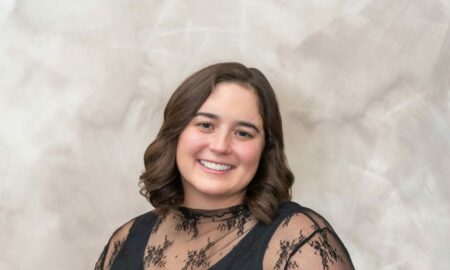





Today we’d like to introduce you to Jac Painter.
Thanks for sharing your story with us Jac. So, let’s start at the beginning and we can move on from there.
My Artist story had a decades-long preface. For 24 years, I worked in retail/commercial real estate across the United States and across the globe, even living in Amsterdam for over three years. It may not be immediately evident, but real estate has both analytical and creative aspects. The analytics are obvious: is this the right location? Does this deal make good economic sense? But the creativity comes in a more abstract form: how will I craft this offer? How can I introduce my brand to this landlord in a way that makes them react positively and want to “buy”? Even my spreadsheets/reports had to be pretty. Not just for me, but to present my work in the most positive light.
After a few years with some of the country and world’s biggest brands, like Sprint and Starbucks, to name a few, I spent a couple of years with two failed startups. The last startup did everything by committee with an autocrat at the head. He took away all the creative parts of real estate. He and the committee decided how to approach the developers, how to craft the offers. It left me with quite a hole.
Coincidentally, I had found some chips of graffiti (with the help of my cousin) from the Krog Street Tunnel in Atlanta. Thick layers, decades of spray paint had been chipped off the wall and left on the ground. I learned later that was part of street art. Find your spot to paint. If it’s cracked, you can choose to chip away those cracks to get a smooth surface for your message, your art. You leave the chips on the ground along with your spent cans of spray paint. It’s part of the process. It’s part of the rebellion. The philosophical weight of these chips was not lost on me. I loved them immediately. They shouldn’t be thrown away like trash. I thought about what to do with them and almost instantly, I thought of “preserving” them. That took me to butterflies and other insects preserved in resin. And that started my journey to learn about resin. I was hooked. I called it My Jam.
When the company I was with decided not to grow at the rate they initially wanted to, they eliminated my position. I haven’t looked back. I got lucky when my local coffee shop let me hang some of my early work. From there, a friend offered to host a solo show at his gallery. I’ve been rolling ever since. It’s been three years since I found those first chips and two years since I dedicated my time to art.
We’re always bombarded by how great it is to pursue your passion, etc – but we’ve spoken with enough people to know that it’s not always easy. Overall, would you say things have been easy for you?
Before I decided to focus full time on my art, my career was wrought with challenges. It was if the universe was saying, “um, are you sure this is what you should be doing?” From sexual harassment by older men who were protected by people in power who said “oh, that’s just Bill, he’s old school,” to other women who seemed to challenge me for no reason, to sexual molestation by a client, to sexual discrimination when I was put up for promotion as the strongest contributor among my two male colleagues, (they were vice presidents) but my promotion to VP was squelched for no legitimate reason other than there were already two women on the leadership team – that was enough for the Old Boys Network. I learned to use my voice and to call a spade a spade. That allows you to opt-out of situations that are not right for you. But it also sows the seed of change for the next woman. It’s like giving a hand up to a woman you may never meet.
One common affliction of women is the Imposter Syndrome. We wonder when people around us will figure out we’re just ‘faking it until we make it.’ It’s hard to realize it when you’re in it, but you ARE doing it. You’re not faking it. You made it. I’ve had a relapse of this syndrome in my art. I’m not an angsty ‘artiste.’ I can’t draw references and correlations between my art and other well known or obscure artists. I didn’t spend years in art school. My time struggling was in all those failed resin experiments in my garage. But art doesn’t have to come from struggle. It can come from strength. I came to art armed with skills that some other artists may struggle with. I no longer feel guilty about that. I am no longer embarrassed to be, essentially, successful, professional and a technical novice. My success comes from my strengths and from the people who are attracted to my art and my story. No one’s journey is better or “more right”. Conventionality is for some but not for all. Own your space… and share it.
We’d love to hear more about your art.
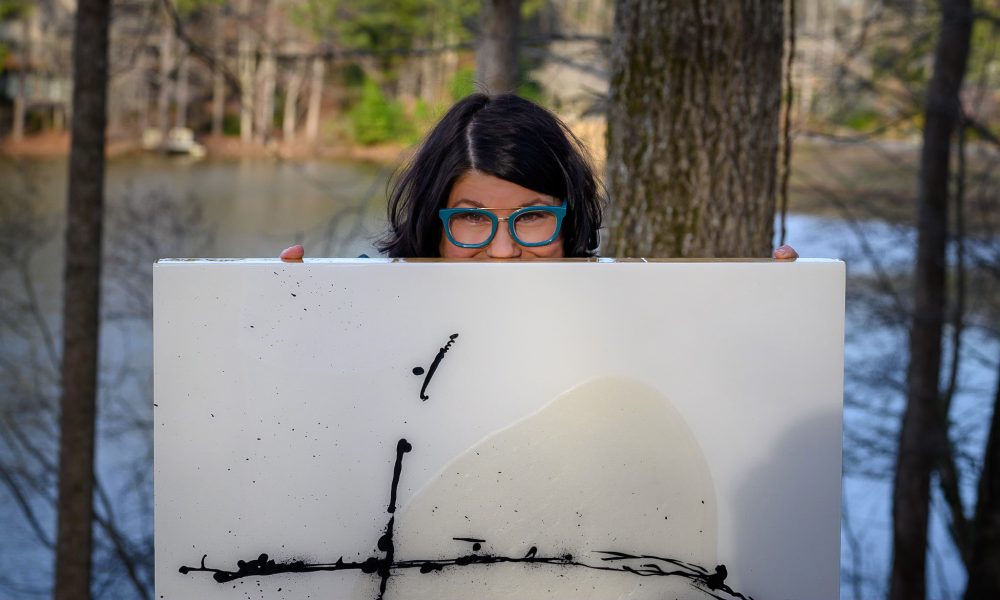
I work in resin and found objects. Chips of graffiti from Krog Street Tunnel, smashed beer cans from the streets of Reynoldstown, an unfired bullet from a sidewalk in Atlanta. I cherish these items and their untold stories. I compose them and float them resin that is often boldly colored. I make sure the items come out of the resin so you can feel their form. Once you’ve seen my work, you can recognize it from across the room. Although there may be people who come after me who share my journey of preserving other people’s stories in resin, for now, I’m proud to be doing something I feel is original.
I had a meeting one time with Atlanta chef Carla Fears. She came to my first studio (a barn in Cabbagetown). When she was learning about my work, she said: “It’s like broken art.” In that instance, I knew that was my brand. Sometimes the items are, indeed, broken. Sometimes it’s their story that is broken. Sometimes I am broken. But we are all art.
Finding a mentor and building a network are often cited in studies as a major factor impacting one’s success. Do you have any advice or lessons to share regarding finding a mentor or networking in general?
Extending the theme of the universe nudging me away from retail real estate, I lucked out when a year before my first show an acquaintance (now friend) put out an APB on Facebook for an “accountability partner”. She needed someone to be a sounding board for her as she juggled many projects for her art and culture curation business. Having an art curator to bounce off of and help guide my choices has been a godsend for me. She helps me maintain the integrity of my art. Her encouragements give me confidence. She’s giving me opportunities to meet other artists.
Although my mentor found me, I highly recommend networking, even if you hate the very idea of it. Go to those networking events. Join an online group. If you’re an artist, go to those gallery shows. Meet other people in your industry. Find someone you like or admire. Start a conversation. You will learn something, I am sure of it. And they may become a mentor or connect you with someone who will. When we’re starting out (or in my case, starting a second act), we tend to feel alone, like it’s us against the world. But it’s not. If we are vulnerable, if we tuck our pride for a second, we can become so much more. On the other side of that coin, I strongly believe in sharing. Be the person you want for someone else.
Contact Info:
- Website: https://www.jacpainter.com
- Phone: 828-367-7551
- Email: jac@jacpainter.com
- Instagram: @jac.painter
- Facebook: https://www.facebook.com/JacPainterArtist/
- Other: https://www.patreon.com/JacPainter


 Image Credit:
Geoff Painter
Suggest a story: VoyageATL is built on recommendations from the community; it’s how we uncover hidden gems, so if you or someone you know deserves recognition please let us know here.