Hi Ty, thank you so much for taking the time to share your work and perspective with our readers. You bring a rare level of realism and psychological depth to the espionage thriller genre, so we’re excited to dive in. Your writing is deeply informed by your military background and extensive travel. How have those lived experiences shaped the way you portray intelligence work, power structures, and the moral gray areas your characters are forced to navigate?
My military service exposed me to experiences that shaped both my worldview and my writing in lasting ways. One of the most influential factors has been living abroad. I’ve spent extended time in places like Korea, Germany, England, and Italy, and traveled through many more countries in between. Wherever I’ve been, I’ve made a conscious effort to immerse myself in the local culture rather than observing it from a distance.
That immersion taught me that power, loyalty, and truth rarely look the same from one place to another. Working alongside people from different nations—and seeing how governments, militaries, and intelligence communities operate under very different social and political pressures—made it clear that intelligence work is rarely clean or binary. Decisions are often shaped by competing interests, limited information, and cultural misunderstandings, and even the “right” choice can carry unintended consequences.
Those experiences heavily influenced how I portray intelligence work and power structures in my fiction. I’m less interested in clear heroes and villains than I am in the gray space where duty clashes with conscience and survival sometimes outweighs idealism. My characters are forced to navigate systems that demand loyalty while withholding clarity, and the moral tension that creates mirrors what I’ve witnessed firsthand: people doing their best within imperfect systems, where every decision carries a cost.
At the core of your work is a recurring question about what happens when systems designed to protect the world become its greatest threat. What first drew you to exploring this tension, and why does it feel especially relevant right now?
I was drawn to this tension through firsthand exposure to large systems built around security and control. In theory, these institutions exist to protect people, but in practice they can drift from their original purpose as power consolidates and accountability thins. What interested me most wasn’t the idea of overt corruption, but how easily good intentions can evolve into harmful outcomes through routine compromises made in the name of safety or efficiency.
That question feels especially urgent right now because we’re living in an era of centralized power, rapid technological expansion, and information warfare, where decisions are often made far from public scrutiny. Trust in institutions is eroding, and people are increasingly aware that the systems meant to safeguard them can also be used to manipulate or control. My work explores that uneasy space—not to offer answers, but to examine the cost of placing blind faith in systems without questioning who ultimately benefits.
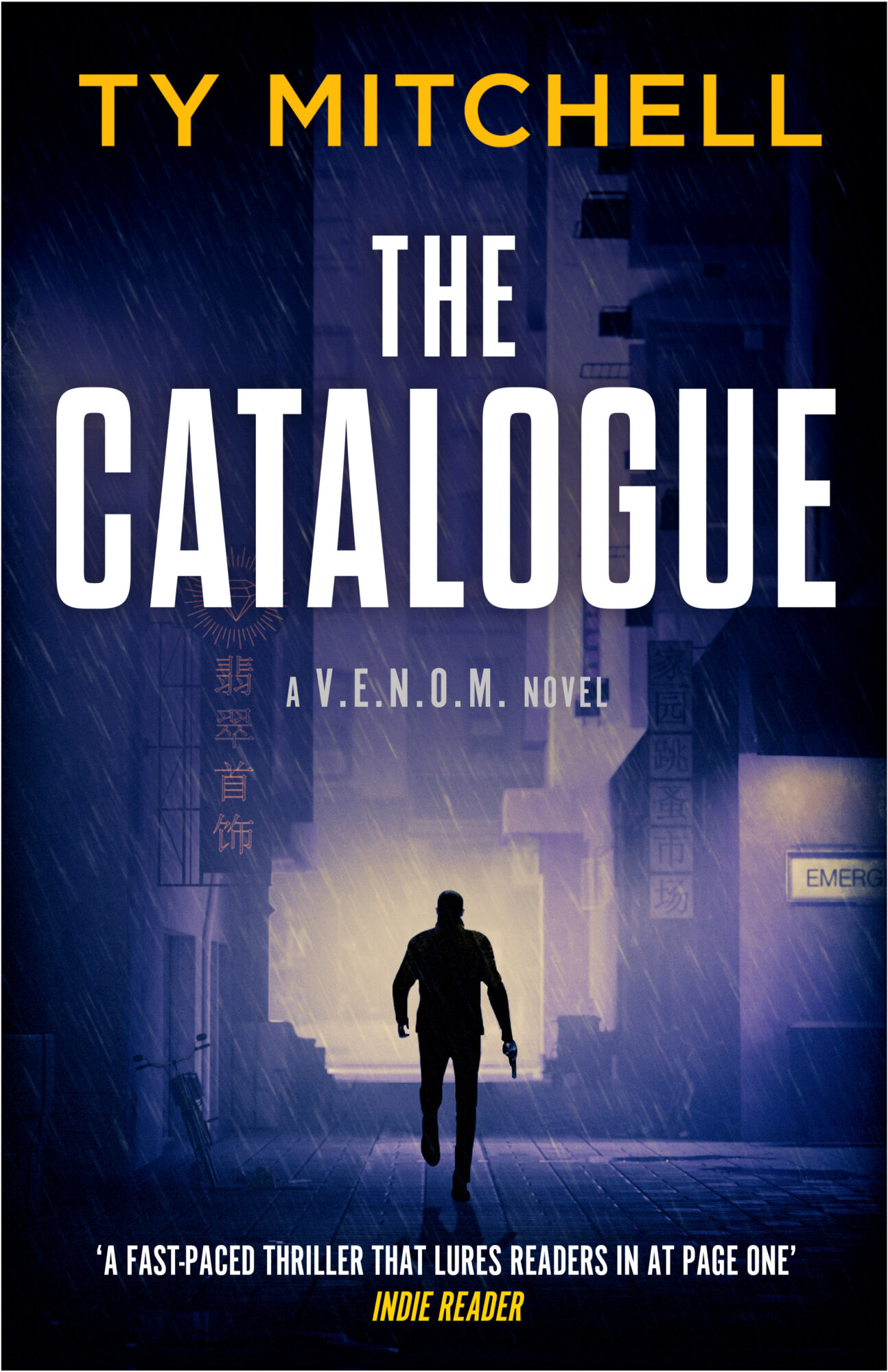
In The Catalogue, readers follow an ordinary homicide detective who is suddenly pulled into the world of global espionage. What compelled you to anchor this story in a protagonist who begins outside the intelligence world, and how does that outsider perspective change the emotional stakes?
I anchored The Catalogue in a protagonist (Jake Penny) outside the intelligence world because I wanted the story to unfold from a human, grounded perspective rather than an institutional one. An ordinary homicide detective brings instincts shaped by proximity to victims, consequences, and accountability—things that often become abstract at higher levels of global power. Dropping someone like that into the machinery of espionage exposes the disconnect between policy and impact in a very personal way.
That outsider perspective raises the emotional stakes because the character isn’t insulated by ideology or training meant to normalize moral compromise. Each revelation carries weight, not just as information, but as a challenge to their sense of right and wrong. As the scale of the conflict expands, the reader experiences that escalation alongside the protagonist—confusion, resistance, and the growing realization that nothing is as it first appeared. That’s why the final reveal lands with such force—it doesn’t just change what the character knows, it fundamentally alters how they understand the world they’ve been pulled into.
Your stories avoid glamorizing espionage and instead focus on consequence, compromise, and the psychological toll of secrecy. How do you balance fast-paced, cinematic action with deeper internal conflict and moral complexity?
This is actually a really good question. That balance came from pushing back against the idea that genre fiction has to check a rigid set of boxes. As creatives, we’re often tempted to lean heavily on familiar tropes because they signal to readers what kind of story they’re buying—and while that isn’t inherently wrong, it can flatten the work if you’re not careful. Early drafts of The Catalogue leaned more into the spectacle: high-octane action, gadgets, and protagonists who felt almost invincible.
That changed after watching the film Get Out for the first time and seeing how Jordan Peele subverted a familiar genre by shifting the focus from surface-level thrills to psychological tension and deeper meaning. It made me rethink how I was using action. Instead of action defining the characters, I let the characters—and their flaws—shape the action. The people in my stories are human first, carrying fear, doubt, and moral conflict, who just happen to possess specialized skills that allow them to survive in the world of espionage.
Once I leaned into that, the action became more cinematic because it had consequences. Every chase, fight, or decision carries a psychological cost, and the moral complexity emerges naturally from what those characters are willing—or unwilling—to sacrifice. That’s how I keep the pace moving without losing the emotional weight that makes the story linger after the last page.
Trust, loyalty, and survival are constantly in tension throughout your work. What do you hope readers walk away thinking about long after they’ve turned the final page?
I hope readers walk away questioning where their trust truly lies and what loyalty actually costs. In the worlds I write about, survival often depends on choosing between personal integrity and institutional allegiance, and there’s rarely a clean or comfortable answer. I want readers to sit with the discomfort of those choices and recognize how easily trust can be manipulated when fear and authority intersect.
More than anything, I hope the story lingers as a reminder that survival isn’t just about staying alive—it’s about what parts of yourself you’re willing to compromise along the way. If readers finish the final page asking whether they would make the same decisions under pressure, then the story has done its job.
As your body of work continues to grow, how do you see your voice evolving within the modern thriller landscape, and what kinds of stories are you most excited to explore next?
As my work evolves, I see my voice continuing to move toward more character-driven thrillers. I’m less interested in spectacle for its own sake and more focused on stories that sit at the intersection of global consequence and personal cost. Within the modern thriller landscape, that means blending the momentum and tension readers expect with a deeper examination of who pays the price when systems operate without accountability.
Looking ahead, I’m most excited to explore stories that push beyond traditional espionage frameworks—narratives that follow unexpected protagonists, examine emerging forms of power, and challenge the idea of who gets to define truth in a world shaped by secrecy and influence. As the scope expands, the core remains the same: human beings navigating impossible choices inside systems much larger than themselves.
Links:














 Bringing Heart Back Into Gifting: How Busola Akinpade’s OMG Gift Is Redefining Thoughtful, Elevated Holiday Boxes
 How Jamie Kirk Is Turning Pain Into Purpose Through A New Beginning Mental Health & Wellness
 How Travis L. Greene, Jr. Is Redefining Legacy, Leadership & Compassion — Both Online and In Real Life
 Podcast: Building a Successful Services Business, Financial Management & Growth
 The Experts on Branding, Marketing, Social Media & Web Presence
 Lifestyle improvements & entrepreneurship
 Start and Scaling a Business, Branding, and Work Life Balance
 Building a brand and reputation within the beauty industry
 Starting, Funding, and Scaling a Business, & Work-Life Balance as a Parent