




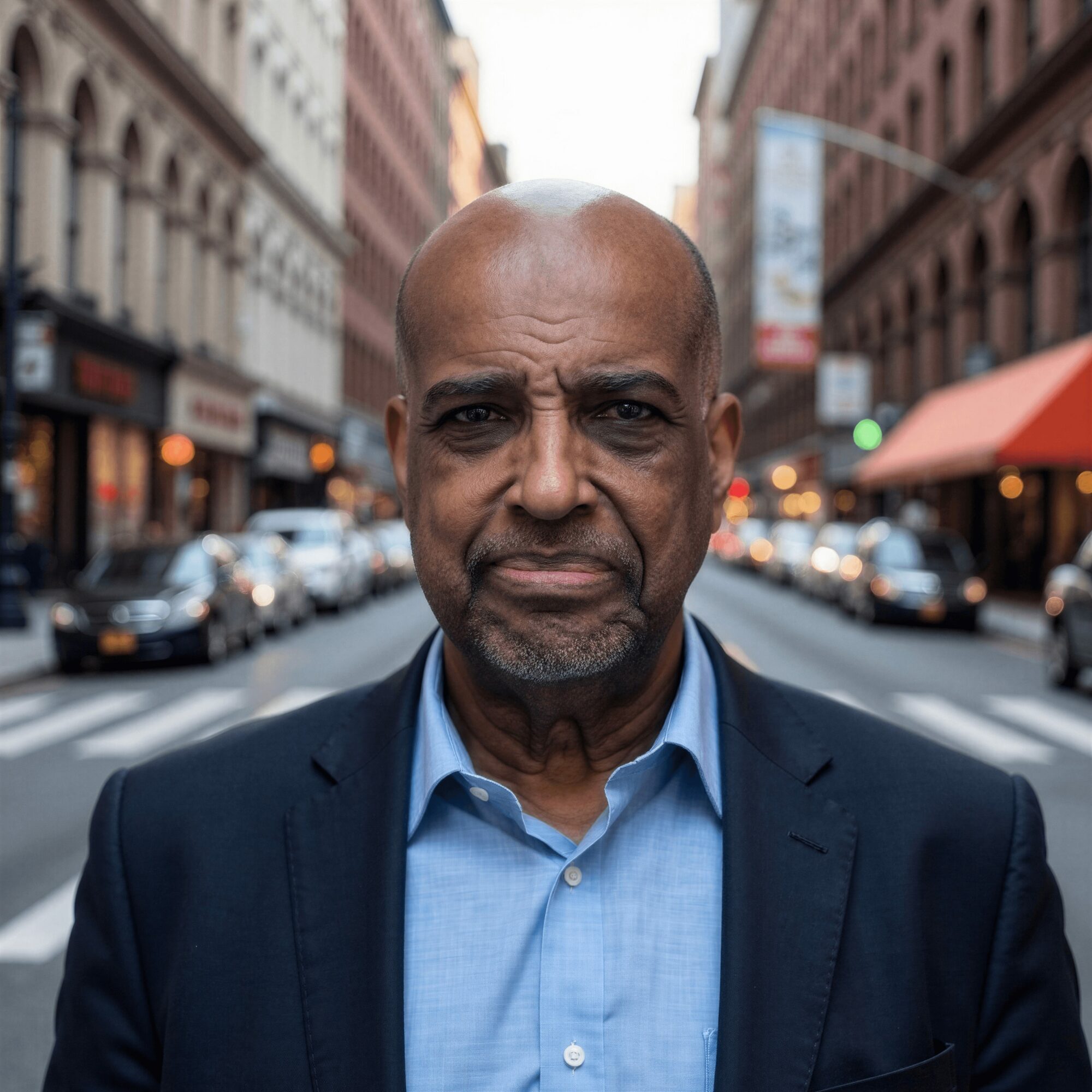
Today we’d like to introduce you to Andrew Neves.
Hi Andrew, so excited to have you on the platform. So before we get into questions about your work-life, maybe you can bring our readers up to speed on your story and how you got to where you are today?
I spent 35 years studying nutrition. I had the credentials, the blog, the audience. By most measures, I had figured it out.
Then 63 hit and I could not walk 100 yards without Advil.
Thirty pounds overweight. Knees wrecked from three surgeries. And somewhere in the back of my head, the quiet, embarrassing awareness that I knew more about cellular biology than most people I’d ever meet, and it wasn’t helping me at all.
That’s where the story actually starts. Not with some big idea. With personal failure.
I got into microgreens years before they were trendy. My co-founder Stephen Jones introduced me to them back in the early days of JPure Farms. What struck me wasn’t just the nutrition profile, which is extraordinary. It was the potential for precision. You’re not dealing with the nutritional noise of a full-grown plant. You’re working with a concentrated, targeted compound profile. That fascinated me as a researcher.
So I built Microgreens World in 2017, mainly to share what I was learning. Over a million visitors later, it became the leading resource in the space. I thought I understood microgreens. I thought I understood nutrition.
At 63, my body told me otherwise.
The thing I had been getting wrong was targeting. I was eating “healthy” the way most people do: a little of everything, hoping something would stick. Microgreens included. I treated them like a multivitamin. Just take them. Feel better. No real logic behind which varieties, which compounds, which specific biological patterns they were meant to address.
So I stopped guessing and started testing. I looked at my body’s signals, matched them to what the research said about specific phytonutrient pathways, and built a protocol around that. Not a diet. A method for biological decision-making.
A year later, 25 pounds were gone. Three miles without Advil. My only supplements were the ones my physician prescribed.
That’s what I turned into a book. “The Microgreens Method” is the system I wish I had at 63. It’s built on a framework called PACT: Pinpoint your pattern, Acquire the right varieties, Consume them consistently, Track what actually changes. The science behind it pulls from 77 peer-reviewed studies. The approach pulls from years of being wrong and finally figuring out what right looked like.
It launches March 3, 2026. Hit number one in Antioxidants and Phytochemicals on Amazon. And the companion app, where readers can work with an AI research coach named Sage, went live last week.
At 50, I survived stage 2 prostate cancer. At 63, I could barely walk. At 68, I’m the healthiest I’ve been in two decades, writing about how to do what I did.
That’s the story. It’s less about microgreens than people expect. It’s really about what happens when knowing more stops being enough, and you finally start paying attention to your own body instead.
Alright, so let’s dig a little deeper into the story – has it been an easy path overall and if not, what were the challenges you’ve had to overcome?
No. Not even a little smooth.
Let me start with where the business side actually begins, because it’s wrapped up in the personal stuff in ways that are hard to separate.
My co-founder at JPure Farms, Stephen Jones, introduced me to microgreens long before most people had heard the word. What struck me wasn’t just the nutrition science, which is genuinely extraordinary. It was the business question underneath it: why wasn’t anyone treating these as a precision tool rather than a garnish? Restaurants were buying them for color. Health enthusiasts were buying them vaguely, hoping for the best. Nobody was positioning them around specific biological outcomes.
That’s where Microgreens World came from. I launched it in 2017 as an education platform. Grow guides, nutrition breakdowns, research summaries. The idea was to build the leading resource in the space and figure out where the real business opportunity lived inside that audience.
What nobody tells you about content businesses is how long you publish into silence. The early months of Microgreens World were just me writing, posting, and watching traffic numbers that were, to put it generously, humbling. You do it anyway. You learn SEO by failing at it. You learn what readers actually want by watching what they ignore. I was also running JPure Farms and health coaching clients at the same time, so “free time” wasn’t really a concept I had access to.
And the health struggles weren’t new, either. Years before I ever launched Microgreens World, I’d survived stage 2 prostate cancer. Three knee surgeries at various points across that stretch. I came into the content business already knowing what rebuilding felt like. What I didn’t expect was that by my early 60s, even with 35 years of studying nutrition, even with a growing platform, I’d still find myself 30 pounds overweight and unable to walk 100 yards without Advil.
That’s the part that still gets me when I tell it. I was running the leading microgreens resource on the internet from a body that wasn’t working. The irony wasn’t subtle.
But that personal failure became the business pivot.
What I realized was that I’d built an audience around a question nobody was fully answering: not which microgreens to eat, but which ones for your specific biology, and how to know if they’re actually working. Microgreens World gave people education. What they needed was a method. A real decision framework. That’s when the book became serious.
Three years to write it. Not because I’m slow. Because I kept being wrong. The original manuscript was 300 pages of dense research, the kind that academic peers nod at and everyone else puts down after page twelve. Scrapped the whole thing. Rebuilt it around a framework I’d tested on myself first, then refined through hundreds of conversations with Microgreens World readers over nine years. Multiple rounds where I thought I was done and then found a structural problem, an overclaim, a case study that didn’t hold up honestly.
The publishing path had its own friction. Getting print files formatted correctly for IngramSpark sounds like a minor technical detail until it’s 2am three days before your print deadline and nothing is cooperating. Building the companion app, the PACT Toolkit with Coach Sage, meant working with developers while writing a book while managing an email list while running three existing businesses. Nothing about that math is comfortable.
The launch is March 3rd, 2026. Number one New Release in Antioxidants and Phytochemicals on Amazon. 152 founding readers will receive a special hardcover edition before the general release. App goes live the same week.
But between 2009 and that launch date, the road included cancer recovery, knee surgeries, years of building an audience slowly with no guarantee it would go anywhere, multiple business directions competing for the same hours, and a book manuscript that got torn apart and rebuilt more than once.
The credibility that sold those pre-orders came from nine years of showing up on Microgreens World without overclaiming, without selling anything I couldn’t stand behind. That trust was built slowly. There’s no shortcut to it.
At 68, I’m the healthiest I’ve been in two decades. But the version of this story where it clicked smoothly into place? That version doesn’t exist.
Thanks for sharing that. So, maybe next you can tell us a bit more about your business?
Microgreens World started in 2017 as a simple idea: build the most reliable resource on the internet for people who wanted to understand microgreens beyond the hype. No overblown claims. No miracle cure language. Just the science, explained clearly, with practical guidance for what to actually do with it.
Nine years and over a million, two hundred thousand visitors later, that’s still the foundation. But what the business became is something I didn’t fully anticipate. We’ve reached people in over 170 countries across the globe.
The readers who found Microgreens World weren’t casual health browsers. They were analytical, research-minded people. Forty, fifty, sixty years old. Fed up with vague advice. They’d already tried the supplements and the elimination diets and the wellness protocols that promised everything and delivered confusion. They wanted specifics. Which microgreens, for what, and how would they know if it was working.
That question is what Microgreens World specializes in now. Not microgreens broadly, but precision nutrition using microgreens. The difference matters. We’re not selling the idea that microgreens are good for you. We’re giving people a structured method for figuring out which specific varieties match their specific biology, and a framework for tracking whether the approach is actually doing anything.
That framework is called PACT: Pinpoint your inflammatory pattern, Acquire the right varieties, Consume them correctly, Track what changes. It’s built on 77 peer-reviewed studies and backed by a companion app at app.enneadhealth.com, where readers can work with an AI research coach named Sage who has read the book and can pull from the actual research papers.
The book, “The Microgreens Method,” launches March 3rd, 2026, and has already hit number one in its Amazon category immediately.
What sets this apart from other nutrition resources is the intellectual honesty. We tell readers when the evidence is preliminary. We publish the case studies where the protocol required adaptation or didn’t produce clear results. We don’t promise outcomes we can’t support. In a space full of overclaiming, that approach builds a different kind of trust. Slower, maybe. More durable, definitely.
What I’m most proud of is that the audience stayed. A million visitors over nine years, and the readers who showed up early are still here. That doesn’t happen with gimmicks. It happens when you consistently tell people the truth, even when the truth is “we don’t fully know yet, but here’s how to test it yourself.”
How do you define success?
Success, for me, has gone through a few different definitions over the years. And I’m not sure the early ones were right.
For a long time, success looked like credentials. The MSc. The certifications. The publications. If you knew enough, understood enough, had studied enough, you were succeeding. That version of success didn’t protect me from prostate cancer at 50. It didn’t stop my knees from failing. It didn’t keep me from being 30 pounds overweight at 63 while running a nutrition platform. Knowing things turned out to be a very incomplete definition.
Then success looked like audience size. Traffic numbers. Reach. A million visitors to Microgreens World sounds like success. And it is, partially. But reach without behavior change is just noise. You can educate a million people and move none of them.
So here’s where I’ve landed, and it’s more biology than philosophy, honestly.
There are two numbers that matter in a human life: lifespan and healthspan. How long you live, and how many of those years you actually function well. Most people focus on the first number and ignore the second. The medical system is largely built around adding years, not preserving quality inside them. You can live to 90 in a body that stopped working at 65. That’s not success. That’s just duration.
What drives me, at 68, is the gap between those two numbers. That gap is where people lose their independence, their mobility, their sharpness, their ability to show up for the people they love. And the research is very clear that the gap is not fixed. It’s not just genetics. It responds to what you eat, how you move, what you track, and whether you’re paying attention to the right signals.
So success, for me, is someone closing that gap. Not because I told them to, but because I gave them a method that let them figure it out themselves. A framework. A structure for paying attention. The science is the backbone, but the art is making that science accessible enough that a 58-year-old with joint stiffness and a busy life will actually use it.
A reader who finishes 90 days with data that tells them something true about their own body, that’s success. A person who makes it to 80 still walking three miles, still sharp, still present, because they started making small targeted adjustments at 65, that’s success.
I didn’t write a book about microgreens. I wrote a book about closing the gap.
Pricing:
- The Microgreens Method (available on Amazon) Kindle: $14.99 Paperback: $18.99 Hardcover: $27.99
- One-on-One Health Coaching Available for Atlanta-area clients and virtually Personalized 90-day protocol support for individuals looking to address chronic inflammation, improve energy, mobility, and long-term healthspan Contact via microgreensworld.com
Contact Info:
- Website: https://microgreensworld.com
- Instagram: https://www.instagram.com/microgreens.world
- Facebook: https://www.facebook.com/TheMicrogreensWorld
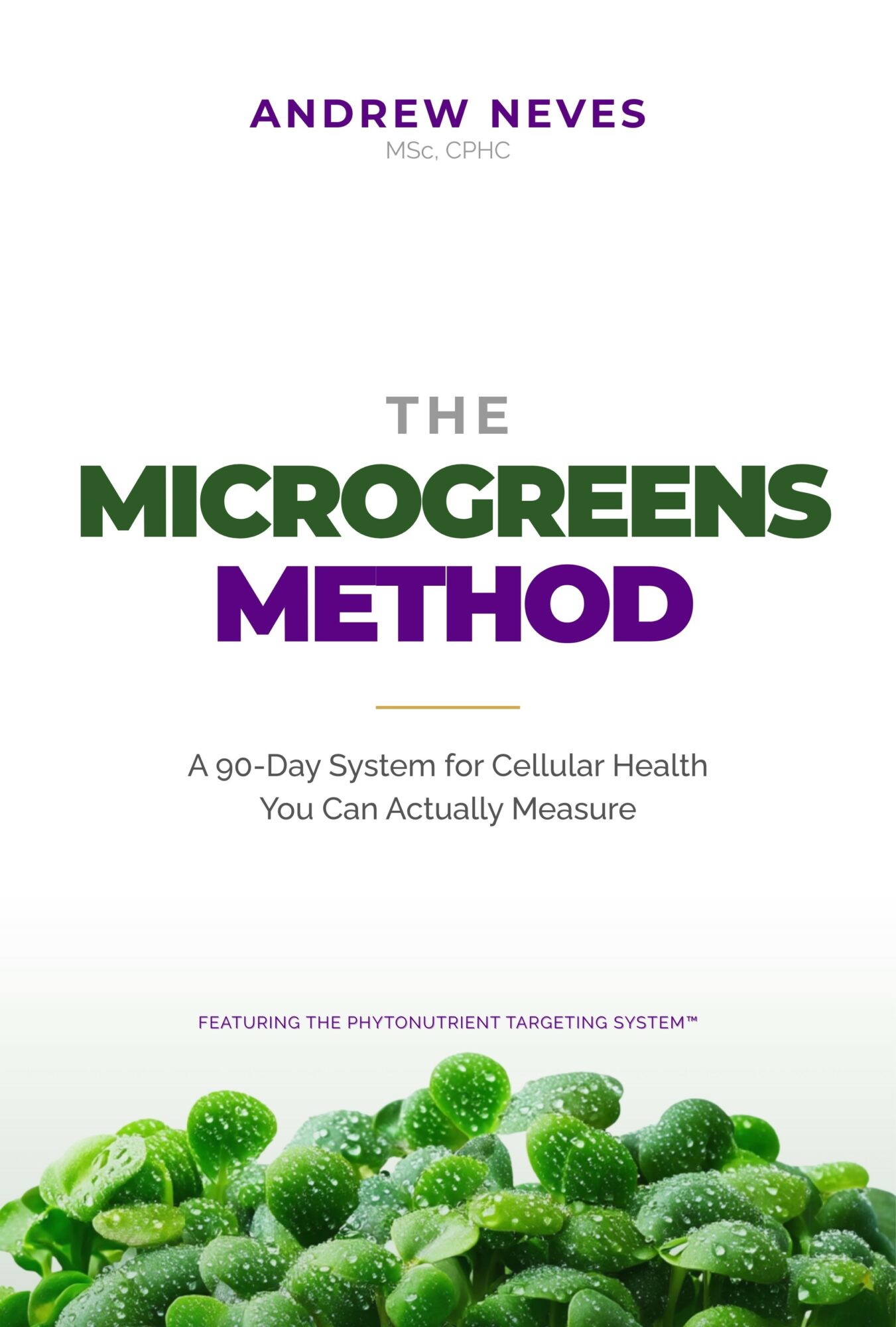
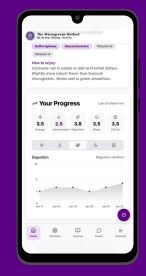
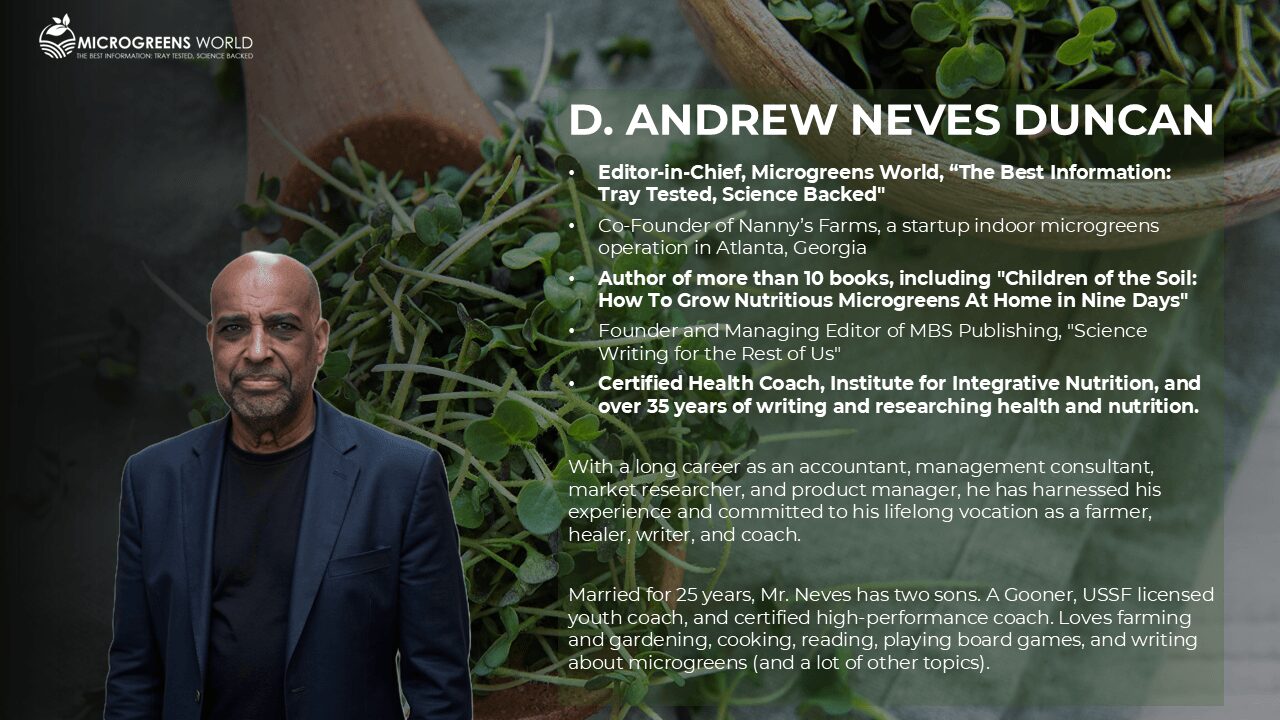
Image Credits
(c) 2026 Microgreens World
Popular
-

Satoya Hayes on Turning Beauty 2 Extensions into a Platform for Affordable Confidence and Entrepreneurial Opportunity
-

Hidden Gems: Local Businesses & Creatives You Should Know
-

ATL’s Most Inspiring Stories
-

Portraits of Atlanta
-

Asha Ford on Building Krystal Klear Motion and Creating Purpose-Driven Design for Women
-

Truth in Every Verse: Jay Erve on Identity, Experience, and Creating Art That Lasts