





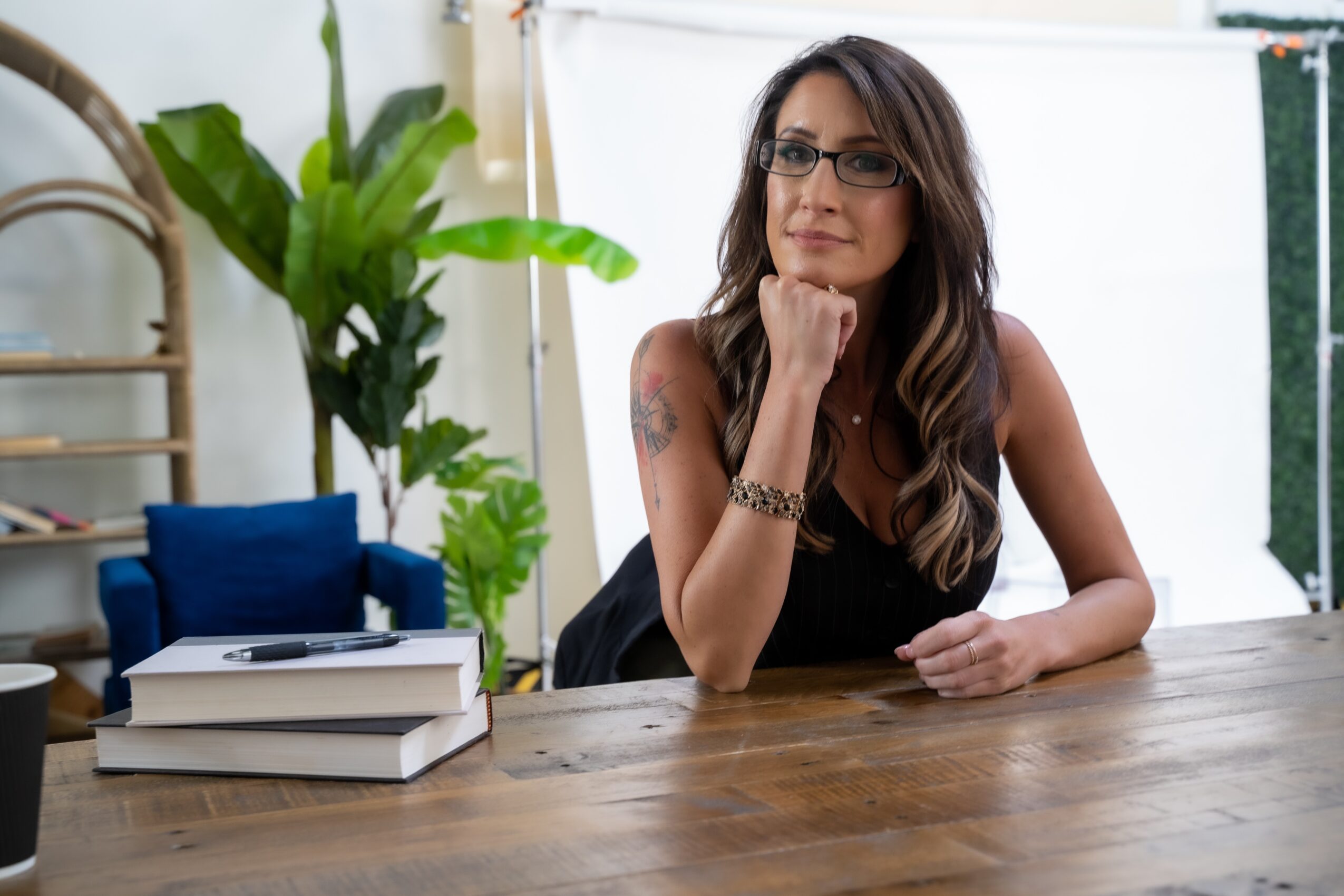
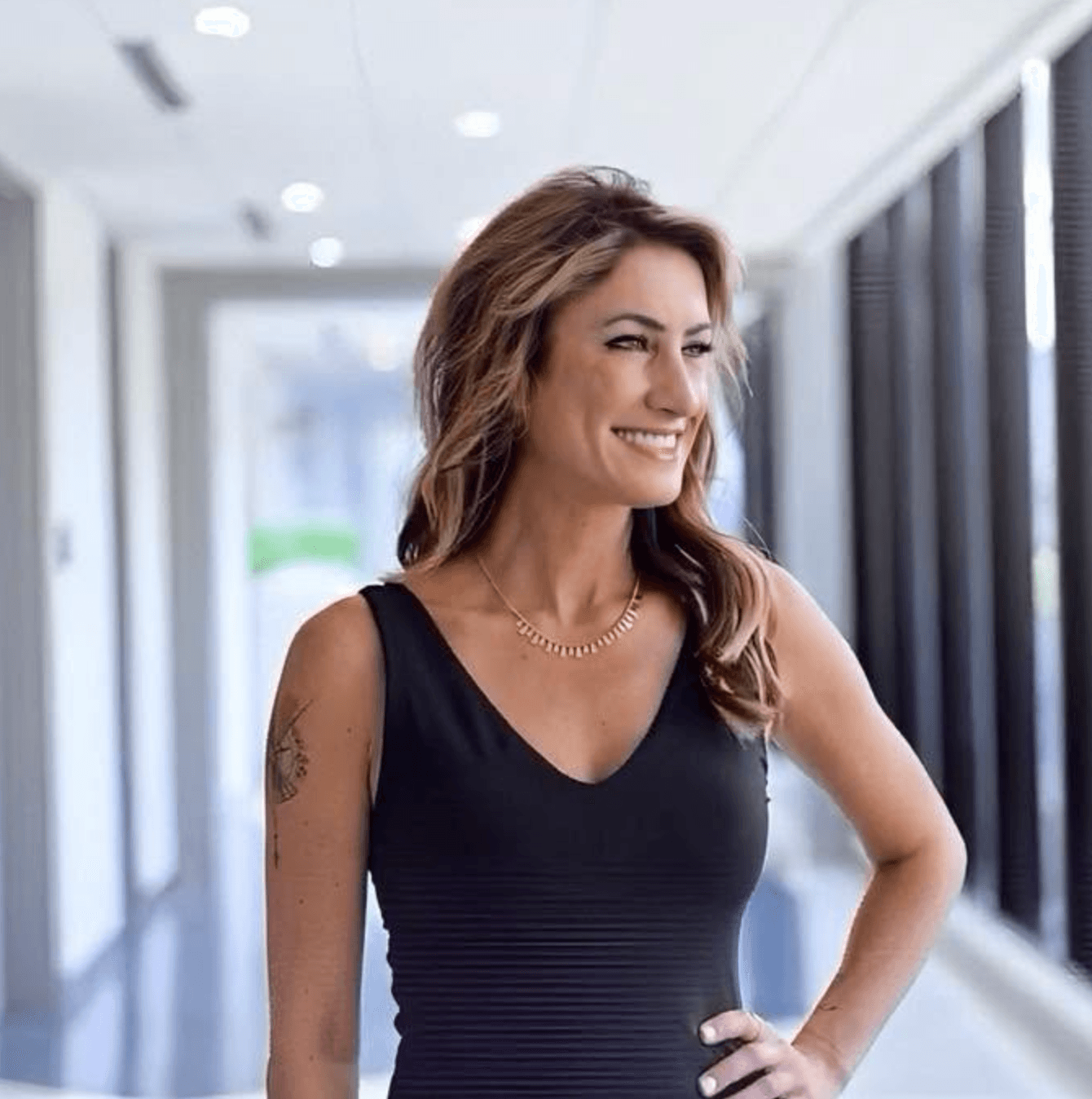
Today we’d like to introduce you to Mandy Morris.
Mandy , we appreciate you taking the time to share your story with us today. Where does your story begin?
So I’ve always been the kind of person who picks up on what people aren’t saying. I got picked on in elementary school, and when that happens, you learn to read a room fast and make yourself small. I didn’t know it then, but I was studying people way before I ever got a degree in it.
I actually went to college to be an athletic trainer. That was the plan. But around that same time I started going to counseling myself for the first time, and I started volunteering at a crisis resource center. And sitting with people on what were some of the worst days of their lives, I just knew. Like, this is it. So I switched my major to psychology at Georgia College, got my master’s in clinical counseling, and later got certified in EMDR. I’ve had my own practice here in Georgia for over ten years now.
What I always found fascinating is how much of what we do comes from stuff we don’t even remember. It still runs the show.
And then my own life kind of forced me to go deeper. I was in a marriage that slowly wore me down. From the outside I looked like I had it together, strong, capable, all of that. But inside I was ignoring my gut, ignoring my body, and telling myself I just needed to toughen up. I was acting strong while I was abandoning myself. Leaving was one of the hardest things I’ve ever done. I was in a really dark place for a while, and I doubted myself in a way I never had.
The funny thing is, I knew all the theory. I could have explained exactly what was happening to me. That didn’t fix it. What changed things was doing the work in my body, not just in my head, and getting to the stuff I’d been carrying around since I was that little girl trying to stay under the radar.
That’s when I really got it: being successful doesn’t override your nervous system. You can have the degrees, the business, all of it, and still be struggling inside.
And once I saw that in myself, I started seeing it everywhere. Especially with high achievers. Founders, executives, people who look like they’ve got it all figured out. They’re not stuck because they don’t know what to do. They’re stuck because they’re running the same patterns that got them there, and success doesn’t fix those. It makes them bigger. That’s where my whole thing comes from: we don’t have problems, we have patterns.
In 2020 I started putting out content for leaders, and in 2021 somebody who’d been following my posts on LinkedIn messaged me and asked if I’d coach their CEO. I ended up working with that CEO for a few years, and that’s really how the executive coaching side took off. I’m not the person you call for business strategy. I help with what’s driving it: how you handle pressure, how you make decisions, how you show up for your team.
Then Thanksgiving Day 2022, I lost my oldest brother, Dan. No warning. No goodbye. He was just gone.
And here’s the thing. I’d spent my whole career helping people through moments like that. I knew all the research. I’d taught it for years. None of it helped fast enough when my own family needed it. I felt so helpless.
Then one day I was out on a run and it just hit me. As an EMDR clinician, I’d watched this one technique, bilateral stimulation, give my clients real relief, fast, for years. So I called my brother Jeremy, who’s been in tech for 20 years, and said, “I think we can build something that helps us get through this.” And we did. That’s soFree. It’s an app that helps calm your nervous system in under two minutes, and we can actually see it in the heart rate data, not just in people telling us they feel better. It helped our family find our way back.
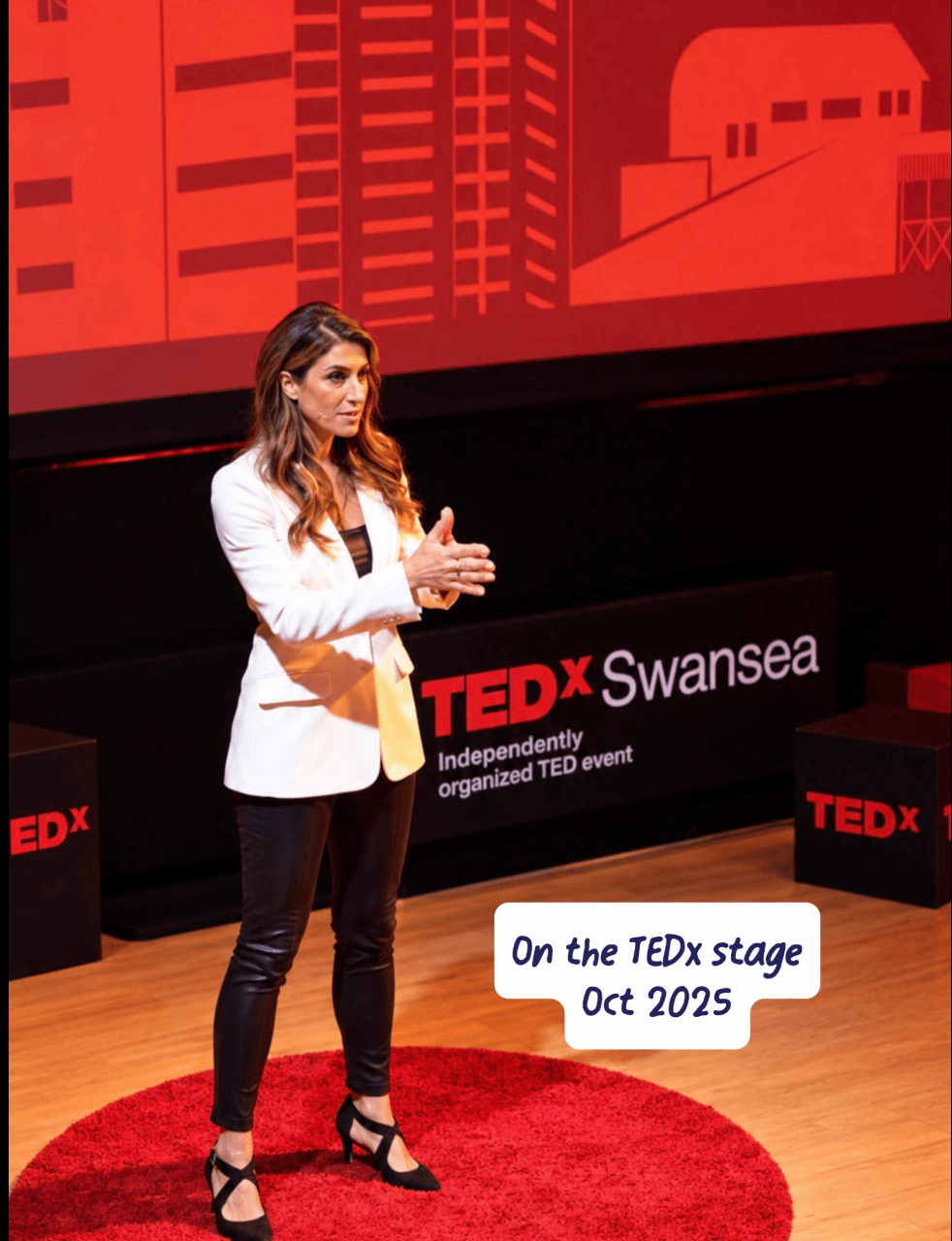
Since then it’s been kind of a whirlwind. I did a TEDx talk in October 2025, and I almost didn’t do it. Right before, that old voice came back, the one telling me I wasn’t ready, I wasn’t good enough. I did it anyway, and in February 2026 it was the most-viewed TEDx talk worldwide. Which is still wild to me. I write for Entrepreneur now, I created a program called The Internal Edge, and I’m working on a book called You Don’t Have Problems, You Have Patterns.
If there’s one thing I want people to take from my story, it’s that you have to do the work. Not read about it. Not understand it. Actually do it. Bruce Springsteen wrote in his memoir about how the baggage we never sort through gets heavier as we get older, and how “the price of our refusal to do that sorting rises higher and higher.” That line gets me every time, because I’ve lived it. The things I built to protect myself as a kid kept running long after I needed them, and they cost me. I see the same thing with my clients. And your body always knows first. I say it all the time: if you don’t stop, your body will make you. I’d rather help people do the sorting before it gets to that point.
Alright, so let’s dig a little deeper into the story – has it been an easy path overall and if not, what were the challenges you’ve had to overcome?
No, not even close. I think people see the TEDx talk or the articles and assume it all just kind of happened. It didn’t.
One of the biggest struggles was learning to be seen. Remember, I’m the kid who learned to stay under the radar. And then I built a career where I have to put myself out there constantly. Posting on LinkedIn, speaking, putting my own story out there. Every time, that old part of me goes, “Who do you think you are?” I still hear it. I’ve just stopped letting it make the decisions.
Then there’s the business side. Nobody teaches you how to run a business in grad school. You learn how to help people. You don’t learn marketing, or sales, or how to price yourself, or how to explain what you do in a way that doesn’t sound like a textbook. When I started moving from counseling into executive coaching, I had to figure all of that out from scratch, and a lot of it was trial and error.
And soFree was a whole other level. I’m a clinician, not a tech person. Suddenly I’m in rooms with investors, learning a completely different language, hearing “no” a lot, and building something new while our family was still in it after losing Dan. That was hard. There were days I wondered if I was in over my head.
The funny part is, the struggles I’ve had are the exact patterns I help my clients with. I’m a high achiever too. I’ve caught myself overworking, saying yes to everything, trying to prove I belong in rooms I’ve already earned my place in. Knowing all of this doesn’t make me immune. It just means I catch it faster now.
That’s probably the biggest thing the hard parts taught me. The road doesn’t get smooth. You just get better at noticing when you’re slipping back into old patterns, and you do something about it sooner. That’s the work. It doesn’t end, but it gets lighter.
As you know, we’re big fans of you and your work. For our readers who might not be as familiar what can you tell them about what you do?
So the simplest way to say it is I help high achievers figure out what’s driving them. Most of the people I work with are founders, executives and leaders who look like they’ve got it all together, and they do in a lot of ways. But they can’t shut their brain off. They’re running on stress. They keep hitting the same wall at work or at home and can’t figure out why.
And working with high achievers is different. These are really smart people. They’ve usually read the books, listened to the podcasts, maybe even worked with a coach before. A lot of them can explain their own problem better than I could. So giving them more information doesn’t help. Their problems aren’t intellectual. If they could think their way out of it, they already would have.
That’s where my work comes in. I’m an executive psychology coach, and my background is clinical. I’m a licensed counselor and an EMDR clinician. So I’m not coming at this from a motivational, “here are five tips” angle. I’m looking at the patterns underneath, why you do what you do, and how your nervous system is driving a lot more of your decisions than you think.
I’ve actually narrowed it down to four patterns I see over and over in high achievers: Performance, Perfection, Proof and Protection. Needing to keep performing to feel worth something. Needing everything to be perfect. Needing to keep proving you belong. And putting up walls so nobody gets too close. Most people see themselves in at least one right away. Those patterns usually helped you get where you are. They’re also what’s wearing you out.
Outside of coaching, I created The Internal Edge, which is my program for high performers, and I co-founded soFree, the app my brother and I built after we lost Dan. I also speak, I write for Entrepreneur, and I’m working on my book.
What I’m probably known for is that line: we don’t have problems, we have patterns. People tell me it changes how they see themselves. They stop thinking something’s wrong with them and start seeing that there’s a reason they do what they do, and that it can change.
What I’m most proud of is soFree. It came out of the worst thing that ever happened to my family, and now it’s helping people we’ll never meet. Every time someone tells me they used it before a hard meeting, a stressful conversation, to help them sleep, or in the middle of a panic, it gets me, because I know exactly where it came from.
There are a lot of executive coaches out there, and a lot of good ones. Most of them focus on goals, skills, strategy and accountability, and that’s valuable. But that’s not what I do. What I do is executive psychology coaching. I work on the stuff underneath the goals: the patterns, the beliefs and the way your nervous system reacts under pressure. That’s what usually gets in the way. I have the clinical training to go deep, but I talk to leaders like a person, not a textbook. And since their problems aren’t intellectual, I don’t stop at insight. Plenty of people can tell you why you’re stuck. I help you do something about it, and a lot of that happens in the body, not just in your head.
Can you talk to us about how you think about risk?
I don’t really think of myself as a big risk-taker, which is kind of funny, because when I look back I’ve taken some pretty big ones.
The way I see it, your brain runs on efficiency. It likes what’s familiar because familiar is predictable, and predictable takes less energy. So anything unfamiliar gets flagged as a threat, even when it’s a good thing. Your nervous system can’t really tell the difference between a good risk and a dangerous one. It just knows it’s new. I see this all the time with smart, successful people who stay in a job or a relationship or a business they’ve outgrown. They know what they need to do. Staying just feels safer, even when it’s not.
And not taking the risk costs you something too. It’s just harder to see, because it happens a little at a time.
Leaving my marriage was probably the biggest one for me. People think leaving is the risky part. For me, staying would have killed me. But leaving still meant starting over and not knowing what was on the other side, and that was terrifying.
Going from counseling into executive psychology coaching was another big one. I had a practice that was working. Coaching executives meant putting myself out there in a way I never had, posting on LinkedIn, getting in front of leaders, explaining what I do and why it’s different. I had no idea if anyone would care.
soFree was a big one too. I’m a clinician. I’m not a tech person. Building an app and raising money is a whole different world, and I had to learn a lot really fast. But after we lost Dan, not doing it felt like the bigger risk.
TEDx was a risk too, even if it doesn’t sound like one. Two weeks before, I almost canceled. I got so in my head about it. I told myself it wouldn’t matter and nobody would care, and I was just scared. I did it anyway, and it ended up being the most-viewed TEDx talk in the world that February. I think about that a lot, how close I came to not doing it.
And this year I closed my office and went fully virtual. I’d been in that space for years, so it was emotional. But it gives me more time for coaching, speaking and soFree, and that’s where I want to put my energy.
What I tell my clients is you’re probably always going to feel scared when you take a big step. That doesn’t go away. What helps is figuring out whether the fear is actually protecting you, or whether it’s just an old pattern trying to keep you comfortable. When you can tell which one it is, it’s a lot easier to make the call.
Contact Info:
- Website: https://mandyemorris.com/
- Instagram: https://www.instagram.com/therapist_Mandy
- Facebook: https://www.facebook.com/mandymorisLPC
- LinkedIn: https://www.linkedin.com/in/mandymorris/
- Soundcloud: https://mandyemorris.com/the-internal-edge/
- Other: https://www.getsofree.com/





Popular
-

Hidden Gems: Local Businesses & Creatives You Should Know
-

ATL’s Most Inspiring Stories
-

J. Avery Chester Is Turning Years of Pain, Growth, and Self-Discovery Into The Velvet Room
-

Portraits of Atlanta
-

From Corporate VP to Entrepreneur: Benny Williams is Making Executive Marketing Accessible to Churches, Nonprofits, and Businesses
-

Raven Parris Is Building the Village Every Mother Deserves During Pregnancy and Postpartum