





We’re looking forward to introducing you to Rachel Anne Kieran, PsyD. Check out our conversation below.
Good morning Rachel Anne, it’s such a great way to kick off the day – I think our readers will love hearing your stories, experiences and about how you think about life and work. Let’s jump right in? What do you think is misunderstood about your business?
One of the most common misunderstandings about my work — and about therapy in general — is the fear people bring with them before they ever walk through the door. Many people worry that therapy means they’re “crazy,” broken, or not normal, or that they’ll be judged, pathologized, or reduced to a diagnosis.
From my perspective, normal is a myth — and it’s a harmful one. The idea that there’s a single right way to think, feel, love, relate, or exist hurts all of us. Most of the people who seek therapy aren’t unwell; they’re responding understandably to a world that is often overwhelming, unjust, or misaligned with who they are.
I see therapy as essential preventative care, not a last resort. Just like physical checkups or rest, mental-health support helps us build resilience, self-understanding, and connection over time. Therapy isn’t about fixing what’s wrong with you — it’s about supporting growth, learning, and meaning-making across the many journeys we move through in life.
At StorieBrook, we believe that everyone deserves access to that kind of care — without shame, without gatekeeping, and without needing to prove they’re struggling “enough.” Healing, curiosity, and growth are not signs of weakness; they’re part of being human.
Can you briefly introduce yourself and share what makes you or your brand unique?
I’m Dr. Rachel Anne Kieran, Psy.D., a clinical psychologist and the founder of StorieBrook Therapy & Consulting. My work centers on creating affirming, accessible mental-health care for people who often feel like they don’t quite fit the mainstream — including folks navigating sexual, gender, and relational diversity, neurodivergence, disability, body diversity, and alternative spiritual identities.
StorieBrook grew out of my own private practice as a response to what I saw missing in traditional mental-health spaces: room for authenticity, community, and collaboration. We offer therapy, consultation, and community programming, and our physical space includes a community room designed for workshops, support groups, and shared healing experiences — because care doesn’t happen in isolation.
That vision has expanded into two companion projects. The StorieBrook Foundation works to dismantle financial barriers to affirming care, and StorieTree focuses on professional education and community learning. Together, they form an ecosystem grounded in authenticity, justice, and belonging. What makes this work special to me is that it’s not just about treatment — it’s about helping people reclaim their stories and build lives that feel honest, connected, and whole.
Thanks for sharing that. Would love to go back in time and hear about how your past might have impacted who you are today. What did you believe about yourself as a child that you no longer believe?
As a child, I believed I was both not enough and too much at the same time. There was always something about my body that was “too” much — first too tall, then too fat. I absorbed the message that I needed to be literally less in order to be lovable, acceptable, or successful, and that living in the body I had would limit my opportunities for love, work, joy, and belonging.
The influence of the diet industrial complex was woven throughout my family and culture, and the practice of ritualized starvation profoundly damaged my relationship with my body and with food. Those experiences shaped how I saw myself for many years and taught me to distrust my own needs and intuition.
At StorieBrook, body liberation is central to our work because I had to learn — slowly and imperfectly — that my worth is not conditional. I am enough, lovable, and valuable as my authentic self, and that truth does not depend on size, shape, or conformity. Healing my relationship with my body is still a work in progress, but it’s also what allows me to show up fully and advocate for others who have been told, in countless ways, that they must shrink themselves to belong.
That belief — that no one needs to be less in order to be worthy of care — is at the heart of StorieBrook’s mission and the community we are building.
When you were sad or scared as a child, what helped?
Books. Always books.
Books were my refuge — a gateway to other worlds and other ways of being. They offered connection to people who felt like me, minds I admired for a bravery I didn’t always feel I had, and sources of compassion when I needed it most. At eight years old, I read Little Women for the first time and fell in love with Jo March — her devotion to her family alongside her independence, her rebellion, and her deep desire to make the world more just. I didn’t have the language for it then, but I recognized myself in her.
I’ve always read widely and with curiosity, but there’s a clear through-line when I look back: I’m drawn to the pattern-breakers, the compassionate rebels, the stories that reveal how systems shape lives — and how those systems can, and must, be changed. It took years, and a lot of learning about power and structure, to understand that pattern, but once I did, it made sense of so much.
I also know now how deeply I love stories of found family — communities built on shared values, meaning, and purpose. That love for narrative and connection is what eventually led me to name my practice StorieBrook — a nod to the way stories have always helped me survive, make meaning, and imagine something better. Today, that same belief guides my work: that stories heal, communities sustain us, and we don’t have to walk our paths alone.
Next, maybe we can discuss some of your foundational philosophies and views? What’s a belief or project you’re committed to, no matter how long it takes?
I am deeply committed to the belief that access to mental healthcare — and really all forms of healthcare — should be universal. Care should not be something people have to earn, justify, or fear losing.
The reality is that living without access to care actively makes people less well. The constant anxiety of knowing that support is unaffordable, unavailable, or tied to employment or privilege takes a real toll on both mental and physical health. Preventative care becomes impossible when people are focused on survival, and by the time help is available, so much unnecessary harm has already occurred.
That belief is what led to the creation of The StorieBrook Foundation, which exists to help dismantle financial barriers to affirming mental-health care by directly supporting access for marginalized communities. It’s long-term, systems-level work, and I know it won’t be quick or easy — but it’s essential.
I’m committed to this because care changes lives, and because collective wellbeing depends on it. No matter how long it takes, this is work worth doing.
Okay, so before we go, let’s tackle one more area. If you laid down your name, role, and possessions—what would remain?
What would remain is my family — the one I’ve built through a life rooted in consent, compassion, and authenticity. I’m incredibly fortunate to be surrounded by people who share my values, whose company I genuinely enjoy, and who also lovingly respect my neurodiverse need to disappear and be left alone sometimes.
If I weren’t my name, title, or things, I would still be surrounded by love and laughter. I’d probably be reading a book, singing ridiculous musical theater songs with my best friends, wandering a renaissance faire with my chosen family, and snuggling with my pets. Those things feel essential to who I am.
There’s also something that comes with being a therapist — even if I weren’t one professionally, I’ve always been a helper. That part of me wouldn’t disappear. What has changed is that doing this work has taught me far better boundaries than I had when I was staying up until 3 a.m. in college talking friends through crises. I’d still care deeply, I’d still advocate for myself and for the communities that matter to me — just in healthier, more sustainable ways.
I’m deeply grateful that I’ve been able to weave what matters most to me into my work, but even if all of that fell away, those roots would remain. I would still be me.
Contact Info:
- Website: https://www.storiebrook.com/
- Instagram: https://www.instagram.com/storiebrooktx/
- Linkedin: https://www.linkedin.com/company/storiebrook/
- Facebook: https://www.facebook.com/storiebrooktx/
- Youtube: https://www.youtube.com/@StorieBrookTx404
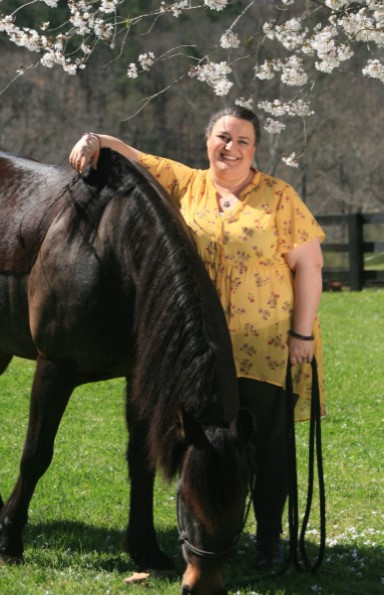
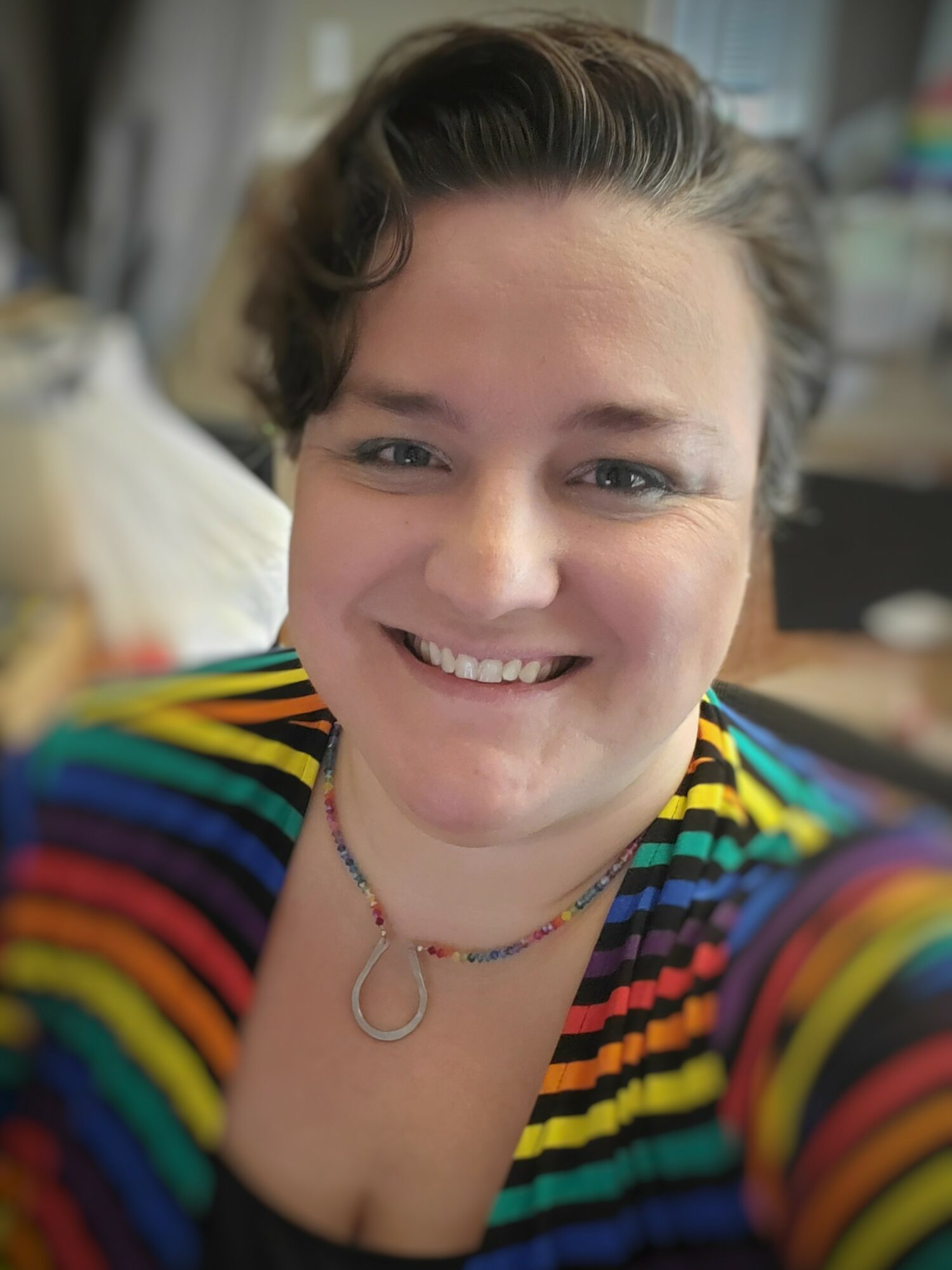
Image Credits
Rachel Anne Kieran – I own all rights
Popular
-

Hidden Gems: Local Businesses & Creatives You Should Know
-

ATL’s Most Inspiring Stories
-

Portraits of Atlanta
-

Dr. Hildiah Martin-Suggs Is Building Second Chances for Youth Who Were Almost Lost in the System
-
From Showing Up to Seeing His Face on a Billboard: Anthony Green Is Just Getting Started
-

Wayne Smith Jr on Survival, Psychological Thrillers, and the Cost of Staying Alive