






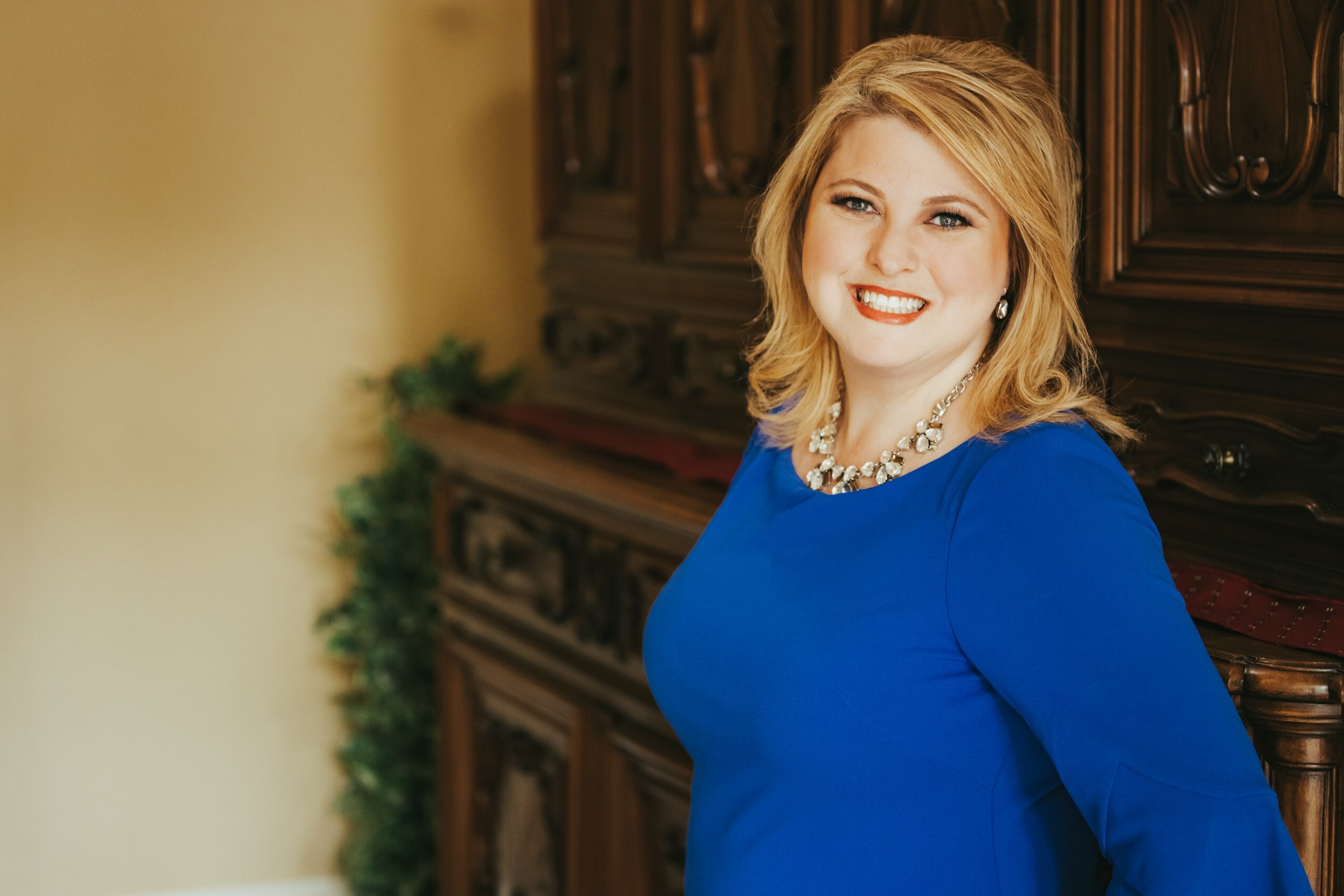
Stephanie Robins shared their story and experiences with us recently and you can find our conversation below.
Hi Stephanie, thank you so much for taking time out of your busy day to share your story, experiences and insights with our readers. Let’s jump right in with an interesting one: What battle are you avoiding?
Right now, the battle I’m quietly wrestling with is something very personal—my daughter is about to start her senior year of high school, and the reality that she’ll be leaving for college soon is really starting to hit me. I’m so proud of her and excited for all that’s ahead, but if I’m honest, there’s a deep part of me that’s already grieving the shift.
Lately, I’ve been sorting through her old things—childhood art, school projects, toys from her playroom—and it’s stirring up a lot of emotion. It’s not just about letting go of the “stuff,” it’s the memories attached to those seasons of life, both beautiful and challenging. I catch myself wondering: Did I prepare her well enough? Did I soak in every moment I could?
So much of my identity and daily rhythm has revolved around being her mom. From adjusting my work schedule to watching her extracurriculars to simply being available at the end of the day—this role has shaped who I am. And now, I’m facing the question: What will life look like without that constant presence?
This is the space I’m learning to sit with. Not rush to fill it. Not push it away. Just be in it. Like many of my clients, I’m learning that even joyful transitions can come with grief. And that’s okay. I remind myself that honoring these feelings doesn’t make me any less strong—it just makes me human.
Can you briefly introduce yourself and share what makes you or your brand unique?
Hi, I’m Stephanie Robins, LCSW, and I’m the founder of Alpharetta Family Therapy in Alpharetta, Georgia. I’ve been a therapist for over 25 years and specialize in helping children, teens, adults, and families navigate tough transitions—whether that’s anxiety, trauma, divorce, co-parenting challenges, or parent-child disconnection. My work combines deep clinical insight with practical strategies that help people move forward with confidence and clarity.
What makes my practice unique is the way it blends therapy with real-world solutions—especially when legal and emotional issues collide. In addition to seeing clients, I serve as a Parent Coordinator, certified mediator, expert witness, speaker, and trainer. I also write and teach extensively, including contributing to the bestselling book Divorce Amicably and publishing research in Family Court Review.
Lately, I’ve been developing training programs on high-conflict personalities like narcissism and how those patterns affect families—not just in romantic relationships, but in parenting, co-parenting, and the parent-child bond. These dynamics can be incredibly painful and confusing, and I’m passionate about helping both families and professionals better understand and respond to them in healthier, more informed ways.
At the heart of it all, my work is about relationships. I love helping people feel more empowered, more connected, and more hopeful—even in the most complicated situations. Whether I’m supporting a teen through anxiety or helping parents untangle years of conflict, I approach every case with compassion, creativity, and a belief that change is possible.
Thanks for sharing that. Would love to go back in time and hear about how your past might have impacted who you are today. Who saw you clearly before you could see yourself?
Without question, my mom. She was my greatest influence and the person who saw me most clearly long before I understood myself. We were incredibly close. She had a rare gift for listening—really listening—and she offered thoughtful, grounded advice about everything from relationships and life decisions to fashion and home décor. She was also an entrepreneur and business owner herself, and I think that combination of creativity, intuition, and practicality shaped me more than I realized at the time.
As a child, I was very quiet and shy, and I struggled with anxiety. I wasn’t the loud or attention‑seeking kid—I was observant, cautious, and deeply curious about people and families. I loved learning, tried hard in school, and spent a lot of time watching and listening. My mom saw that sensitivity and curiosity not as weaknesses, but as strengths. She recognized something in me that others—and even I—couldn’t yet name.
What mattered most is that she made me feel deeply loved, valued, and safe. Because of that foundation, I grew up feeling secure, even while being shy. She believed in me with a confidence that quietly carried me forward.
Losing her unexpectedly a few years ago was devastating, and it’s a grief I still carry. But her influence shows up in my life every day—in my work, in how I listen to others, and especially in how I parent. Now that I’m a mom, I often find myself asking, What would she do? I try to show up for my daughter with the same presence, encouragement, and unconditional support—helping her grow into a confident, kind, and capable young woman.
In many ways, my mom saw the therapist, the leader, and the mother in me long before I ever did. And I’m still guided by her example.
What did suffering teach you that success never could?
Suffering taught me humility, depth, and a kind of empathy that can’t be learned from training or success alone. Going through my own divorce, navigating motherhood, and unexpectedly losing my mom were some of the most painful experiences of my life. Each one brought profound loss, grief, and uncertainty—and they changed me in ways success never could.
Before those experiences, I already cared deeply about people and their pain. But suffering taught me what it actually feels like to sit in the unknown, to grieve what you thought life would look like, and to keep showing up even when you don’t have all the answers. It taught me patience—with myself and with others—and respect for how nonlinear healing really is.
Those seasons also clarified something important for me: pain is not something to rush through or “fix.” It’s something to be witnessed and honored. Experiencing that firsthand has made me a better therapist. I don’t just understand grief, loss, and transition clinically—I understand them humanly. I know how isolating they can feel, and how powerful it is when someone simply stays present with you.
I truly believe my suffering was not for nothing. It deepened my compassion, sharpened my intuition, and strengthened my ability to hold space for others in their hardest moments. Today, it allows me to meet clients exactly where they are—with honesty, warmth, and hope—knowing that even in deep pain, growth and healing are possible.
I think our readers would appreciate hearing more about your values and what you think matters in life and career, etc. So our next question is along those lines. Is the public version of you the real you?
Yes, I’d say the public version of me is very close to the real me. I try to lead with authenticity in everything I do—whether I’m working with a client, speaking at a professional event, or just having a casual conversation. What you see is what you get: I’m a real person, with a real life, real responsibilities, and real challenges. I don’t pretend to have it all together, because none of us do.
As a therapist, I believe it’s important to be transparent—but also professional. I’ll occasionally share pieces of my own story when it’s relevant and helpful, but I’m always mindful that the session is about the client, not me. Still, I think it helps people to know that I understand what it feels like to struggle, to grieve, to rebuild. I’m not above them—I’m right there beside them.
I’m also someone who has a big heart, a great sense of humor, and a generally positive outlook on life. At the same time, I’m cautious. I don’t open up to everyone right away—I like to observe, listen, and get a feel for people before I jump in. That’s part of how I build trust, and it’s also a reflection of my own journey with shyness. Most people are surprised to learn I’m actually quite shy by nature. I’ve had to work hard over the years to push past fear and self-doubt so I could take risks, try new things, and say yes to opportunities that scared me. Shyness isn’t a flaw—it’s part of who I am—but I’ve learned not to let it hold me back.
At the end of the day, my goal is to be someone people can trust—someone they can relate to, feel safe with, and know is showing up as her full self, not just a polished version. The real me is the one showing up every day—doing the work, learning, growing, laughing, stumbling, and always trying to make a meaningful difference.
Okay, so before we go, let’s tackle one more area. What do you understand deeply that most people don’t?
I’ve come to understand something that I wish more people truly believed: everyone is insecure, everyone is worried they’re not doing enough, and everyone is afraid of being judged. We spend so much time in our heads, assuming other people are analyzing our every move, when in reality, most people are far too busy worrying about themselves to notice the little things we obsess over.
I also believe most people don’t see themselves clearly. The mirror lies. Photos don’t tell the full story. And the version of ourselves we hold in our mind is often way more critical than the one others see. I’ve had to learn this myself—and I remind clients often: People likely have a better impression of you than you think.
One of the most powerful things I’ve learned as a therapist and a mom is that you don’t have to be perfect to show up. Wear the swimsuit. Take the photo. Get in the pool and play with your kids. Your presence matters so much more than your appearance.
I’ve also come to accept that messes are not failures—they’re signs of life being lived. A messy home, a messy day, a messy conversation… it means you’re in it. You’re human. We weren’t meant to live in perfectly curated houses or perfect bodies or perfect lives. We’re meant to be real. And that’s the legacy I hope to leave: that being real, present, and imperfect is more than enough.
Contact Info:
- Website: https://www.alpharettafamilytherapy.com
- Linkedin: https://www.linkedin.com/in/stephanie-robins-19015511
- Facebook: https://www.facebook.com/stephanierobinslcsw
Popular
-

Hidden Gems: Local Businesses & Creatives You Should Know
-

ATL’s Most Inspiring Stories
-

Portraits of Atlanta
-

Dr. Hildiah Martin-Suggs Is Building Second Chances for Youth Who Were Almost Lost in the System
-

From Showing Up to Seeing His Face on a Billboard: Anthony Green Is Just Getting Started
-

Wayne Smith Jr on Survival, Psychological Thrillers, and the Cost of Staying Alive