





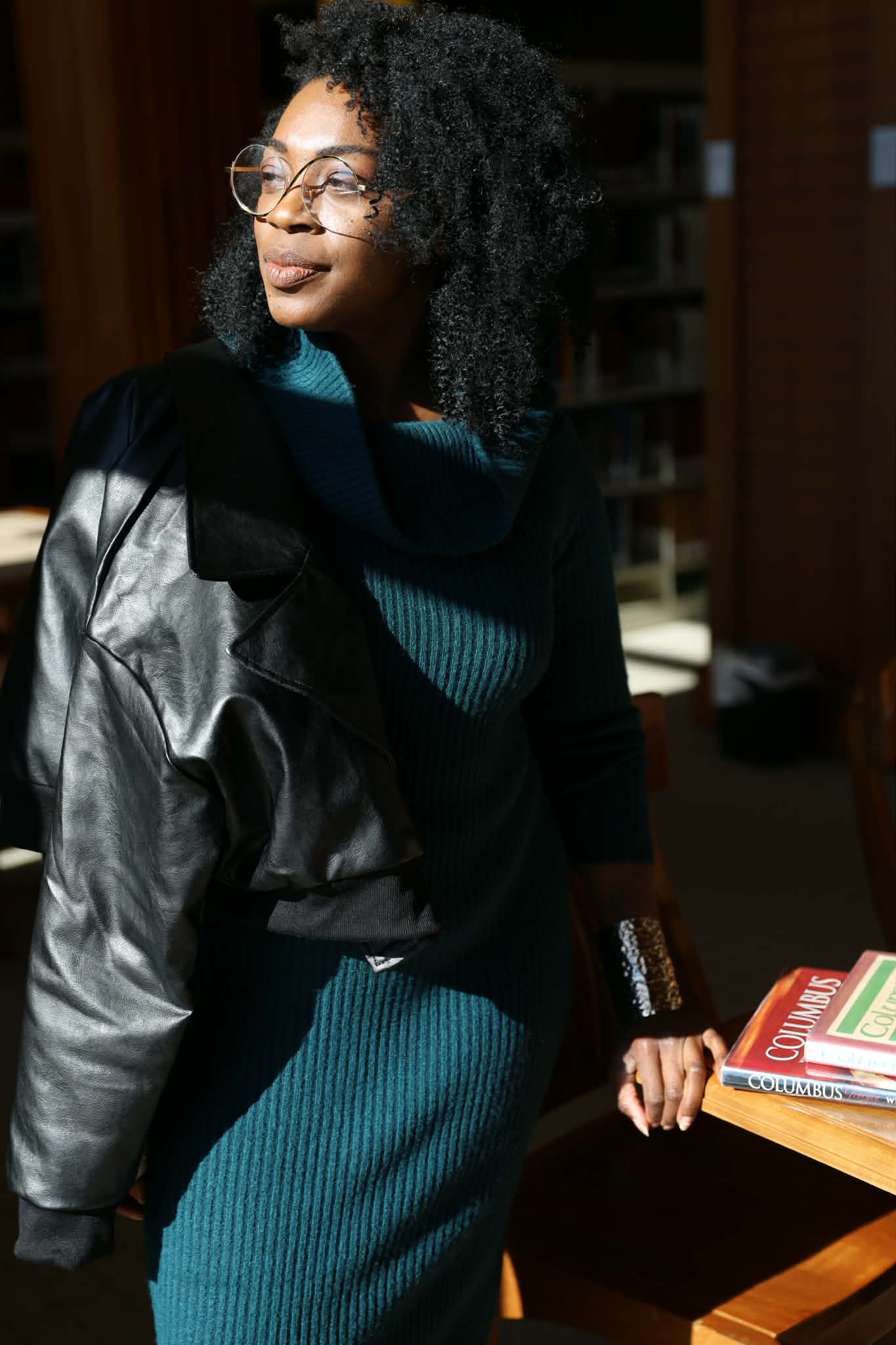
Today we’d like to introduce you to Dr.Jaketra Bryant.
Hi Dr.Jaketra, please kick things off for us with an introduction to yourself and your story.
I was never the quiet, unquestioning child people assumed I was. I was deeply curious—always asking why, always pushing against answers that didn’t make sense to me. Even when I was protected, I didn’t accept protection as truth. I felt restricted, not because I lacked agency, but because I wasn’t given the language or space to live out what I already sensed about myself.
As the youngest of five, I was watched closely, shaped carefully, and placed inside expectations that didn’t feel like mine. People spoke about me more than with me—how I should sound, how I should move, how a Black woman like me was supposed to exist in the world. I felt boxed in across environments, not because I didn’t know who I was becoming, but because I wasn’t allowed to decide it out loud.
That tension led me into difficult relationships and choices—not out of rebellion, but out of exploration. I was searching for freedom without a map. I struggled with passivity and codependence, not because I lacked insight, but because I lacked models of healthy power, voice, and belonging. I knew something wasn’t right; I just didn’t yet have the words for it.
In hindsight, I recognize what was happening. I was absorbing projection—other people’s fears, limits, and unexamined beliefs—before I had the tools to name them. What I had instead was curiosity. A constant question underneath everything: What is moving people to tell me who I should be?
That question became the foundation of my work.
Today, I help people unlearn inherited narratives and reconnect with their own authority. Through psychology, leadership practices, and human connection, I create spaces where individuals and teams can hear themselves clearly—often for the first time. I don’t shape people; I make room for them.
My freedom came later, when I finally gained language for what I had always known. But once it arrived, it was expansive. It reshaped my work, my parenting, and how I lead. I now understand that what once felt like restriction was actually the beginning of discernment—and curiosity was never a flaw.
Can you talk to us a bit about the challenges and lessons you’ve learned along the way. Looking back would you say it’s been easy or smooth in retrospect?
No, it hasn’t been a smooth road—and much of my struggle has been internal before it was ever external.
A significant part of my journey has been coming into my identity fully and unapologetically. For example, during the first two years of my PhD program, many of my close friends didn’t even know I was pursuing a doctorate. I moved through that season quietly, almost privately, because I wasn’t sure I would be supported—or worse, that I would be judged—for wanting something expansive. As a Black woman pursuing a PhD in leadership—not education, but executive and C-suite leadership, where women represent a very small percentage—I carried an unspoken pressure and, at times, shame for aiming that high.
That silence reflected a deeper struggle. I had to unlearn the belief that ambition required isolation, or that leadership somehow made me less feminine, less relational, or less deserving of love. In relationships, I often felt boxed in—expected to shrink parts of myself to be more palatable. In family spaces, I had to learn how to step out of inherited mirrors and define my own voice, even when it disrupted familiar narratives.
There were seasons where I questioned whether I could truly “have it all”—meaning meaningful relationships, executive leadership, community-centered work, and a grounded sense of self. Working through that required deep inner work around shame, mental health, and self-trust.
What changed everything was choosing integration over fragmentation. I no longer see my leadership, femininity, intellect, and care for community as competing parts of me. They coexist. There have also been challenges related to how women in leadership are perceived—particularly as I step into the public arena—where questions about readiness, age, and whether people will support a woman, especially as the first Black woman on the mayoral ballot, surface more often than they ever did in my professional career.
Alright, so let’s switch gears a bit and talk business. What should we know about your work?
Over the last 16–17 years, I’ve worked as a licensed professional counselor with people ranging in age from 14 to 83. No matter their background, role, or stage of life, I’ve watched people search for the same thing: a sense of self, meaning, and belonging. Witnessing that pattern is what shaped my path and ultimately led me into leadership research and practice.
My PhD is in Leadership Studies, and my work sits at the intersection of mental health, restorative justice, and executive leadership. I’ve worked with a wide range of people—from individuals navigating personal crises to executives and leaders shaping systems. That includes vice presidents of YMCAs, city managers, university deans of inclusion, apartment owners and property managers, and the residents living within those systems. I’ve worked from the top of organizations all the way to the people most impacted by their decisions.
What I’ve learned is that, regardless of title or power, people often struggle with the same internal challenges—bias, identity, fear, and disconnection. My work is about helping people get to the core of who they are, understand how their inner world shapes their actions, and see themselves and others more clearly. When that happens, it often leads to greater humility, accountability, and humanity.
What I’m most proud of is the depth of connection my work allows. I’ve cried with clients, cried alongside audiences of hundreds, hugged thousands of people, and celebrated milestones ranging from personal breakthroughs to weddings and leadership transformations. I’ve seen people reclaim hope at moments when they felt lost, and then go on to create healthier relationships, workplaces, and communities.
What sets me apart is that I don’t separate leadership from humanity. I meet people in moments of struggle, confusion, or transition—and help them reconnect to life, purpose, and possibility. From there, they often go on to do the same for others.
Where we are in life is often partly because of others. Who/what else deserves credit for how your story turned out?
I’ve been fortunate to have mentors and supporters at key moments in my life—people who truly saw me and refused to let me settle.
Several former psychologists and supervisors played an essential role in my development, especially early in my career. They didn’t just train me clinically; they trusted my leadership, encouraged my creativity, and challenged me to think bigger. I had supervisors and clinical directors who would give me real responsibility, allow me to be myself, and resist the urge to hand me answers. Instead, they created space for me to figure things out, return with solutions, and grow into my own authority.
There were also pivotal moments of encouragement that came from unexpected places. One that stands out happened when I was speaking internationally for the first time in the Virgin Islands. The host of the Airbnb where I stayed saw something in me and continued to stay in touch for nearly two years afterward—offering encouragement, reminding me of my potential, and consistently pushing me to expand how I saw myself. That kind of belief, especially when it’s unprompted, can be life-changing.
At different points, I resisted going further academically. I had already experienced bias and projection, and there were moments when pursuing a higher degree felt daunting rather than exciting. But mentors—particularly psychologists and supervisors I deeply respected—were unwavering. They would tell me, “You’ve mastered this part. Now go get your PhD. It’s going to open doors, and you see the world differently.” They believed in my capacity even when I hesitated to claim it myself.
What I’m most grateful for is that these mentors didn’t try to shape me into someone else. They allowed me to lead authentically, trusted my instincts, and supported my growth in ways that still matter today. Even now, as I run for mayor, I can still call on many of them—for perspective, grounding, and encouragement. Their influence is woven into both who I am and how I lead.
Pricing:
- $3500 per hr training session
- $155 hr counseling
Contact Info:
- Website: https://www.drbryantforcolumbus.com
- Instagram: https://www.instagram.com/drbryantforcolumbus/?igsh=MTNsNnM4dHM5ajI1NQ%3D%3D#
- LinkedIn: https://www.linkedin.com/in/dr-jaketra-bryant-lpc-57a36390/
- Other: https://www.jaketrabryantinincludeus.us
Image Credits
Photographer Maria Hayes and Phil Vongsavang