






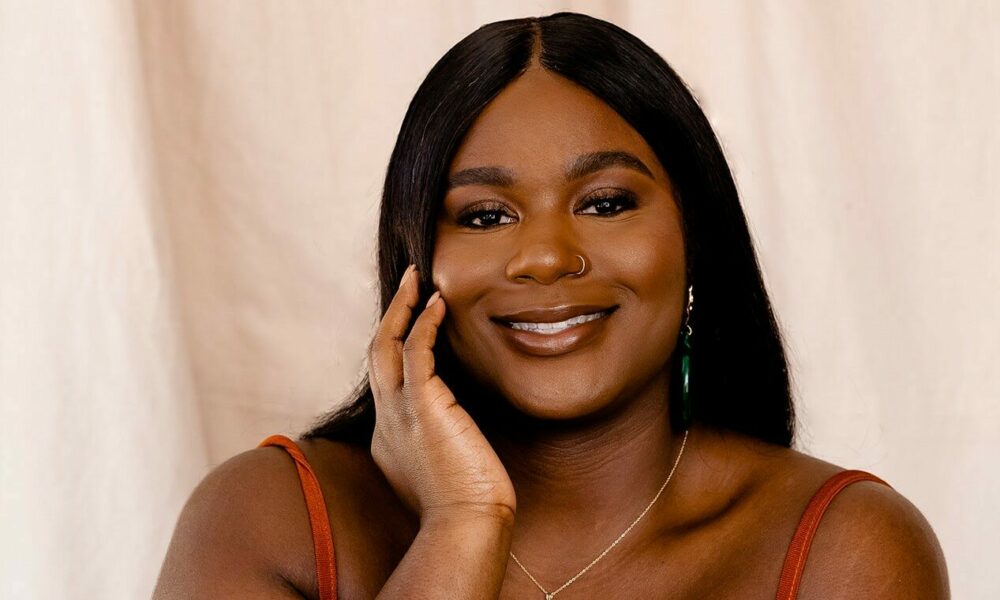
Today we’d like to introduce you to Sierra Nance.
Sierra, we appreciate you taking the time to share your story with us today. Where does your story begin?
My journey started at Winston Salem State University – a small HBCU in North Carolina. While there I found my passion for research and came to appreciate the history and legacy of HBCUs. I continued on with my career in scientific research at the University of Michigan where I’m currently finishing up my PhD in Molecular & Integrative Physiology. Transitioning from a HBCU to a PWI where I was the minority, not just being a Black woman in this space, but coming from an HBCU, was difficult. In 2019, I pitched this idea to a few of my colleagues to start a platform to support other HBCU students pursuing a similar path in higher education, specifically in STEM. Myself, Tony Larkin and Nnamdi Edokobi came together and created HBCU-DAP, Inc. We started by building a Virtual Workshop Series to provide information, resources, mentorship, and support for HBCU students on their journey to their doctorate degree. Today we have been providing resources, mentorship, and support for students across the United States for three years and are I am looking forward to leading my team for the years to come.
Alright, so let’s dig a little deeper into the story – has it been an easy path overall and if not, what were the challenges you’ve had to overcome?
Building a business from scratch has definitely not been a smooth road. Initially, my goal was to travel to HBCUs and host in-person workshops. However, my first pitch to garner financial support for HBCU-DAP, Inc did not work out. Instead of putting the idea on hold, we brainstormed to figure out a way to use the resources we had and that is how the Virtual Workshop Series was developed. I used my experience in graphic and website design to create our current website to house the resources, we used recording equipment that we had access to as graduate students and even signed up for workshops through the university’s Entrepreneurship Clinic. Building our business model took some time, but I would say the most difficult thing to do was reach our target audience. Our initial approach was to reach out to leadership at HBCU’s but eventually found that reaching the students directly through social media was the best approach. Over time we were able to garner more support and are still diligently seeking additional financial resources and accepting donations to ensure we are able to continue to provide these resources for our students free of charge.
Appreciate you sharing that. What else should we know about what you do?
I study obesity and Type 2 Diabetes. My work primarily uses mouse models to better understand how the immune cells within our fat tissue contribute to inflammation and insulin resistance. Additionally, I work with the graduate school creating initiatives for graduate students that came from Minority Serving Institutions (MSIs) like HBCU’s. The thing that makes me most proud about the work that I do is that I motivate and inspire other Black women and men to pursue careers in STEM. It is a field where we (Black people) continue to be underrepresented. By being visible and advocating for not just myself but other Black folks in STEM, I am able to provide confidence that there is space for us. For me, that’s what sets me apart – I will always speak up and advocate for those that need it, even if it makes people uncomfortable. What sets HBCU-DAP, Inc apart is that everything we do is designed with the HBCU student in mind. HBCU-DAP, Inc is designed for HBCU students by HBCU students. As an HBCU alum transitioning into a research-intensive predominantly white institution (PWI), I used that experience to determine “where are the gaps?” and “how do we fill them?”
Where do you see things going in the next 5-10 years?
I’m hoping that the STEM space will be more inclusive and equitable over the next 5-10 years. A lot of industries are so focused on the diversity aspect that I think sometimes they forget that with increasing diversity you have to consider the things that makes your team/department diverse and figure out how do I make sure this environment is not only inclusive but equitable. Fortunately, I am able to contribute to this in my current role by having important conversations with the faculty, staff, and administration that will be training the next group of scientists. On that note, I do see an increase in initiatives and organizations that support students of color. There’s been a trend in HBCU support – which I love. I’m hopeful that this momentum will continue.
Contact Info:
- Website: www.hbcudap.com
- Instagram: https://www.instagram.com/hbcudap/
- Instagram: @drcoco__


Image Credits
Erinnae University of Michigan Medical School