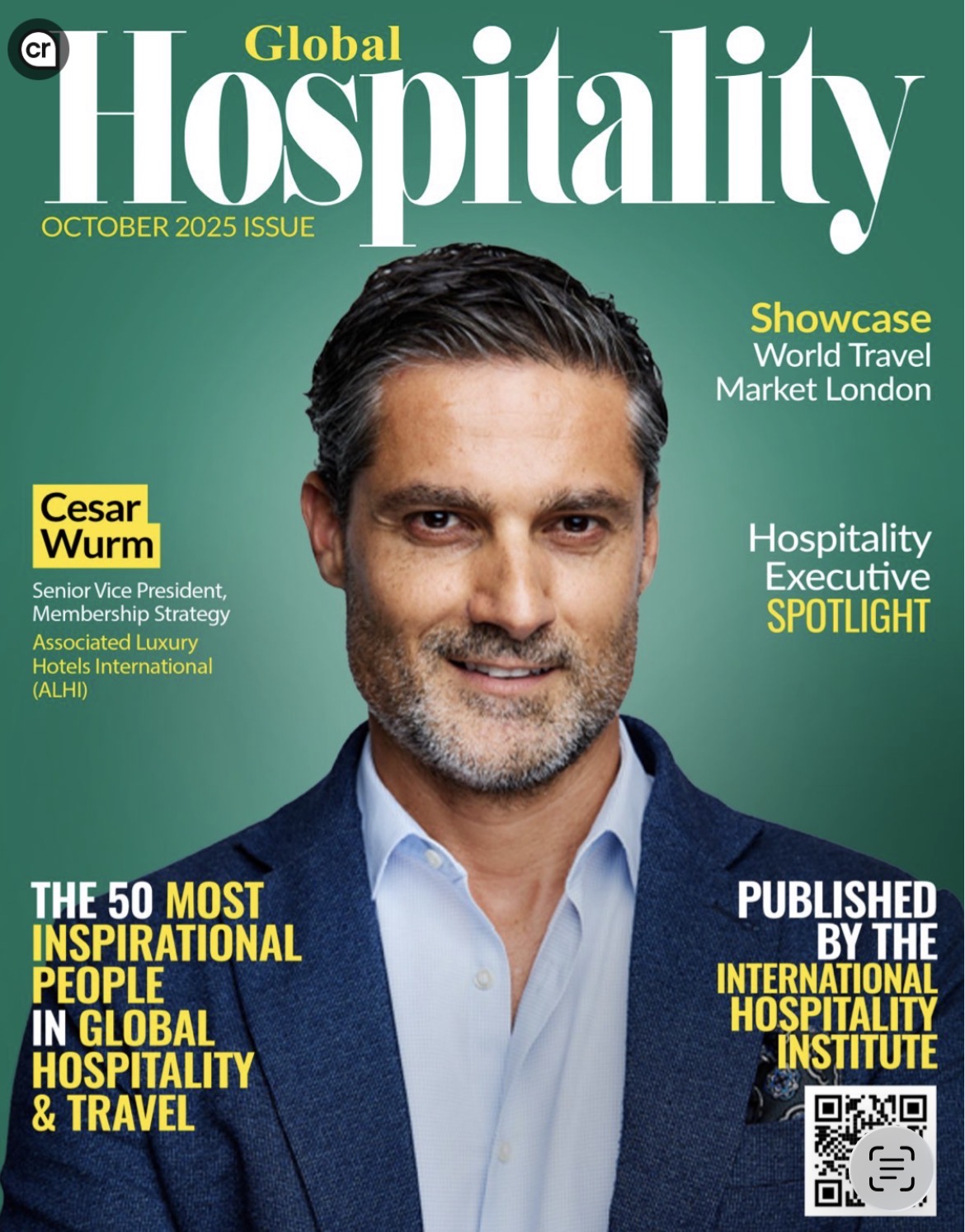





Today we’d like to introduce you to Cesar Wurm.
Hi Cesar, please kick things off for us with an introduction to yourself and your story.
I was born and raised in Brazil, and I carry a lot of pride in where I come from — the culture, the grit, the warmth, and the belief that you keep going even when life gets heavy. That foundation shaped me early: work hard, stay resilient, take care of people, and find a way forward.
I’ve built my career in hospitality, which is fitting because at its best, hospitality is about service, connection, and making people feel seen. From early roles to leading teams at a high level today, I’ve always been driven by growth — not just revenue and results, but helping people become the best version of themselves.
At the same time, there was a chapter of my life that looked “successful” on the outside, but was quietly unraveling on the inside. For years, alcohol was something I used to cope, to escape, to manage pressure, and to numb feelings I didn’t know how to face. And like many people, I could still perform, still produce, still show up — which made it easier to minimize what was really happening.
Eventually, the truth caught up with me. The hardest part wasn’t admitting I had a problem — it was accepting that I couldn’t outwork it, outrun it, or “fix it later.” I reached a point where I knew something had to change, not just for my career, but for my life — for my family, my future, and the kind of father and leader I wanted to be.
Sobriety became the turning point. It wasn’t a single moment of willpower — it was a decision, followed by daily actions. I learned how to sit with discomfort instead of numbing it. I rebuilt my routines around wellness: movement, sleep, accountability, mental health, and honest conversations. Recovery taught me self-awareness, humility, and something I didn’t expect — peace. It also taught me that vulnerability isn’t weakness; it’s a form of strength that creates real connection.
Today, I’m grateful to be sober and to use my story with purpose. I wrote The Powers of Addiction: Finding Freedom in Acceptance and Recovery because I wanted people to understand that addiction doesn’t always look the way we assume — and that recovery is possible, no matter how far gone someone feels. Through my work, speaking, and conversations — including my podcast — I try to share a message that’s simple but powerful: you’re not alone, you’re not broken beyond repair, and your next chapter can be better than your last
Would you say it’s been a smooth road, and if not what are some of the biggest challenges you’ve faced along the way?
Not at all — it hasn’t been a smooth road. And I think that matters, because if we only talk about recovery like it’s this clean, upward journey, a lot of people will feel like they’re failing the moment it gets hard.
One of my biggest struggles was even acknowledging to myself that I had a problem. Not because I didn’t know something was off — I did — but because admitting it felt like opening a door I couldn’t close. There was fear underneath it: If I say this out loud, then I have to change. And change meant letting go of a lifestyle I’d lived for decades — the routines, the social identity, the comfort of “this is just how I do life.” Alcohol had become more than a habit. It was part of my normal. So I stayed in that limbo for too long, trying to manage it quietly and convincing myself I could keep everything the same.
Another struggle was denial in a high-functioning way. I could still perform. I could still show up to work. I could still be social. So I kept telling myself it wasn’t that bad… even when deep down I knew it was getting worse. That “high-functioning” label is dangerous because it lets you stay stuck longer.
Then there was shame — wanting to be the strong leader, the reliable person, the one who has it together — while privately feeling like I was losing control. Shame makes you isolate, and isolation feeds the problem. I didn’t want to disappoint people, but I was already disappointing myself.
And the honest truth is, my recovery wasn’t linear. There were setbacks. There were moments where I slipped and had to face the reality that willpower alone wasn’t the solution. Relapse is a brutal teacher — it reminds you how fast old patterns can return, and how quickly “just one” turns into a familiar cycle. But it also forced me to get more serious: more accountable, more honest, more committed to the daily practices that keep me well. I had to learn that sobriety isn’t just about stopping — it’s about rebuilding.
Early sobriety was tough because I had to learn how to live without my “off switch.” Alcohol wasn’t just a substance — it was a coping mechanism. So when I removed it, I had to face things I’d avoided for years: anxiety, stress, insecurity, old pain, and the reality of how I’d impacted people I love. There were days where I felt emotionally raw and exposed, like I didn’t have skin. And then you realize: this is why I drank — because I didn’t know how to sit with discomfort.
I also underestimated how much recovery is about rebuilding identity. When you stop drinking, you don’t just lose a substance — you lose routines, environments, and even a version of yourself you presented to the world. That’s disorienting. You’re learning who you are again, and it doesn’t happen overnight.
Even now, the struggles don’t disappear — they evolve. Life still gets heavy. Pressure still shows up. That old voice still tries to negotiate. The difference today is I don’t romanticize it anymore. I know exactly where that road leads. Recovery gave me tools, community, and accountability — and it gave me something bigger than temptation: purpose.
The raw truth is: sobriety didn’t magically fix everything. What it did was give me a real chance to face life honestly — to do the work, repair relationships, rebuild trust, and learn how to be present. And I’m grateful for the hard parts because they’re the reason I can look someone in the eye today and say, “I get it — and you can do this.”
Thanks for sharing that. So, maybe next you can tell us a bit more about your work?
At my core, I’m a hospitality leader and someone in long-term recovery who’s passionate about helping people grow — professionally and personally.
Professionally, I work in the luxury hospitality space with ALHI (Associated Luxury Hotels International), where I lead membership strategy. In simple terms, I help exceptional hotels and resorts strengthen performance, sharpen their go-to-market approach, and build the right relationships that drive meaningful business. I specialize in connecting the dots between strategy + people + results — building trust with owners and leaders, bringing clarity to the “why,” and helping teams execute in a way that actually moves the needle.
What I’m known for is a mix of high standards and high care. I’m very results-driven, but I’m equally focused on culture, leadership, and doing the right thing. I love being the person who can take something complex, make it simple, and then help people take action — while feeling supported, not pressured.
Outside of my day job, a big part of my work is mission-driven. I share openly about sobriety, mental health, and wellness through my writing, speaking, and conversations — including my book, The Powers of Addiction: Finding Freedom in Acceptance and Recovery. My goal is to normalize the truth that addiction and mental health struggles don’t always look the way people assume — and that recovery is possible, even for people who feel stuck, ashamed, or “too far gone.” I also stay active in community work and causes that matter to me, because service is one of the greatest anchors in my life.
What I’m most proud of is something deeply personal: I can look myself in the mirror and know I’m not living a double life anymore. Sobriety gave me integrity back — and with it, the ability to build a home rooted in trust. I’m incredibly proud of the relationship I have with my daughter and with my wife, Laura — real love, real respect, real presence. I know, without question, that the connection we have today wouldn’t be possible without recovery.
What sets me apart is that I lead with lived experience and real transparency. I’m not interested in being polished for the sake of image — I’m interested in being real, consistent, and impactful. I’ve learned how to perform at a high level without losing myself in the process, and I bring that same mindset to everything I do: build trust, tell the truth, do the work, and help others rise.
What does success mean to you?
To me, success is living a healthy, productive life with integrity — mind, body, and spirit aligned.
It’s waking up clear, showing up fully, and doing the right thing even when no one is watching. It’s having the discipline to protect my wellness, the courage to keep growing, and the humility to stay honest.
And beyond achievement, success is legacy. It’s the impact I leave in people — the kindness, encouragement, and hope they felt because our paths crossed. If I can help someone feel seen, feel stronger, or believe they can change… and I can do it while being present for my family and true to myself — that’s success.
Contact Info:
- Website: https://cesarwurm.com/
- Instagram: https://www.instagram.com/cesar_wurm
- Facebook: https://www.facebook.com/share/1G4c8f4UX7/
- LinkedIn: https://www.linkedin.com/in/cesar-wurm-5aa855b
- Youtube: https://m.youtube.com/@CesarWurm