


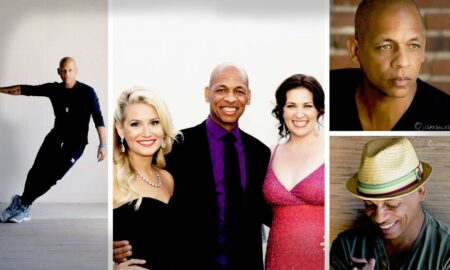



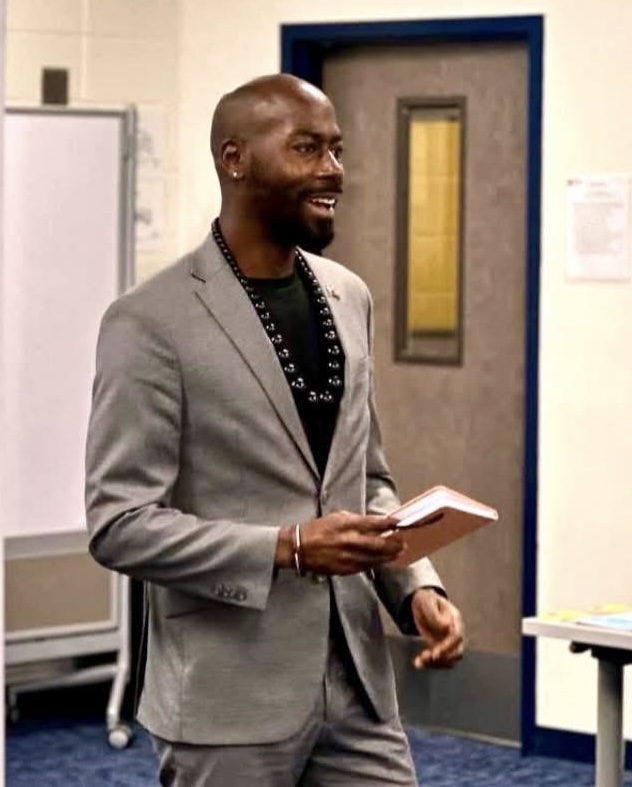
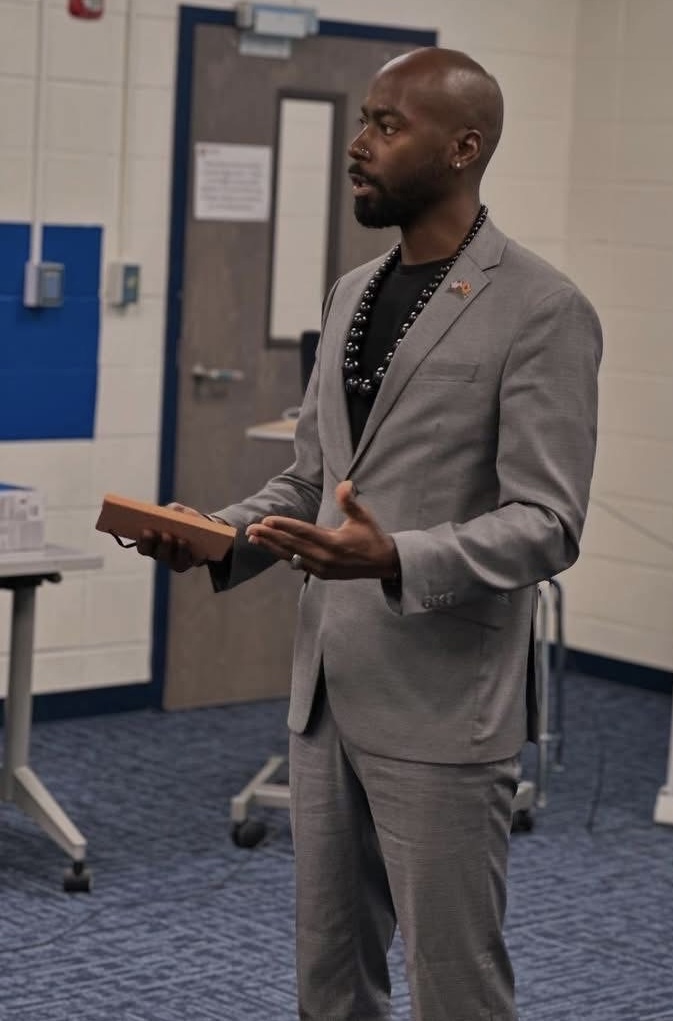
Today we’d like to introduce you to Cornelius Gamble.
Hi Cornelius, please kick things off for us with an introduction to yourself and your story.
I grew up in Fort Pierce, Florida, in an environment where limits were assumed and expectations were low. Even then, I didn’t experience the world the same way as most people around me. I paid attention. I noticed patterns. I understood consequence early. I wasn’t searching for direction. I already had it.
After high school, my goal was to become a sheriff’s deputy. When I went to apply, I was told I needed to be twenty one. In the meantime, the path forward was clear. Gain military experience or complete college. College didn’t align with how I learn or operate. The military did.
I chose the Marine Corps deliberately. It aligned with how I’m wired and what I wanted next. I wanted challenge. I wanted responsibility. I wanted pride of belonging. I wanted financial stability. I wanted to see the world and test myself inside a system where standards mattered and effort had consequence. The Marine Corps was the best fit.
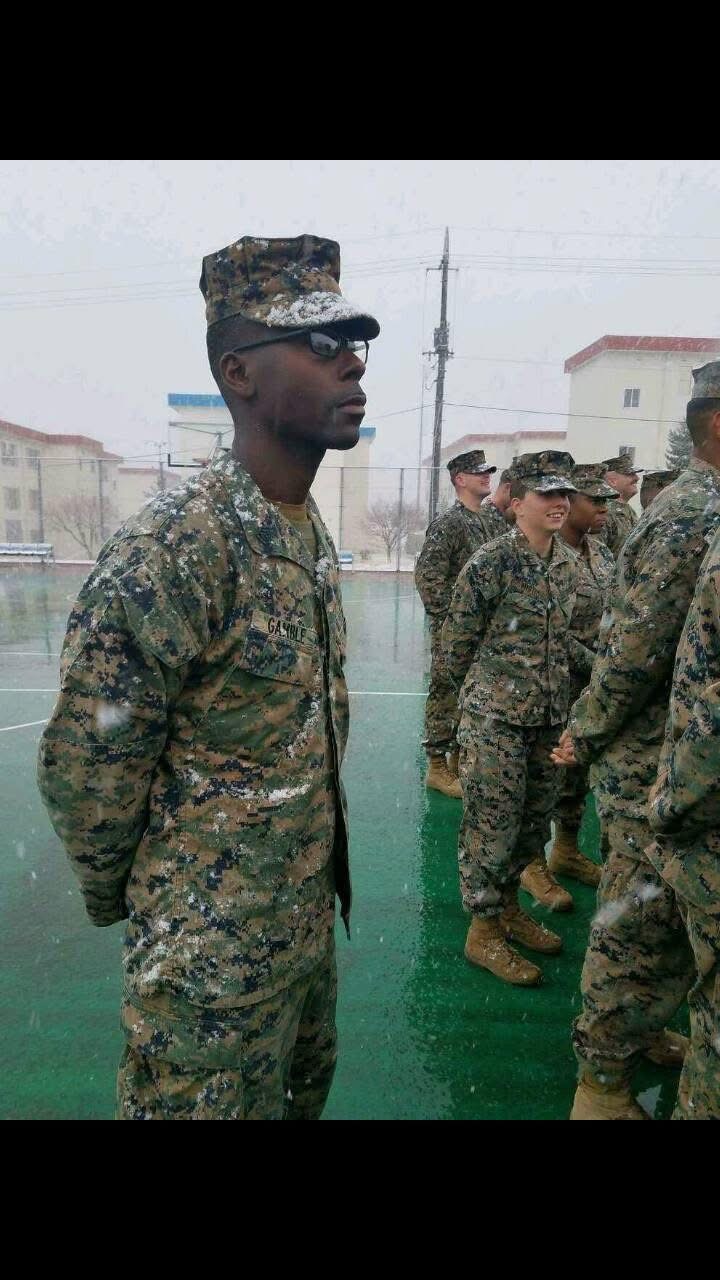
I joined at seventeen and served for nearly sixteen years, eventually reaching the rank of Gunnery Sergeant. I trained Marines under pressure, advised senior leaders, and worked directly in suicide prevention and morale recovery efforts. Leadership there was actionable. Decisions at times carried the weight of life or death. Pressure exposed everything. What became clear over time was this. Performance doesn’t fail because of missing skill. It fails when identity and pressure fall out of alignment.
While still serving, I formalized what I had been observing in others and in myself. In 2020, I became a certified Master Mindset Life Coach. The certification gave language and structure to patterns I had already lived. At that point, the work existed alongside rank, role, and physical capacity. The system still held.
That changed when my career ended early due to medical conditions, including degenerative disc disease and neurological challenges. Retirement removed the uniform, the authority, and the physical output. Everything I had learned now had to be tested again, but this time without title, structure, or external validation.
That period forced a deeper reckoning. Not about performance. About identity. The work became personal and unforgiving. What emerged was simple and durable. People are rarely stuck because they are incapable. They are stuck because they are still operating from an identity that once protected them, but no longer fits.
Today, I work with people at that same threshold. I help them dismantle the internal patterns that disrupt clear thinking, delay decisive action, and undermine execution. The focus is not motivation. It is orientation. Regulating pressure. Removing internal noise. Restoring clarity so action becomes obvious rather than forced.
That is how I started. That is how I arrived here.
We all face challenges, but looking back would you describe it as a relatively smooth road?
No, it has not been a smooth road. There were multiple disruptions, not just one.
Over time, I was carrying severe PTSD and the effects of multiple traumatic brain injuries. At the time, I didn’t see them as signals. I saw them as obstacles to manage. My strategy was simple and familiar. Push harder. Stay functional. Keep producing. For a long time, that approach worked. Until it didn’t.
When my Marine Corps career ended earlier than expected due to medical conditions, the external structure disappeared all at once. Chronic pain and neurological challenges were part of the reality, but the deeper rupture was internal. Nearly sixteen years of identity had been organized around performance under pressure. Without rank, uniform, or physical output, there was no buffer left. What I had been overriding finally demanded attention.
Another challenge was discovering that competence does not automatically transfer across environments. The civilian world rewarded different signals. Visibility over quiet execution. Speed over depth. There were periods where I was busy but not advancing. Working hard without real alignment. That friction exposed how often effort is used as a substitute for clarity.
The accumulated weight of unprocessed pressure mattered. Trauma, loss, and high consequence decision making leave residue when they are ignored. I saw this pattern not only in myself, but repeatedly in people who appeared capable and composed while quietly deteriorating. That reinforced something that experience had already taught me. Mindset is not optional. It is infrastructure.
What ultimately shifted things was learning to regulate pressure instead of overriding it. Separating emotion from identity while still listening to what those signals were communicating. Slowing down enough to reorient instead of defaulting to force.
Those disruptions were not detours. They became the foundation. They reshaped how I work, how I lead, and how I define progress. The focus moved from endurance to clarity. From pushing through to choosing deliberately.
Thanks for sharing that. So, maybe next you can tell us a bit more about your work?
My work centers on helping people dismantle the internal patterns that quietly limit their movement. The individuals I work with are already capable and driven. The issue is not ability. It is orientation. Outdated identities, conditioned responses, and unregulated pressure that distort clarity and delay action.
I specialize in identity based performance, pressure regulation, and decision making under stress. I work at the level where belief, emotion, and action intersect. My background includes formal training in mindset and behavioral frameworks, but my work is far beyond the norm. I treat mindset as an operating system. When it is misaligned, performance degrades regardless of talent or effort.
I am known for helping people move. Not through hype, motivation, or endless processing, but through clarity. The work creates space. Space to see accurately. Space to regulate pressure. Space to choose deliberately instead of reacting out of habit. Whether I am working one on one, training leaders, or speaking, the objective is the same. Restore clarity so forward motion becomes obvious.
What I am most proud of is the consistency of the outcomes. I have worked with leaders under real consequence, supported suicide prevention and morale recovery efforts, and helped individuals who appeared externally successful but felt internally stuck. Watching someone reclaim agency over how they think, decide, and lead is the measure that matters.
What sets my work apart is that I do not separate performance from humanity. People are not tools. They are the mission. The work is grounded in empathy without rescue, accountability without force, and depth without stagnation. I help people operate from who they already are once the internal noise is removed, and then sustain that orientation under pressure.
If you had to, what characteristic of yours would you give the most credit to?
The quality that has mattered most to my success is self awareness.
Self awareness allows me to see what is happening internally in real time. Thoughts, emotional shifts, conditioned responses, and the early signals that pressure is beginning to distort clarity. Without that awareness, effort turns into reaction and momentum turns into force.
What makes the difference is the ability to pause inside that moment. To regulate rather than override. To separate emotion from identity while still listening to what the emotion is communicating. That space is where choice becomes possible.
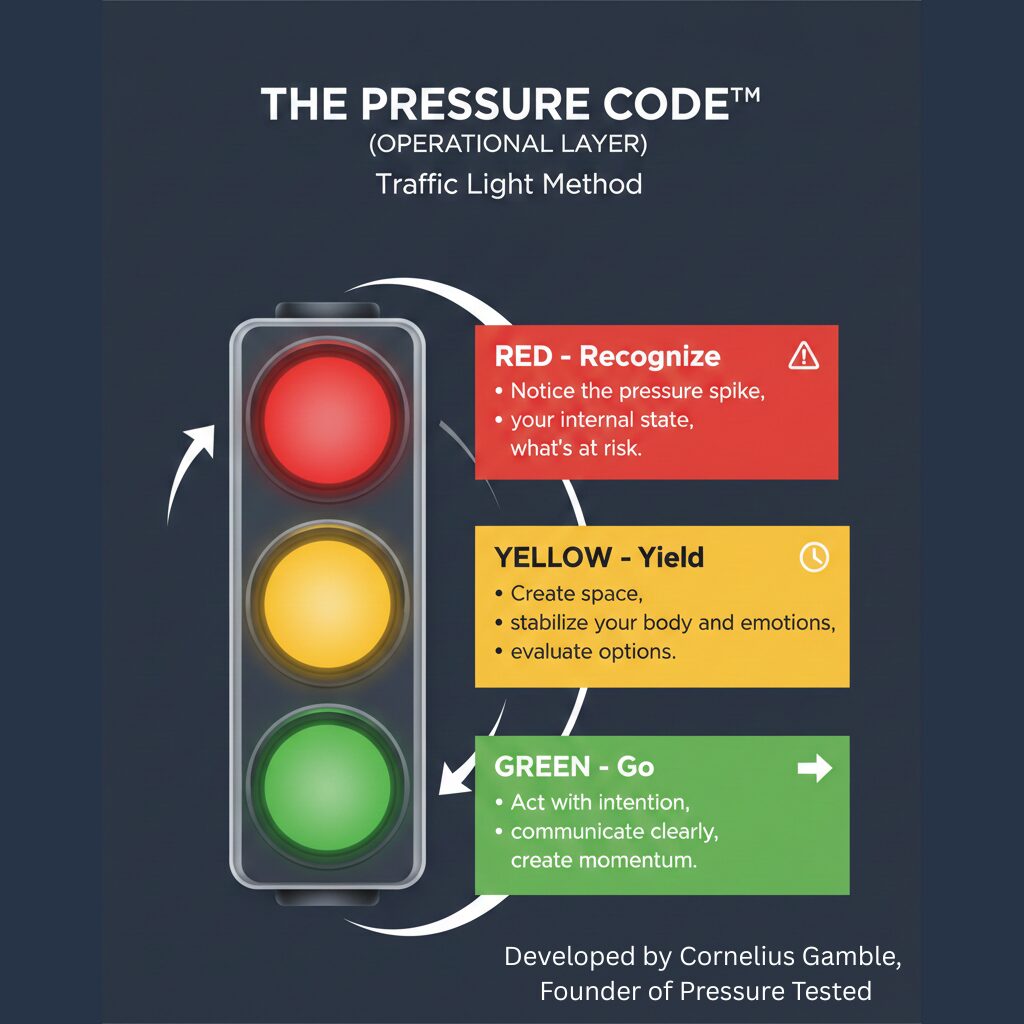
Over time, this way of working with pressure evolved into what I now call the Pressure Code framework. It is a simple, operational model for staying oriented under stress. At its core is the Traffic Light Method.
Red is recognition. Noticing the pressure spike, the internal state, and what is actually at risk.
Yellow is yield. Creating space, stabilizing the body and emotions, and evaluating options instead of forcing movement.
Green is go. Acting with intention, communicating clearly, and creating momentum from alignment rather than impulse.
This capacity has shaped how I lead, how I navigate disruption, and how I move through transition without losing orientation. Skills change. Roles change. Environments change. Self awareness, especially under pressure, is what allows adaptation without fragmentation.
It is also the foundation of the work I do with others. When someone can accurately observe their internal state, regulate pressure, and choose deliberately, progress becomes sustainable. Growth stops being accidental and starts being directed.
Everything else builds on that.
Pricing:
- 1:1 Mindset & Performance Coaching: Custom engagements based on goals, scope, and duration
- Workshops & Speaking Engagements: Pricing varies depending on format, audience size, and objectives
Contact Info:
- LinkedIn: https://www.linkedin.com/in/corneliusgamble/
- Youtube: https://www.youtube.com/@IamCorneliusGamble
Popular
-

Opening Up to Move Forward: Diane Martinez on Vulnerability, Small Steps, and Getting Unstuck
-

Hidden Gems: Local Businesses & Creatives You Should Know
-

ATL’s Most Inspiring Stories
-

Portraits of Atlanta
-

Storytelling, Wellness, and Community: Dayana Preval on Finding Alignment Through Creative Expression
-

Rewriting the Rules of Publishing: How Jalisa Rose Ray Is Building an Author‑First Legacy with JRose Publishing