


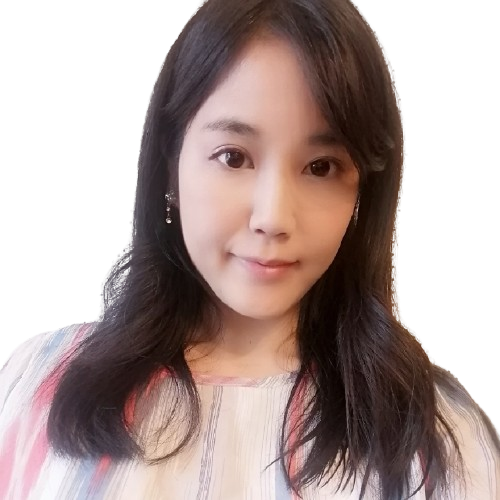
Today we’d like to introduce you to Yuriko Kuroiwa.
Hi Yuriko, thanks for sharing your story with us. To start, maybe you can tell our readers some of your backstory.
My first encounter with the piano was when I was in the third grade of elementary school. My mother was a piano teacher, and I grew up in a home with a grand piano. Children regularly came to our house for lessons, and I also took piano lessons once a week at a studio near my home.
At first, I played classical piano strictly according to sheet music. However, by the time I was in sixth grade, I began to feel unsatisfied with simply playing the notes. Around that time, I discovered that I could listen to music two or three times, memorize the phrases, and reproduce songs on the piano by ear. By my third year of junior high school, I began using this skill in my own way, creating piano covers of various songs.
At the same time, I also began composing my own music and performing it on the piano. Music has been a part of my life since childhood, and the piano has been an essential means of expressing emotions that cannot be put into words. Even when I experienced stress in my personal life, expressing myself through the piano became a source of healing, helping me restore balance and bring myself into a positive state of mind.
Can you talk to us a bit about the challenges and lessons you’ve learned along the way. Looking back would you say it’s been easy or smooth in retrospect?
My journey has not always been smooth. Like many creators, there were times when I struggled with self-doubt, comparisons with others, and concerns about how my music was being received.
In particular, my piano style is entirely self-taught. I was not trained under a specific system, and I have continued to pursue an original style that does not fit neatly into established frameworks. Because of this, there were moments when I felt that my work was difficult to evaluate or fully appreciate, especially by those with more conservative perspectives.
There were also periods when balancing changes in my living environment and personal life with my creative work proved challenging. However, I believe these experiences have ultimately added depth and authenticity to my music.
Can you tell our readers more about what you do and what you think sets you apart from others?
I enjoy listening to a wide range of music, from Western and Japanese pop to film scores, learning songs by ear, and performing them on the piano with my own arrangements. I also perform piano with vocals and compose original music.
I primarily share my performances on YouTube, and my original compositions are also released on music streaming platforms such as Spotify. My performance experience includes playing at hotels, piano cafés, volunteer concerts for children at welfare facilities, and university-hosted events at my alma mater, among many other settings.
I also organize my own piano concerts about twice a year, often collaborating with various artist friends. My husband is a visual artist who creates music-inspired artworks and other types of art, and recently we started a joint art sales business. On some occasions, I have held piano concerts while displaying his artwork, creating collaborative events that blend music and visual art.
Expressing emotion is extremely important in my piano performances. While I strive to capture the atmosphere of the original pieces, I perform with the intention of reaching the listener’s heart by putting genuine feeling into each performance. For this reason, my piano covers may not always follow the original exactly, as I place greater emphasis on artistry and emotional expression rather than strict reproduction.
If my piano music can uplift, comfort, or move even a single listener, that brings me the greatest joy. When I receive comments during concerts or on YouTube and Instagram such as, “I was moved to tears,” “I felt truly encouraged,” or “It felt like my heart was being cleansed,” I feel deeply grateful that I chose this path.
My piano style is entirely self-taught, and what sets me apart from other performers is my belief that the piano is not a tool for showcasing technique, but a language for conveying emotion.
We’d be interested to hear your thoughts on luck and what role, if any, you feel it’s played for you?
I feel that my activities have been possible only through the support and cooperation of many people. By valuing my network and cherishing each encounter, I have been fortunate to gain numerous performance opportunities and to share my music with a wider audience.
While good fortune certainly plays a role, I believe that continuous personal effort and a sincere appreciation for human connections are essential. These are values I intend to continue carrying forward in my journey.
Contact Info:
- Website: https://lit.link/yuha7153
- Instagram: https://www.instagram.com/yuri.piano_by_ear/
- Facebook: https://www.facebook.com/yuriko.handa.1/?locale=ja_JP
- Twitter: https://x.com/yuriko31974053
- Youtube: https://www.youtube.com/@%E3%82%86%E3%82%8A%E8%80%B3%E3%82%B3%E3%83%94%E3%83%94%E3%82%A2%E3%83%8E
- Spotify: https://open.spotify.com/intl-ja/artist/6ayO2pYk0RBnGqPn731pdB
- Other: https://www.etsy.com/shop/MaisonYuri


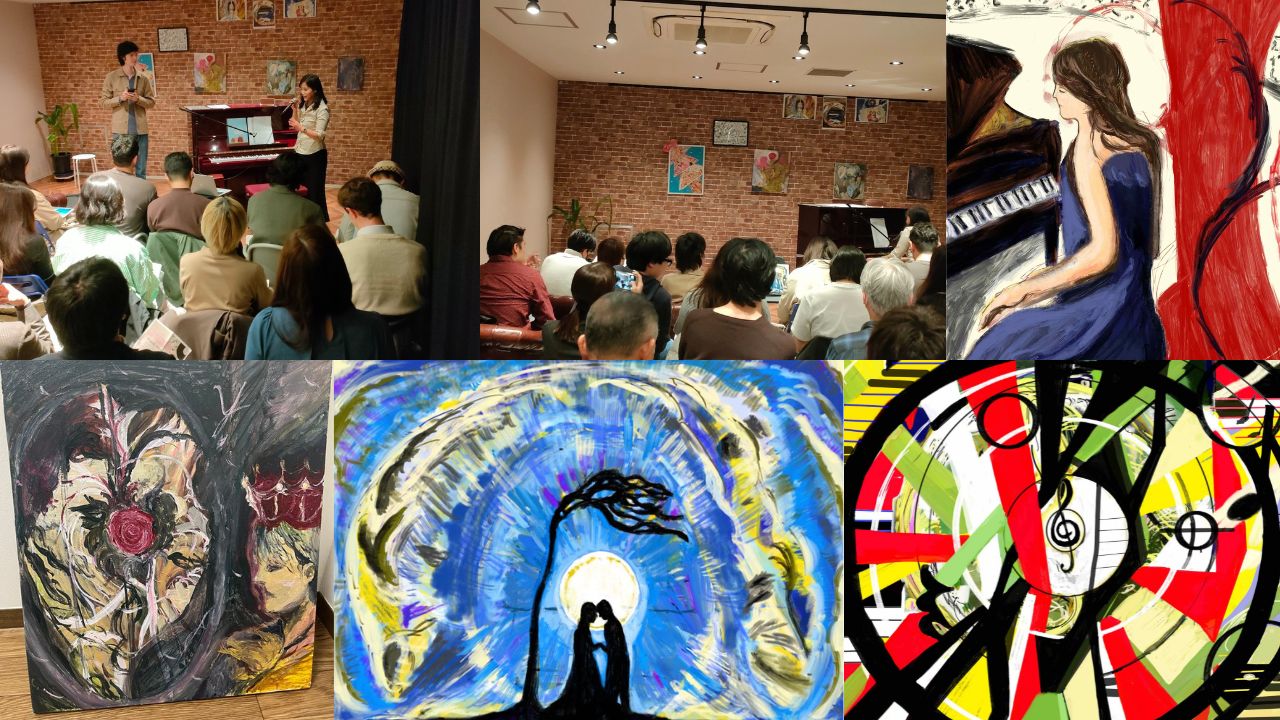

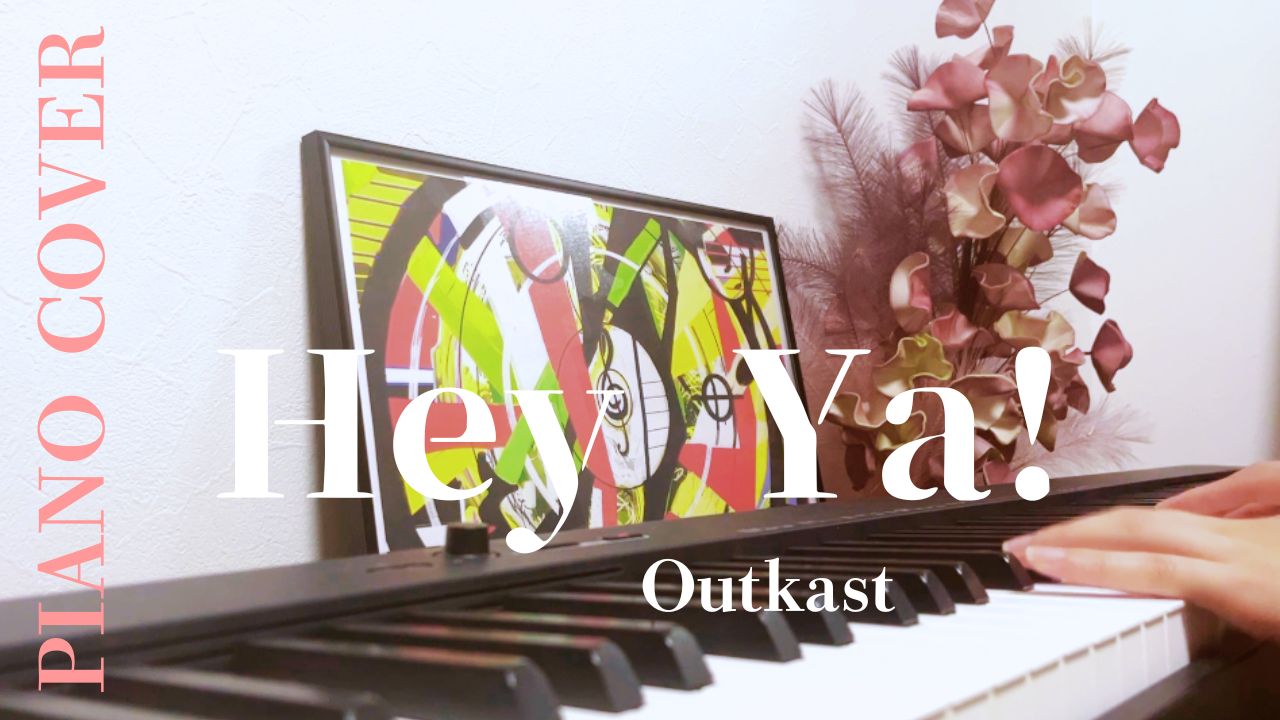
Image Credits
All images were taken by me.