





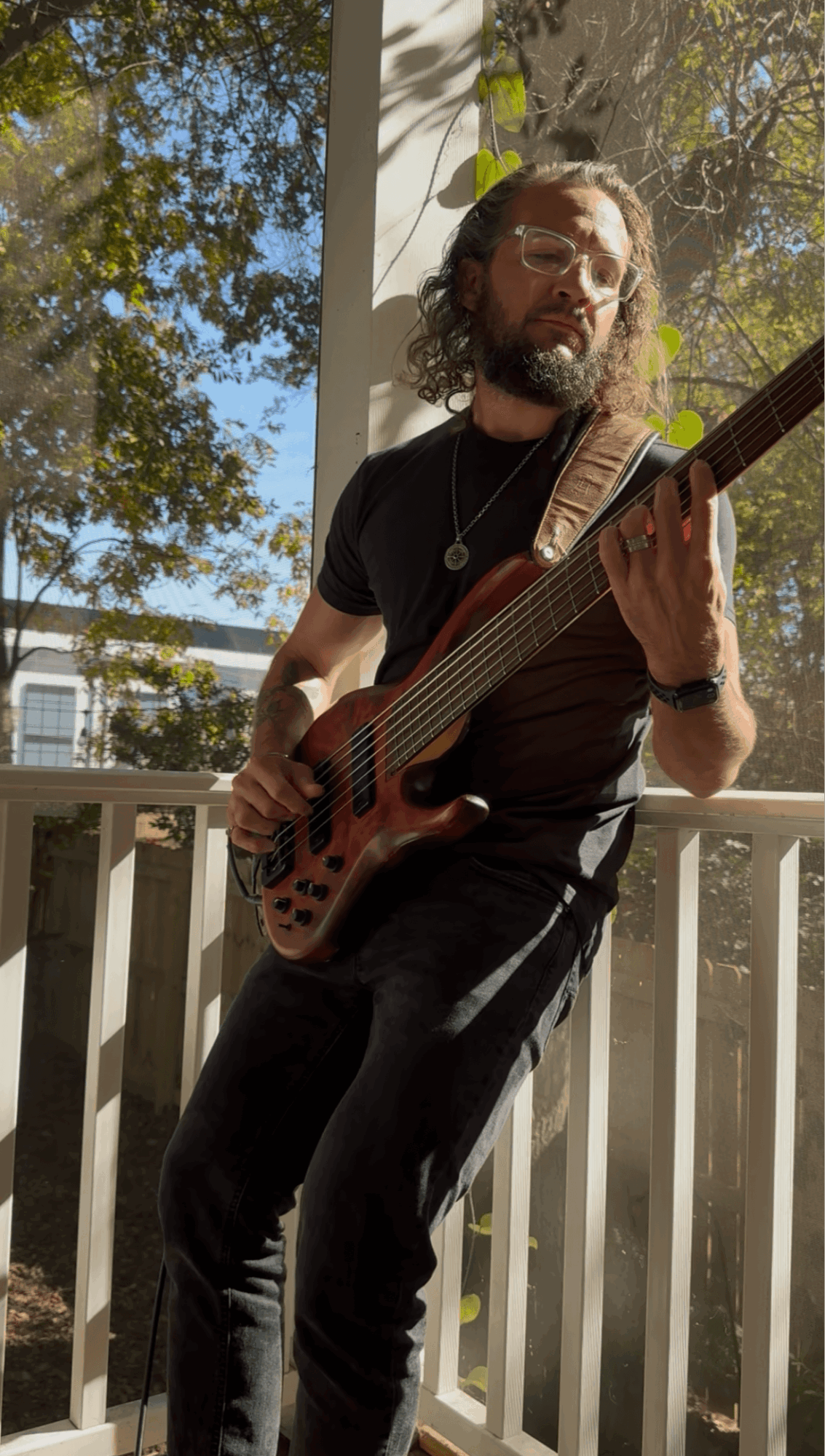
Today we’d like to introduce you to Alex Hamberger.
Hi Alex, so excited to have you on the platform. So before we get into questions about your work-life, maybe you can bring our readers up to speed on your story and how you got to where you are today?
Since I can remember, connecting with people through music has been as constant as my heartbeat. Over the course of my life, it’s this steady pulse that has taken me from the Midwest to the West Coast, across to Atlanta and back to Southern California, and presently back again in ATL. It’s been an honor to get to know and keep friends and collaborators in Minneapolis, Los Angeles, and Atlanta. As the beat marches on and we each continue to forge our own paths, I do my best to keep in touch both personally and collaboratively with the folks who have shaped my musical experience.
It was along this journey that I made the choice to study music in the university setting. As an electric bassist, I wasn’t able to major in performance at the public university I did my undergrad at (University of Minnesota Twin Cities). Because they didn’t offer a major focusing on my instrument, I soaked up as much as I could from the professors and instructors who were well versed in “world music” – Ghanaian drumming, Brazilian Samba, Indian classical…while finding ways to study the social and political contexts from which a lot of these musics came to be through “ethnomusicology” courses. All along, I was playing in bands in the local club scene, touring the midwest, and working at the college radio station and local record store (shout out Electric Fetus).
After a few years, I packed everything I could fit into my PT Cruiser and headed west to chase the dream in LA. I found a school out there that offered a masters program on electric bass, and the whole world seemed at my fingertips. In fact, a lot of the programs at California Institute of the Arts focus more on finding your voice as an artist and less on shedding standards and repertoire. They also had really in-depth programs with world class teachers in West African, Indian, Caribbean, Balkan, and other kinds of music, so I fell in love with taking in as many of these styles as I could. Outside the classroom, I was (again) working at a record store (shout out Amoeba Hollywood) and hustling internships at music management companies and record labels. What I loved most about this time was the unabashed creative artists I was meeting on the scene. I had the chance to tour all around the country with a number of original acts ranging from my own bass + harp duo to an absolutely killing neo-soul group, a folk-rock 4-piece and even an 11-piece hip hop/jazz fusion band.
My journey took a hard turn to the right not long after I got married. My wife became a family caregiver what felt like overnight, and just 9 months after we jumped the broom, we were moving east to help out in Atlanta. This was also just on the heels of the Covid “speed bump,” and I had talked my way into a head-of-sales role with a tech company. That first time in Atlanta, I was meeting folks through jam sessions and came up with a handful of local gigs. But this was really a turning point for me when it came to writing music under my own name – without a “band” to hide behind, I had to take a big step towards taking all those experiences and influences up til then and letting my own creative synthesis take place. On a personal level, we got some extra help with the family caregiving, and a quick trip back to the West Coast for a friend’s wedding was enough to stir our feelings into making the (long) move back cross country.
Out west, we had found a beautiful home in the idyllic Temecula Valley – wine country of Southern California. The only problem? We were about an hour from the closest cultural hub (San Diego), and even further from LA (especially in traffic). After a couple of years of the “slow life,” we carefully decided that we’d be happier in Atlanta where we’d have more than enough to do any night of the week, along with a strong community of likeminded people.
Since moving back, I’ve been finding the pockets that align with my musical heartbeat best – creative musicians who live by mottos like “no covers and no requests,” folks who can play anything but listen more than they play. It’s given me a real fresh perspective on creating for creation sake, and I’m really thrilled for this next chapter. I’ve even begun writing and recording songs with some new collaborators, and I can’t wait to get these out in the world. Follow me on your streaming platform of choice to see how the journey has shaped up so far. I just released a new song with collaborators from my time in Minneapolis and Los Angeles (“Sweater Weather (Ronan’s Lullaby)”), and if you’re following me you’ll be plugged in for when the next couple of new ones drop early next year.
Can you talk to us a bit about the challenges and lessons you’ve learned along the way. Looking back would you say it’s been easy or smooth in retrospect?
The road hasn’t always been easy, but I think that’s where you get a lot of juice for the squeeze. A big part of the journey that I’ve had to wrestle with is how to best water and nurture my musical garden. Folks take a lot of different routes to sustain themselves financially – some folks get the big gigs, but it can take a lot of time and relationship building to get there. Some teach private lessons or in schools, others play in corporate and cover bands, and others still balance a “day job,” but the risk is that this can take over a lot of time and energy. I’ve really shaded towards the last option, which has allowed me to not put financial pressure on music. The tradeoff is that I’ve definitely had to learn to balance my priorities and manage my time. When I was out in Temecula, it was very easy to just focus on the day job, since I didn’t really have as many opportunities to get out and play. At the same time, that period gave me a lot of time to focus on writing and recording. I could connect with my friends who were still in LA, or those who had moved away from LA for one reason or another to put together projects remotely. Now being back in Atlanta, I’ve been having a great time getting back out to a handful of events a week, experiencing the vibe and learning all along, while having the space to contribute what I can.
Can you tell our readers more about what you do and what you think sets you apart from others?
I’m an artist at heart, and that art takes two distinct forms of expression –
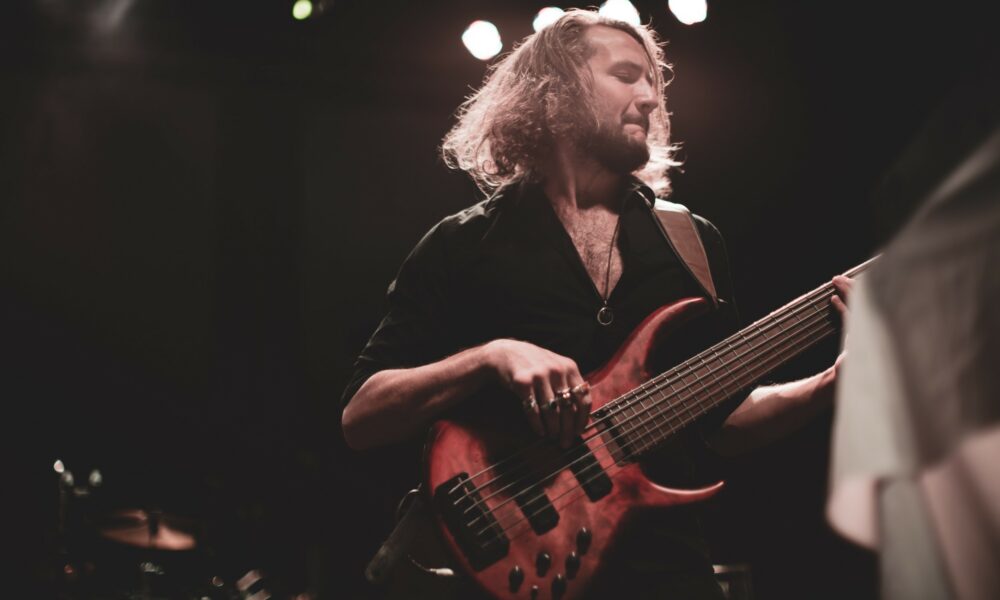
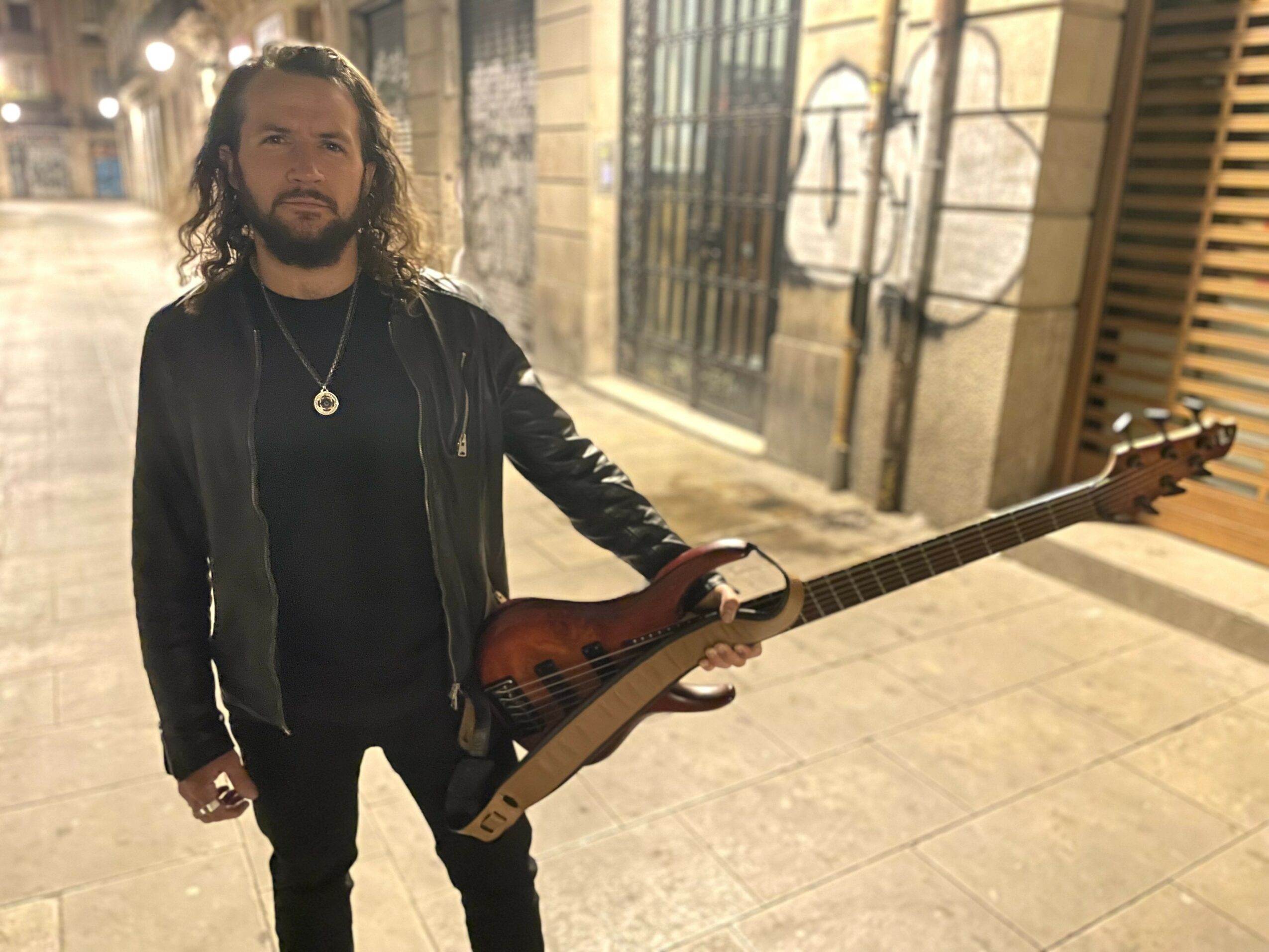
1. I’m a musician, a bass player, songwriter, and producer. I create my own music, which is informed by every one of the different styles I’ve studied, played, and encountered, as well as all of the phenomenal musicians I have encountered along the way. I release music under my own name (Alex Hamberger), and it’s available anywhere you stream music.
2. I’m an executive level sales professional. I can build and deliver a sound and effective sales strategy for startup and scale up companies. I’m an award winning public speaker, I travel the world to meet with customers and deliver presentations, and I attribute a lot of this to my experience as a performer. Being creative allows me to stand out from a lot of folks in this field by finding new ways to deliver results.
I would say what sets me apart is that I do these things simultaneously, without losing or hiding who I am in the process. I think the business side has allowed my creativity to flourish, as it provides the financial resources to sustain the lifestyle I aim to live. It also gives me a framework for planning and executing projects and processes. I think the music side allows me to be more authentic in my business interactions, never afraid to hop on stage or think outside the box. It’s also always fun to share my music with my business contacts as a nice surprise, like “check out this completely different thing that I do.”
Are there any apps, books, podcasts, blogs or other resources you think our readers should check out?
A few that come to mind on the creative side are “The Creative Act” by Rick Rubin, “Creative Quest” by Questlove, “12 Notes” by Quincy Jones. I also am into reading about history and social progress, so books like “The Color of the Law” by Richard Rothstein, “Fighting Traffic” by Peter Norton, “How Music Got Free” by Stephen Witt, and “Coffeeland” by Augustine Sedgewick are some recent favorites. I also got into a Timothy Snyder kick – his books “On Freedom,” “On Tyranny,” and “The Road to Unfreedom” are a really great trio for getting hip to how governments getting heavy handed can become a slippery slope real quick.
Pricing:
- Music is “free” these days, right? 😉
- Just kidding, but definitely find me on your streaming platform of choice
Contact Info:
- Website: https://open.spotify.com/artist/2dpPtuKuDckMttXUIT7ChB?si=CXRPX9xCSIq2dk2DZogCIA
- Instagram: @alexbassberger
- LinkedIn: https://www.linkedin.com/in/alex-hamberger/
- Youtube: https://www.youtube.com/channel/UCfKOO5RxGY1o1TN48KYZaOQ
- Soundcloud: https://soundcloud.com/alexhamberger
- Other: https://music.apple.com/us/artist/alex-hamberger/1511653504
Popular
-

What are you being called to do now, that you may have been afraid of before?
-

What are the biggest lies your industry tells itself?
-

Was there ever a time you almost gave up?
-

Is the public version of you the real you?
-

If you could say one kind thing to your younger self, what would it be?
-

Local Highlighter Series