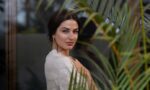



Today we’d like to introduce you to Angie Melissa González Chaverra.
Hi Angie Melissa, so excited to have you on the platform. So before we get into questions about your work-life, maybe you can bring our readers up to speed on your story and how you got to where you are today?
I am an Afro-Colombian woman from Chocó, one of the most marginalized yet culturally vibrant regions of Colombia. I am passionate about dance as a language of survival, resistance, and empowerment. My life and work embody the inseparability of art, education, and social justice. These are not simply academic interests for me; they are the core of my existence.
From a very young age, I learned that the dream of every Black girl in my community was to straighten their afro hair. Once I became old enough, the dream became a reality. I began to straighten my hair every month with chemical treatments, not realizing how I was conforming to a more significant issue. I assumed that straightening my hair would offer me a sense of belonging, but it ultimately distanced me from my own cultural identity. I began to feel bad about myself and was told I had ‘pelo malo’ or ‘bad hair.’ In Colombia, ‘pelo malo’ is a negative expression that rejects Black people’s natural hair. It is communicated to us from a very young age. I was conditioned to believe I was inferior, and to be accepted, I had to have straight hair. At the same time, I was raised in a community where everyone is “manito(a),” family, bound by music, dance, and collective care. These contradictions shaped me. Structural racism, poor schooling, and internalized messages sought to silence me, but through dance, I reclaimed my voice.
My commitment to community leadership began with the Dr. Martin Luther King Jr. Program, a U.S. Department of State initiative for Afro-Colombian and Indigenous university students to study English and leadership. The program was transformative. I embraced my natural hair. I learned about global Black and Indigenous struggles and began designing empowerment workshops with El Centro Colombo Americano in Bogotá. These experiences shaped my conviction that education must be grounded in culture and social justice. Later, I co-founded Nzingha Akanforá, a Black women’s collective in Bogotá that nurtures young Black girls to see themselves as leaders, creators, and knowledge producers. Our work has earned international recognition for advancing gender equity and racial justice in Colombia.
In 2022, I became the first Afro-Colombian recipient of the Fulbright Scholarship in the Arts category, which brought me to the U.S. to complete my M.A. in Africana Studies at Georgia State University in Atlanta, GA. My journey in the United States marked a turning point. I arrived with years of professional artistic experience and a deep commitment to learning from and contributing to Black diasporic networks. In my M.A. program, I began to merge my artistic practice with academic inquiry, engaging deeply with the historical, political, and social contexts of Chocó. Through my thesis, I developed a diasporic framework that examines how African-descended communities articulate identity, belonging, and social justice through movement. This work has allowed me to understand my body (our bodies) as archives of history and sites of political expression. Along the way, I have faced challenges that shaped my determination and resilience. Navigating new academic systems, balancing community engagement with research, and pursuing opportunities as an international scholar has taught me adaptability, courage, and discipline.
My personal history has shaped me into a scholar who refuses to accept silence, invisibility, or narrow definitions of knowledge. My past, present, and future belong to my community and those who have helped me grow. I have not made it alone. Many people have been put in my life to empower and guide me through my pathway. For many years, my circumstances held me down, but I no longer move through the world in fear. I stand prepared to pursue new opportunities and soar beyond the limits once placed before me. I hope to offer pathways of healing, expression, and confidence. I dream that future generations of my community will not have to endure the same struggles I faced. I have been called to give birth to a new generation. I am the dream of my ancestors.
Alright, so let’s dig a little deeper into the story – has it been an easy path overall and if not, what were the challenges you’ve had to overcome?
My journey has been shaped by the realities of navigating multiple worlds: as an Afro-Colombian woman, an artist, an immigrant, and a scholar. Each space has required me to constantly prove my legitimacy, my knowledge, and the value of the cultural practices I come from.
One of the greatest challenges has been moving through academic environments where Afro-diasporic dance and embodied knowledge are often misunderstood or undervalued. I’ve had to advocate not only for my work, but for the recognition that dance is a legitimate form of knowledge, resistance, and community memory. Balancing financial pressures, visa limitations, and the emotional weight of living far from home while pursuing advanced study has also tested my endurance. There have been moments of doubt, exhaustion, and uncertainty. Times when I questioned whether I belonged in these spaces. Yet those struggles clarified my purpose. They strengthened my commitment to creating pathways for other Afro-descendant artists and scholars and to honoring the communities that shaped me.
Can you tell our readers more about what you do and what you think sets you apart from others?
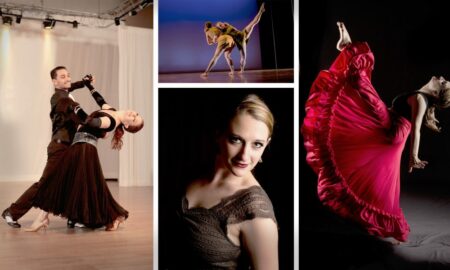
I am a dancer, educator, and scholar committed to honoring and amplifying the embodied knowledge of Afro-Colombian communities. I specialize in using dance not only as an artistic practice, but as a tool for healing, storytelling, and social justice.
Through workshops, performances, and research, I create spaces where people reconnect with their bodies, histories, and collective power. Much of my work centers Afro-Colombian traditions, especially from the Pacific region, and explores how movement carries memory, resistance, and joy. I am known for bringing cultural depth into educational spaces, bridging academic inquiry with lived experience and community-rooted practices.
What I am most proud of is the way my work uplifts others. Whether working with young girls, students, or community members, my intention is always to cultivate confidence, belonging, and pride in our cultural heritage. Seeing participants recognize their own strength and voice through movement is one of my greatest rewards. I believe what sets me apart is that I don’t separate dance from social context. I treat it as a living archive and a pathway to transformation. My work is grounded in community, guided by ancestral knowledge, and driven by a vision of collective empowerment. I strive to create spaces where culture is not just preserved, but lived, celebrated, and used as a force for change.
Are there any apps, books, podcasts, blogs or other resources you think our readers should check out?
One of my favorite shows is The Mel Robbins Podcast, which offers practical tools for mindset and motivation that I often apply to both my creative and personal life. I also enjoy listening to What Now? with Trevor Noah, and a big part of what I consume is with the intention to learn more and more about Black communities around the world. I love watching interviews with people I admire and engaging with content that expands my understanding of diasporic histories and creativity. I also intentionally support creators from my home country, Colombia. Platforms like Micrófono Afro and Afrodiversas, as well as content from my friends Yeison Martinez and Zuri Valoyes, keep me connected to conversations about identity, culture, and representation.
Some of my favorite books include Soñar lo imposible by Paula Moreno, All About Love by bell hooks, and The Let Them Theory by Mel Robbins. I’m currently re-reading Viral Justice, which continues to shape how I think about social change, imagination, and collective futures. It reminds me to stay grounded, curious, and connected to the ideas that inspire my work.
Contact Info:
- Website: https://artistadanza.wordpress.com/
- Instagram: https://www.instagram.com/angiemegch/
- Facebook: https://www.facebook.com/angiemelissa.gonzalezchaverra
- LinkedIn: https://www.linkedin.com/in/angie-melissa-gonzález-chaverra-498751250
Image Credits
GSU Arts and Sciences
Thrive 360