

Today we’d like to introduce you to Kevin Enners.
Hi Kevin, so excited to have you on the platform. So before we get into questions about your work-life, maybe you can bring our readers up to speed on your story and how you got to where you are today?
I always loved creative writing. As a kid in elementary school, I would write small short stories. They were not long. Only two or three pages. Part of that was because I didn’t have quite the advanced technology that I am currently using today. These stories would take days or even weeks to finish, but I saw the blank pages as a territory uncharted, and my ideas as my compass.
As I can’t physically pick up a pen or pencil and write, I would dictate to someone who could (typically either my parents or one of my para-pros at school. (I did use a computer with a word processing system, but the word processor was slow, and so dictating was faster.) My dad bought me a diary in which I would share stories of the day (still having to dictate), and so I think that fueled my writing.
I was an avid reader. I read a variety of novels and short stories throughout school. I was particularly interested in Goosebumps by R. L. One summer, when my mom, sister, and I were visiting my grandmother. At a Barnes & Noble, I found this children’s book filled with short stories by Edgar Allan Poe. So, my family was very supportive of my writing. They still are today. But the biggest challenge was getting my thoughts down to create a cohesive story.
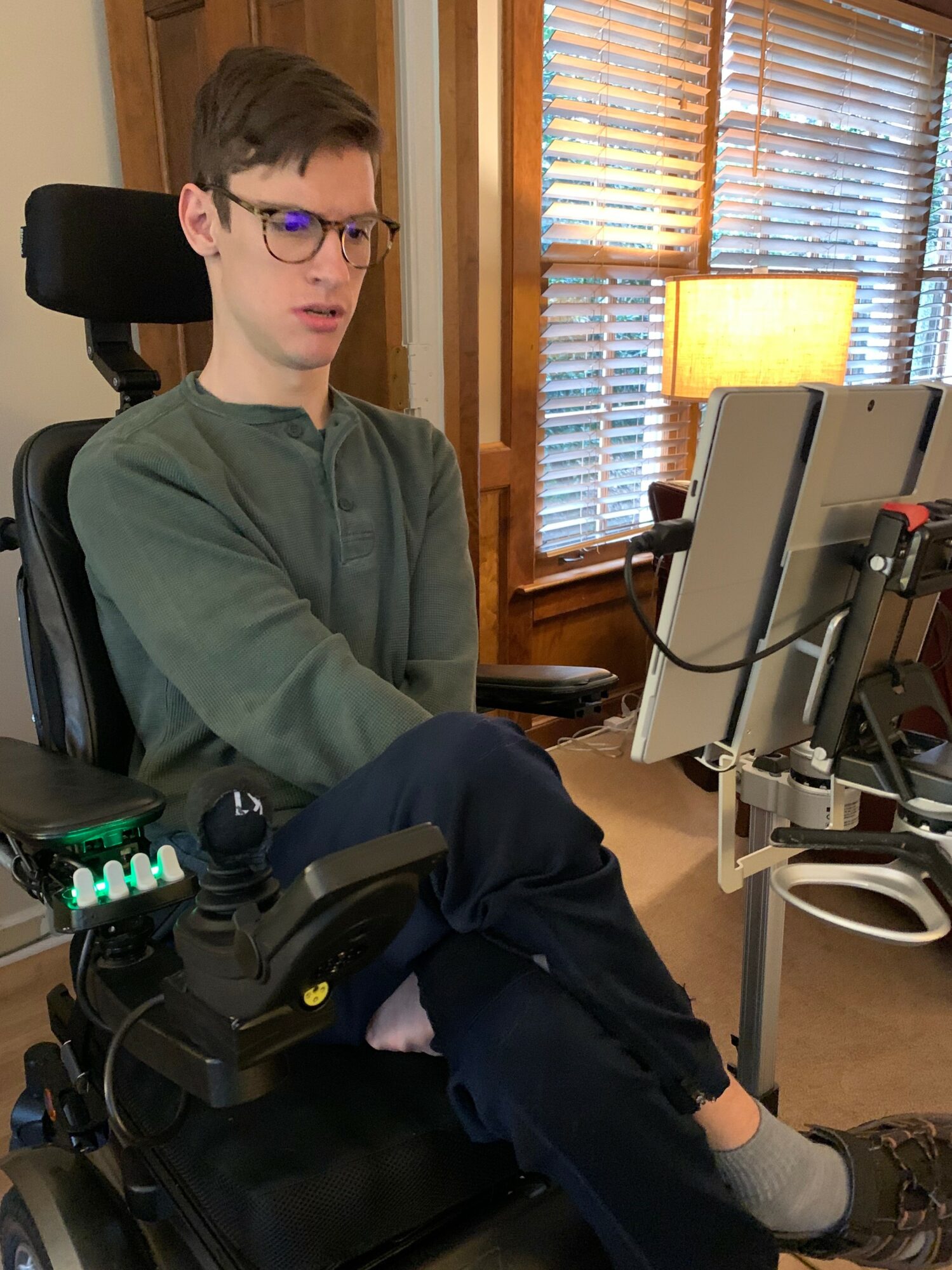
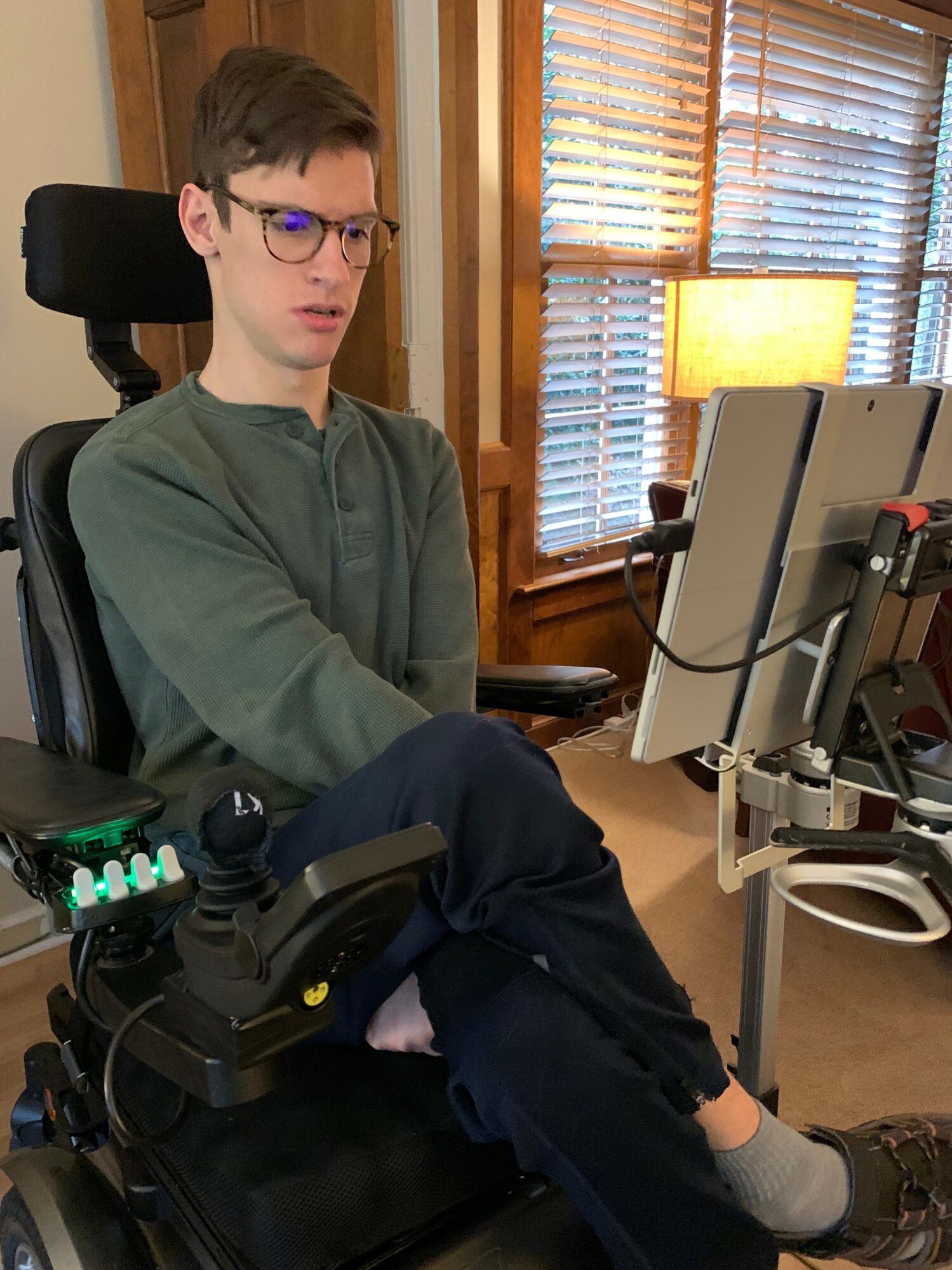
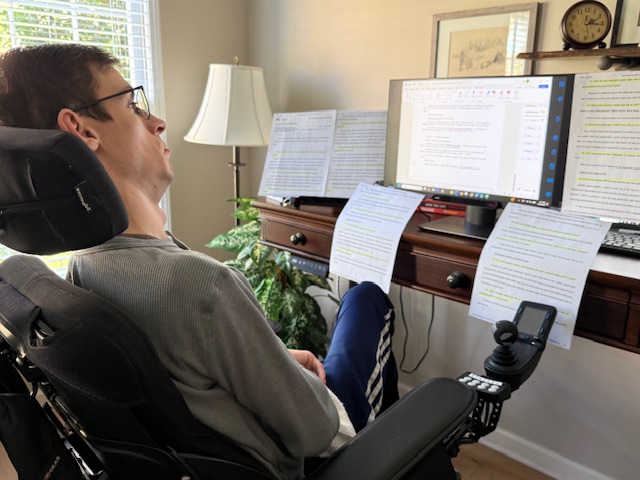
Fortunately, assistive technology continued to improve (as did my writing). During the summer between my freshman and sophomore years of high school, a friend introduced me to an eye-gaze communication device called Tobii. Even though it was primarily a communication device for people with disabilities, it operated on Microsoft Office. So, we could install Word on it. That sped up the writing process tenfold. My creativity could be unleashed, and I felt like there were no limits to my writing (at least, no physical ones).
During my senior year of high school, I did my senior project on the process of publishing a book. For this project, I had to find a mentor. I learned a lot about writing and publishing a book. How hard it was to spin a story, edit, refine, repeat, and then find a publisher interested enough to publish the manuscript (which is the hardest part, in my opinion). But my mentor for this project helped me understand that the most important part of writing and publishing a book is believing in your work and, more importantly, believing in yourself.
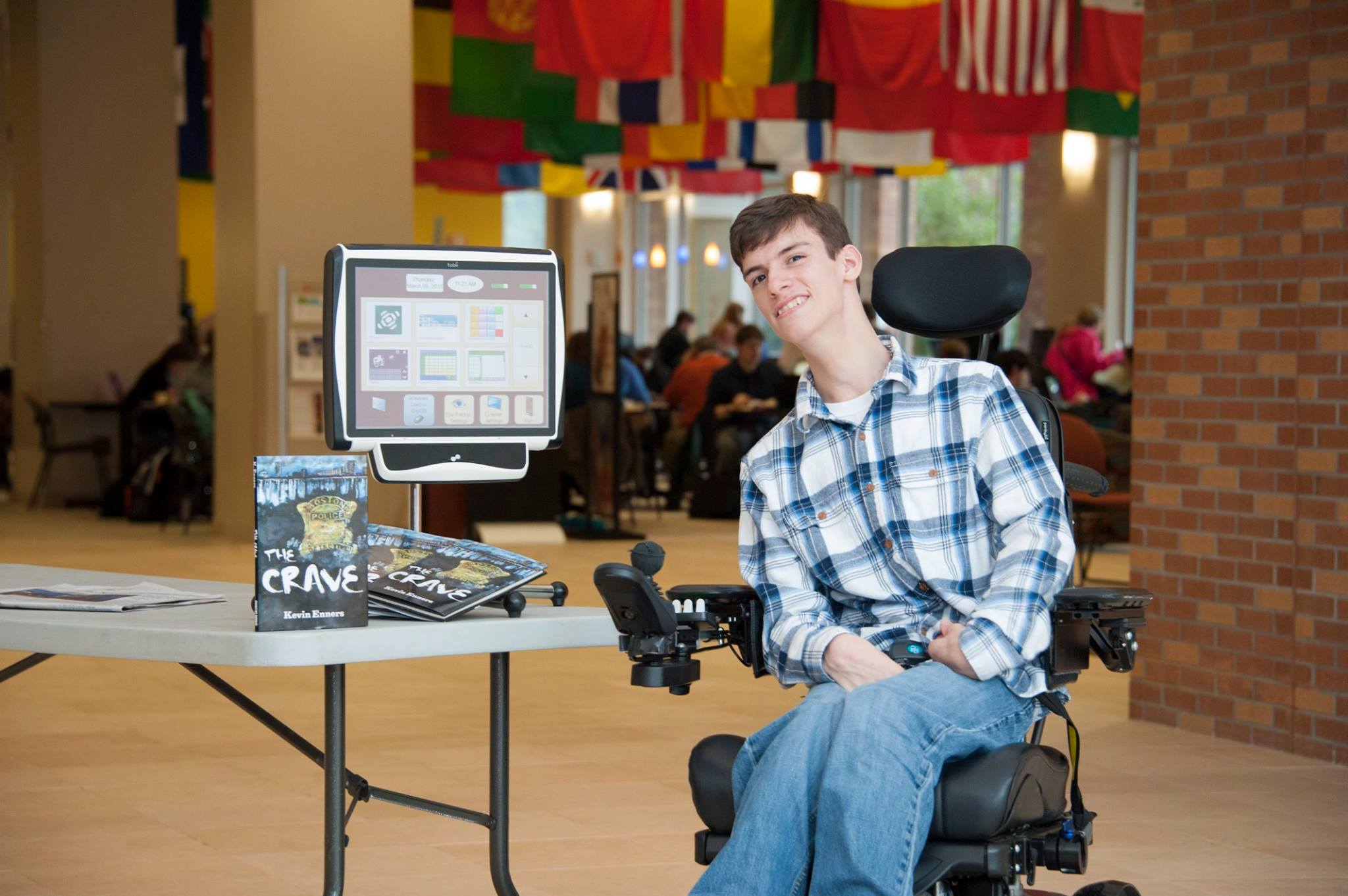
From there, I thought, “Okay, what story can I write that nobody else can?” Because if I could figure that out, I would know that I can make it as an author because nobody else had written or would think of writing that story. Thus, my novella, The Crave, was born. It is a short crime thriller about a young man with mild cerebral palsy who goes on a quest to kill the Irish mobster who killed his family. But during his bloodlust search, he finds solace from a Boston police detective and the detective’s daughter.
The Crave was my first publication. Looking back, I wish I had made some different decisions while writing that still bug me today. Alas, hindsight is always fifty-fifty.
I joined The Atlanta Writers Club in 2022, and it has been a wonderful resource and asset, fostering my growth as a writer. Through talks and critique groups, I have learned more about the business side of things. As hard as it is, I learned to sort of detach myself from my manuscripts (as hard as it is), and to read them (and rewrite them) as marketable products, rather than extensions of myself (even though they still are) through a more critical eye. That’s probably why it’s taken me longer to write. I have to look at my material from a buyer’s perspective.
Through the AWC, I met Bobby Nash via their mentorship program. He has been awesome on giving me tips on my writing and how to break through barriers.
Would you say it’s been a smooth road, and if not what are some of the biggest challenges you’ve faced along the way?
Absolutely, there have been (and continue to be) plenty of struggles. The first one was convincing myself that I have a knack for writing. I am the guy who is always second-guessing himself. I lay awake at night thinking, “Was today the day that I wanted to happen? Did I do everything in my power to move in the direction I want to go in?” Sometimes it’s an affirmative “Yes.” Sometimes it’s a reluctant “Somewhat.” Sometimes it’s a “Hell no!” But that’s the path of being a writer.
While I write my fiction, I have a full-time job that coincides with my writer’s aspirations. I am The Communication Project Manager for The Kyle Pease Foundation. Sometimes, my day job gets in the way of working on my manuscripts. I also train for marathons and indoor rowing events and cycling events. That too takes time away from my manuscripts. But I don’t want people to think that because I have a disability, I’m incapable of accomplishing extraordinary things.
I also write screenplays (some of which are about people with disabilities), which have been turned down by producers for whatever reason. But all of that is part of the journey. My journey. And, it doesn’t make my manuscripts any less important. It just means that in those moments, I have to focus on something else, and then get back to my manuscript another day. The good thing is that my manuscript will always be there. I will always have a support group there. And I can always sharpen my writing through my day job, blogs, manuscripts, and screenplays.
Can you tell our readers more about what you do and what you think sets you apart from others?
As I mentioned earlier, I work full-time for a nonprofit organization called The Kyle Pease Foundation. Its mission is to improve the lives of individuals with disabilities through sports and elsewhere. I graduated from Kennesaw State University with a Bachelor of Science in Journalism and emerging media, as in social media and YouTube.
I lead KPF’s Communication Team on projects such as blogs about athletes, volunteers, board members, etc., YouTube vlogs about athletes, and other multipurpose content to be used in fundraising campaigns, promotion across social media platforms, and content for internal communications.
I initiated the “In My Wheels” vlog series because I believe in the power of storytelling and showcasing that, for people with disabilities who have joined KPF, it’s not about racing. It’s about feeling and actually being included in a movement where athletes with and without disabilities can compete alongside each other. It’s also about their personal journey. I think that is important because every journey is different, as is the “why” behind participating in endurance sports.
What’s next?
As I continue working on my novel, A Clockwork Emerald, I am working on a collection of short stories that I hope to publish within the next few months. I am also working on several screenplays at the moment and plan to have them produced. I hope my work will lead to entertainment of all kinds to become more inclusive of creatives with disabilities. This community of people have been overlooked for so long, I don’t think people who are not in the know that there are stories that can and should be included in mainstream entertainment, whether it be books, TV shows, movies, etc. I want to reach as many audiences as possible so that characters with disabilities and their struggles become ingrained in the fabric of modern entertainment.
Contact Info:
- Website: https://midnightmurmurs.blog/
- Instagram: https://www.instagram.com/kevinenners/
- Facebook: https://www.facebook.com/kevin.enners
- LinkedIn: https://www.linkedin.com/in/kevin-enners-291a84291
- Bluesky: https://bsky.app/profile/ocularscribe.bsky.social
- Youtube: https://www.youtube.com/@ablescapes
- Other: https://stage32.com/profile/1051127
Popular
-
Hidden Gems: Local Businesses & Creatives You Should Know
-

ATL’s Most Inspiring Stories
-

Portraits of Atlanta
-
Natasha Dillard on Redefining Beauty Standards and Empowering Women Through Unapologetic Self-Expression
-
Darren Paltrowitz on Blending Investigation, Media, and Culture to Uncover the Stories Behind the Stories
-
Naeemah Jade on Redefining Networking Through Trust, Proximity, and Intentional Community