







Today we’d like to introduce you to De’Havia Stewart.
Alright, so thank you so much for sharing your story and insight with our readers. To kick things off, can you tell us a bit about how you got started?
I grew up in a small town in Florida, Pensacola, and come from a low income background, but I was introduced to the power of finance very early through my great aunt. She was born in the 1930s, the child of a sharecropper, and like many women of her generation she did not work a traditional corporate job. She was a housewife while her husband served in the military, but she made intentional financial decisions that completely changed her family’s trajectory.
She invested the majority of their disposable income into real estate and built a small portfolio that generated consistent income. When her husband later became disabled and could no longer work, the rental income and equity she had built allowed them to maintain a middle class lifestyle and remain financially stable. Watching that as a child showed me firsthand how access to financial tools and ownership can change not just one person’s life, but an entire family’s future. That experience is what initially sparked my interest in finance and in how people can move between income classes through investment.
I carried that interest into college at Florida A&M University, an HBCU, where I was a first generation college student majoring in accounting. While there, I was introduced to venture capital through a nonprofit called HBCUvc (in which I later served on the investment committee of their $1M pre-seed fund), and I began learning more about the structural barriers underrepresented founders face when trying to access capital, whether due to demographic background, geography, or lack of networks. I also started to understand the ripple effects of those barriers, how limited access to early capital impacts a company’s ability to grow, hire, and ultimately build generational wealth. That became a problem I felt deeply motivated to help solve.
During college, I worked as a Summer Analyst at Goldman Sachs and also during the school year I worked with the State Board of Administration of Florida, which is the fifth largest public pension fund in the United States. Those experiences gave me exposure to institutional finance and large scale asset management, but venture capital stood out to me because of how early decisions can shape the success or failure of entire businesses and communities.
After graduating, I spent several years at Accenture, working in strategy consulting with Fortune 500 companies across retail, financial services, and media. That experience gave me a strong foundation in how businesses scale, how to analyze complex problems, and how to build relationships with senior leaders, all skills that later became incredibly valuable in venture capital and investing.
From there, I transitioned into venture capital, where I supported early stage founders and helped deploy over $125M+ into startups through roles at SoftBank’s Opportunity Fund, Anthemis, and later Serena Williams’ venture firm, Serena Ventures. Throughout my venture career, I have backed unicorn companies such as QuickNode, Notion, Cityblock Health, Brex, and Eight Sleep, along with emerging high growth startups including FlutterFlow, Upwardli, and Subject Learning. I have also supported creator-led and culturally significant projects alongside figures such as Snoop Dogg and Alicia Keys, which further shaped how I think about the intersection of culture, technology, and ownership.
My work has earned national recognition, including being named an HBCUvc Emerging Leader in Venture Capital, Atlanta Inno Under 25, and multiple placements on the Alpha Partners Rising Star List. I have also spoken at leading institutions and global stages such as the New York Stock Exchange, Yale University, and GITEX Dubai, which has allowed me to share insights on innovation, access to capital, and the future of entrepreneurship.
Through these experiences, I became increasingly focused on companies building real infrastructure in large, overlooked markets, particularly in financial services and healthcare, and I also became more aware of how difficult it is for both founders to access early capital and for individual investors to meaningfully participate in early stage investing. That realization ultimately led me to begin building what would later become 1248 Angels, which is an investment group that I co-founded that writes checks up to $150K into early stage startups.
I’m sure it wasn’t obstacle-free, but would you say the journey has been fairly smooth so far?
It has definitely not always been easy, but the learnings along the way have been some of the most meaningful parts of the journey. Early in my career, I spent a lot of time learning how to navigate professional spaces where I was often one of the few people who looked like me, particularly in finance and venture capital. Those experiences pushed me to become confident in my voice, trust my instincts, and stay grounded in my long-term goals, even when the path was not always clearly laid out.
When I started building 1248 Angels, I quickly learned that investing is about much more than finding great companies. It is about building real relationships with founders and being willing to show up for them when things are still uncertain or coming together. I had to learn how to fundraise, how to build strong diligence processes, and how to truly support founders after the investment, not just celebrate the wins. On average, we now help our portfolio companies raise about $2.5M in additional capital alongside our initial investment, and we stay very hands on with hiring, go to market strategy, and customer introductions. Some of my most rewarding moments have been helping a founder hire a key executive or connecting them with early customers and watching their businesses really take off.
One thing people do not always talk about in venture is how emotionally difficult it can be to say no to great founders. There are far more strong companies than any one firm or platform can invest in, and that can be heartbreaking at times, especially when you believe deeply in someone’s vision. Because of that, I try to give what I can beyond capital. I spend a lot of time mentoring through accelerator programs like Techstars, the Cox Cleantech Accelerator, and Google for Startups, and I try to be very intentional about sharing my knowledge and network with founders and operators even when an investment is not possible.
Another important learning for me has been around sustainability. In venture, we evaluate thousands of companies each year, sometimes two to four thousand depending on the platform, and that pace can lead to burnout if you are not careful. I have learned that protecting my mental health and personal wellness is essential to being a good investor and leader long term. For me, that means spending time swimming, going to the beach, playing chess, traveling, and making space for hobbies that help me mentally reset. Those moments away from work actually make me more present and effective when I come back.
Overall, the journey has reinforced that building something meaningful requires patience, resilience, and a lot of learning in real time. While it has not always been easy, it has been deeply fulfilling, and every experience has strengthened my commitment to expanding access to capital and opportunity through 1248 Angels.
Thanks for sharing that. So, maybe next you can tell us a bit more about your business?
1248 Angels is an early stage investment platform focused on backing founders solving real problems in large, overlooked markets, particularly across fintech, healthcare, and business infrastructure.
At its core, 1248 Angels is built to sit at the intersection of education, access, and capital. We work with 200+ accredited investors, many of whom are investing in startups for the first time, and we provide them with education, structured deal flow, and opportunities to participate meaningfully in early stage companies. On the founder side, we invest in companies across the U.S. and help startups build diverse, value added cap tables early in their journeys, when strategic support and relationships can make the biggest difference.
What sets us apart is that we are not just focused on writing checks. We are deeply hands on with our portfolio companies, supporting founders across fundraising strategy, hiring, go to market execution, and customer introductions. On average, we help our portfolio companies raise approximately $2.5M in additional capital alongside our initial investment, and we actively leverage our network and experience to help founders scale with discipline. In some cases, that has meant helping founders hire key executives, while in others it has meant connecting companies with early customers or strategic partners that help accelerate traction.
We are also very intentional about who we bring into our investor community. Our network includes medical professionals, legal professionals, senior operators, and executives across multiple industries, which allows us to add value beyond capital and help founders access real expertise. This creates a flywheel where founders are supported not just by one investor, but by an engaged community that is invested in their long-term success.
Brand wise, what I am most proud of is that 1248 Angels is known for being founder aligned, disciplined, and values driven. We care deeply about transparency, long-term relationships, and helping companies build sustainable businesses, not just chasing short term wins. Our name comes from the bible verse, Luke 12:48, to whom much is given much will be required and that principle shows up in how we invest, how we mentor, and how we show up in the ecosystem.
1248 Angels exists to expand who gets access to early stage investing and who gets access to early belief. Whether someone is a founder looking for partners who will truly support them, or an investor looking to participate in innovation in a thoughtful, structured way, our goal is to create pathways that feel accessible, credible, and community driven.
In addition to 1248 Angels, I also run Mustard Seed Capital Management, an investment advisory firm where funds and investment platforms outsource their investment work to me in senior leadership capacities such as CIO, VP, and Head of Investing. Through this firm, I support multiple clients, including a $100M sports focused fund and a venture growth platform writing $1–5M checks, which allows me to bring cross stage perspective and discipline into our early stage work.
Where do you see things going in the next 5-10 years?
Over the next five to ten years, I think artificial intelligence will fundamentally reshape how companies are built, how fast they scale, and which founders are able to compete early. What is especially exciting is that AI is lowering the barrier to entry for startups by reducing the cost of building, automating operations, and allowing very small teams to accomplish what once required much larger organizations.
From an investing perspective, I expect to see strong growth in AI powered solutions across financial services, healthcare, and business infrastructure, particularly tools that improve decision making, reduce manual work, and expand access to critical services. These are not just productivity tools, they are systems that can change how people interact with essential parts of everyday life, from credit and payments to patient care and workforce training.
At the same time, I think we will see a shift toward more capital efficient startups. As AI enables founders to do more with less, investors will place greater emphasis on disciplined growth, strong unit economics, and real customer value rather than just rapid user acquisition. This will likely change how early stage companies raise capital and how investors evaluate traction and progress.
Another important trend will be how AI impacts who gets to build. As tools become more accessible, we will see more founders from non traditional backgrounds enter tech and entrepreneurship, which has the potential to diversify innovation in meaningful ways. However, that also means access to early capital, mentorship, and networks will be more important than ever, because technology alone does not solve structural gaps in funding and opportunity.
Contact Info:
- Website: https://www.1248angels.com/home
- Instagram: https://www.instagram.com/dehavias
- LinkedIn: https://www.linkedin.com/in/dehavia/
- Twitter: https://x.com/de_havia
- Other: https://www.dehavia.com/

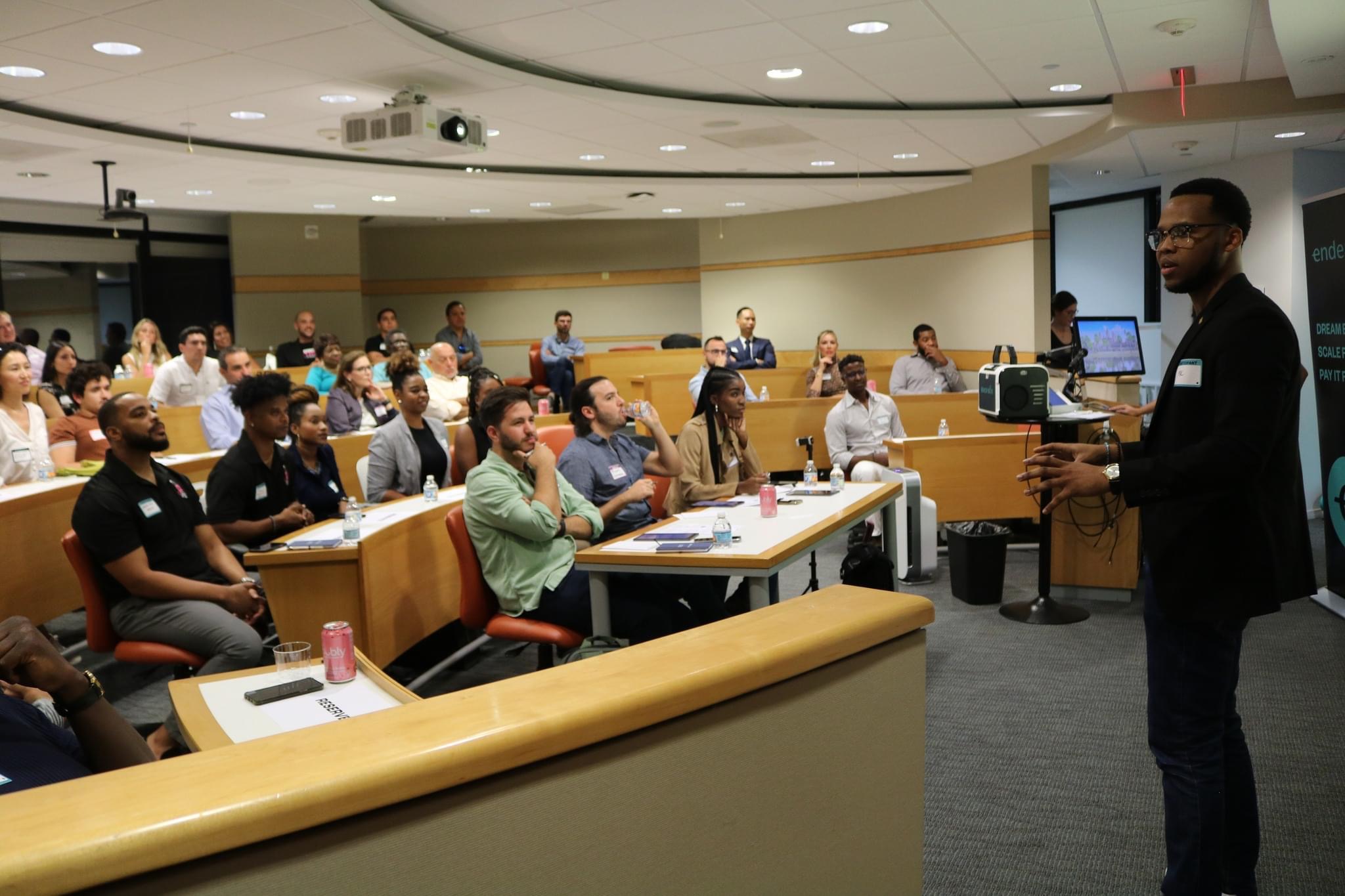



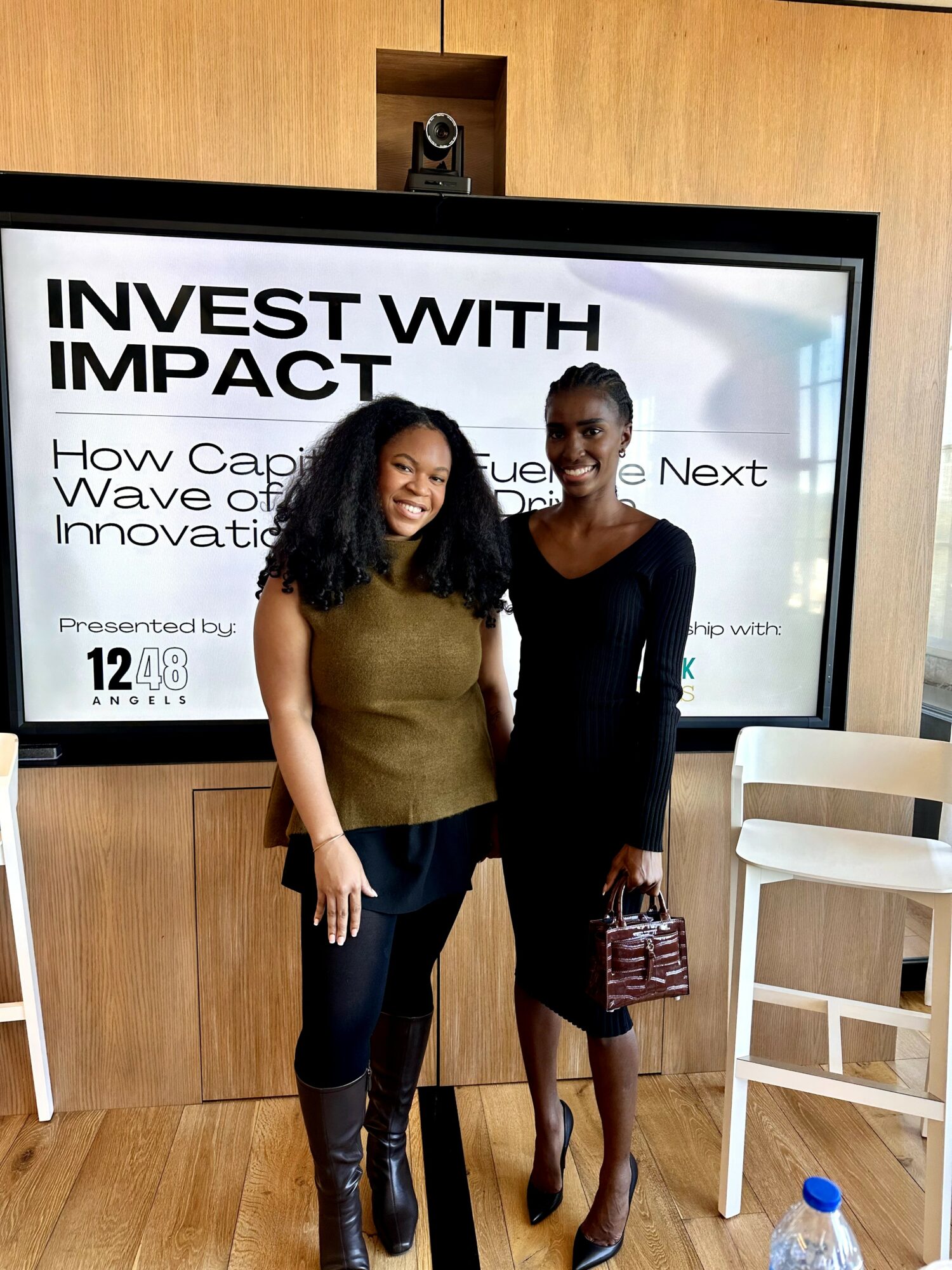
Image Credits
Tony Fiorini
Cameron Mitchell
Popular
-

Choosing Impact Over Control: Susana’s Intentional Evolution of Fro Butter
-

Where Faith, Code, and Soul Converge
-

Breaking Cycles, Answering the Call Forward
-

Leadership Rooted in Dignity and Continuity
-

Healing as Leadership: How LaCora Monet Is Redefining Sustainable Success
-

Returning to Herself: How Thalorah Is Building Veloria™ as a Sanctuary for Feminine Sovereignty