






Today we’d like to introduce you to Hyla-Monét Penn.
Hi Hyla-Monét , so excited to have you on the platform. So before we get into questions about your work-life, maybe you can bring our readers up to speed on your story and how you got to where you are today?
I’m Hyla-Monét Penn a leadership and organizational development coach, former principal, and the founder of H-Monét Penn Consulting, a boutique consulting firm dedicated to helping leaders balance empathy and accountability and build high-performing teams that have a sustainable impact.
I’ve spent nearly two decades in education, with over 12 years in school and organizational leadership. My journey started in the classroom, but it truly took shape when I became a school principal. That role put every leadership skill, technical and adaptive, to the test. I learned quickly that the most successful leaders weren’t just the ones with just strong systems; they were the ones who knew how to lead people with clarity, compassion, accountability, and strategy. They were the ones who created environments where teams felt both supported and challenged to grow.
But as I was developed as a school leader attending workshops and other professional development something was missing in the way leaders were being developed across education, nonprofits, and even corporate spaces:
Leadership programs were heavy on technical skills and light on adaptive, human-centered development.
I kept seeing this gap, leaders drowning in responsibilities, overwhelmed by expectations, struggling to balance people and productivity, and unsure how to communicate, coach, or make decisions with confidence. When I was consistently praised for my warm-yet-direct coaching style during a national principals fellowship, I realized:
This blend of clarity, compassion, accountability, and strategic thinking is teachable and most leaders aren’t getting it.
The idea didn’t come to me in one single moment. It started quietly, during the year I was a part of a national principals fellowship. We spent hours coaching, modeling, and role-playing the types of conversations leaders navigate every day. And every single time I stepped into a role play, whether I was giving feedback, setting expectations, or coaching through challenges, I kept hearing the same thing:
“You’re warm but direct.”
“You make people feel safe enough to be honest.”
“Your expectations are high and clear.”
“You model the kind of coaching leaders actually need.”
At first, I shrugged it off as just “my style.” But with every round of feedback, a quiet thought started to sit heavier on my heart: Something is missing in how we develop leaders.
We were learning technical leadership: frameworks, protocols, observation cycles, data analysis. All important. All necessary. But the adaptive side, how leaders navigate human behavior, build trust, communicate with clarity, hold people accountable with compassion, that part was almost always an afterthought. Yet those were the moments where people in the fellowship (both leaders and facilitators) kept saying, “Hyla, you do this differently.”
So I started researching. I read everything I could find on adaptive leadership, emotional intelligence, culture-building, psychological safety, and leader identity. And without even realizing it, I was building the foundation of what would one day become my boutique leadership and organizational development consulting practice.
However I sat on the idea for three years. Not because I didn’t believe in it, but because I was leading a school through a pandemic, had just had my third child, etc. And then one Saturday morning at brunch, I was lamenting about leadership development and the challenges I was experiencing as a leader and my my husband looked at me across the table and said, “Honey, you’ve been talking about this for years. Just do it. Start the business.”
Before I could think of reasons not to do it, he pulled out his iPad, opened the business registration site, and said, “Tell me the name of the business. Let’s go.”
The next few months looked like searching for coaching and development around building and leading a business, social media marketing, securing clients, financial business management, etc. and figuring out how to translate a decade of principalship into a consulting experience that balanced both people and productivity.
I built my website in pieces, refined my messaging, took my first clients, tested and refined my frameworks repeatedly and kept asking myself “What support did I wish I had as a leader?” That question is the heart of my business.
And that’s how my idea moved from a spark → to a calling → to an actual, functioning, high-impact consulting company serving leaders in education, nonprofits, and organizations who want to lead with heart and strategy.
We all face challenges, but looking back would you describe it as a relatively smooth road?
The short answer? No, it has not been a smooth road. And honestly, I’m grateful for that, because the challenges have shaped me into a more grounded, self-aware, and effective leader.ship coach. When I transitioned from school leadership to entrepreneurship, the learning curve was steep. I would always say: “I know how to lead a school, but leading a business is a completely different skill set.”
In the beginning, I was navigating unfamiliar territory. I was learning about: pricing my services, structuring offers, creating contracts, marketing my work, building systems, understanding the financial side of running a company, learning how to talk about my work outside the context of education. There were so many moments where I felt like a first-year teacher again. I was committed, passionate, capable, but figuring it out as I went.
One of the biggest challenges was internal. I questioned whether people would find my coaching meaningful or necessary. In education, my impact was visible. I could walk into classrooms, look at data, see growth, and feel the tangible outcomes of my leadership. In entrepreneurship, the feedback loop wasn’t immediate. I had to trust my expertise even when the external validation wasn’t there yet. And then, as I expanded into organizations and businesses outside of education, nonprofits, higher ed, small businesses another layer of doubt surfaced. I worried if my leadership experience translate? Did I really have the credibility to support leaders in other industries? Is my insight valuable or too rooted in schools?
What I learned navigating this doubt and growing my business is that leadership is human work before it’s industry-specific work. The skills that made me an effective principal, clarity, emotional intelligence, communication, adaptive leadership, culture-building, accountability, and vision were exactly the skills leaders across every sector desperately needed. But it took time, experience, and self-reflection for me to really own that truth. I also had to learn to trust my process. As an entrepreneur, no one hands you a roadmap. There’s no district calendar, no evaluation rubric, no pacing guide. You build as you go. You refine in public. You learn through wins and missteps. There were seasons when I felt overwhelmed. Times I questioned whether starting a business was the right move. Moments where balancing motherhood, work, wellness, and entrepreneurship felt like too much. But each challenge taught me something essential. I learned that confidence isn’t built by comfort, it’s built by consistency.
And looking back, I’m proud of the journey, bumps and all, because it made me the leader, coach, and businesswoman I am today.
Thanks – so what else should our readers know about H-Monét Penn Consulting, LLC?
As I was developed as a school leader attending workshops and other professional development sessions something was missing in the way leaders and staff were being developed across education, nonprofits, and even corporate spaces: Development programs were heavy on technical skills and light on adaptive, human-centered development.
I kept seeing this gap, leaders drowning in responsibilities, overwhelmed by expectations, struggling to balance people and productivity, and unsure how to communicate, coach, or make decisions with confidence. When I was consistently praised for my warm-yet-direct coaching style during a national principals fellowship, I realized my blend of clarity, compassion, accountability, and strategic thinking is teachable and most leaders aren’t getting it.
That’s what led me to create my firm.
What I Do & Who I Serve: Today, I coach, train, and consult with early-career and emerging leaders (typically 0–5 years into leadership) across:
–K–12 schools & districts
–Higher education
–Nonprofit organizations
–Small-to-mid-sized businesses
My services include:
–Leadership coaching (1:1 and team-based)
–Organizational development consulting
–Professional development for instructional and mid-level leaders
–Leadership retreats and wellness-centered experiences
–Membership and group coaching programs (Balanced Leadership League)
–Development frameworks & tools like my Balanced Leadership Clarity Guide and Balanced Leadership Blueprint™
Everything I create is rooted in a simple truth: Leadership doesn’t work without balance.
Balance between people and productivity.
Between heart and strategy.
Between clarity and compassion.
Between expectation and support.
The Problems I Solve:
Most of my clients come to me overwhelmed, under-supported, and unclear. They’re juggling team morale, meeting organizational outcomes, managing conflict, and figuring out who they are as a leader all at once.
I help them:
–Build confidence in their leadership identity
–Communicate expectations clearly and consistently
–Develop high-performing teams
–Navigate difficult conversations with clarity and care
–Strengthen culture through aligned behaviors
–Avoid burnout and sustain their leadership energy
–Make decisions strategically without second-guessing themselves
Leaders leave my programs feeling more grounded, more equipped, and more aligned not because I give them the “perfect script,” but because I help them develop the internal and external systems to lead with both heart and strategy.
What Sets Me Apart: My work is different because it blends:
–Adaptive leadership (the people side)
–Technical leadership (the systems side)
–Wellness-centered leadership (the sustainability side)
Most programs focus on one of these. Mine integrate all three.
Clients consistently describe me as:
–Warm, but direct
–Compassionate, but clear
–Expert, but approachable
–Vision-driven, but grounded in real, day-to-day leadership realities
I pride myself on creating psychologically safe coaching spaces where leaders feel comfortable being honest about their struggles and ready to rise into higher levels of excellence.
What I’m Most Proud Of: I’m most proud of the leaders who walk away saying:
“I finally trust myself.”
“My team feels aligned again.”
“I’m a better leader and a better human.”
“I can breathe in my job again.”
These transformations remind me why I built this business.
What I Want People to Know:
I believe leadership should feel purposeful, sustainable, and human.
I believe in high expectations, not harsh leadership.
I believe in clarity, not confusion.
I believe teams deserve leaders who can coach with heart and hold accountable with integrity.
And I believe every leader regardless of title deserves support, strategy, and a community committed to their growth.
My brand is built on that philosophy.
My work is built on 18 years of lived leadership experience.
And my mission is to help leaders thrive without burning out.
Before we let you go, we’ve got to ask if you have any advice for those who are just starting out?
In leadership there are 5 essential actions that one should demonstrate to be effective and cultivate a positive culture when managing a team:
It starts with one core belief: People don’t perform at their best when they’re pressured. They perform at their best when they feel seen, supported, and crystal clear about what’s expected.
1. Lead with Clarity and communicate open, honestly, and early because morale begins with expectations. Most morale issues aren’t really morale issues; they’re clarity issues and morale drops when teams feel blindsided.
*Teams thrive when they know:
What success looks like
What the priorities are
How decisions get made
How their work contributes to the larger vision
When team members understand the “why” behind their work, they feel more connected and motivated.
Leaders should:
Share updates proactively
Explain decisions
Name challenges openly
Invite questions
Transparent communication is a sign of respect, and respect boosts morale more than any incentive program ever could.
2. Model What You Expect. Team culture mirrors leadership. If you want consistency, be consistent. If you want positivity, model emotional regulation. If you want accountability, practice self-accountability. Leaders set the tone long before they set the agenda. Your presence, behavior, and energy create the emotional climate your team works within.
3. Build Relationships That Are Both Warm and Direct. Morale grows when people feel respected and valued not just as employees, but as humans. Check in on your people. Listen deeply. Celebrate wins. Notice effort. At the same time, don’t shy away from honest and direct communication. Teams trust leaders who care enough to tell the truth, offer feedback, and hold everyone (including themselves) to high standards. This balance of warmth and directness is where psychological safety lives.
4. Give Frequent, High-Quality Feedback. People crave feedback that helps them grow. Not vague praise. Not delayed, unclear criticism. But specific, actionable feedback that communicates:
“I see you. I’m invested in you. I want you to win.” When leaders give supportive coaching consistently, morale naturally strengthens because people feel developed, not judged.
5. Prioritize Workload, Wellness, Sustainability, and celebrate progress. Burnout and a lack of recognition are the fastest ways to kill morale.
Leaders must:
Protect people’s time
Streamline priorities
Remove barriers
Normalize boundaries
Encourage rest
Provide the team with steady acknowledgement
When well-being and progress are prioritized, performance improves and it creates a culture where people feel appreciated and connected.
I wish I knew these 5 essential actions rather than learning them as I navigated various challenges.
Contact Info:
- Website: https://www.hmpennconsulting.com
- Instagram: @thehmonetway
- LinkedIn: Hyla-Monét H. Penn
- Other: tikTok: @thehmonetway




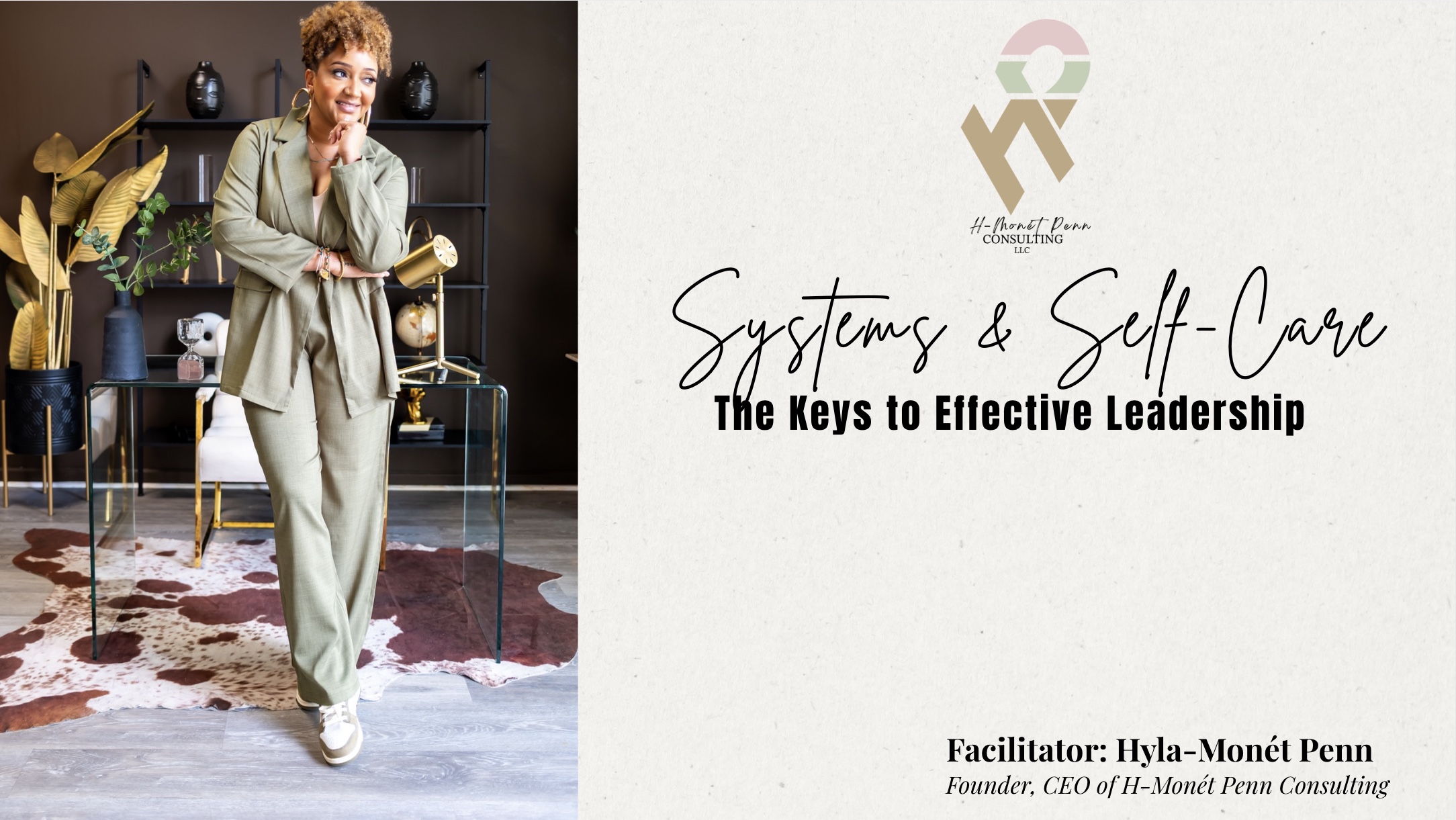
Image Credits
Ameer Linthicum
Mike D.