






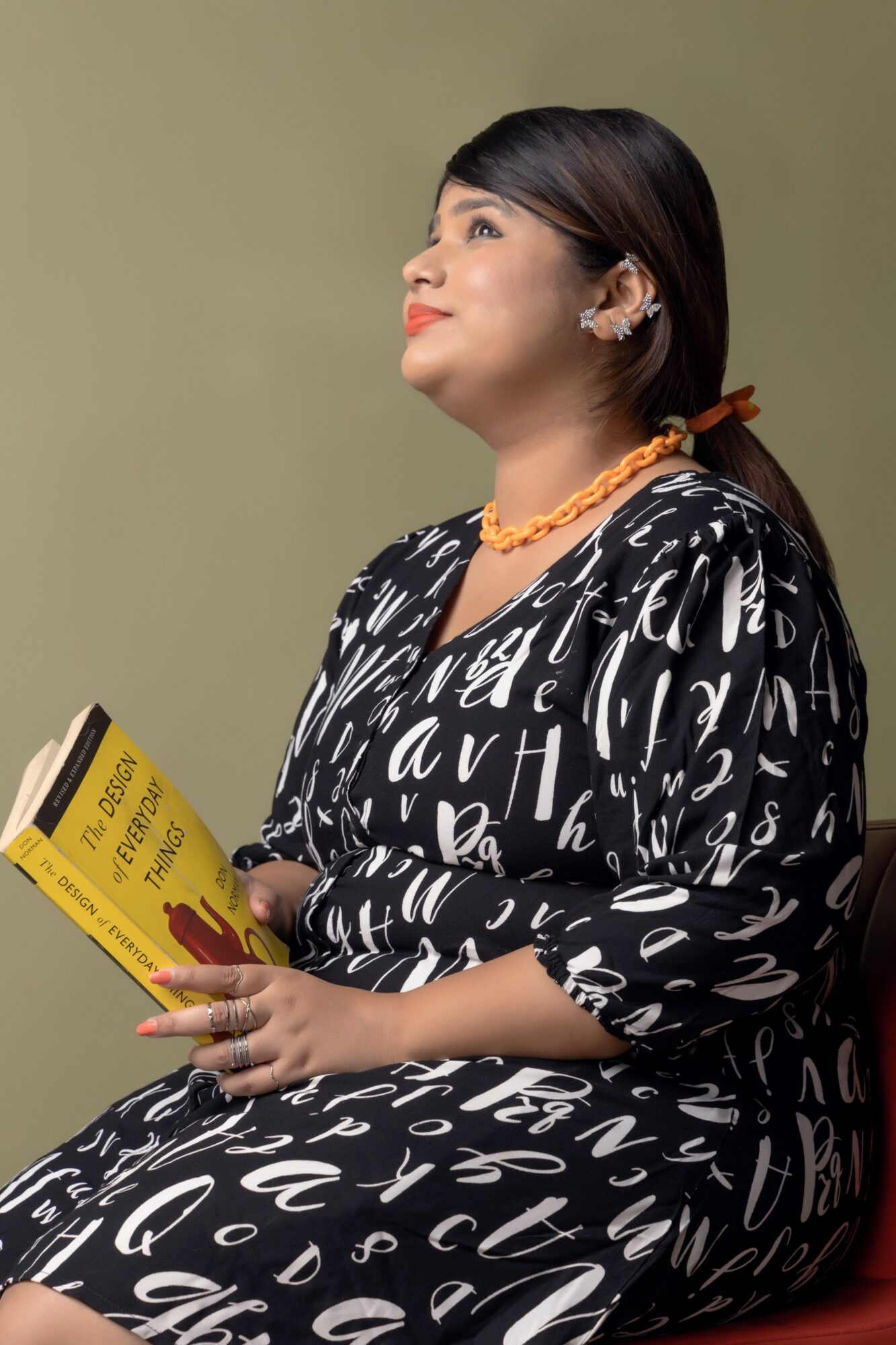
Today we’d like to introduce you to Kopal Sahu.
Hi Kopal, we’d love for you to start by introducing yourself.
My story begins in India, as the youngest in my family — and the first creative anyone had ever seen in our home. Even as a child, I was endlessly fascinated by visuals, design, and animation. My mom loves to tell the story of how, while other kids were learning how to eat properly, I spent my time cutting everything I could find with scissors — paper, fabric, newspapers. And my dad, who noticed that spark before anyone else, framed my early drawings and displayed them in our living room. In a way, that was my first gallery — the first place where I felt my imagination was celebrated.
I didn’t grow up surrounded by creatives, but I grew up surrounded by love — and that was enough to let my creativity grow without fear.
When I chose Product Design for my undergraduate degree, it opened up an entirely new way of seeing the world. Product design taught me to see emotions even in industrial objects — to understand why people choose something, what feelings it evokes, and how design subtly shapes behavior. I realized that product design is really about designing habits. And yet, I also learned something deeper: every good design needs persuasion — a strong experience that influences people, resonates emotionally, and makes them want to engage.
That realization slowly pulled me toward creative advertising — the desire to create not just functional solutions, but emotional experiences.
So I followed that instinct to SCAD, where I pursued my master’s in Advertising. That is where everything finally came together. I learned how to blend strategy with imagination, and how to bring emotion into design without losing clarity or intention. Even now, my philosophy remains rooted in what I learned early on: form follows function, but function must always honor emotion.
Then came Area 23, an IPG Health Company — the chapter that shaped me the most.
Healthcare advertising carries a deep responsibility. It requires delicacy, compassion, and the willingness to truly listen to people’s stories. At Area 23, I deepened my expertise in creating art direction concepts that weren’t just beautiful but meaningful — visuals that honored people’s fears, truths, and hopes. I collaborated with strategists, copywriters, and medical teams who taught me how to communicate with care and precision. Some projects were emotionally heavy, but those were also the moments that taught me the true power of creativity when it’s driven by purpose.
Looking back, I can see how every piece of my journey connects — the little girl cutting paper at home, the daughter whose drawings were framed like treasures, the product designer fascinated by human behavior, the storyteller searching for emotion, and the art director learning to serve people through thoughtful, empathetic design.
I create because it’s my way of honoring people — their feelings, their stories, their quiet moments of being human. And even today, I’m still evolving, still learning, still stepping into the creative I always dreamed of becoming.
Would you say it’s been a smooth road, and if not what are some of the biggest challenges you’ve faced along the way?
It definitely hasn’t been a smooth road, but every challenge has shaped me in ways I’m grateful for. Being the first creative in my family meant I had no blueprint — I even had to help my family understand what this career path really meant. Even now, people often ask me, “What exactly do you do?” which reminds me how unconventional this journey can look from the outside.
In India, I started internships as early as my second year of college because I had to research everything on my own. Those early experiences opened my world to advertising and design, and my curiosity pushed me to learn 3D animation late at night after long internship days. Looking back, those moments taught me discipline and the importance of being multidisciplinary — something every art director needs.
Moving from India to the U.S., studying at SCAD, and rebuilding my creative identity from scratch was exciting but sometimes overwhelming.
But I’ve learned that a smooth road doesn’t build you — the difficult ones do. Every obstacle taught me resilience, curiosity, and purpose, and helped me grow into the creative I am becoming.
Thanks for sharing that. So, maybe next you can tell us a bit more about your work?
I hold expertise in art direction (visual storytelling), graphic design, motion design, and UX/UI design. I’m a multidisciplinary art director who can collaborate seamlessly with cross-functional teams — blending different perspectives into clear, thoughtful, emotionally resonant ideas.
At my core, I’m an art director and visual storyteller who works at the intersection of strategy, emotion, and design. I focus on creating work that not only looks beautiful but feels intentional, meaningful, and human.
What I’m most known for is my strategic thinking and the way I blend it seamlessly with creativity. For me, the why behind an idea is just as important as the visuals themselves. My product design background gave me that foundation — the instinct to question, analyze, and understand human behavior before shaping a narrative. It’s not something I can set aside; it’s what makes my ideas feel grounded and unique.
I continue to use UX research tools to empathize deeply with the people I’m designing for. That strategic layer helps me uncover emotional truths, and from there, the visuals flow with greater intention. At SCAD, working as a research assistant strengthened this even more — it taught me how to translate insights into creative decisions and pushed me to experiment, because innovation only happens when we allow ourselves to try, test, fail, and evolve.
My time in healthcare advertising shaped me profoundly. It taught me how to approach sensitive topics with compassion and clarity — how to create visuals that carry emotional weight without losing honesty. It made me understand that creativity is a form of service, a way to honor people’s stories with respect.
What sets me apart is that balance — blending strategy with emotion, research with intuition, and structure with storytelling. My process is rooted in empathy, fueled by insight, and expressed through a strong visual voice.
And what I’m most proud of isn’t a single campaign, but the intention behind my work — the moments when something I created helped someone feel understood, seen, or comforted.
Ultimately, my work is about connection — connecting people to stories, emotions to ideas, and visuals to meaning. That is the heart of everything I do.
Who else deserves credit in your story?
I definitely didn’t get here alone, and I’m deeply grateful for the people who’ve shaped my journey.
My family has been my greatest support. Even though no one came from a creative background, they believed in me long before they fully understood this path — my dad framing my drawings, my mom celebrating every small win, and my sister standing with me through every transition.
I’m also thankful for my undergraduate mentors, who encouraged me to explore design beyond the classroom. They played a big role in helping me step into a future I had never seen modeled before. I was the first student from my bachelor’s program to pursue this international creative path, and their support gave me the courage to take that leap.
At SCAD, my professors and the mentors I worked with as a research assistant taught me how to balance strategy, empathy, and creativity — and to think deeper, question more, and experiment fearlessly.
I’ve also learned from amazing teams at Deloitte (Scad pro) and Bentley (Iris agency x Scad), where I saw how strategy and storytelling can elevate each other. And at Area 23, mentors guided me through emotionally sensitive healthcare work and taught me how to create with compassion and clarity.
On a personal level, playing tennis has been my way of recharging — a simple routine that keeps me grounded and refreshed.
Every mentor, teammate, and supporter has played a part in my growth, and I carry their lessons into every project I create.
Contact Info:
- Website: https://www.kopalsahu.com/
- Instagram: https://www.instagram.com/kopal.04/
- Facebook: https://www.instagram.com/kopalsahu.04?igsh=cXNiZW5lN2UzanQ0&utm_source=qr
- LinkedIn: https://www.linkedin.com/in/kopalsahu/
- Other: https://www.behance.net/KopalSahu
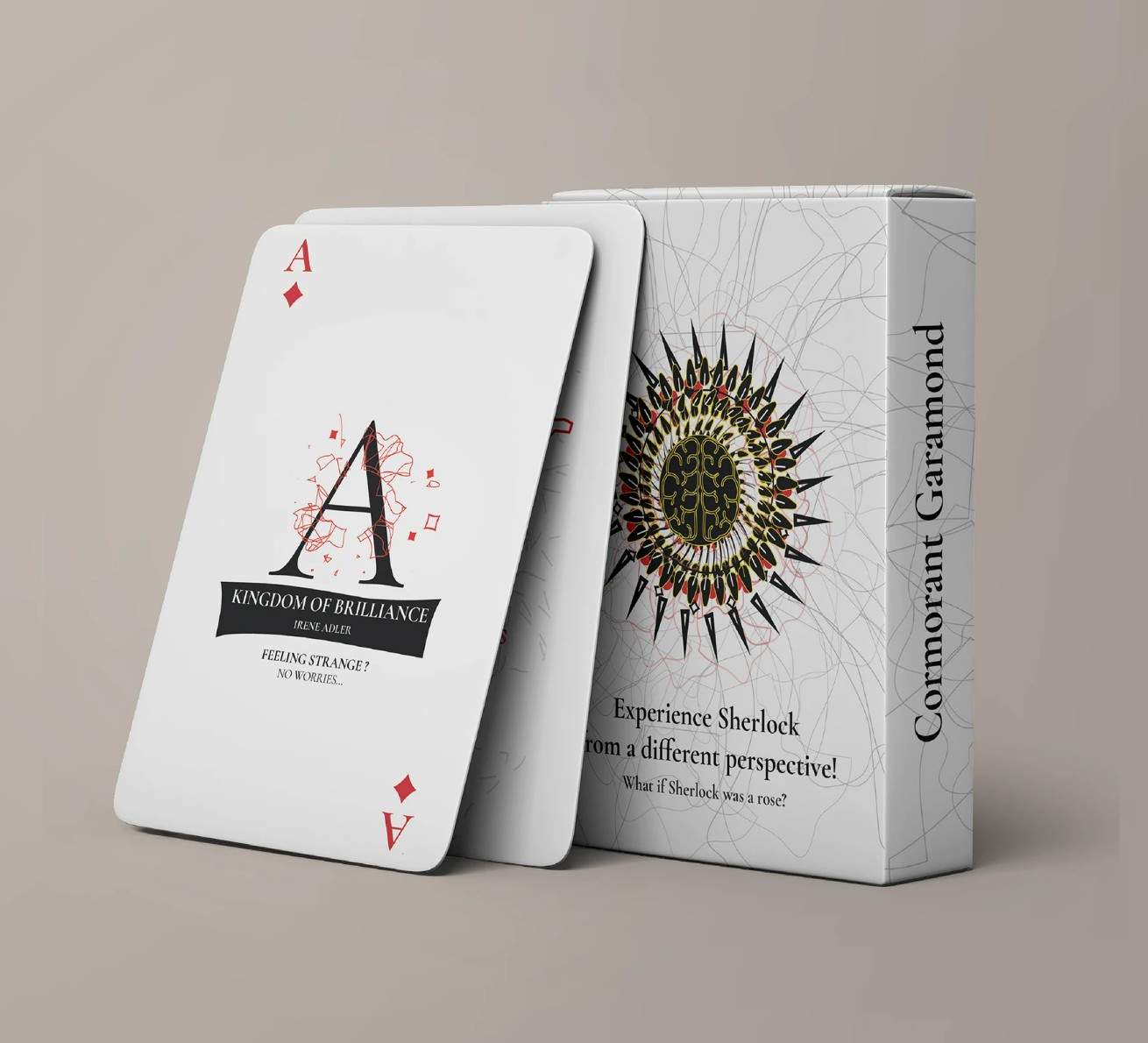
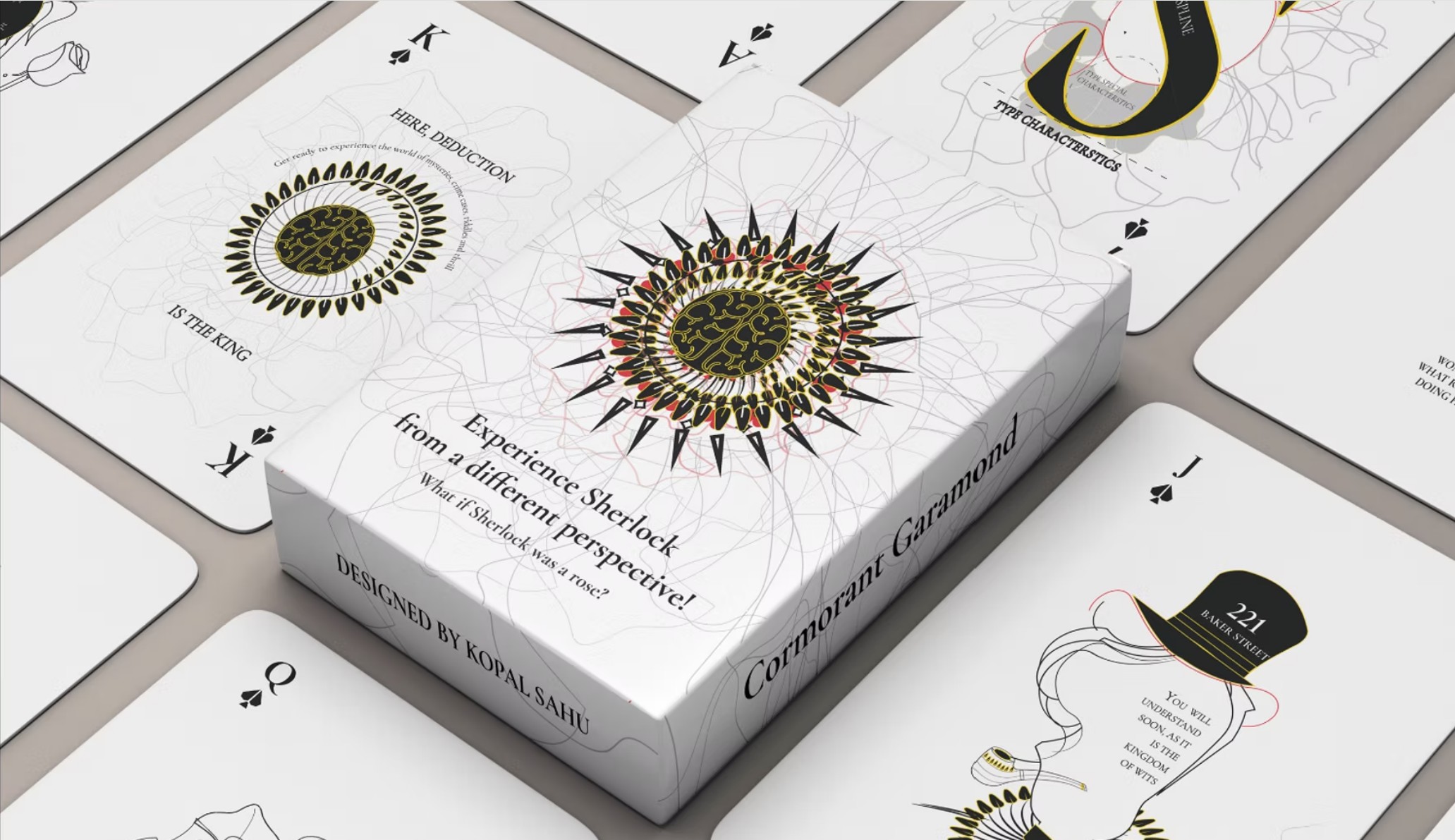
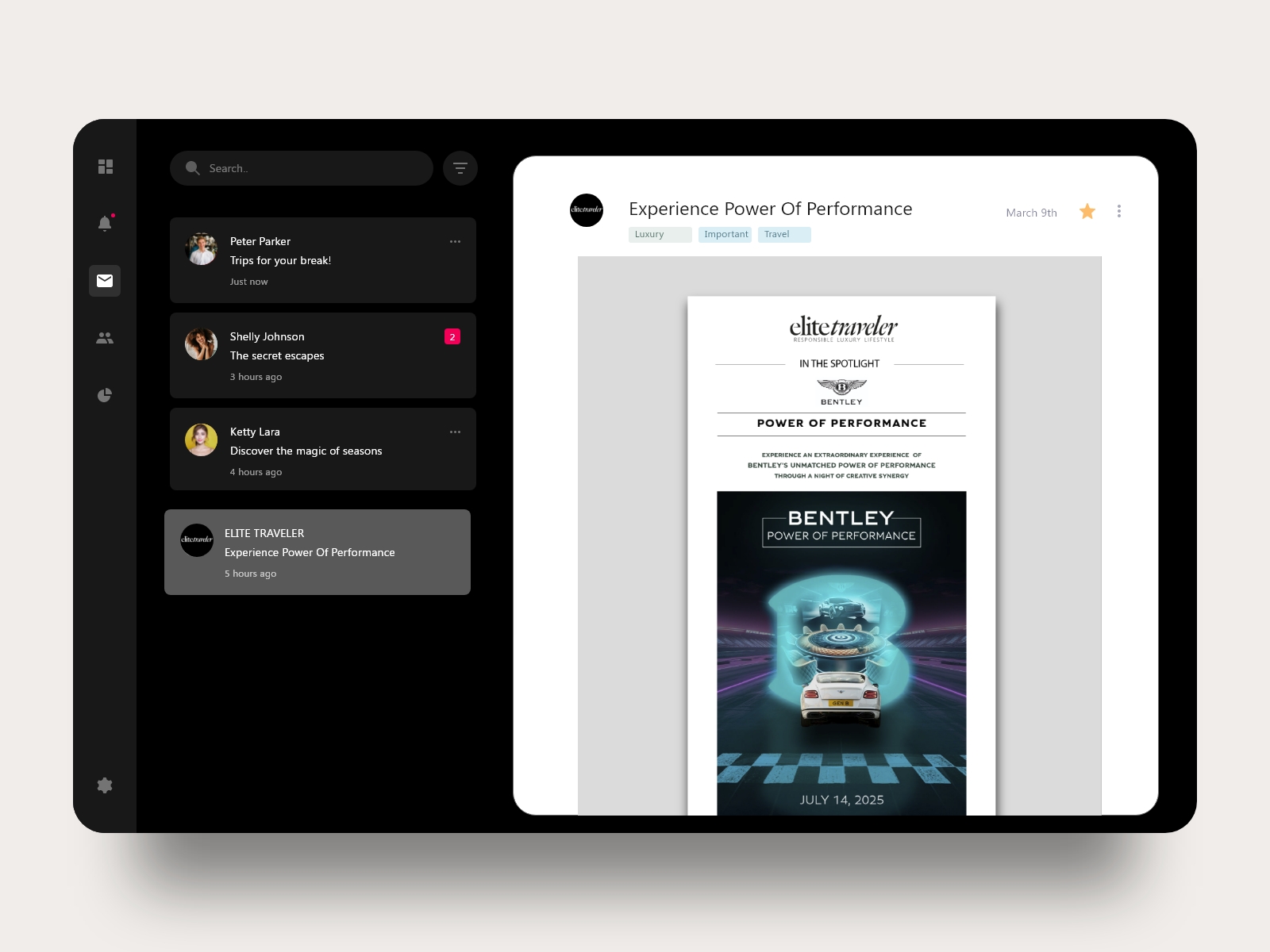

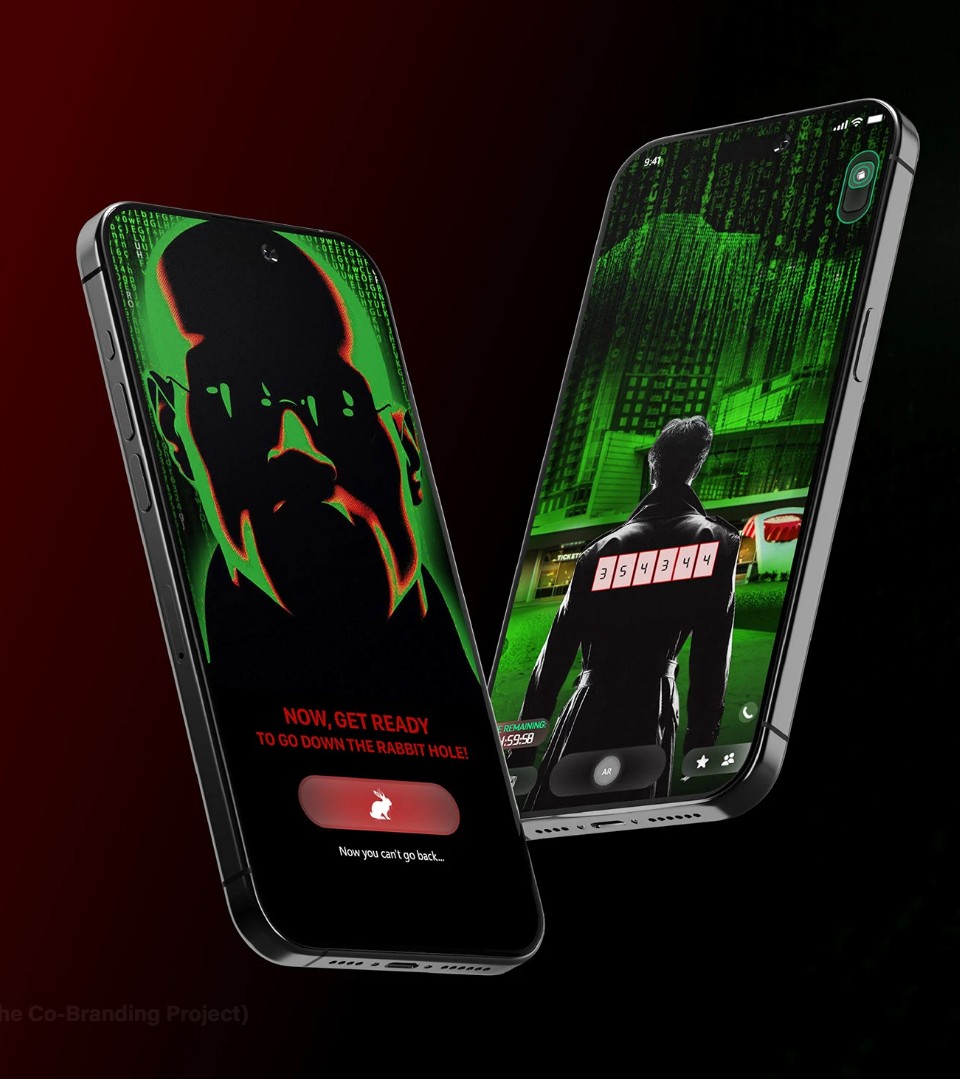
Image Credits
Work Image Credits:
Sherlock Holmes Card Deck — Conceptualized, Art Directed & Designed by Kopal Sahu
Bentley: Power of Performance Campaign — Team Project by Kopal Sahu, Sade Bayan, and Polina Gimla
My role: Art Director, UI Designer, Graphic Designer & Strategist
Matrix: Escape the Matrix — Team Project by Kopal Sahu, Sade Bayan, and Polina Gimla
My role: Art Director, UI Designer, Graphic Designer & Strategist