





Today we’d like to introduce you to Kaylee Goss.
Hi Kaylee, we’d love for you to start by introducing yourself.
My path to becoming a therapist wasn’t a straight line and honestly, that’s made me a better one.
I spent years working as an engineer, solving problems, optimizing systems, and chasing efficiency. It was good work, but something was missing. I kept finding myself more drawn to the people around me than the problems in front of me. I wanted my work to matter in a way I could feel, like being able to with someone in a hard moment and actually help them move through it. Engineering couldn’t give me that.
So I made a change. I went back to school, earned my Master’s in Counseling Psychology from The Chicago School of Professional Psychology, and eventually built a practice I’m genuinely proud of: the Center for Creative Change, right here in Atlanta.
Before opening my own practice, I gained experience across a wide range of clinical settings: a non-profit play therapy center, an inpatient hospital, an intensive outpatient group and a group private practice.
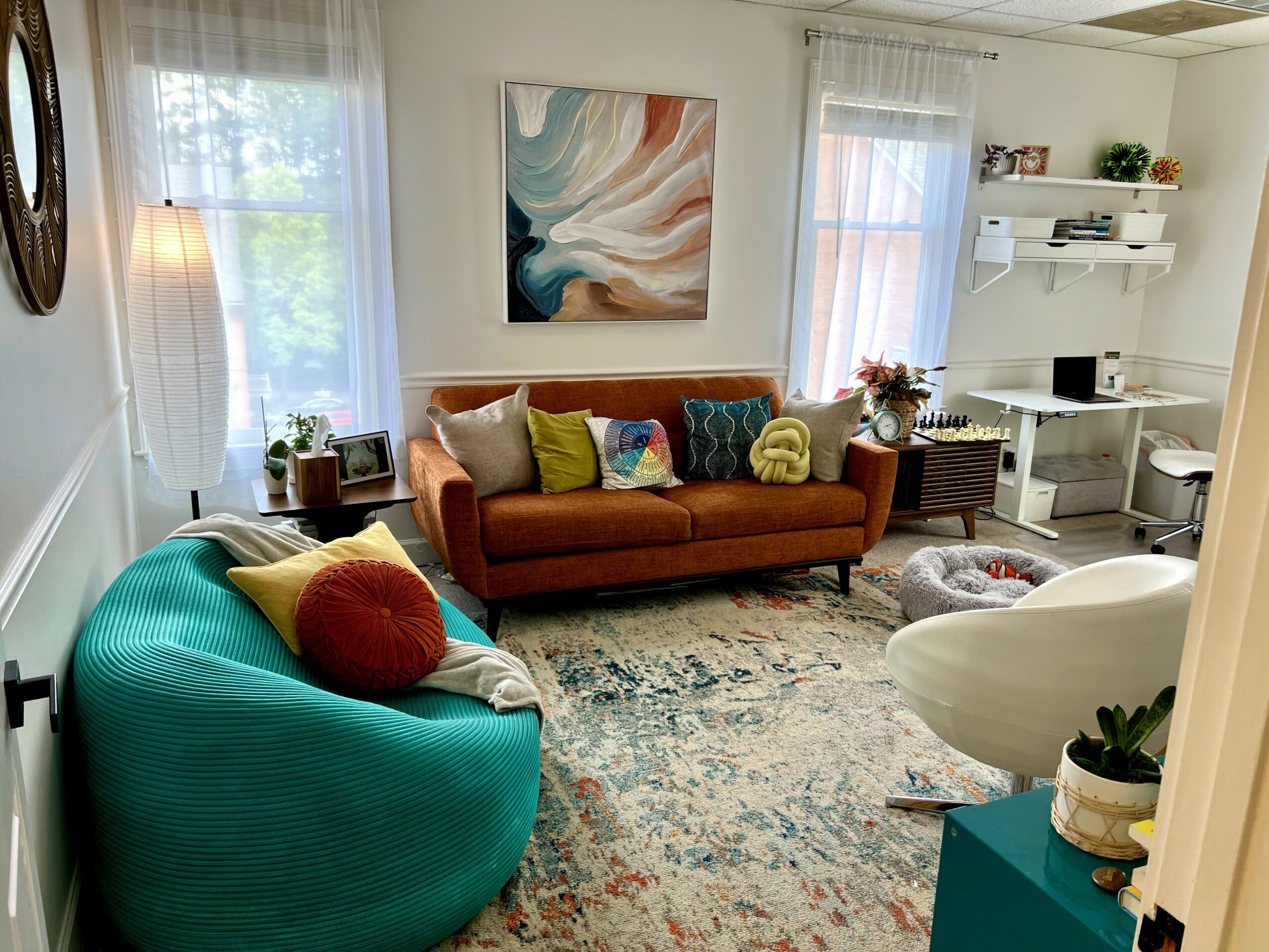
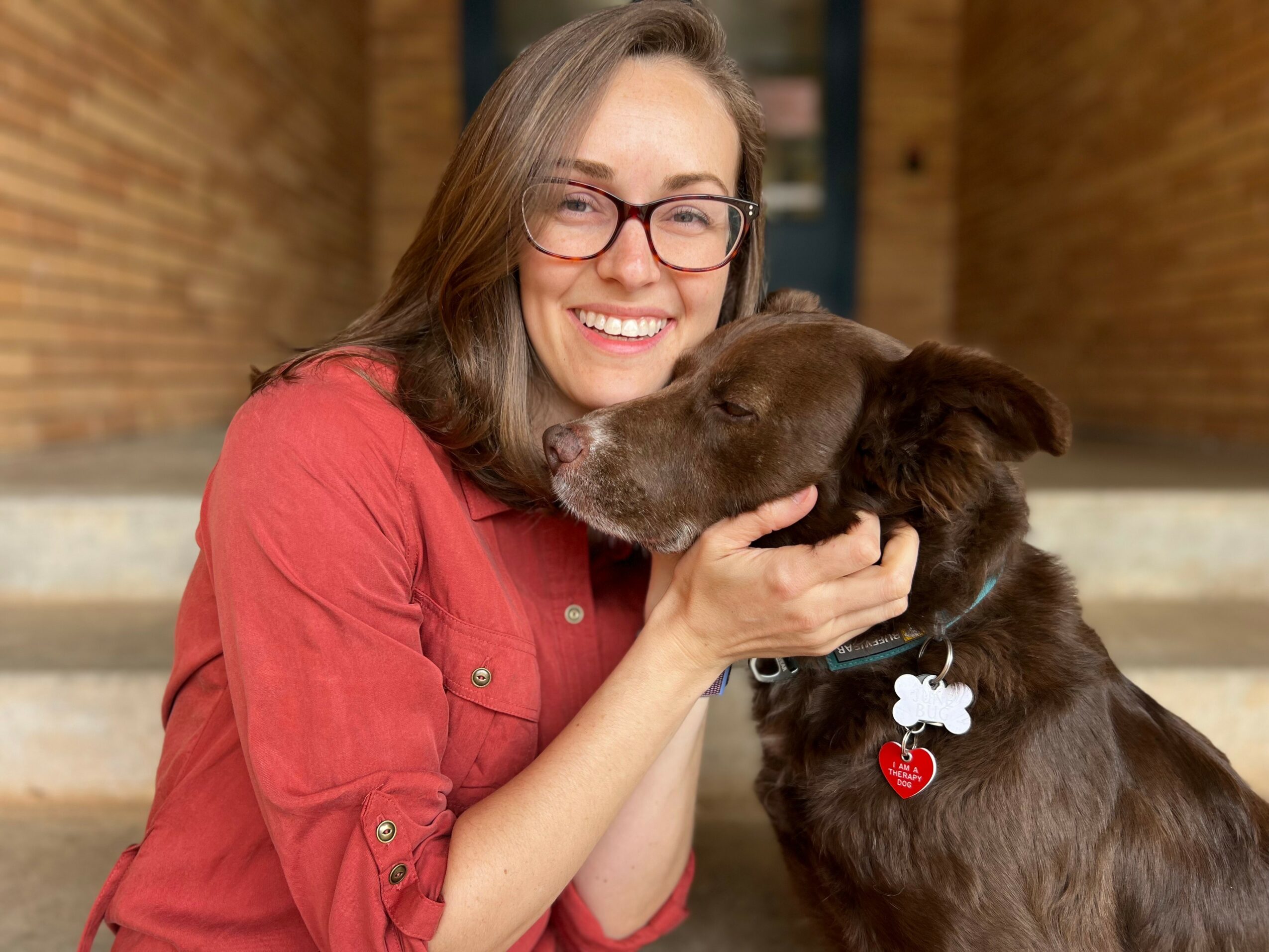
Now, I work with children, teens, and adults navigating anxiety, ADHD, depression, life transitions, and more. I blend evidence-based approaches with creativity because therapy should be enjoyable while you build tools to face life’s challenges. And my therapy dog June Bug is often in the room too, offering her own brand of comfort and calm.
I’m sure it wasn’t obstacle-free, but would you say the journey has been fairly smooth so far?
Creating a private practice means suddenly wearing every hat: therapist, business owner, marketer, scheduler, biller, and everything in between. Building something entirely your own requires a certain kind of grit and adaptability.
But I’ve learned I’m pretty good at making leaps. Before opening the Center for Creative Change, I spent years building my clinical foundation across a wide range of settings. And before any of that, I made an even bigger leap: walking away from a career in engineering because I knew I was meant for something different. That decision taught me to trust myself, and I’ve carried that confidence into everything I’ve built since.
Building this practice was just the next leap. And like the ones before it, it turned out to be exactly the right one.
Great, so let’s talk business. Can you tell our readers more about what you do and what you think sets you apart from others?
In my practice, the Center for Creative Change, I specialize in anxiety, ADHD, and parenting, and especially the intersection of all three. My clients are children, teens, adults, and parents who are navigating the unique ways these challenges overlap and show up in daily life, whether that’s building cognitive flexibility, strengthening emotional regulation, challenging negative thinking patterns, or tackling perfectionism and low self-esteem.
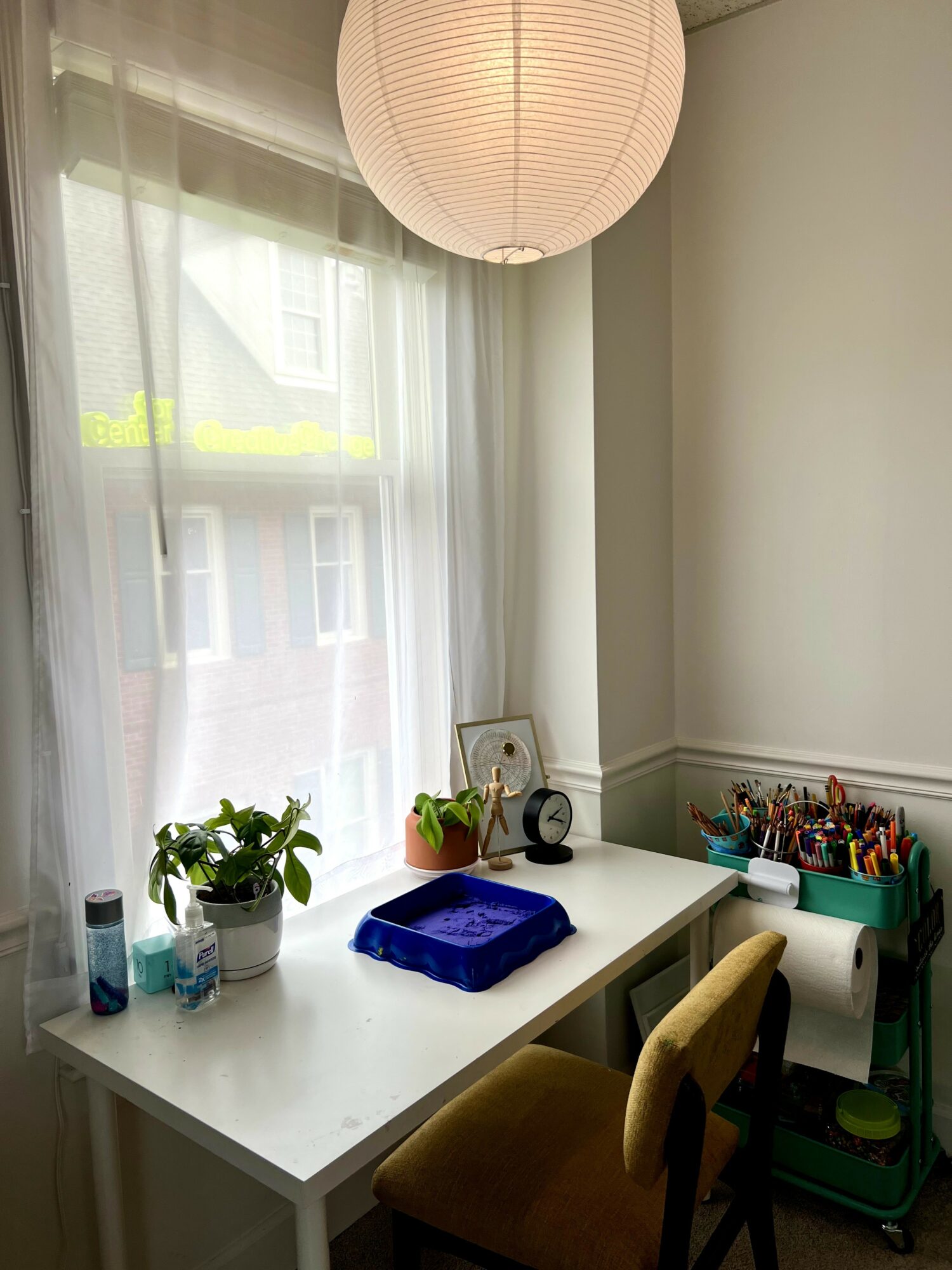
What sets me apart is the way I work. I blend evidence-based approaches with creativity, often using art, play, and movement, to make therapy effective, engaging, and fun. June Bug, my certified therapy dog, is often part of that too.
Parent coaching and support is something I’m truly passionate about. I offer 1-on-1 and group parent coaching, drawing on my training in Positive Discipline and SPACE — a Yale-developed approach that equips parents to reduce their child’s anxiety by shifting their own behaviors. I love working with parents because the ripple effect is so real: when a parent grows and gains new tools, their kids feel it too, and that’s some of the most meaningful progress I get to witness.
I have the best job in the world. Watching my clients find real peace, joy, and confidence never gets old.
Are there any important lessons you’ve learned that you can share with us?
One of the most important lessons I’ve learned is that pulling in parent support early and often makes all the difference. When I communicate well with parents, while of course keeping all client information confidential, the families I work with develop healthier communication and regulation strategies together. Progress doesn’t just happen in the therapy room; it happens at the dinner table, in the car, during the hard moments at home. When parents feel informed, equipped, and part of the process, the whole family moves forward.
Contact Info:
- Website: https://www.centerforcreativechange.com/
- Instagram: https://www.instagram.com/centerforcreativechange/