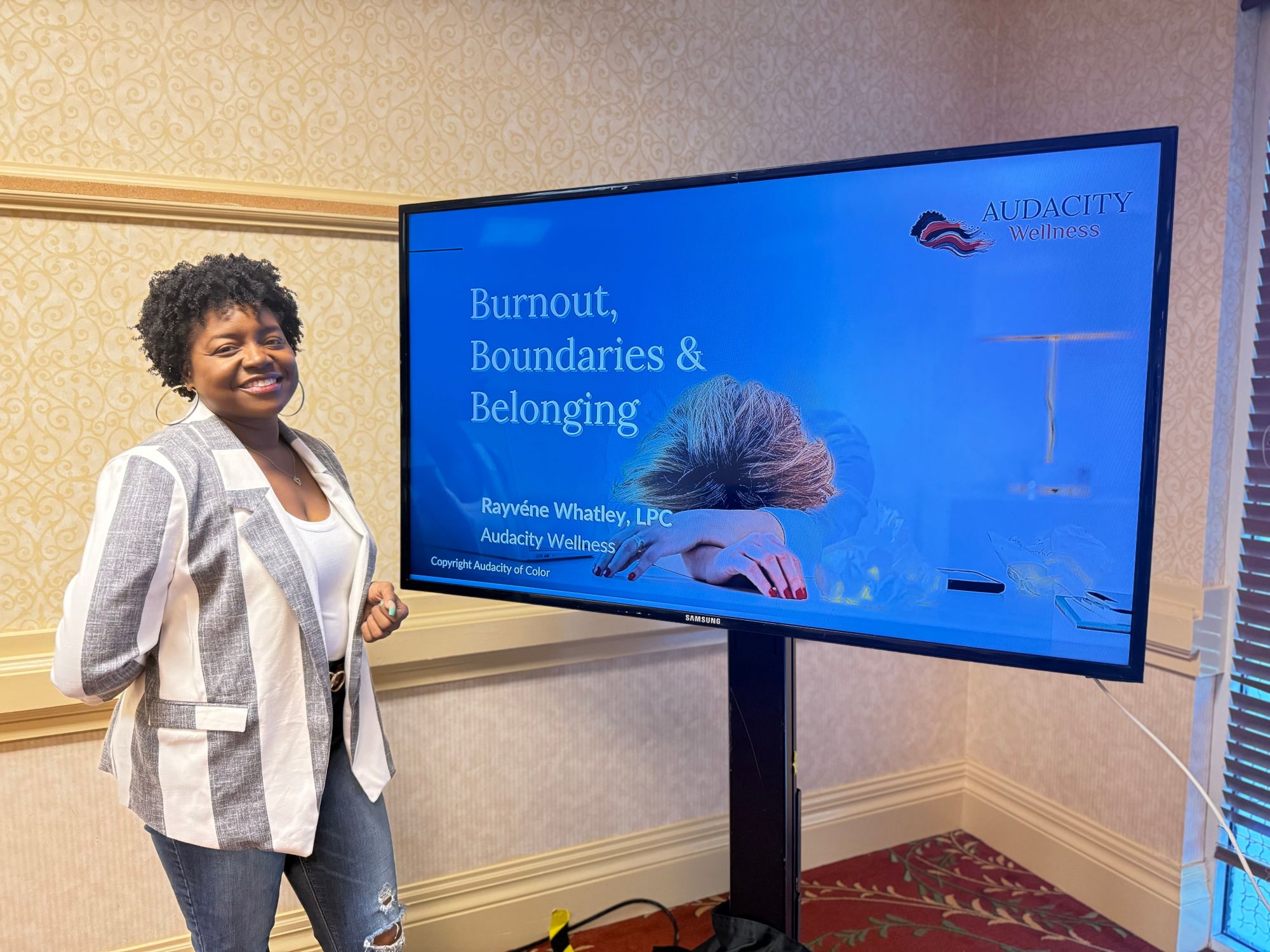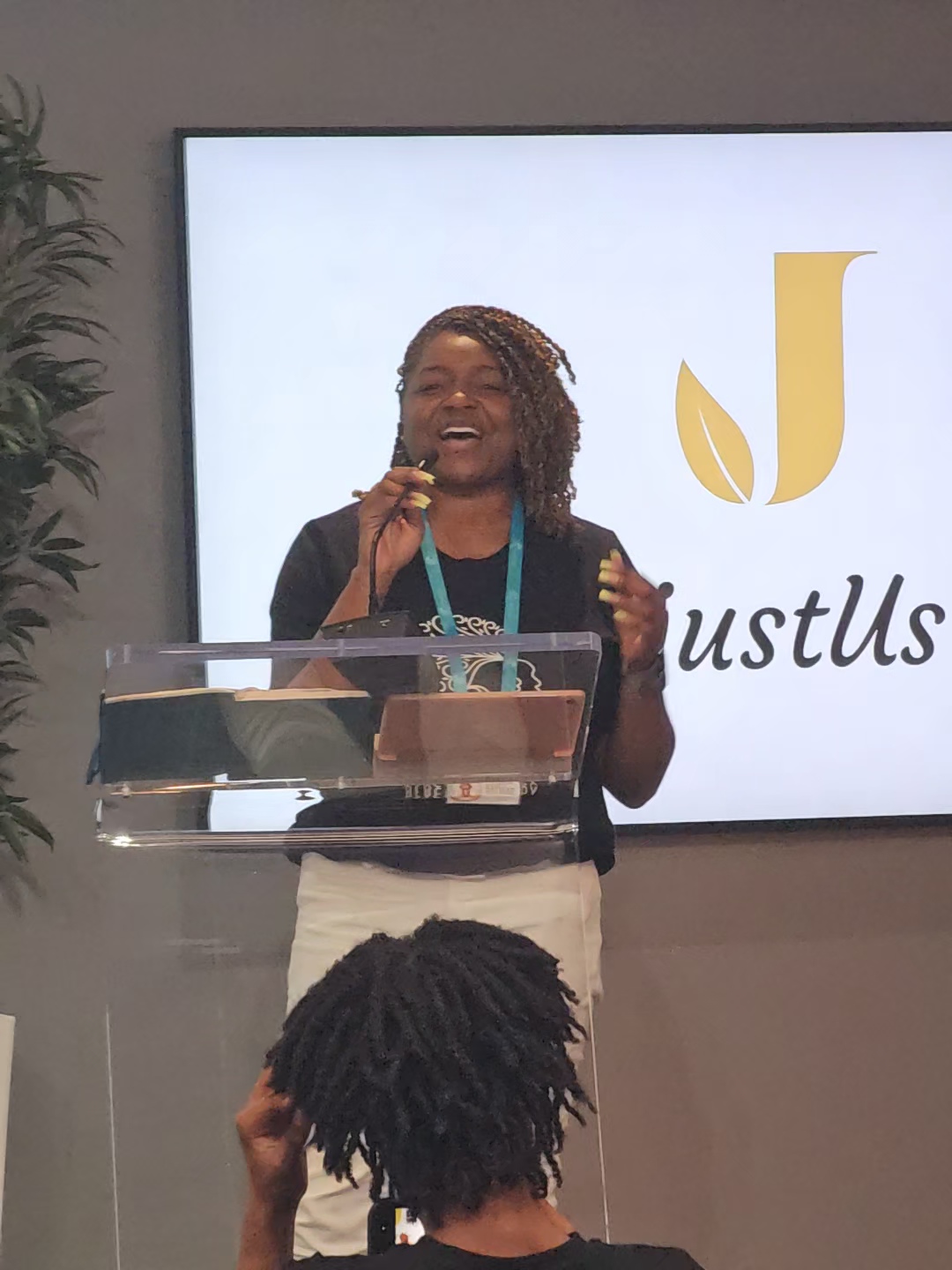







Today we’d like to introduce you to Rayvene Whatley.
Rayvene, we appreciate you taking the time to share your story with us today. Where does your story begin?
As an anxiety and trauma therapist, I’ve spent countless hours listening to professionals talk about their work. Not just the titles or responsibilities, but the pressure, the anxiety, and the quiet exhaustion that followed them home. Over time, what I started to notice was a pattern I couldn’t ignore. Many of the people I worked with were capable, successful, and deeply committed, yet emotionally guarded and constantly bracing themselves just to get through the workday. The issue wasn’t a lack of skill or motivation. It was the environments they were operating in.
And that’s really where Audacity Wellness began.
What became clear to me was that much of what shows up in therapy is shaped, reinforced, or intensified at work. How people manage stress, avoid conflict, overfunction, or shut down emotionally is often tied to workplace expectations and culture. Understand trauma helps me to see these behaviors for what they are. They’re not personal shortcomings, they’re nervous system responses to pressure, uncertainty, and unspoken demands. I wanted a way to address those patterns before they turned into burnout, disengagement, or people leaving roles they were otherwise well-suited for. So I decided to go to the source.
After more than a decade of listening to professionals struggle with their work environments, it became clear that individual coping strategies weren’t enough. The issues were systemic. In 2021, I began working with the problem from a broader lens, partnering directly with executives and organizations to examine how workplace structures, leadership norms, and communication patterns were contributing to stress and disengagement. That shift allowed me to address the root of the issue, not just its impact on individuals.
<b>Audacity Wellness was created to bridge human needs and business needs. </b>I intentionally blend my experience as a therapist, a business owner, and a leader to help organizations understand how emotional dynamics show up in communication, leadership, and team culture, and how to repair them in practical, sustainable ways.
The goal is simple. When people feel seen, they work better.
Today, my work sits at the intersection of mental health and workplace strategy. I bring a therapist’s lens into organizational spaces, helping teams move beyond surface-level wellness initiatives and into meaningful, measurable change. It’s about building workplaces where people don’t have to armor up to perform, and where businesses are stronger because of it.
Can you talk to us a bit about the challenges and lessons you’ve learned along the way. Looking back would you say it’s been easy or smooth in retrospect?
It depends on what we mean by smooth. If we mean effortless, then no. Not at all. That said, the challenges were very helpful in providing perspective and helped refine the direction.
Honestly, one of the biggest hurdles has been helping organizations actually see the gaps between how they believe their culture is functioning and how people are experiencing it day to day. Many leaders are deeply committed and well-intentioned, but emotional dynamics at work are easy to overlook because they don’t show up neatly on performance dashboards. Anxiety, emotional shutdown, and chronic stress tend to get mislabeled as motivation issues or communication problems, when they are often signs of a system under strain.
This feeds directly into the next challenge: most employees don’t believe that their leaders are deeply committed and well-intentioned because of the very emotional gaps I seek to close.
Another challenge has been shifting the conversation from checking a box to doing the work. A single workshop can feel productive, but without follow-through it rarely creates change. Real impact requires time, honesty, and a willingness to look at how leadership behaviors, expectations, and unspoken norms shape team dynamics. That can feel uncomfortable at first, especially in environments that value speed and output.
What I’ve learned is that organizations willing to invest in strengthening their teams in a meaningful way see the difference quickly. When emotional dynamics are acknowledged and addressed, productivity improves, communication becomes clearer, and people are more engaged because they feel safe enough to contribute fully. The work isn’t always easy, but it’s effective. And once leaders see the connection between emotional health and performance, the conversation shifts in a powerful way.
As you know, we’re big fans of Audacity Wellness. For our readers who might not be as familiar what can you tell them about the brand?
Absolutely! Audacity Wellness is a workplace strategy and advisory firm that helps organizations strengthen performance by addressing the emotional dynamics that shape how people work. We partner with leaders and teams to turn chronic stress, burnout, and communication breakdowns into stronger accountability, more honest communication, and cultures where people don’t have to protect themselves to perform.
Our approach is informed by clinical experience, which allows us to bring a more honest perspective to what’s happening with the humans doing the work. Instead of stopping at surface-level behaviors or productivity metrics, we look underneath. We examine the underlying emotional patterns, nervous system responses, and unspoken workplace norms that influence how people lead, collaborate, and protect themselves at work. Many workplace challenges that show up as disengagement, conflict, or low morale are actually responses to sustained pressure and emotional disconnection within systems.
Our work focuses on balancing basic human needs with the needs of business. We partner with organizations to move beyond performative wellness efforts and toward meaningful, sustainable change. This includes leadership development, team trainings, facilitated conversations, and culture-focused initiatives that prioritize psychological safety, emotional clarity, and accountability. The goal is not just to make people feel better, but to help teams function better.
What I’m most proud of is helping organizations close the gap between intention and impact. Leaders are often well-meaning, yet employees don’t always experience that care in practice. Audacity Wellness helps make those gaps visible and repairable. <b>When people feel seen, communication improves, trust grows, and productivity follows.</b>
I want readers to know that Audacity Wellness is for large and small organizations ready to be honest about what’s not working and willing to invest in their people in a real way. This work isn’t about checking a box. It’s about creating workplaces where people can show up fully and do their best work, without burning out in the process.
We’d love to hear about how you think about risk taking?
I tend to think about risk practically. In my work, risk usually shows up when you decide to name what others are avoiding or when you step into spaces that aren’t designed to hold emotional honesty.
One of the most significant risks I took was expanding my work beyond individual therapy and into organizational systems. It meant moving beyond the clarity and containment of the therapy room into environments where emotional impact is rarely prioritized, where results are expected quickly, and where being direct can challenge long-standing power dynamics.
What made that shift risky wasn’t the work itself, but the context. Organizations often reward composure over candor and speed over reflection. Choosing to introduce conversations about stress, anxiety, and emotional avoidance into those spaces meant accepting that not everyone would be ready or receptive. It also meant standing firmly in a different way of working, even when quick fixes would have been easier to sell.
Over time, I’ve learned that meaningful change in organizations requires a tolerance for that discomfort. Risk, in this sense, is staying present long enough for insight to turn into action. It’s trusting that when leaders are willing to pause, listen, and engage honestly, the payoff is stronger alignment, clearer decision-making, and teams that can function without constant strain.
That’s how I think about risk now. Not as a dramatic leap, but as a deliberate choice to do work that asks more of people and ultimately gives more back.
Contact Info:
- Website: https://audacitywellness.com/
- Linkedin: https://www.linkedin.com/in/rayvene-whatley/
- Other: https://www.linkedin.com/newsletters/work-is-weird-7386149852532875264/