






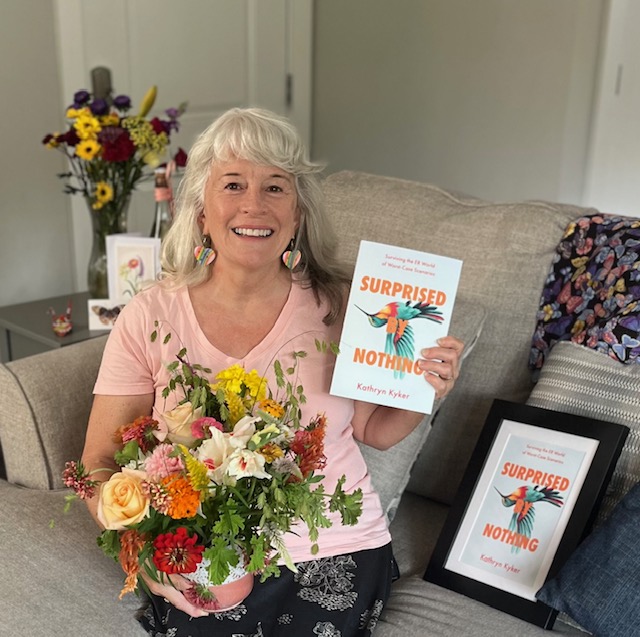
Today we’d like to introduce you to Kathryn Kyker.
Hi Kathryn, so excited to have you on the platform. So before we get into questions about your work-life, maybe you can bring our readers up to speed on your story and how you got to where you are today?
Where I am today: A retired social worker who’s written a memoir chronicling her career as a regional hospital’s first ER social work manager. My memoir details the innovation of that position, the personal cost of the work, and the period of self-reflection essential to my healing.
I came to Athens Dec. 1983 with my husband who was an artist. He planned to enroll in the art department at UGA to study with Jim Herbert. We came from Western Carolina, in Cullowhee, NC, where I had completed my undergraduate degree in social work. Now it was his turn to be the student, yet time passed and he never enrolled. (Is it typical for a woman to start “her” story with her husband’s? I wonder if any men do that?)
At age 21, I was becoming a feminist. The Feminist Center of Athens supported the Rape Crisis Line, and I was an active volunteer. The group ran on consensus, and schooled me in some basic feminist philosophy. Working at UGA’s Main Library, books such as Mary Daly’s Gyn/Ecology and Carol Gilligan’s, In a Different Voice, found their way into my hands. When my husband continued to delay his schooling, I enrolled in UGA’s graduate school to earn my MSW. When my husband had an affair, I left him.
As I approached my final semster of graduate school, planned to leave Athens for an internship in Washington, D.C.But, I fell in love and got pregnant. I changed my plans. I re-married and had my first child. I finished my thesis the next year–Examining the Social Distance of Parents Who Adopt Transnationally. I worked for an adoption agency in Atlanta part-time and had my second child at age 25. Our employers did not provide health insurance, and my pregnancies were uncovered, so I had home births for both deliveries, provided by certified nurse midwives who closed their business soon afterwards, in the face of tremendous obstacles placed by physicians in the area.
So, I didn’t have a great affection for doctors but damn, I needed health insurance! So, at age 28, I took a job in the ER at a regional hospital as a Patient Advocate. The doctors weren’t much of a problem, I worked more with nurses, patients, and families. The bigger problem was hiding my fear of blood and learning to cope with secondary trauma–the impact of working with victims of random accidents and calculated violence. There was also disease, poverty, abuse, and every sort of worst-case scenario. My world view flipped and I developed coping mechanisms, like compartmentalization, that worked in the short term, but sabotaged the wiring needed for optimum mental health.
I was promoted to a new position of Social Work Manager and developed a case management program along with supervising a group of advocates. We now covered the ER twenty hours every day. My husband and I raised our family. His business grew bigger, but we still depended on my insurance coverage. The hospital went through changes in response to the growing costs, regulations, and challenges of health care. My job and the Patient Advocate position survived despite being on the cutting block many times.
Detachment from what I experienced at work led to disconnection with my feelings. I was no longer able to cry even in moments of personal grief. But fear snuck in and threatened to take over. I didn’t have a history with anxiety, so it took a long while to accept that I had it. Once in my mid-fifties, I began reducing my hours at the ER. In my twenty-nine years there, my physical symptoms included clenching my jaw, digestive issues, chronic muscle tension, and anxiety. “Not crying” doesn’t make that list, as if it is a trivial thing, but it is often the first tangible sign of the cost of the work. My husband’s business became successful enough for me to retire early, at age 57.
I had been reflecting on my career and found my memory was like swiss cheese. I believe that compartmentalizing impaired memory storage. I wanted to understand why working in the ER changed me and whether I could change back. I started writing what I could remember and pushed myself to unveil as much as possible. On the days I couldn’t grasp the needed details, I wrote about the medical system and the values of social work. It’s said that you should write the book you would like to read–I read many medical memoirs and found nothing like what I wanted to write: an ER story that wasn’t trying to be gritty or shocking, that revealed more about the author’s insides than the misfortunes of patients’ and families.
When I finished writing I looked for a publisher and kept re-writing. My book came out August 2025, and I had a launch party in October. Friends from all the different areas of my life, including the ER, came out in celebration and formed a line that went out the door, waiting for my signature. I would never have dreamed of such a gracious reception, but what I am most grateful for is that the terrible fear that hovered over me before it was published–worrying how exposed I would feel with my book out in the world– has dissipated, as if I wrote those fears away. The joy and pride of having my voice in the world through this book is stronger than those fears.
I am still in recovery for wholeness but sometimes able to shed a tear.
And that’s where I am today. 🙂
Alright, so let’s dig a little deeper into the story – has it been an easy path overall and if not, what were the challenges you’ve had to overcome?
I have always been a person who plans, but I have been able to be flexible when my life shifted in unexpected ways: my divorce, my early pregnancy followed by a period of mild postpartum depression. Having children at such a young age meant I was out of sync with my generation. I had to find a support group. When I needed to earn more money, I had to take the job in the ER, despite having fainted twice at just the thought of blood. With administration changes in the hospital, I faced the challenge of defending the patient advocate position many times, and was never able to get them better pay. Once retired, I needed to to understand what I had been through, yet I had memory problems due to over-using coping strategies like compartmentalization and detachment.
Despair Co. makes snarky posters out of cliches used in the workplace. One of my favorites showed a Mayan temple of sacrifice with the words: “All we ask here is that you give us your heart.”
That was the deal in the ER. It was rewarding and exciting, and easier to stay (I thought) than to find another job. So, in a way, the road was smooth–all I had to do was stay the course, all I had to do was sacrifice my heart. That’s a bit dramatic, but I think we often make these sort of compromises, like: this is a cool job, I’ll just set aside my ethics, or my dreams, and we go about convincing ourselves that the job is worth it. I’m reminded of Clarissa Pinkola Estes, when she writes in Women Who Run With The Wolves, that the young daughter betrothed to Bluebeard convinced herself that, “He is not really so blue.” The truth is often inconvenient. It was no different with me. I was blind to the major challenge of knowing what mattered and seeing the cost of maintaining my status quo, telling myself “It’s not really so blue.”
Thanks – so what else should our readers know about your work and what you’re currently focused on?
Social work in the ER is the shortest of short-term intervention. It is band-aid work–a bit of help for today’s wound. There isn’t time to resolve deep-seated problems. When I went to graduate school, I was on the organizational track–I was interested in being part of a big organization with an expansive plan. I wanted to be part of an ambitious mission that worked collaboratively with other organizations to meet the needs of individuals. I brought those interests to my position in the ER. I established relationships with community groups and learned area resources. As the team of patient advocates grew, I encouraged advocates to make these connections and share knowledge with the group–all to better help patients and families, to provide a bit more than band-aid social work.
I was part of a team that developed bereavement outreach services for families of patients who died in the ER. I created a case management program to connect the patients we saw frequently, to organizations that had the resources to provide more extensive and focused assistance. I received training on identifying and reporting child and elder abuse and neglect, and developed and presented training to the medical staff every year. I tried to be a positive influence on each new patient advocate, helping them to lean into social work values, to not let their “helping get in the way of helping.” (A quote from a social work professor)
I believe I was known for working hard, putting the patients first, representing the hospital positively, being a good boss, and really caring.
And now what I am proud of is that I wrote about it in a way that takes readers on a sometimes brutally honest tour of my inner workings: Welcome to my brain.
How do you think about luck?
In my memoir I write that I never considered myself especially lucky, therefore, I don’t court it. I’m not much for adhering to superstitions (the way most ER staff do). However, I have actually been extraordinarily lucky, starting with meeting my husband, a mate who is very good for me in so many ways. If we hadn’t become pregnant, I wouldn’t have stayed with him–I was drawn to less reliable types.
We could have gone into debt paying for conventional services for pre and postnatal care, and hospital delivery, but early on in pregnancy I bumped into a nurse friend who urged me to contact the nurse midwives. They were only in business a few years–that resource didn’t exist in my town before them or after them–but I was able to have both my children under their care, which didn’t just save us a tremendous amount of money that we didn’t have, it kept me front and center of the experience, giving me body agency and empowerment at a young age, resulting in a confidence that has served me well. The midwives were still working with me when I experienced post-partum depression, and connected me to a network of new mothers.
In my professional life, I was lucky to find an agency that accepted me as an intern, when I had to pivot from my plan to work in D.C. My supervisor in that agency was an incredible mentor, and the internship turned into a contract position that I kept for over ten years. It allowed me to set my own hours, making it easier to balance a career with parenting.
Then when I needed to work more, I bumped into an acquaintance that referred me to the ER position. I was in the right place at the right time, hired by an innovative ER Director who was my next great mentor. She had a vision for the role and gradually I grew into that vision, allowed to shape and define the position to both suit my skills, and meet the needs of patients and families.
My creative pursuits were essential to my health, and when possible I worked on local films as an actor, producer, and finally, as a writer. I found a kindred soul in a young woman who became my longtime writing critique partner. We started with screenplays, but when I turned to writing my memoir, she was the first to read my pages. Coincidentally, she was the daughter of an ER nurse I was close to, so she had a unique understanding and appreciation for the landscape of the ER world. She was key to my memoir getting written.
I suppose it was very lucky that I retired in February 2020, so that I did not experience Covid in the ER. But I felt guilty about that. During those early Covid days and months I was writing, and had become part of a meditation group in the area that met by Zoom. Through them I acquired new friends and resources for healing. I could see how the pieces of my compartmentalized selves may one day fit into wholeness. I brought these insights into my writing and into my healing.
I feel lucky to have been a part of the Athens community for over forty years in many different roles: student, librarian, wife, mother, peace activist, church goer, tennis player, filmmaker, frontline service provider, organizer, mindfulness meditator, and writer. The Athens community has given me tremendous opportunities and support, and I hope I can continue contributing to its vitality.
Pricing:
- Hardback book – $25.95
- Paperback – $ 17.95
- E book – $9.99
Contact Info:
- Website: https://kathrynkyker.com
- Instagram: @kathrynthe8
- Facebook: https://www.facebook.com/kathryn.kyker
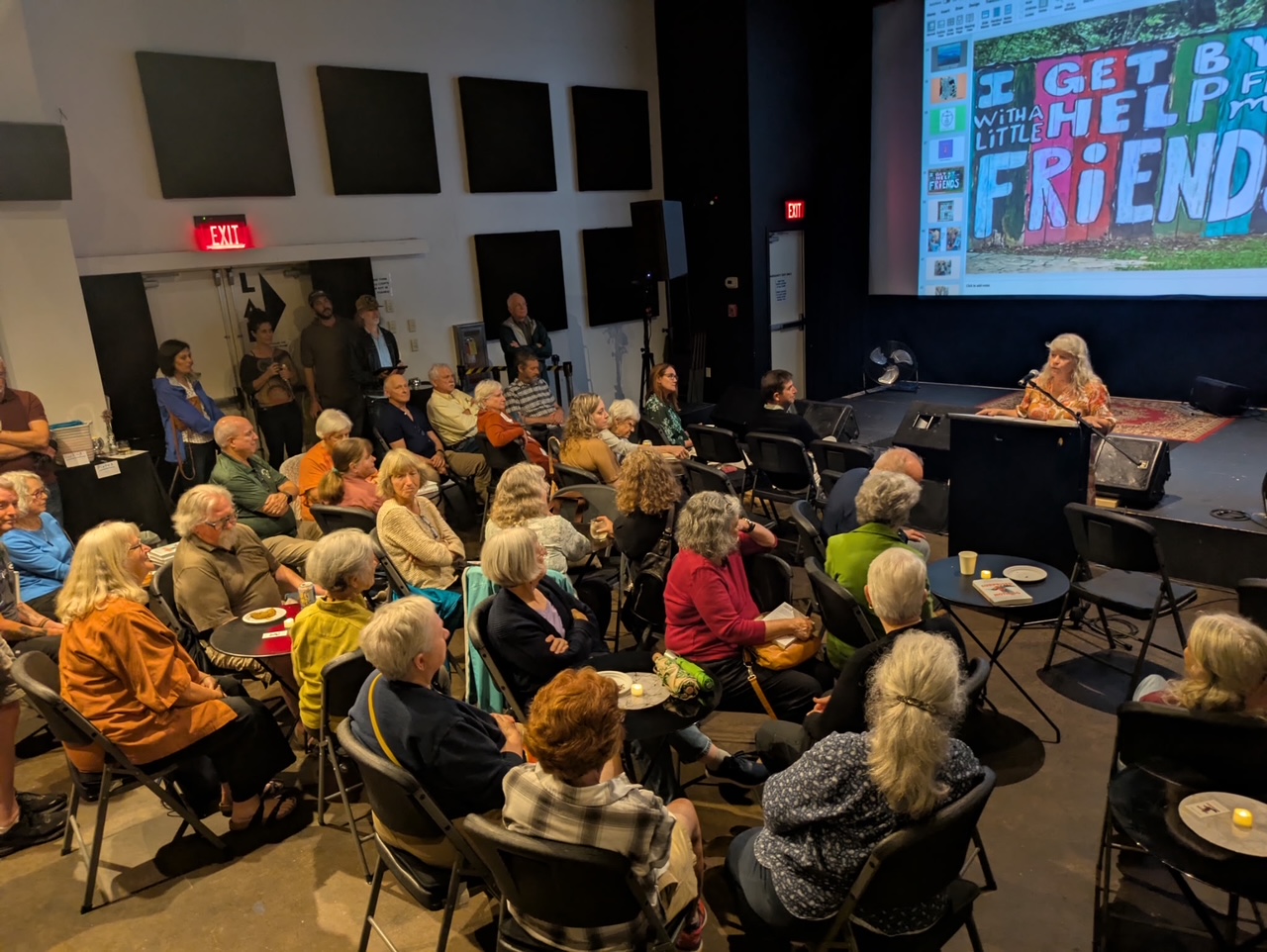
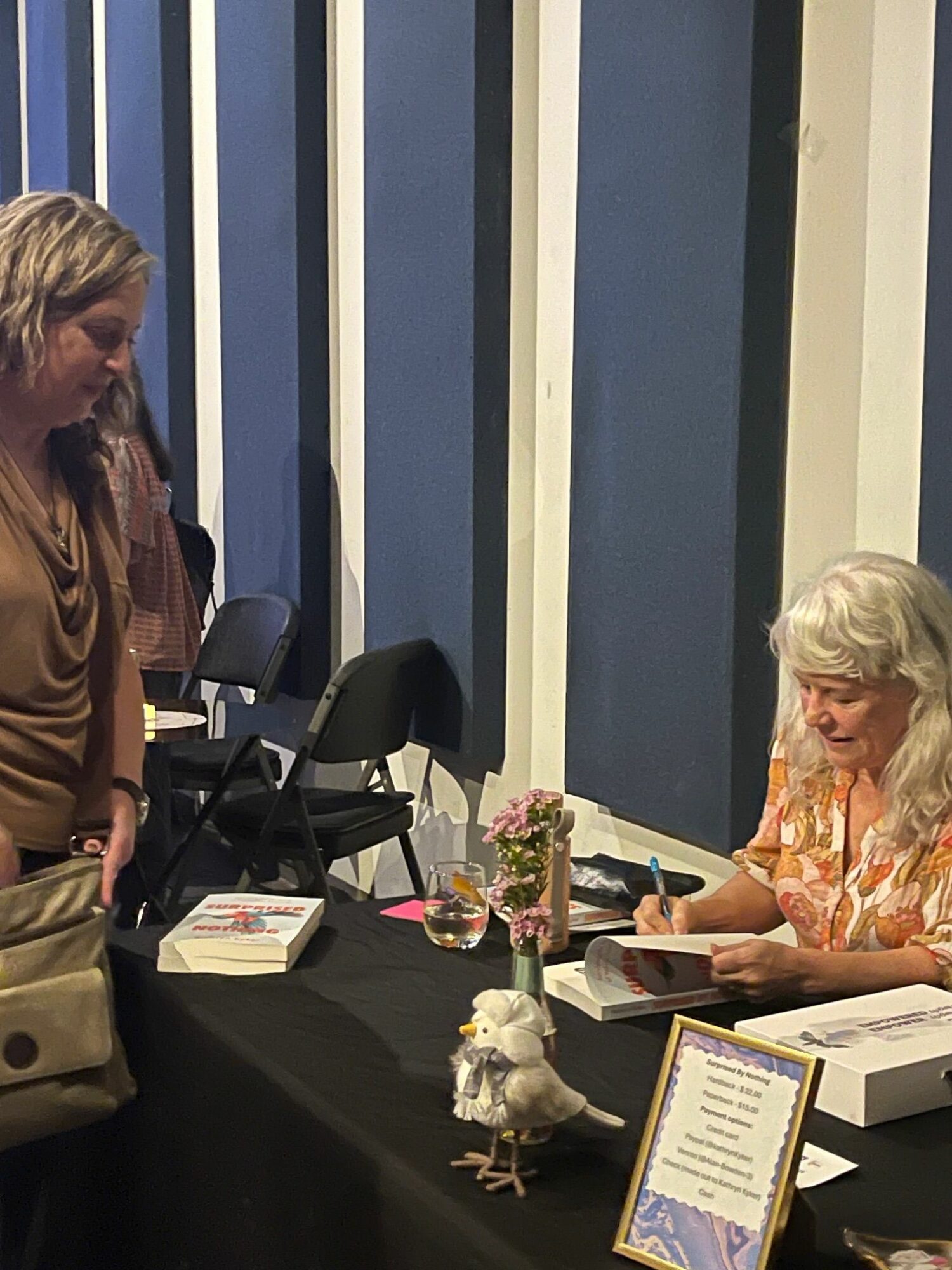


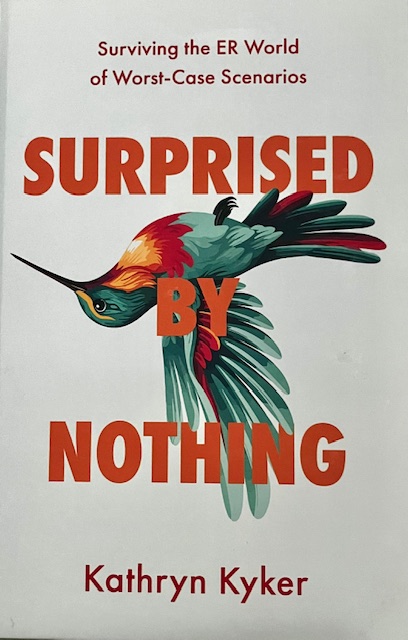
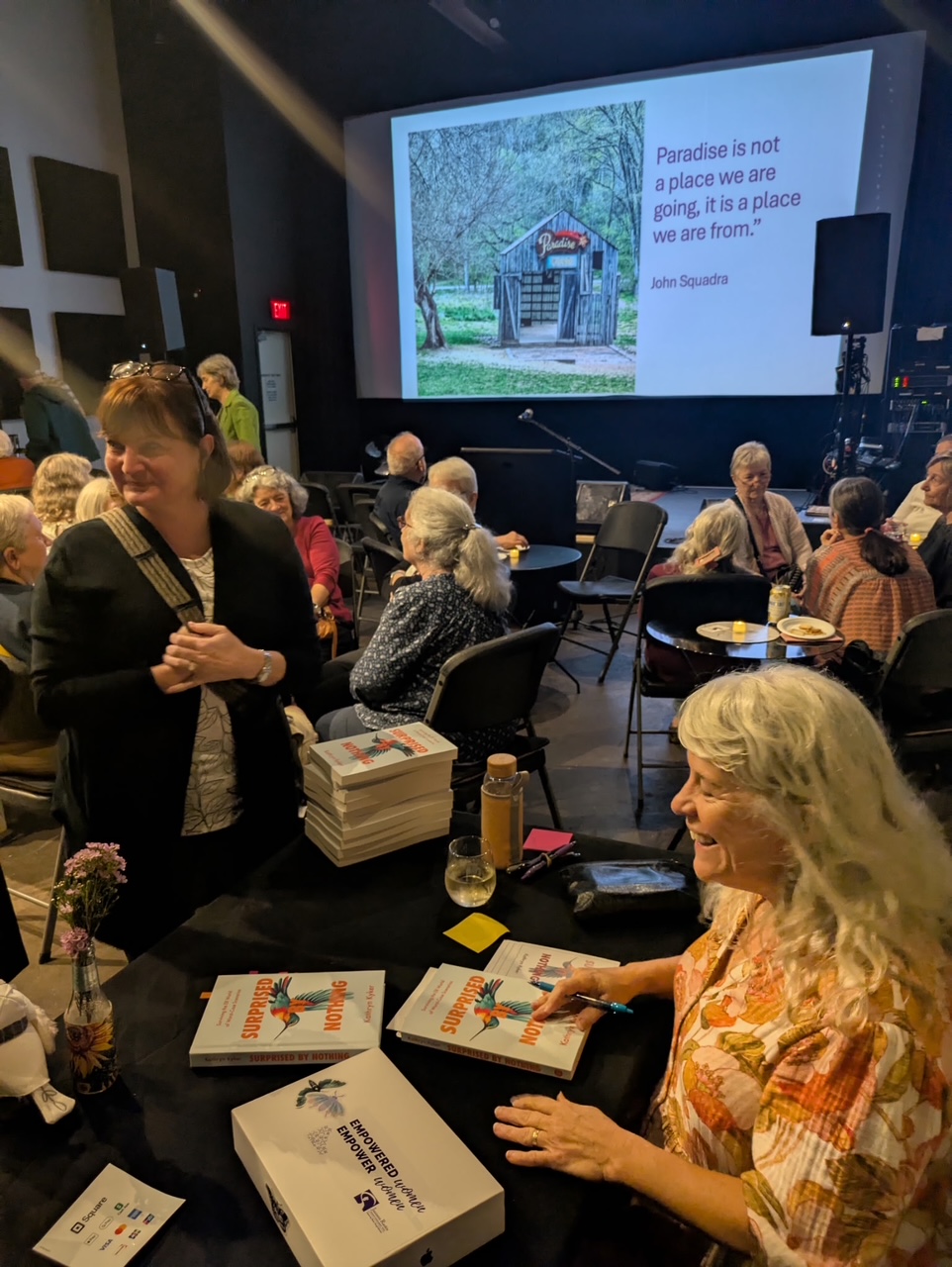
Image Credits
Kathryn Kyker
Alan Bowden
Katherine Cerulean
Chris Risse