






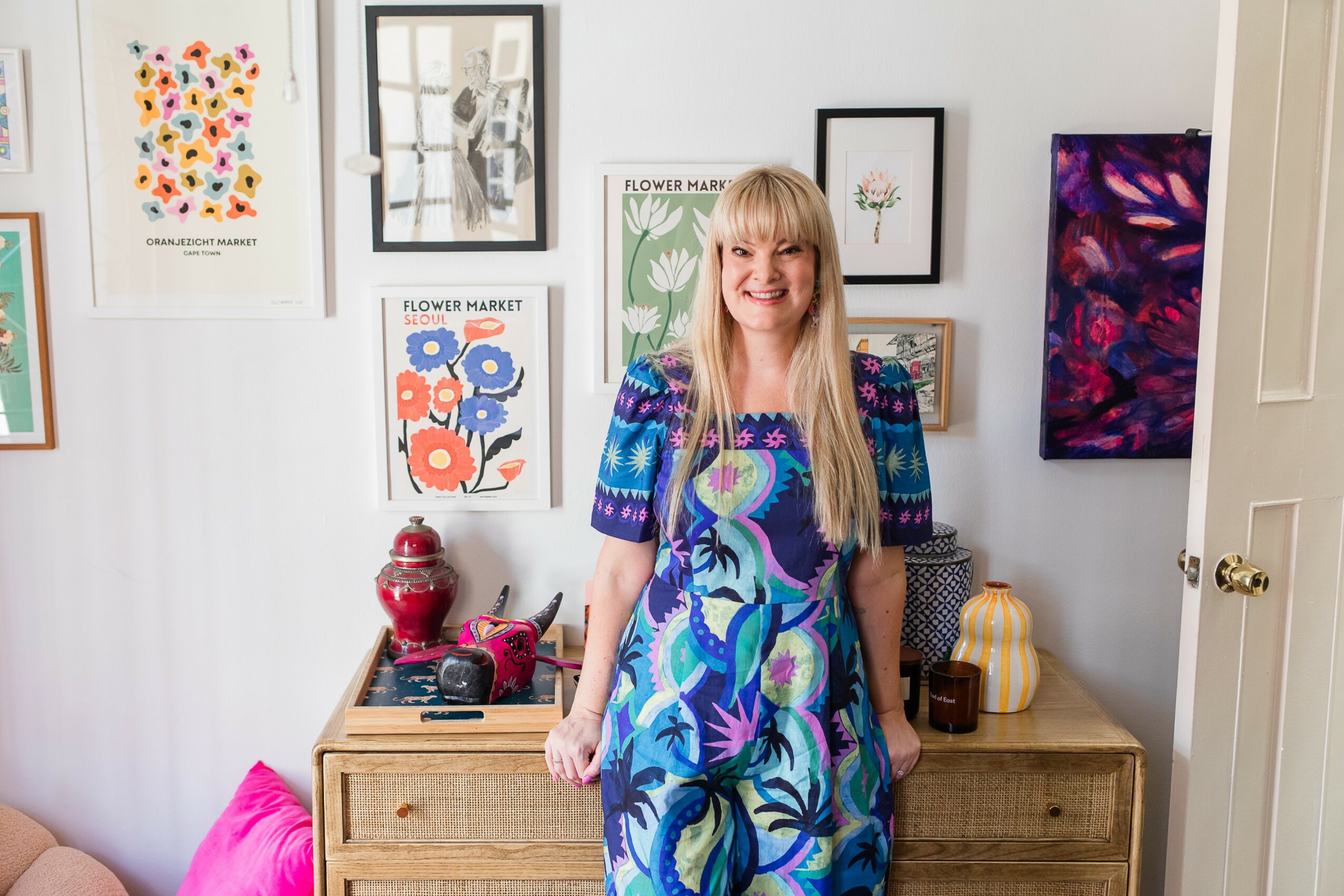
Today we’d like to introduce you to Nikki Smit.
Hi Nikki, so excited to have you on the platform. So before we get into questions about your work-life, maybe you can bring our readers up to speed on your story and how you got to where you are today?
I didn’t always fit neatly into what was expected as a child. I was curious, sensitive, and attuned to the world around me, and I learned early that people move through life in very different ways. I was fortunate to grow up with parents who helped me understand that difference as part of who I was, not something to correct. They didn’t have the language we have now, but they modeled something that stayed with me: that understanding people begins with listening, context, and relationship.
My father’s work in community settings had a particularly strong influence on me. Watching him connect with people, often across difference, showed me the quiet power of being present with others at a human level. That way of seeing the world shaped me long before I entered this profession.
I trained as an occupational therapist in South Africa, where my early work was grounded in community-based, holistic practice. There, wellbeing wasn’t framed as mindset or performance, but as something deeply influenced by environment, access, and the quality of our relationships. That perspective became foundational to how I work.
After moving to Singapore, I spent many years working closely with children, particularly neurodivergent children, in schools and clinical settings. Supporting children gave me a deep understanding of how nervous systems develop, how sensory and emotional experiences shape behavior, and how powerful it can be when adults prioritize safety and curiosity over control.
Over time, my work expanded to include adults alongside children, and increasingly adults in their own right. I became especially interested in the gap between what many people intellectually understand about wellbeing and what their bodies are actually carrying. This is where my work began to sit more clearly in the health and wellbeing space, bringing together nervous system science, sensory health, and lived experience.
Today, I work across children, adults, families, and professionals, and much of my work now involves teaching, speaking, and writing. I translate complex ideas about stress, capacity, and nervous system health into language that feels grounded and relevant to everyday life. Whether I’m working clinically, speaking to organizations, or creating educational content, my focus is the same: helping people understand themselves with more clarity, relate to their experiences with less self-blame, and feel supported as human beings rather than managed or fixed.
Alright, so let’s dig a little deeper into the story – has it been an easy path overall and if not, what were the challenges you’ve had to overcome?
It hasn’t been a smooth road, but not in the way people often expect.
One of the biggest challenges has been working within systems that prioritize outcomes, efficiency, or surface-level change over depth and sustainability. Early in my career, I often felt a tension between what I knew genuinely supported nervous systems and wellbeing and what systems were asking for: faster results, clearer metrics, more compliance. Learning how to hold my ground without becoming rigid, and how to advocate without burning out, has been an ongoing process.
Another challenge has been finding language and positioning for work that doesn’t sit neatly in one box. What I do lives across therapy, wellness, education, and nervous system science, and that can be difficult to communicate in spaces that prefer clear labels. As my work expanded beyond traditional clinical roles into teaching, speaking, and writing, I had to get comfortable being visible in new ways and less easily categorized.
That visibility came with its own discomfort. Stepping into public-facing work meant allowing my thinking to be seen, questioned, and sometimes misunderstood. It also required a shift in identity, from being primarily a clinician working quietly within systems to someone contributing ideas more openly to the wider health and wellbeing conversation.
On a personal level, I’ve also had to reckon with my own capacity. Like many people who care deeply about their work, I spent years pushing through, assuming that resilience meant endurance. Learning to listen to my own nervous system, set clearer boundaries, and practice the principles I teach wasn’t always comfortable, but it was essential.
Rather than seeing these challenges as problems to solve, I now understand them as shaping forces. They clarified what I’m willing to compromise on and what I’m not, and they pushed me toward work that feels more honest, relational, and sustainable, including sharing these ideas more widely through teaching, speaking, and writing.
Can you tell our readers more about what you do and what you think sets you apart from others?
My work sits at the intersection of nervous system health, sensory processing, and everyday wellbeing.
I’m an occupational therapist by training, but my work now extends beyond traditional clinical roles. I work with children and adults, as well as families, professionals, and organizations, supporting people in understanding what’s happening in their bodies and nervous systems when life feels overwhelming. Much of my work focuses on helping people make sense of stress, sensitivity, emotional flooding, shutdown, and burnout in ways that are practical, compassionate, and grounded in lived experience.
I specialize in working with neurodivergent individuals and those who identify as highly sensitive or chronically overwhelmed, including people who may not have had language for their experience earlier in life. Rather than approaching wellbeing as a mindset issue or something to fix, I focus on capacity, safety, and how the body processes experience through the sensory and nervous systems.
Alongside my clinical work, I spend a significant amount of time teaching, speaking, and writing. A core part of my work is translating complex nervous system and sensory science into language that feels accessible and relevant, without oversimplifying people’s experiences. Whether I’m working one-to-one, speaking to organizations, or creating educational content, my aim is to offer a clearer, kinder framework for understanding ourselves.
What I’m most proud of is the sense of clarity and relief people often describe. Many tell me their experiences finally make sense, that they can relate to themselves with more understanding and less self-criticism, and that this shift changes how they move through daily life.
What sets my work apart is the integration. I bring together nervous system science, sensory health, and relational context in ways that feel grounded and usable in everyday life. I work with children and adults differently, while recognizing that we carry our nervous systems forward, shaped by experience, environment, and relationship.
Risk taking is a topic that people have widely differing views on – we’d love to hear your thoughts.
I don’t think of myself as a risk-taker in the dramatic or impulsive sense. I’m thoughtful, attuned to context, and very aware of timing. But I do believe that growth happens at the edge of our capacity, and stepping into that edge requires bravery.
Most of the meaningful risks I’ve taken haven’t been sudden leaps, but deliberate decisions to move toward work that felt more honest. Stepping beyond clearly defined clinical roles, sharing my thinking more publicly, and trusting my perspective enough to teach, speak, and write all carried risk. Visibility always does. There’s the risk of being misunderstood, of not fitting neatly into existing categories, or of being judged for not staying in a familiar lane.
One of the braver risks for me has been sharing more of my own experience, including naming my neurodivergence and my sensitivity as part of my professional lens. As a therapist, that visibility can feel particularly vulnerable. There’s a real tension between professionalism and authenticity, and a constant question of how to share in ways that feel measured, respectful, and genuinely helpful rather than performative or overexposed. I was very aware that being more open might not resonate with everyone, and that it could even turn some people away.
What’s shaped how I take risks is my understanding of nervous systems. Risk is most generative when it’s held, when there is enough safety and support to move through challenge rather than be overwhelmed by it. We grow when we’re stretched, not when we’re pushed beyond what we can tolerate. I see this every day in my work with both children and adults, and I’ve had to learn it personally as well.
For me, that has meant creating conditions where risk felt possible rather than forced. Building support before stepping into visibility. Paying attention to my own regulation. Letting my work evolve in ways that felt aligned, even when they were uncomfortable. Those moments of discomfort weren’t signs I was doing something wrong; they were signals that I was at the edge of growth.
I think risk lives in that in-between space: where bravery meets capacity, and where challenge is met with enough support to allow real learning and expansion to happen. That’s true in work, in wellbeing, and in life more broadly.
Contact Info:
- Website: https://projectplay.sg/
- Instagram: https://www.instagram.com/nikkismittherapy/
- LinkedIn: https://www.linkedin.com/in/nikki-smit-572087b8/
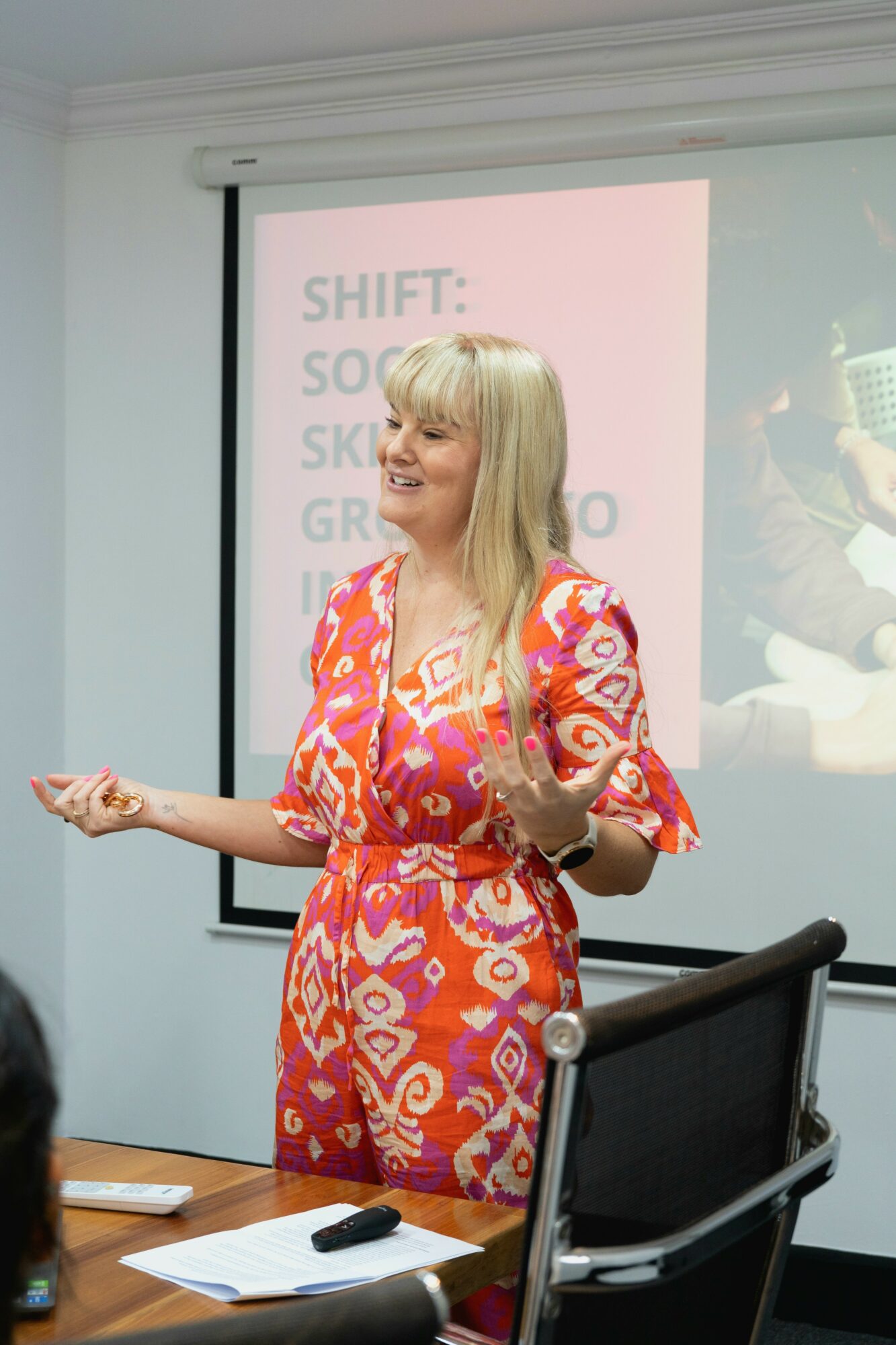
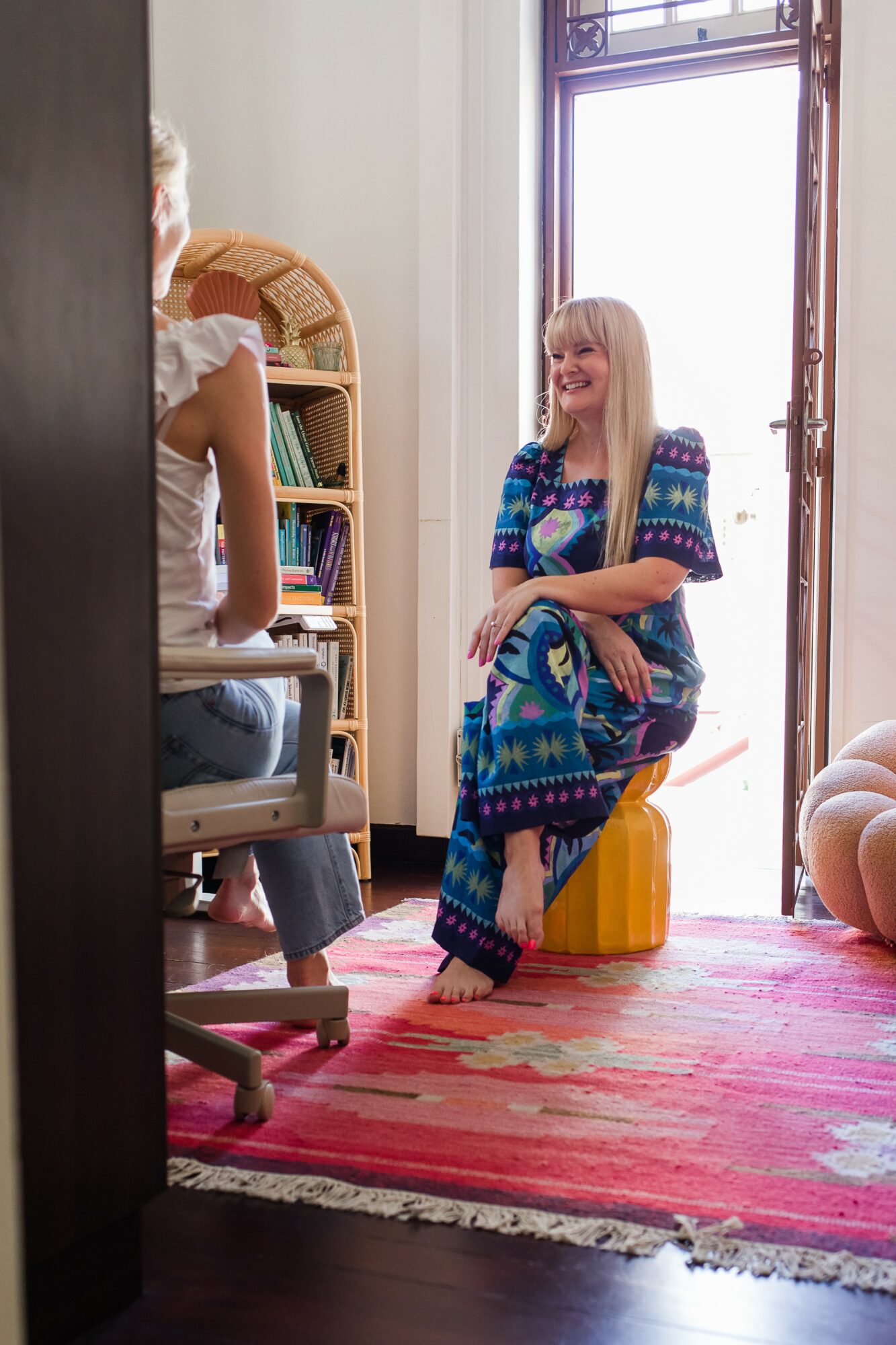
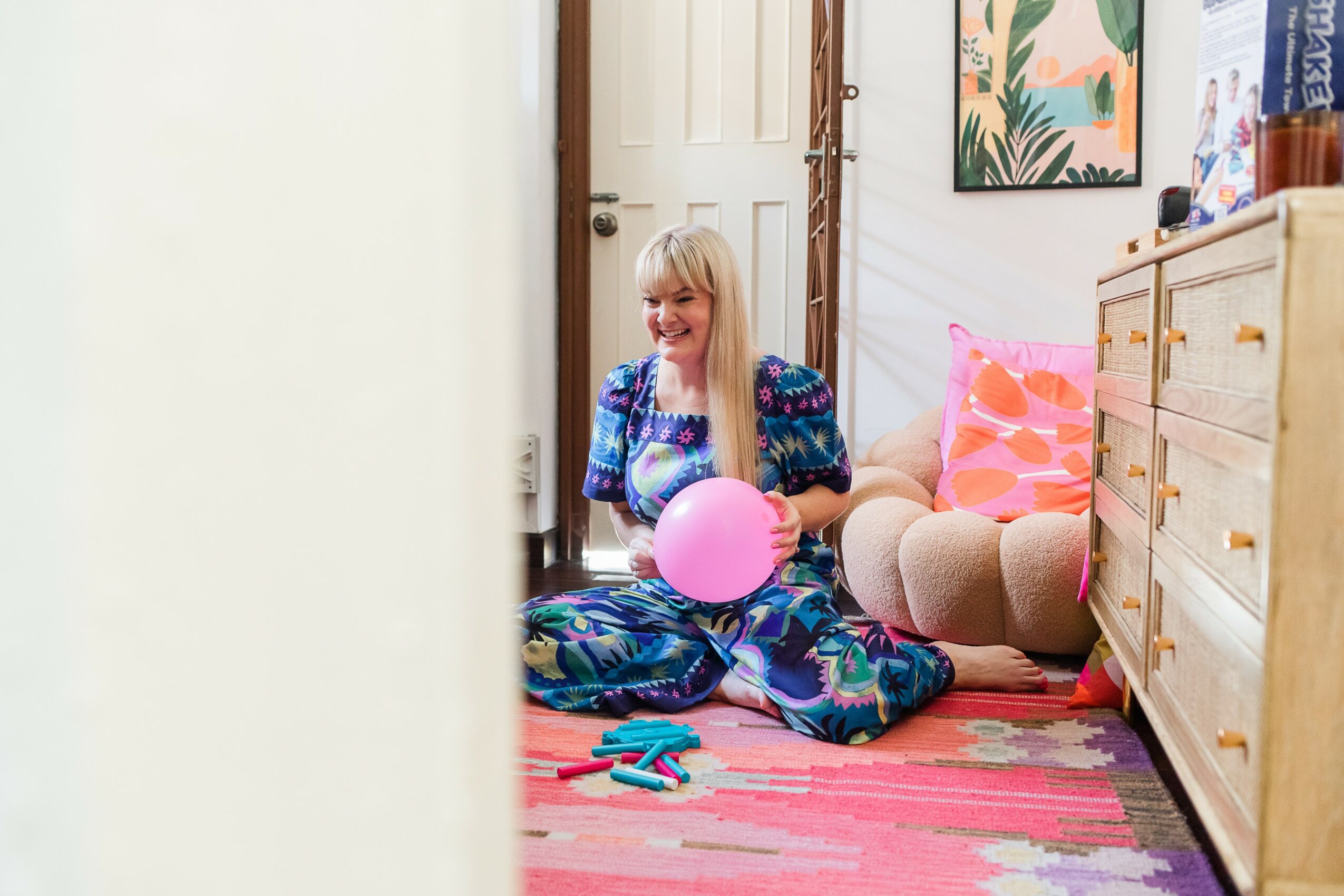


Image Credits
All images are by Nina Mucalov except for one image, the one of me standing with my arms out while giving a workshop which is by Elizabeth Homersham