




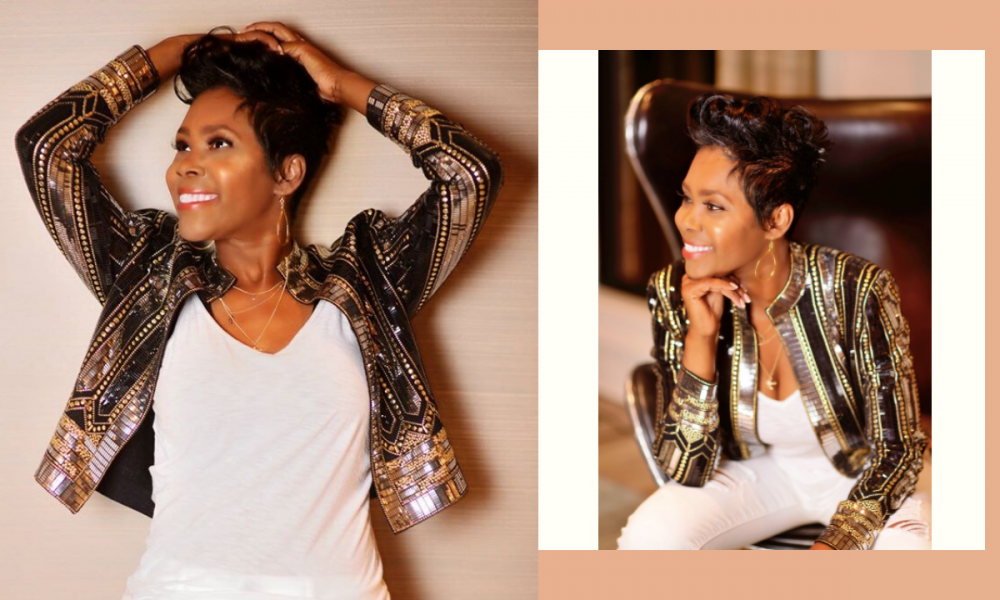
Today we’d like to introduce you to Trinita Ervin.
Trinita, please share your story with us. How did you get to where you are today?
I lost both of my parents at a very young age. My mom died when I was just two years old from poor maternal health, and my dad died of lung cancer when I was 16. Both were preventable illnesses. So, as a young girl, I struggled to learn critical coping skills to overcome the grief of losing both my parents.
As a parent myself, I wanted to make sure I equipped my children with the necessary coping skills needed to get through their own emotional or social pressures. But the social pressures of today are a stark difference from what I faced during my childhood. I became alarmed and concerned about girls during my youngest daughter’s first year in middle school, sixth grade. It was probably the most challenging time for me as a parent. While she had the skills needed, her friends were dealing with some serious issues such as emotional anxiety from social media, gender identity, sexual violations and even immigrant deportation. Our children today are facing some big conversations and social issues at the middle school level and even younger. I helped these girls navigate their issues to get the resources and interventions they desperately needed. One day my daughter had asked me a very profound question, “how can I help other girls?”
I’d been in healthcare my entire career, sparked by the loss of my own parents. Acting on my daughter’s question, I just began by volunteering in my local community with the refugee population here in Atlanta. I started with 12 Liberian girls and just focused on what I already knew as far as nutrition, fitness and gardening, which wasn’t much. I had never intended to start a social enterprise and social entrepreneurship wasn’t quite a term yet, but when Michelle Obama launched her ‘Let’s Move Campaign,’ the demand for me to work with other young girls in elementary schools expanded from one school to another school and so on.
After researching tons of scientific data on girls health I realized that there are some huge gender gaps and inequities in girls physical health, participation in sports, the childhood obesity rates, and their social-emotional wellbeing. This led me to launch a health and wellness brand specifically for girls. I also had a desire to become more knowledgeable about girls health and wanted to redesign the approach to health education. I went on to get certified in nutrition and dietary theory and studied child nutrition, as well as International Women’s Health and Human Rights at Stanford. So, my passion for health and wellness has now become a grassroots movement that has evolved through organic growth both locally and globally with the support of other concerned parents, teachers, public health educators and physicians.
Great, so let’s dig a little deeper into the story – has it been an easy path overall and if not, what were the challenges you’ve had to overcome?
Unfortunately, it has not been a very smooth road. The biggest challenge for us has been trying to keep up with the demand for us to expand our programming.
Our young girls are under tremendous pressure and are unhappier, more insecure about their appearance, and parents are desperate to find solutions. But with no interventions, by the time our girls reach adolescent age they are faced with multiple social challenges and pressures. This is heightened by our current social media environment and the digital world in which we now live in. There is an increased prevalence of cyberbullying, depression and suicide risks amongst children as young as 8-10 years old. Parents don’t really know where to turn, and for a long time we lacked the capacity to expand our reach to girls in their communities. It was heartbreaking to hear the plea of so many parents searching for help.
Ladybug for Girls – what should we know? What do you do best? What sets you apart from the competition?
Ladybug for Girls is a social enterprise. We are a health and wellness active lifestyle brand for girls. Ladybug for Girls unites girls socially through fun, educational, health activities in our Ladybug for Girls Club’s and exclusive member community. Our primary commitment is to ensure that young girls have the resources and tools to feel beautiful, have an equal playing field in sports and physical fitness, to build healthy friendships, and improve their overall happiness. I believe this starts with focusing on a girl’s self-identity, self-love, and self-confidence at a very young age. Our movement is inspiring and encouraging girls to live healthier where they live, learn, and play. We also provide activewear for the young female athletes.
As a company, a portion of our proceeds directly supports young girls in metro Atlanta, Africa and India through our Ladybug for Girls Foundation, Inc. We are most proud of the youth development programming that we have provided for thousands of families in under-served communities. The Foundation’s mission is to empower young girls with the tools to feel beautiful from the inside out. We achieve this by encouraging healthier lifestyles, building their self-confidence, strengthening their social awareness, and advocating for healthier environments locally and globally.
What moment in your career do you look back most fondly on?
I am a Spelman woman. Our motto is “A Choice to Change the World,” so it encourages us to bring positive social change into our community and engage globally. So, when the opportunity came along for us to charter a chapter in Africa, I pursued it. In 2017, Ladybug for Girls chartered its first chapter in Bong County, Liberia. Our primary focus there is on personal hygiene, food insecurity, and agriculture. I founded this organization with a group of girls who were refugees from Liberia, so I felt like this opportunity was bringing us full circle, especially as we were approaching our 10-year anniversary.
Besides our work in West Africa, I’m a global ambassador for adolescent girls health in Tamil Nadu, India with a focus on menstrual hygiene management. What I’ve learned throughout this global venture is that the need to redesign health education for girls is much broader than metro Atlanta communities. While there are some cultural differences, the context for girls health issues is relatively the same across all ethnicity, regions and countries with health and education at the forefront. Our Global Girls Health campaign recognizes the common barriers found in girls health inequities and sports. We use the United Nations SDG goals as our framework to connect us and grow our global footprint.
Contact Info:
- Address: 2107 North Decatur Road
Suite #725
Decatur, Georgia 30033 - Website: www.ladybugforgirls.com
- Phone: (800) 473-0280
- Email: hello@ladybugforgirls.com
- Instagram: https://www.instagram.com/ladybugforgirls/
- Facebook: https://www.facebook.com/LadybugforGirls/
- Twitter: https://twitter.com/ladybugforgirls
- Other: https://ladybugforgirls.org (Ladybug for Girls Foundation, Inc.)


Image Credit:
Boon Vong – Photographer
Suggest a story: VoyageATL is built on recommendations from the community; it’s how we uncover hidden gems, so if you or someone you know deserves recognition please let us know here.
Popular
-

Hidden Gems: Local Businesses & Creatives You Should Know
-

ATL’s Most Inspiring Stories
-

Portraits of Atlanta
-

Satoya Hayes on Turning Beauty 2 Extensions into a Platform for Affordable Confidence and Entrepreneurial Opportunity
-

Asha Ford on Building Krystal Klear Motion and Creating Purpose-Driven Design for Women
-

Truth in Every Verse: Jay Erve on Identity, Experience, and Creating Art That Lasts