








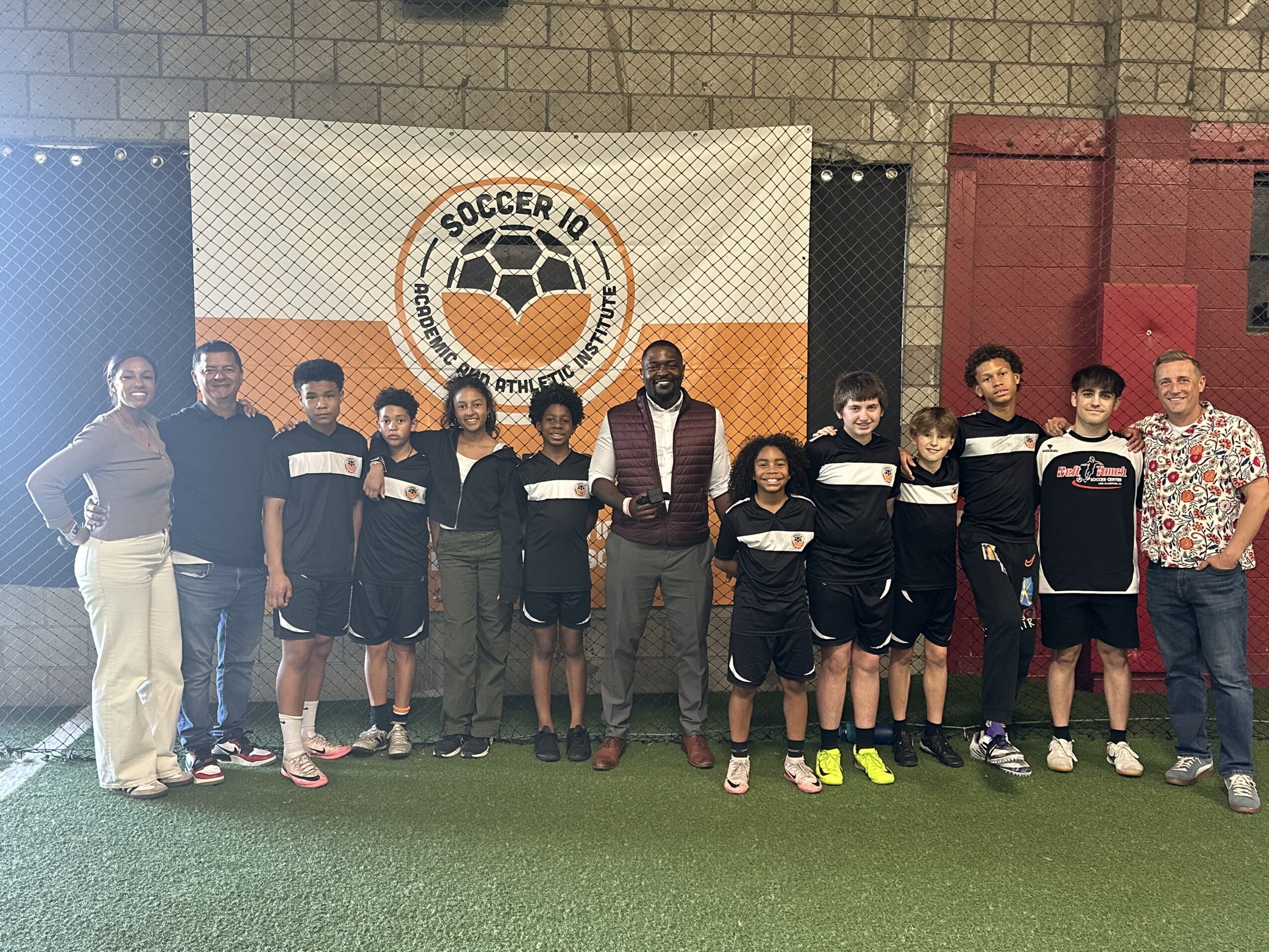
M-T Strickland is shining a light on what many youth sports programs overlook — the critical role of structured off-field training and recovery. Through his work, he’s seen how disconnected schedules and unmanaged workloads quietly lead to fatigue, breakdown, and injury over time. His approach isn’t about more training, but smarter training — helping athletes build consistency, improve movement quality, and stay resilient by understanding how every piece of their development fits together.
M-T, you’ve identified a “hidden gap” in youth sports. What are the most common things athletes are not doing off the field that are leading to injuries?
What I started noticing is that most athletes are doing a lot on the field, but very little is structured off of it.
They’re not consistently working on movement quality, they’re not managing recovery, and there’s no real system for understanding how their total workload is affecting their body over time.
It’s not one big thing, it’s a series of small gaps that add up. And when those gaps go unaddressed, that’s where injury risk starts to build.
From your experience with Metric Mate and youth soccer programs, how is this disconnect between training and recovery showing up in real athletes?
Over time, it became clear that the issue isn’t effort, it’s visibility.
We see athletes training four, five, sometimes six times a week across different environments. Practices, games, private sessions. But none of it is really connected.
What that looks like in real athletes is fatigue that builds quietly. Movement starts to break down. Recovery isn’t keeping up with workload.
By the time something shows up, whether it’s soreness, inconsistency, or injury, it’s usually been developing for weeks.
Why do you think off-field conditioning and recovery are still being overlooked by so many athletes, parents, and coaches?
Most parents are doing everything they can to support their athlete. Coaches are focused on performance. Everyone is trying to do the right thing.
The challenge is that there’s no clear visibility into what’s actually happening outside of individual sessions.
Training feels productive in the moment. But what most people don’t realize is that development isn’t just about what you do, it’s about how everything fits together over time.
That’s the piece that’s often missing.
What are some simple, practical changes young athletes can implement immediately to reduce injury risk and improve performance?
It doesn’t have to be complicated.
One of the simplest things an athlete can do is introduce one consistent, structured session each week that focuses on movement quality and readiness.
Not more volume – just better structure.
The goal is to make sure the body is prepared for everything else they’re doing. When that happens, you start to see better consistency, better movement, and fewer issues over time.
Looking ahead, how do you hope awareness around this issue will shift the way youth sports programs approach training and athlete development?
I think we’re moving toward a shift where it’s not just about how much athletes are training, but how well that training is being managed.
As youth sports continues to grow, the gap between training volume and training intelligence is going to matter more and more.
My hope is that we start to see more focus on visibility. Understanding how athletes are actually developing over time, not just assuming that more work leads to better outcomes.
Because when you can see what’s happening clearly, you can make better decisions earlier, and that changes everything.
Link:
Popular
-

Hidden Gems: Local Businesses & Creatives You Should Know
-

ATL’s Most Inspiring Stories
-

Portraits of Atlanta
-

Dr. Hildiah Martin-Suggs Is Building Second Chances for Youth Who Were Almost Lost in the System
-

From Showing Up to Seeing His Face on a Billboard: Anthony Green Is Just Getting Started
-

Wayne Smith Jr on Survival, Psychological Thrillers, and the Cost of Staying Alive