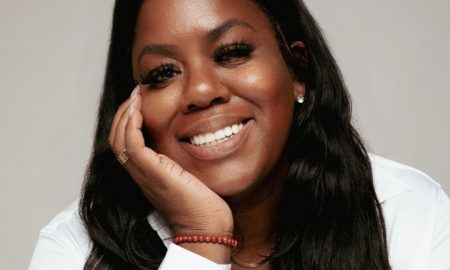
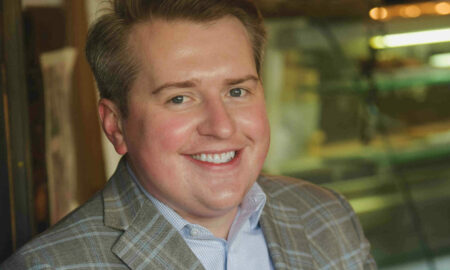
Dr. Cortnie Baity is reimagining how mental health support shows up in people’s lives by taking clinically grounded insights beyond the therapy room and into accessible, actionable tools. Through her work and platforms like Ready To Marry, she’s bridging the gap between understanding and real-life application — helping individuals turn awareness into meaningful change. By combining private practice with digital resources, Dr. Baity is building a more flexible and inclusive approach to personal growth, one that empowers people — especially women — to design lives rooted in clarity, alignment, and intention.
Dr. Baity, you’re expanding beyond traditional therapy into digital tools and products. What inspired you to make your work more accessible and scalable in this way?
What inspired this shift was recognizing the limitations of traditional therapy in terms of reach. In private practice, I’m able to work deeply with a limited number of clients, but I’ve spent the last 11 years observing patterns, insights, and breakthroughs that are not unique to just one person—they’re shared across many lives.
At a certain point, it became clear to me that this knowledge shouldn’t be confined to a 30, 60, or 90 minute session or limited by geography, scheduling, or financial access. Expanding into digital tools allows me to extend the impact of my work beyond the therapy room and meet people where they are—whether that’s through a guided assessment, a workbook, a practical tool, or a video that resonates at the right moment in their life.
It’s really about stewardship—taking what I’ve been entrusted with clinically and making it more accessible, practical, and scalable for the people who need it, globally.
Through Ready To Marry, you’re offering clinically-informed resources. How do these tools help people take action compared to traditional therapy alone?
One of the biggest gaps I’ve seen is that insight doesn’t always translate into action. People can understand themselves on a deep level and still feel stuck when it comes to making different choices.
The tools I’ve created through Ready To Marry are designed to bridge that gap. They take clinical insight and turn it into something structured, tangible, and repeatable—something a person can sit with, reflect on, and actively work through at their own pace.
In therapy, we process. With these tools, people can also practice. They can track patterns, measure change, and build awareness in a more concrete way. It empowers them to take ownership of their growth outside of session, rather than relying solely on the therapeutic space to create movement.
You’re balancing private practice with content, e-books, and YouTube. How do you stay grounded in clinical integrity while building a broader brand?
Clinical integrity is non-negotiable for me. It’s the foundation of everything I create.
Even as I expand into content and digital platforms, I’m very mindful that I am not replacing therapy—I’m complementing it. I’m careful not to blur the lines between education and treatment, and I’m intentional about ensuring that what I share is responsible, grounded in clinical understanding, and presented in a way that honors the complexity of people’s lived experiences.
I also stay anchored by continuing my private practice. Working directly with individuals, couples, and families keeps me connected to real-life dynamics, not just theory. It ensures that my content isn’t abstract—it’s informed by what people are actually navigating in their day-to-day lives.
Your work often centers on intentional living and relationships. What are some of the most common patterns you see people struggling with today?
One of the most common patterns I see is misalignment—people living lives that don’t fully reflect their needs, values, or desires, often because they haven’t taken the time to clearly define them.
In relationships specifically, there’s often a gap between what someone needs and what they’re actually experiencing, but instead of addressing it directly, they minimize it, rationalize it, or try to adapt themselves around it. Over time, that creates resentment, disconnection, and confusion.
I also see a lot of difficulty with communication—not just expressing needs, but feeling safe enough to be honest about them. Many people are afraid that if they are fully seen, they may not be chosen, so they stay in partial versions of themselves.
Intentional living requires a level of clarity and courage that many people are still developing, and my work often sits right at that intersection.
As you continue growing across platforms, what’s your bigger vision for how mental health, entrepreneurship, and lifestyle design can come together—especially for women building purposeful lives?
My bigger vision is to help women realize that their emotional well-being, physical well-being, their financial lives, and the way they design their day-to-day existence are not separate conversations—they are deeply interconnected.
For many women, there’s been an unspoken expectation to choose between stability and fulfillment, or between caregiving and self-actualization. I want to challenge that.
I envision creating ecosystems—through content, tools, and community—where women can develop emotional clarity, make aligned decisions, and build lives that are both sustainable and expansive. That includes how they love, how they work, how they care for themselves, and how they steward their resources.
It’s not just about healing—it’s about building. Building lives that feel intentional, well-resourced, and fully lived.
Links: