





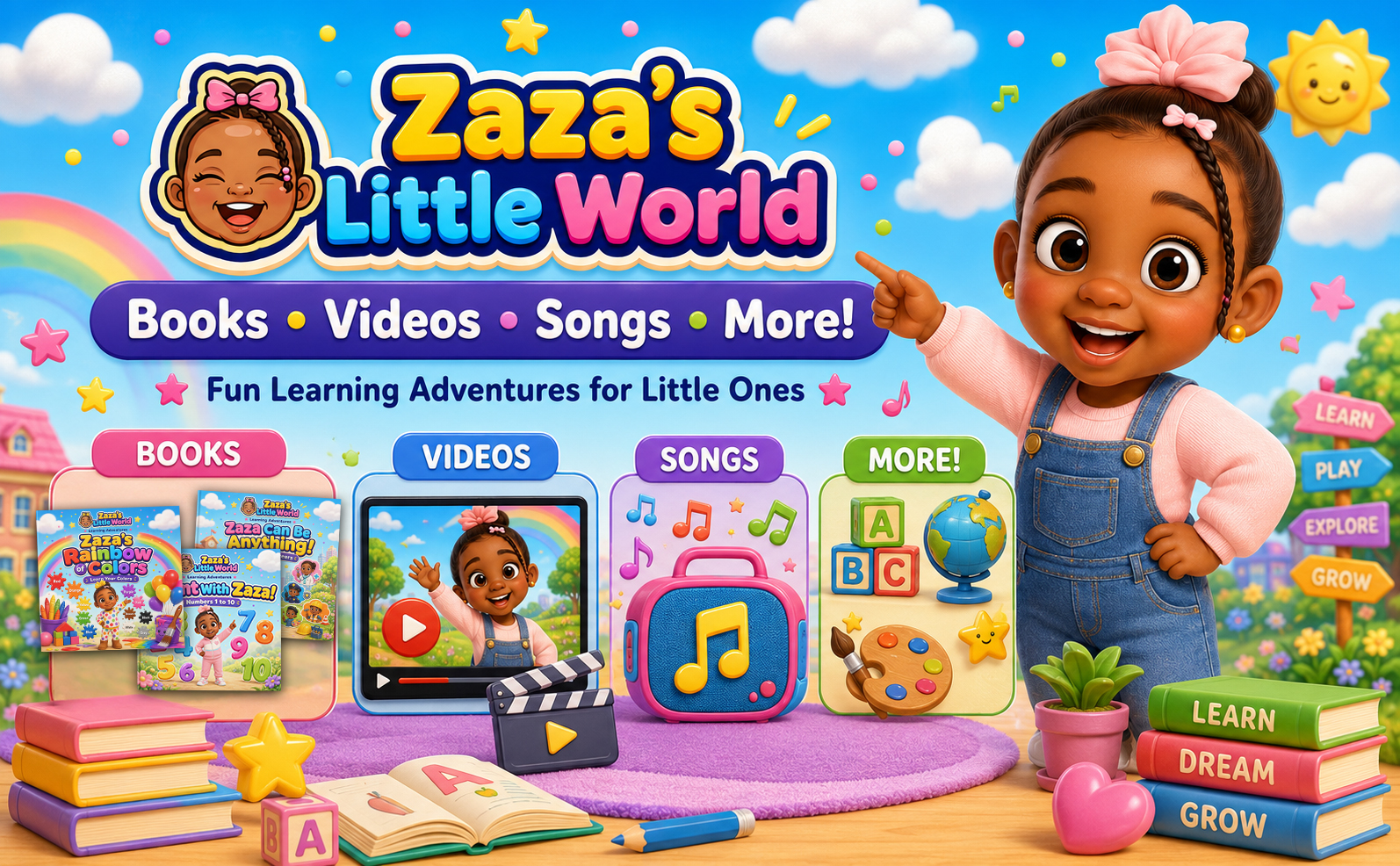
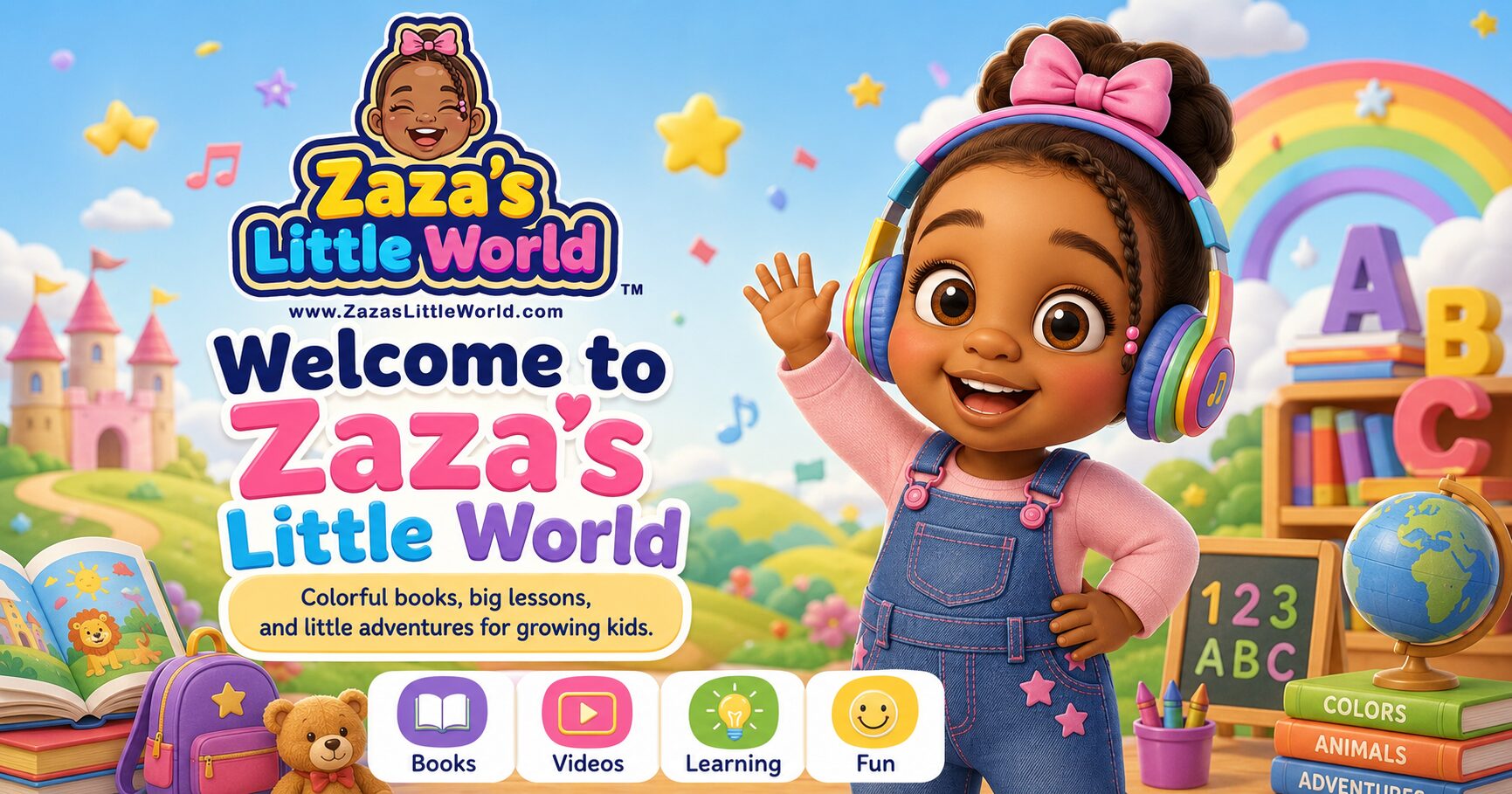

When Mazi Oyo became a father, he began looking for children’s content that reflected the confidence, curiosity, and cultural pride he wanted his daughter to grow up with. Unable to find exactly what he envisioned, he decided to create it himself through Zaza’s Little World, an educational entertainment brand spanning books, music, and animation. We caught up with Mazi to talk about the personal experiences behind Zaza, why representation matters from the earliest years, and the lasting impact he hopes the character will have on the next generation.
Hi Mazi, thanks so much for joining us today. We’re thrilled to have you share your thoughts and insights with our readers. Every beloved children’s character starts with an idea. Can you take us back to the moment Zaza first came to life in your imagination, and what made you realize she had the potential to become something much bigger than a single story?
Yes, of course. It actually started when I became a father. I grew up in a very cultural household. My parents always made sure that my siblings and I were aware of the people and events that impacted African Americans, including the Civil Rights Movement, Black leaders, Black inventors, and even the kings and queens of Africa.
I grew up watching television shows and miniseries like *Roots* and *Shaka Zulu*. We were very Black in my house. So, when my daughter was born, I wanted her to have a similar experience from an early age. I wanted her to see images and characters that looked like her on television, tablets, and mobile devices.
I had a difficult time finding age-appropriate content featuring characters who looked like my daughter. After a while, I decided to create what I wished already existed. That is how Zaza’s Little World was born.
Zaza is a happy, curious, adventurous young girl who gives children the opportunity to see themselves reflected in positive and empowering ways. Was there an experience from your own childhood or one you’ve witnessed as an adult that inspired you to create a character who celebrates imagination, confidence, and possibility?
Like I mentioned earlier, my household was very culturally aware. We celebrated Kwanzaa, observed Martin Luther King Jr. Day before it became a national holiday, and my parents were deeply involved in the Civil Rights Movement.
One of the things I realized later in life is that confidence has to be built from a young age. Many of the issues we struggle with as adults can be traced back to experiences from our childhood. When you dig deeply enough, you can often discover where those feelings first began.
One thing I know for certain is that the world can be a very brutal place for women, young girls, and especially Black girls. But if we can build a strong foundation within them as early as possible, they will have a much better chance of confidently engaging with the world.
I do not want my daughter to develop any type of inferiority complex because all of the heroes, leaders, teachers, toys, and authority figures she sees look nothing like her. Zaza can do and be anything, and I want to make sure that message is instilled in children as early as possible.
At that young age, especially during the preschool years, children are extremely observant. They absorb information at such a rapid pace. By around the age of two, a child’s brain has already reached a significant percentage of its adult volume. That is why I believe it is so important to begin building confidence, identity, and self-worth as early as possible.
Building a new children’s brand from the ground up is both exciting and challenging. Can you share a behind-the-scenes moment from creating Zaza’s Little World that reminded you why this mission matters, even when bringing it to life wasn’t easy?
There really are so many sources of inspiration. My daughter is basically my R&D department, and she doesn’t even know it. I watch what she naturally gravitates toward and try to understand why. I pay attention to what draws her in, what makes her smile, what makes her happy, and what helps her learn.
I notice when she rewinds a scene over and over, watches the same episode repeatedly, or breaks into a cute little dance. Those moments often inspire what I create next for Zaza.
I also pay close attention to the current social media landscape, and honestly, it can be troubling. You see very young children using inappropriate language, and sometimes parents do not fully understand what content is suitable for their children. Seeing all of that pushes me to keep moving forward.
I am extremely cautious about everything my own daughter watches, eats, wears, listens to, and even who she is around. I am creating Zaza’s Little World as though my daughter is the only child consuming it, or as though every child around the world is my own.
That is not always easy, especially at this stage, when I am turning it into a business and introducing it to the world. You have to be extra careful.
I do a tremendous amount of research using Google, Gemini, ChatGPT, Perplexity, YouTube, and other resources. I am constantly looking at statistics, data, effective wording, colors, sounds, learning methods, and children’s focus groups. I want every part of Zaza’s Little World to be intentional, engaging, educational, and safe.
You’re combining books, music, and animation to create an immersive world for young children. Was there a particular story, song, or creative breakthrough that made you think, “This is exactly the experience I want children to have”? We’d love to hear how that moment unfolded.
I remember doing research several years ago on becoming a YouTuber, and I came across this kid named Ryan. I am sure most parents know who he is. He was featured on a list of the highest-earning YouTubers, making millions of dollars simply from children watching his videos.
I watched a few of them, and honestly, I thought they were pretty cool. That was the first time I really understood that kids’ channels were an entire industry.
The woman I was dating at the time had a young son, and I briefly thought about creating a channel with him. But honestly, the interest did not really stick until years later, when I became a father and had a child of my own to think about.
People always point out how lucrative children’s content can be, but for me, it is not really about the money. It is about shaping young minds. It is about giving children more positive choices. Most importantly, it is about giving my daughter someone to look up to who looks just like her.
I used to watch her stare at Cocomelon, completely mesmerized by it. That was the moment I said to myself, “I need to knock them out the box!”
Parents often remember the books and characters that shaped their childhood long after they’ve grown up. As you create Zaza’s world, what do you hope children will carry with them years from now, and is there a personal memory that inspired that vision?
That’s the thing: when I was a kid, there was no YouTube or video on demand. We had to watch cartoons on television on Saturday mornings or at three o’clock after school. There were very few characters who looked like me, talked like me, dressed like me, or came from where I came from. I think one of the only shows we had was Fat Albert and the Cosby Kids.
I want to help create a new wave of content that stars and celebrates African American children of all ages, portraying them with confidence, curiosity, intelligence, and audacity.
I want children to grow up remembering how empowered they felt watching Zaza go on fun, educational adventures and confidently conquer her little world.
As Zaza’s Little World begins its journey, imagine a child discovering Zaza today and then looking back years from now as an adult. What do you hope they’ll remember most about how she made them feel, and why is creating that lasting impact so important to you?
I hope that one day, when that child is an adult and telling the story of how they discovered Zaza, they will say that they saw a face that looked just like theirs, or like their little sister, cousin, or niece.
I want them to remember the excitement of wondering, “What will Zaza do next?” I hope that sense of curiosity and possibility inspires them to live their own lives with that same freedom, confidence, and imagination. I think starting young, I mean preschool age, is extremely important because even though they can’t articulate themselves the way a full grown adult can, these kids are WATCHING, they LEARNING, they are ABSORBING, and we need to fill that void with the right materials.
Link:

Popular
-
Hidden Gems: Local Businesses & Creatives You Should Know
-

ATL’s Most Inspiring Stories
-

Portraits of Atlanta
-

Dr. Hildiah Martin-Suggs Is Building Second Chances for Youth Who Were Almost Lost in the System
-

From Showing Up to Seeing His Face on a Billboard: Anthony Green Is Just Getting Started
-

Wayne Smith Jr on Survival, Psychological Thrillers, and the Cost of Staying Alive