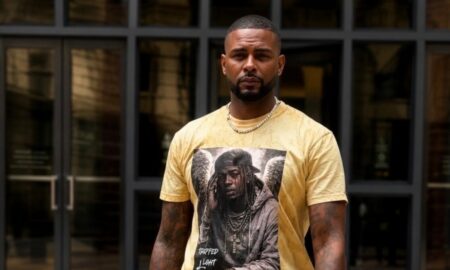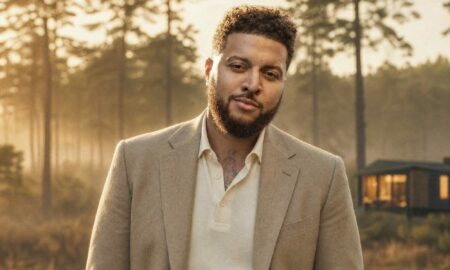








Wayne Smith Jr is a storyteller drawn to the emotional questions that linger long after the action ends. Through his novel Survival, he explores grief, accountability, morality, and the hidden psychological toll of impossible choices, all within a gripping thriller that challenges readers to examine not only what it means to survive, but also what it means to witness the struggles of others. As he continues building immersive worlds and thought-provoking stories, Wayne hopes his work inspires conversations that extend far beyond the final page.
Hi Wayne, thanks so much for joining us today. We’re thrilled to have you share your thoughts and insights with our readers. Survival explores far more than a fight to stay alive it dives into grief, truth, and the psychological toll of impossible choices. Can you take us back to the moment the idea first came to you, and what made you realize this story needed to be told?
It started with a question I think a lot of us ask without realizing it — watching something like The Hunger Games or The Maze Runner and thinking, ‘what would I actually do in that moment?’ Not the spectacle of it, but the quieter question underneath: what does surviving something like that actually do to a person’s mind and body over time? The more I sat with that, the clearer it became that I hadn’t seen that question answered through the perspective I wanted to explore — a Black woman carrying that weight. Not as backstory, not as a supporting role, but as the person the entire story runs through. That felt like unclaimed ground in this genre, and once I saw it, I couldn’t unsee it. So Survival isn’t a story about people turning on each other. It’s a story about what’s left after — grief that doesn’t get room to breathe, truth that costs something every time it’s spoken, and a body and mind that keep degrading under pressure long after the moment that broke them has passed. And there’s a second layer to it too — the idea that this isn’t just happening to someone; it’s being watched. That someone, somewhere, is consuming it. Once that piece clicked into place, the whole book became less about survival as an event and more about survival as something that’s being done to you, on someone else’s terms. That’s the story I needed to write.
Building an original island and its mythology is no small undertaking. Can you share a behind-the-scenes story from your writing process perhaps a character, plot twist, or piece of the world that unexpectedly took on a life of its own and changed the direction of the novel?
That would be the hollow itself. It didn’t start out the way it ended up. Originally, the threat was simpler and more external — almost mythical, something creature-driven. But as I kept writing, I kept circling back to one question: why does this exist, and who benefits from it? That question wouldn’t leave me alone.
That’s when everything shifted. The hollow stopped being just a dangerous place and became a system — a government scheme, a game being run and tested on real, living people, with someone on the other end watching it unfold. Once that clicked, the entire book changed shape. It wasn’t just about surviving a place anymore — it was about surviving a design. Something built with rules, with purpose, with an audience. That’s a very different kind of fear than ‘there’s something dangerous on this island.’ It’s the fear of realizing you’re not just fighting to live — you’re inside someone else’s experiment, and your survival is entertainment or data to somebody else.
Once I saw the hollow that way, I couldn’t go back to the simpler version. It became the heartbeat of the whole book — every reveal, every twist, every piece of Ghost’s story runs through that idea. It’s the moment the book stopped being an homage to a genre I loved and became something entirely its own.
Psychological thrillers often reveal as much about the author as they do about the characters. Was there a personal experience, observation, or question you’ve wrestled with that found its way into Survival and gave the story its emotional core?
If I’m honest, it’s less a single moment and more a question I couldn’t put down while writing this — how much of who we are is a choice, versus how much is just what’s left of us after something takes everything else away. I kept coming back to grief specifically — how it doesn’t wait for a convenient time, how people are expected to keep moving, keep performing, keep surviving, even when there’s no room left to actually feel anything.
That question became the emotional core of Survival — not because I lived exactly what my characters live, but because I think most of us know what it feels like to hold something together on the outside while something else is happening underneath. That gap — between what a person shows and what they’re actually carrying — is where I wanted the book to live. And once I found that gap, the story stopped being just a survival thriller. It became a book about what truth costs a person when they don’t have the luxury of falling apart.
Stories centered on survival often force characters to confront impossible moral choices. As you developed the novel, was there a scene or character decision that genuinely surprised you or challenged your own beliefs about what people are capable of under extreme pressure?
Honestly, it was the subscriber POV interludes. Writing from the perspective of the people watching — the higher-ups, the elites who get something out of seeing regular people forced into life-or-death decisions — that surprised me more than anything else in the book. Not because it was hard to imagine, but because of how easy it was to imagine.
What unsettled me wasn’t inventing that mindset — it was realizing I didn’t have to invent much of it at all. That dynamic, where people in power find entertainment in watching others struggle and suffer for a decision they’ll never have to make themselves — I believe that’s real. Not in the exact form it takes in the book, but in spirit. History is full of it, and honestly, so is the present, just dressed differently. So writing those interludes wasn’t really an exercise in imagining the worst of human nature. It was closer to naming something I already suspected was true and putting it on the page in a way people couldn’t look away from.
That’s what challenged me the most — not writing a villain, but writing something that felt less like fiction and more like a mirror.
Writing suspense requires balancing mystery with emotional depth. Was there a point during the creative process when you struggled to keep those elements in harmony, and what did overcoming that challenge teach you about storytelling?
Definitely. The hardest part wasn’t writing mystery or writing emotion — it was making sure they hit at the right time, for the right reasons, without one canceling the other out. There was a stretch in the process where I had to go back through the manuscript and really audit it — checking when names were revealed, when the survivor count shifted, when certain truths surfaced — because if a reveal landed too early, it drained the tension out of scenes that needed it. And if it landed too late, the emotional weight of what a character had just been through didn’t have time to breathe before the next twist hit.
That taught me that suspense isn’t really about withholding information — it’s about sequencing truth. Every reveal has to earn its place next to the emotion it’s tied to, or you end up with a plot that moves fast but doesn’t actually land anywhere. Once I understood that, it changed how I thought about pacing entirely. It’s not mystery or emotional depth — it’s making sure the reader feels the full weight of what a character loses in the exact moment they learn why they lost it. That’s the balance the whole book is built on now.
When readers finish the final page of Survival, what conversation do you hope they’re still having with themselves? Beyond the twists and suspense, what lasting question or feeling do you hope stays with them long after the story ends?
I hope they’re still asking themselves what it would actually cost them to survive — not the physical part, but the part nobody prepares you for. What would you give up, what would you have to bury, and how long would you carry it after the moment was over?
But more than that, I hope it leaves them looking a little differently at who’s watching. We consume so much — other people’s struggles, other people’s pain, other people’s impossible choices — and rarely stop to ask what that says about us. Survival isn’t just about someone fighting to live. It’s about the fact that someone, somewhere, is always watching that fight and getting something out of it. I want readers to sit with that discomfort a little after they close the book — to wonder where they’ve been the survivor, and where they’ve quietly been the subscriber.
If they finish the book still turning that question over — not the twist, not what happens next, but what it means about how we treat each other’s pain — then I did what I set out to do.


Popular
-

Hidden Gems: Local Businesses & Creatives You Should Know
-

ATL’s Most Inspiring Stories
-

Portraits of Atlanta
-

Dr. Hildiah Martin-Suggs Is Building Second Chances for Youth Who Were Almost Lost in the System
-

From Showing Up to Seeing His Face on a Billboard: Anthony Green Is Just Getting Started
-
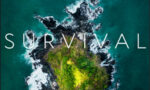
Wayne Smith Jr on Survival, Psychological Thrillers, and the Cost of Staying Alive