

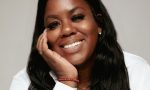
Today we’d like to introduce you to Christian Alexander.
Alright, so thank you so much for sharing your story and insight with our readers. To kick things off, can you tell us a bit about how you got started?
I came into this world on a crisp October morning in Atlanta, Georgia—October 25, 1998—a date that would eventually become my annual reminder of how far imagination can carry a person. Yet long before I understood the weight of that day, I was simply a restless child with a crayon in hand and walls that dared to stay bare.
My childhood was marked by a peculiar dilemma: wherever I went, empty spaces seemed to summon me. The pristine walls of my home and school became one of my first canvasses, and my parents’ reprimands became the soundtrack of my early years. Rather than suppress the spark they saw flickering within me, they made a decision that would shape everything—that they enrolled me in formal art classes, placing brushes into hands that had only ever known pencils and markers.
It was there, in those structured studios, that I began to forge my own path. While my classmates followed the conventional wisdom of filling in forms before defining their edges, I discovered a different rhythm—one that felt innately true. I would trace the outlines of still-life subjects first, sketching their silhouettes before ever daring to address what filled them. My instructors called it unconventional; I called it necessity. There is a certain sacredness in establishing boundaries before filling them with life.
The moment that transformed my relationship with art arrived quietly during my tenth-grade year. A buyer purchased one of my paintings for three hundred dollars—a sum that felt princely to me then, but, it was the first time the world told me in tangible currency that my visions had worth beyond my own bedroom. Art ceased to be merely my escape; it became my dialogue with the living.
By 2018, I had earned a full-ride academic scholarship to Clark Atlanta University, pursuing engineering—a sensible choice, stability wrapped in certain promises. Yet there, amidst equations and laboratories, I discovered an irrefutable truth: when my hands moved across paper or canvas, when colors bled into one another, I felt closer to the Divine than anywhere else. In the Second semester, I made the terrifying, liberating decision to follow what my heart had always been whispering. I changed my major to visual arts, and I have never looked back since.
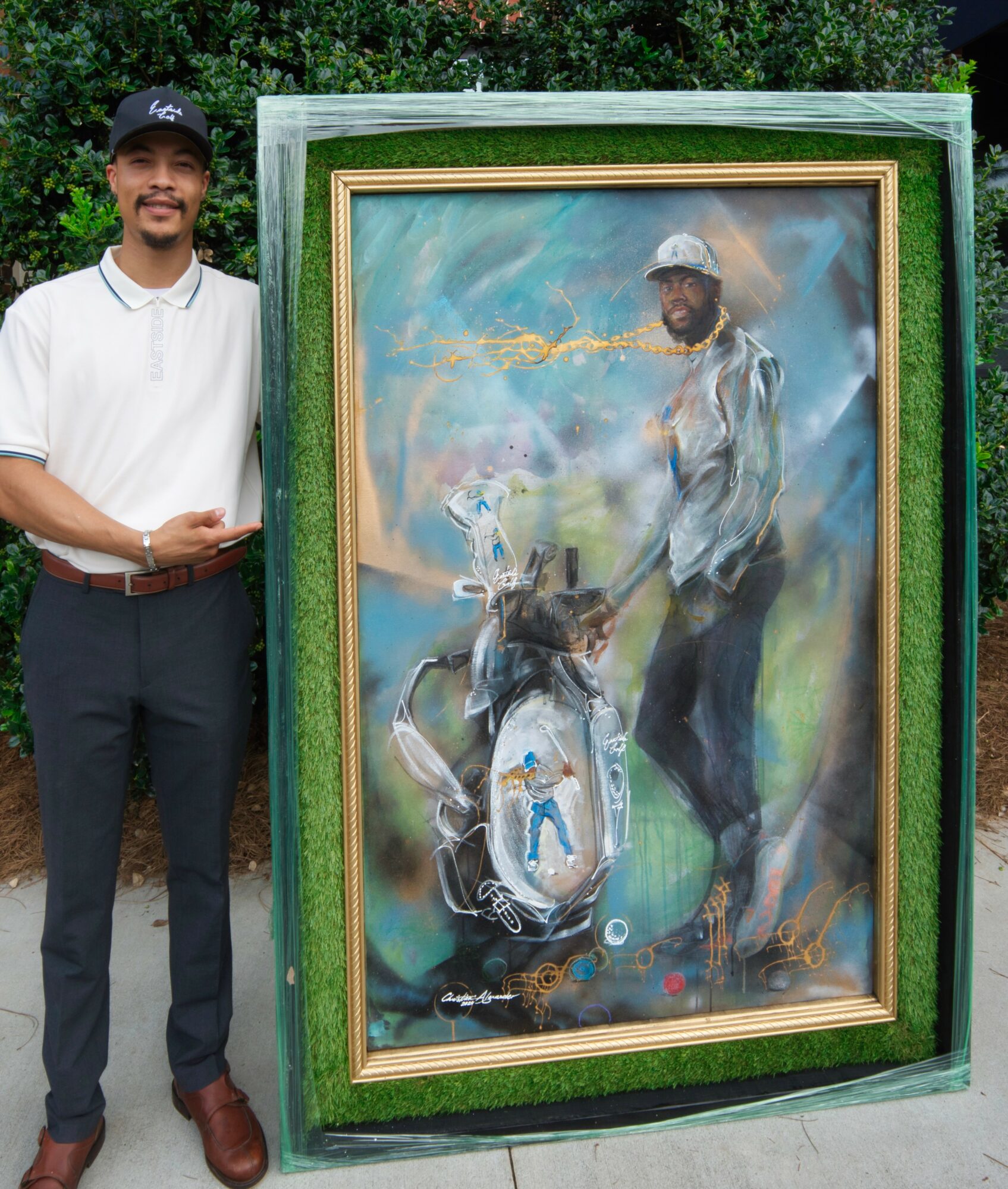
The years that followed became a tapestry of creative exploration. As a freelance graphic designer, I gave visual voice to musicians through album covers and professional logos. As a painter and illustrator, I drew worlds into existence for books and private patrons. I put pen to paper and became a published poet. I learned the alchemy of sound as a music producer. I captured moments through the lens as a photographer., and within the brand MFBLU, I stepped into the realm of fashion design, painting and drawing my aesthetic onto wearable art.
Today, at twenty-seven years old, I find myself at Delta Air Lines as a graphic designer—bridging corporate precision with creative impulse. Yet my truest work continues in the quiet hours, where I am presently crafting a self-illustrated book, marrying my poetry with my paintings—two voices that have always spoken the same language.
Would you say it’s been a smooth road, and if not what are some of the biggest challenges you’ve faced along the way?
There is a peculiar kind of bravery in following one’s heart—a courage that transcends the conventional valor we celebrate in stories and statues. It is quieter, more intimate, and infinitely more terrifying. To become an artist is to leap from a jagged cliff believing somehow that the fall will transform into flight.
The creative mind is both sanctuary and storm. It is a blessing beyond measure—the ability to summon beauty from empty air with nothing more than a pencil’s whisper, to stir the deepest currents of the human spirit with a single stroke of pigment upon canvas. Yet it is equally a curse: a pasture built upon a precipice, where the grass grows sharp beneath our feet and the wind never fully settles. To create is to live perpetually on the edge of something sacred and something dangerous.
To pursue a profession that comes with no map, no guidelines, no guarantees—and to do so amid a global pandemic that stripped the world of its certainty—sounds, I admit, like madness. Perhaps it is. But sometimes madness is simply what sanity looks like when it has run out of other options.
There were nights where I dined upon my own thoughts, swallowing anxiety and doubt until my stomach turned. There were mornings when the only sustenance my body could tolerate was the act of painting—brush in hand, canvas before me, the world narrowing to pigments and presence. When you love something more than life itself, the smaller joys of living tend to fall by the wayside, overlooked and unremembered.
I struggled to maintain friendships, to nurture relationships with those who loved me. The balance between a fulfilling life and the brutal discipline required to become undeniable—it seemed impossible, a scale forever tipped toward sacrifice. I became reacquainted with insomnia, and for years I waged a silent war against my own mind, fighting shadows that no one else could see.
But I have come to understand something profound in these twilight years: it is precisely those darkest moments that allow the light to shine with such unbearable brilliance. The pain became my teacher. The isolation became my studio. And the struggles—those jagged edges of my pasture—became the very foundation upon which I finally learned to stand.
This is what it means to choose art: to eat your thoughts for dinner and call it nourishment. To wake and find that a painting is the only breakfast your soul will accept. To love something so completely that you are willing to lose everything else, and to discover in that surrender the beginning of who you were always meant to become.
Can you tell our readers more about what you do and what you think sets you apart from others?
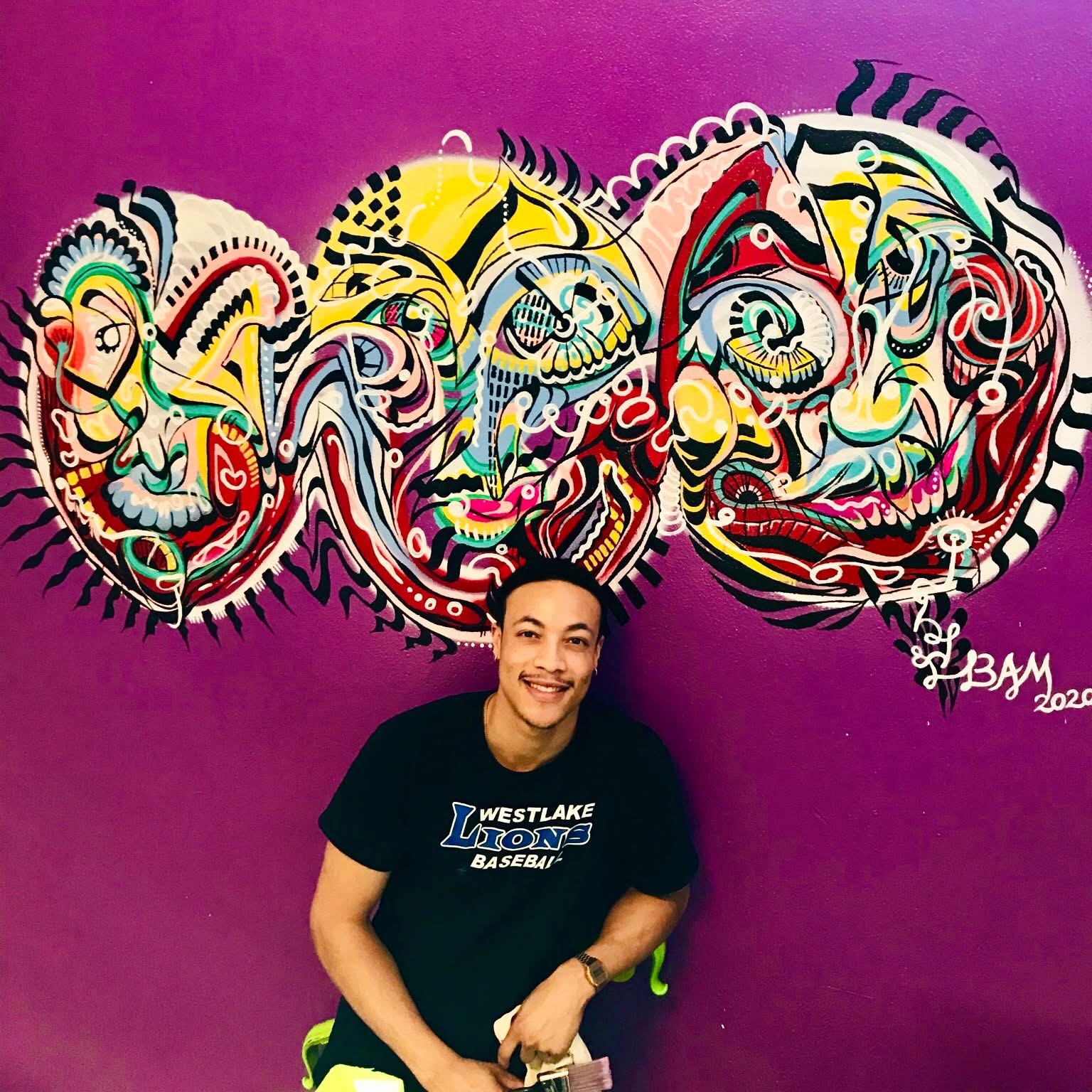
I am a professional visual artist. My practice lives in the liminal spaces where disciplines intersect—where quantum physics whispers its secrets to music, and sound becomes geometry. I find my deepest inspiration in this confluence: the invisible frequencies that bind matter together, the vibrations that compose both atoms and symphonies. Between them lies a language I have spent my life learning to speak.
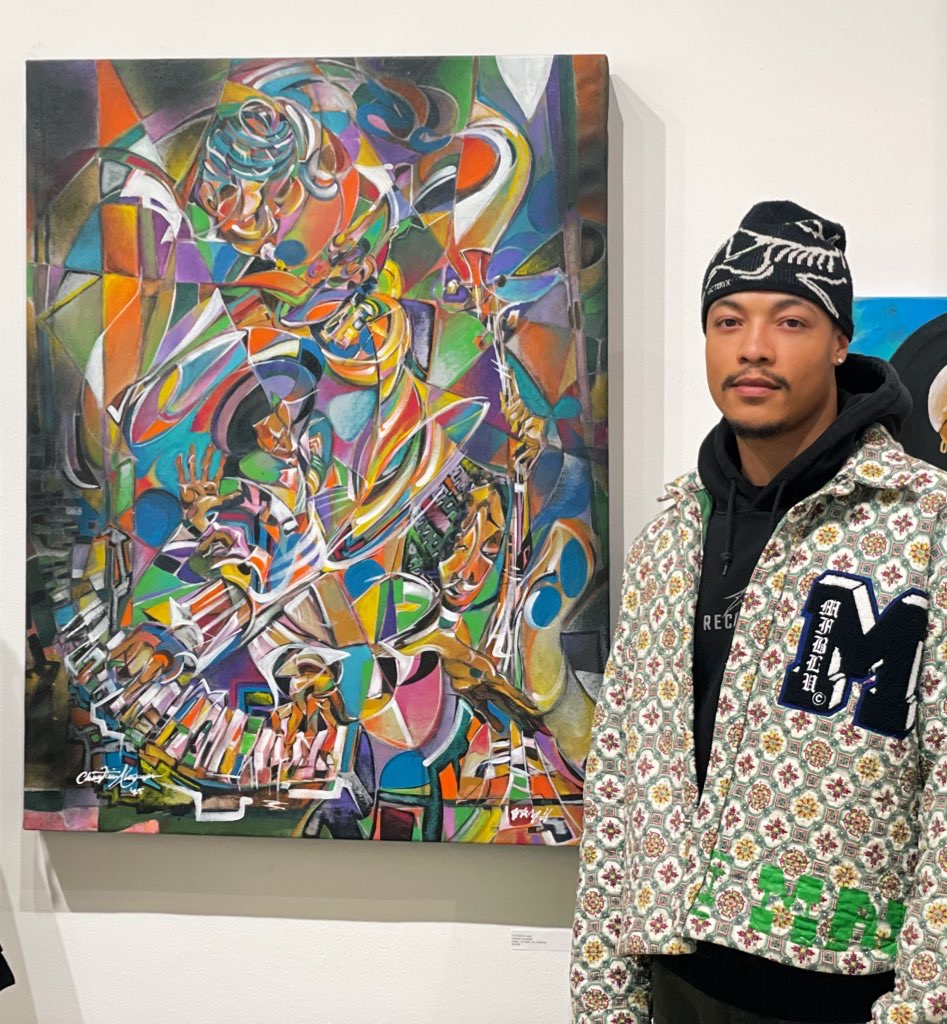
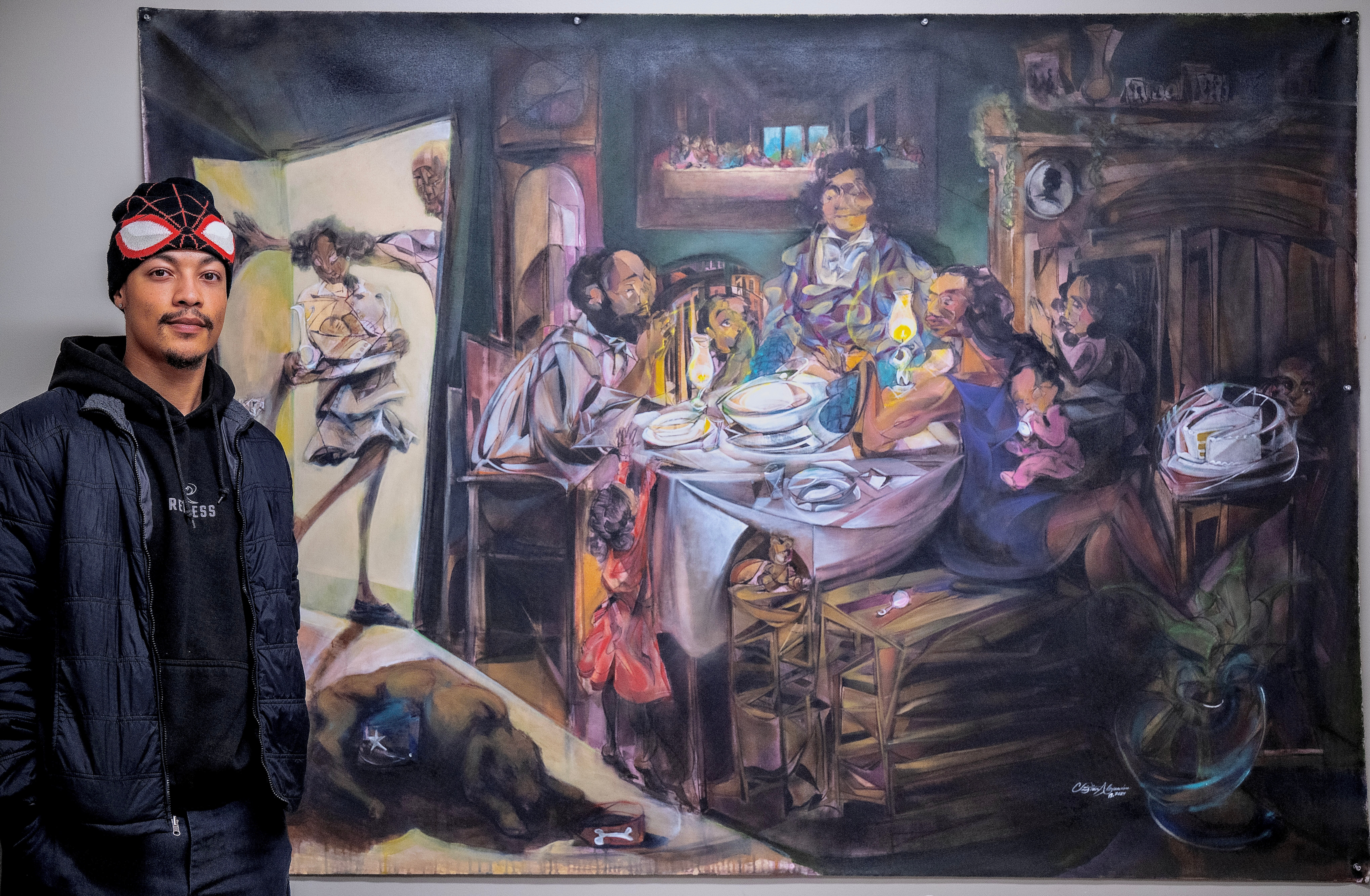
From this foundation, I have forged my own style—one that reclaims and progresses upon traditional African Cubism. It is an homage to the ancestors who first understood that the world is built from angles and arcs, from triangles that hold up the sky and circles that complete the infinite. Yet it is also something new: a pushing forward, a reaching backward only to launch further into the unknown. My work centers on geometric abstraction, on the portrayal of movement and rhythm frozen momentarily upon the canvas, suspended like music made visible.
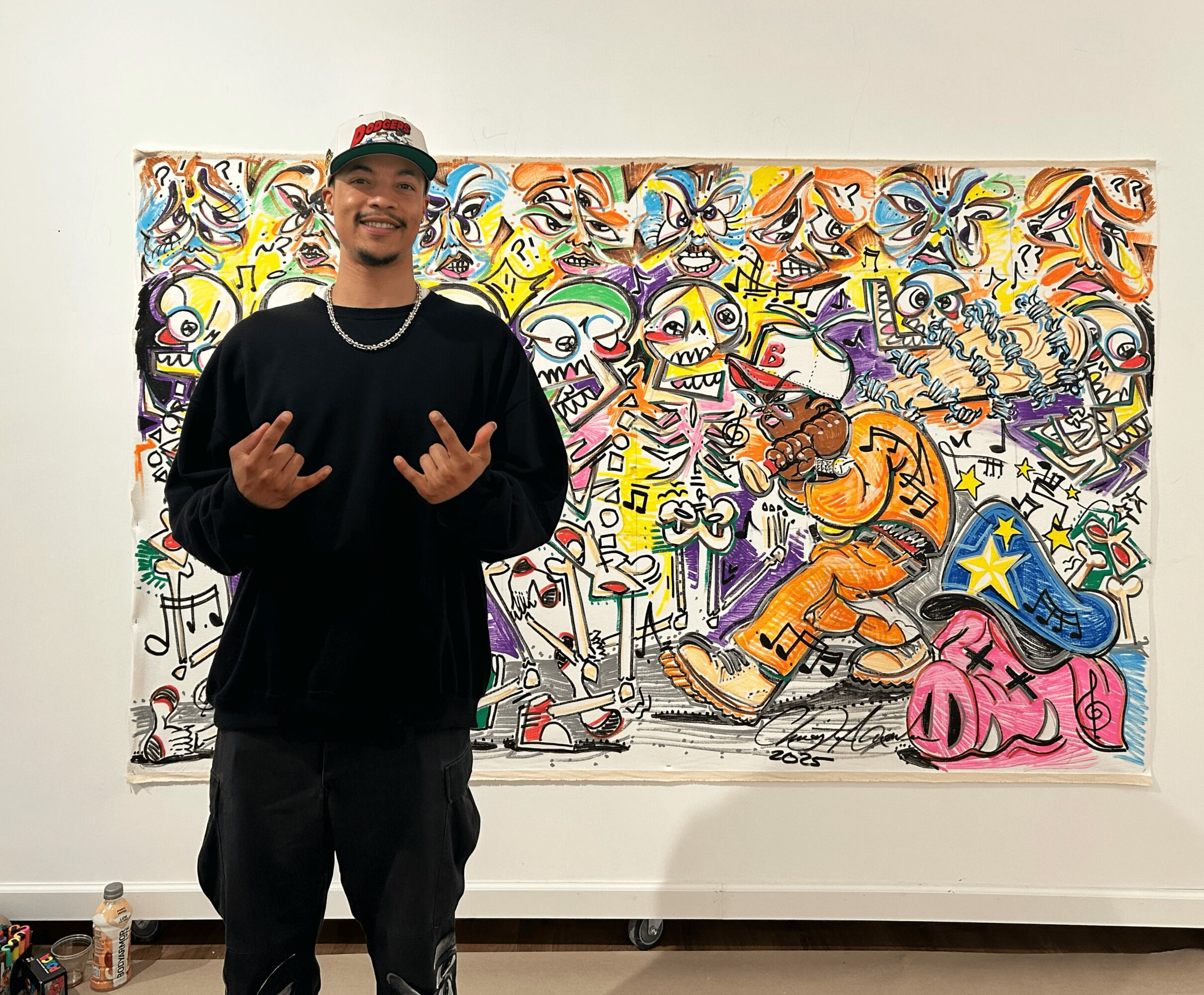
I hold a particular admiration for fashion illustration, and this affection weaves itself through every piece I create. My work often portrays human figures draped in garments that should not exist—impossible confections made from whimsical shapes, folds that defy gravity, fabrics stitched from dreams rather than thread. I believe the body and the cloth are one, each informing the other, each without the other incomplete.
My process, I must confess, is not for the faint of heart. It begins as most things do for me: with stillness. I stare at a blank canvas until the blankness begins to breathe. Until the white transforms into visions—shapes floating at the edge of perception, haunting the periphery like half-remembered songs. And then I take my charcoal, that earthy ancestor of pigment, and I trace what I see. I do not lead the canvas; I follow it. I allow the surface to communicate with me, to reveal what it has been waiting to become.
And when I make a “mistake”—when the line bends where I expected it to flow, when the color strays from its intended shore—I do not resist. I embrace it as divine intervention, a sacred collaboration between my hand and something larger than myself. To create alongside God: is this not why we were given our gifts in the first place?
Do you have any advice for those looking to network or find a mentor?
I’ve found that networking works best when you approach someone as a human, and ask questions about them beyond the professional field. Learn what someone is passionate about and allow them the space to express themselves. Be human, be genuine, and try to foster friendships.
Contact Info:
- Website: https://artbychristianalexander.com
- Instagram: https://www.instagram.com/artofbam/
- LinkedIn: https://www.linkedin.com/in/christian-alexander-31b363171/
- Twitter: https://x.com/artofbam_
Popular
-

Hidden Gems: Local Businesses & Creatives You Should Know
-

ATL’s Most Inspiring Stories
-

Portraits of Atlanta
-
Natasha Dillard on Redefining Beauty Standards and Empowering Women Through Unapologetic Self-Expression
-
Darren Paltrowitz on Blending Investigation, Media, and Culture to Uncover the Stories Behind the Stories
-
Naeemah Jade on Redefining Networking Through Trust, Proximity, and Intentional Community