






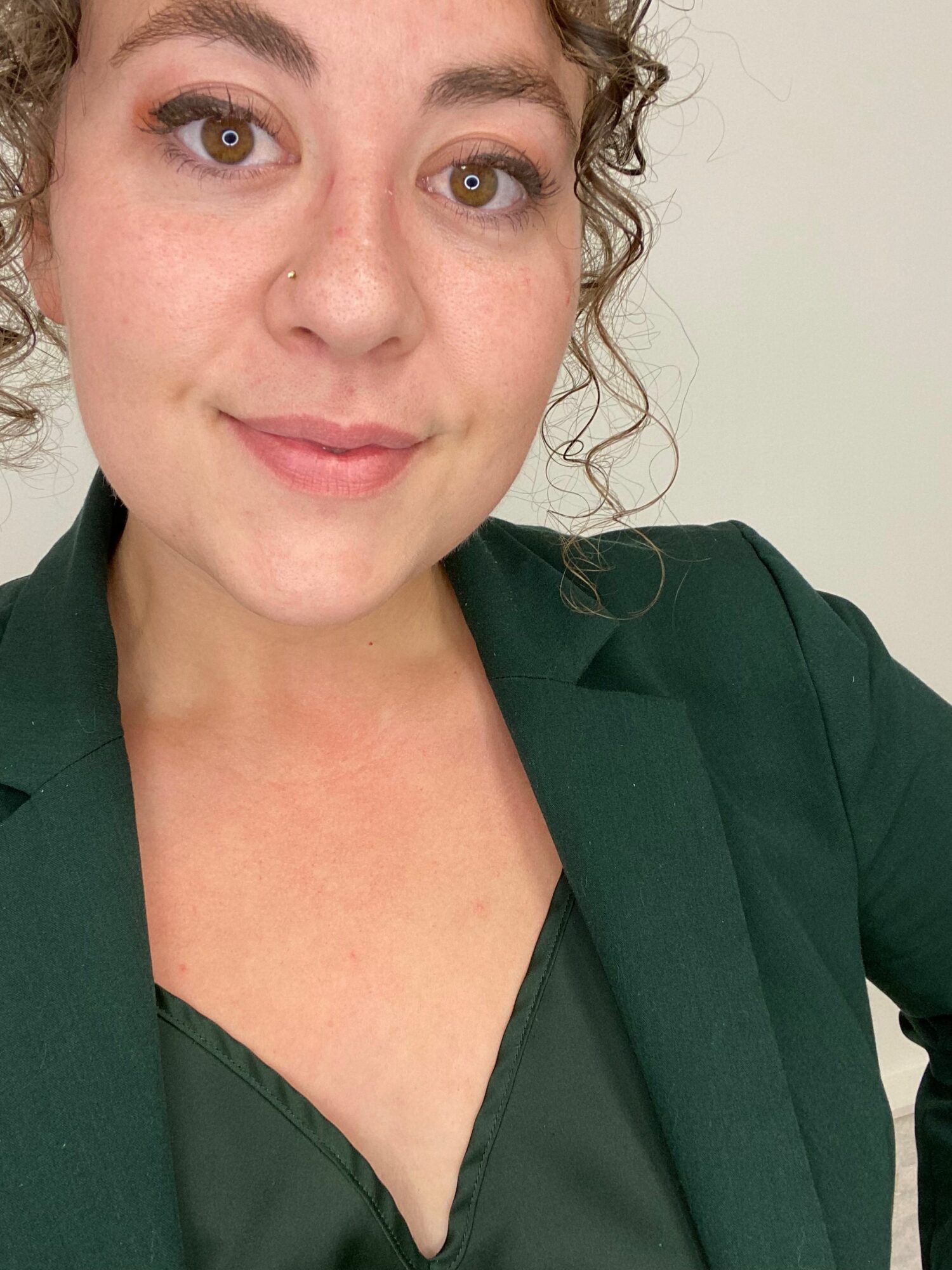
Today we’d like to introduce you to Amanda Swartz.
Amanda, we appreciate you taking the time to share your story with us today. Where does your story begin?
My connection to healthcare started long before I ever worked in billing or operations. I grew up around healthcare workers, especially my mom, who spent more than four decades as a Director of Nursing in senior living communities. From a young age, I was volunteering in dementia care units and seeing firsthand how much responsibility, compassion, and structure it takes to care for people well.
In 2011, I became a Certified Nursing Assistant and worked directly with patients. That gave me a very real understanding of the human side of care. In 2013, I transitioned into healthcare practice management, and that is where I started to realize I was naturally drawn to the systems behind the care, the workflows, staffing, onboarding, compliance, communication, and operational structure that allow providers to actually do their jobs well.
I honestly fell into medical billing and billing operations. It was not something I originally set out to do. My first real exposure came in 2020 when I was working as a Practice Manager for a large therapy office during COVID. Like many people in healthcare at that time, I had to learn quickly and wear a lot of hats. Billing became one of the responsibilities that landed on my desk, and I realized I really enjoyed understanding how healthcare organizations function behind the scenes.
By 2023, people started asking me to help with billing, claims, denials, and operations, and they were willing to pay me for that support. That is really how my consulting work began to grow.
Today, through Swartz Professional Services, I support private practices and privately owned clinics, including therapy practices, psychiatry groups, med spas, and medical clinics. My work includes healthcare operations, billing workflows, recruiting, licensing and regulatory support, HR, payroll, onboarding, systems cleanup, and practice strategy.
When people hear “medical billing and coding,” they often think coding is the biggest part of the work. In hospitals, rehab centers, and larger corporate healthcare settings, coding can absolutely be its own complex role. But I work mainly with private practices and privately owned therapy and psychiatry clinics. In that world, coding is usually less about manually coding every single visit and more about making sure the structure is correct from the beginning, appointment types, CPT codes, fee schedules, EMR setup, claims workflows, and denial follow-up.
What I enjoy most is the problem-solving side. Submitting claims, reading payer responses, understanding denials, correcting issues, and getting claims paid feels like solving a puzzle. When you figure out why something denied and are able to fix it, it is incredibly rewarding because you know you are helping the practice stay stable and allowing providers to keep focusing on patient care.
I did not take a traditional school path into billing or coding. I have a business degree and education in data analytics, and I grew up surrounded by healthcare. Over time, I realized that the business, operations, and problem-solving side of healthcare is where I naturally fit best.
At the core of my work is the belief that healthcare providers deserve strong systems behind them. When the operations, billing, staffing, and workflows are clear, providers can focus on delivering care, patients receive a better experience, and practices can grow without unnecessary chaos or gatekeeping.
Alright, so let’s dig a little deeper into the story – has it been an easy path overall and if not, what were the challenges you’ve had to overcome?
No, it has not always been a smooth road. I do not think many meaningful careers are.
A lot of my growth came from being placed in situations where there was no perfect roadmap. In healthcare, especially during COVID, things were changing quickly, and many of us were learning in real time while still being responsible for patients, staff, providers, and operations. When I was working as a Practice Manager, billing, staffing, workflows, compliance, and daily problem-solving all landed on my desk at different times. It was overwhelming, but it also taught me how to stay calm, figure things out, and build structure where there was none.
One of the biggest struggles was learning complex healthcare systems without coming from a traditional billing or coding school path. I had to learn by doing, reading payer responses, understanding denials, fixing claims, cleaning up systems, asking questions, and slowly building confidence through experience. There were definitely moments where I felt like I was learning an entirely new language.
Another challenge was realizing how much private practices can struggle when they do not have strong systems behind them. Providers are often excellent at caring for patients, but the business side can become chaotic if billing, onboarding, credentialing, HR, documentation, and workflows are not organized. Seeing that gap was frustrating, but it also became the reason I do this work.
Entrepreneurship has also had its own challenges. Starting a business means learning to trust yourself, price your work, set boundaries, and take responsibility for outcomes. It required me to step away from the idea of staying “safe” and instead build something based on real needs I was seeing in the healthcare community.
The road has not been perfectly smooth, but every challenge gave me a clearer understanding of what practices need to function well. It taught me that strong systems are not just about efficiency , they protect providers, patients, staff, and the long-term stability of the organization.
Alright, so let’s switch gears a bit and talk business. What should we know?
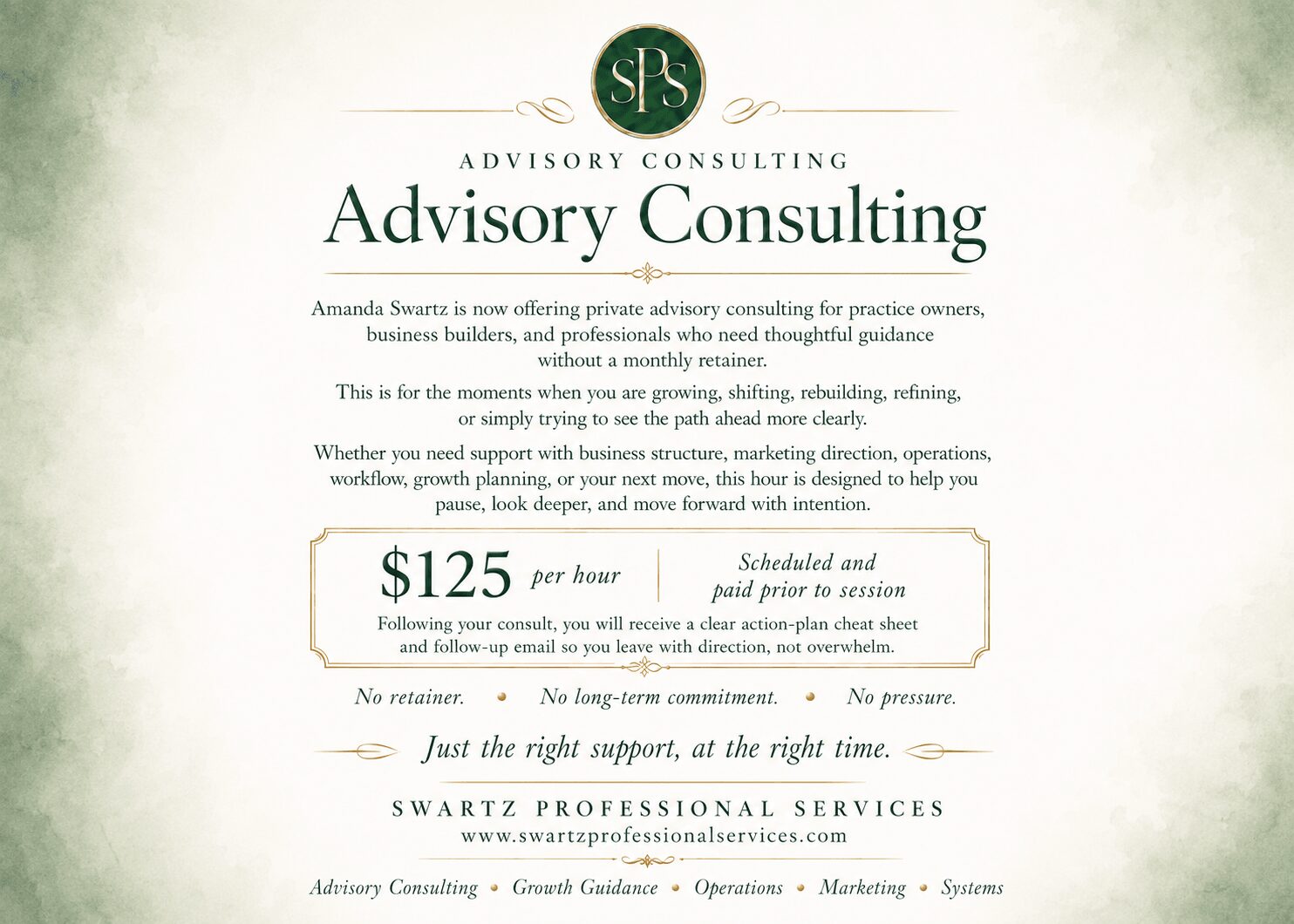
Swartz Professional Services was built to support healthcare practices behind the scenes, where so much of the stability of patient care actually begins.
We work with private practices and privately owned clinics, including therapy practices, psychiatry groups, med spas, and medical clinics. Our focus is healthcare operations, billing workflows, practice management, credentialing support, HR, onboarding, payroll, compliance structure, and system cleanup. In simple terms, we help practices organize the business side of care so providers can focus on their patients.
What we are known for is stepping into the complicated middle space between clinical care and business operations. Many providers are excellent clinicians, but they were never taught how to build scalable workflows, manage billing issues, understand payer problems, organize staff responsibilities, or create systems that can grow with the practice. That is where we come in.
A large part of our work is helping practices clean up the structure underneath their operations. That may include reviewing appointment types, CPT codes, fee schedules, EMR setup, claims workflows, denial trends, credentialing status, onboarding processes, or staff responsibilities. We look at where things are breaking down and then help build a clearer, calmer system.
What sets us apart is that we do not approach healthcare operations as cold or corporate. We understand that behind every claim, workflow, policy, and process, there are real people, patients trying to access care, providers trying to do meaningful work, and staff trying to keep everything moving. Our goal is to bring clarity without making people feel judged, overwhelmed, or left behind.
I am most proud that the brand has grown naturally from real needs. This was not a business built from a theory. It grew because practices needed help, providers were asking for support, and I kept seeing the same pattern: good care can suffer when the systems behind it are unclear. Swartz Professional Services exists to close that gap.
Brand-wise, I am proud that we stand for transparency, calm systems, and empowerment through knowledge. I do not believe in gatekeeping information. I want clients to understand their own practice, their own billing, their own workflows, and their own options. The goal is not to make people dependent on us. The goal is to help them become more confident, informed, and stable.
Our offerings include billing operations support, denial management, workflow cleanup, credentialing and payer enrollment support, HR and onboarding structure, payroll system support, operational consulting, EMR setup guidance, compliance organization, and strategic practice growth support.
What I want readers to know is that healthcare providers do not have to choose between compassionate care and strong business systems. They need both. When a practice has clear operations, clean billing workflows, organized staff roles, and reliable systems, everyone benefits, the providers, the team, the patients, and the long-term health of the business.
We love surprises, fun facts and unexpected stories. Is there something you can share that might surprise us?
Something surprising that many people may not know is that I wrote a book called *Sacred Business Structure for the Healers*.
A lot of people know me through healthcare operations, billing, compliance, and practice management, which can sound very structured and traditional. But there is another side of my work that is deeply connected to holistic wellness, non-Western healing, and the people who are building care models outside of the traditional medical system.
I believe there is often an unnecessary divide between the scientific and the holistic. On one side, you have highly clinical, data-driven providers. On the other, you have healers, coaches, hypnotherapists, energy workers, and wellness practitioners who may not fit neatly into the traditional healthcare model. I believe both sides deserve support, structure, and respect.
Part of what I want to do through my work is help all types of healers build strong, ethical, sustainable businesses. That includes the therapist who leaves traditional practice to become a hypnotherapist, the functional medicine provider building a direct-care model, the med spa owner trying to create better systems, and the psychiatry or therapy practice navigating insurance and compliance.
To me, sacred business structure means bringing grounded systems to meaningful work. It is the idea that a healing practice still needs clear operations, boundaries, workflows, pricing, documentation, and leadership. Structure does not take away from the heart of the work, it protects it.
That is a big part of what makes my brand personal to me. I am not only interested in helping practices run efficiently. I care about helping people who are called to healing work build businesses that are stable enough to sustain them.
Contact Info:
- Website: https://www.swartzprofessionalservices.com
- Instagram: @swartz_professional_services
- Facebook: https://www.facebook.com/swartzleigh
- LinkedIn: https://www.linkedin.com/in/amanda-swartz-022581270

Popular
-

Hidden Gems: Local Businesses & Creatives You Should Know
-

ATL’s Most Inspiring Stories
-

Summer McIntyre Is Building a Career at the Intersection of Sports, Media, Entertainment, and Digital Storytelling
-

DeAnna McIntosh Is Helping Entrepreneurs Move Bold Ideas From Vision to Reality Through Strategy, Innovation, and Execution
-

Portraits of Atlanta
-

Dr. Nicole Brown Expands Her Vision Beyond Design to Inspire Women Through Storytelling, Reinvention, and Intentional Living