


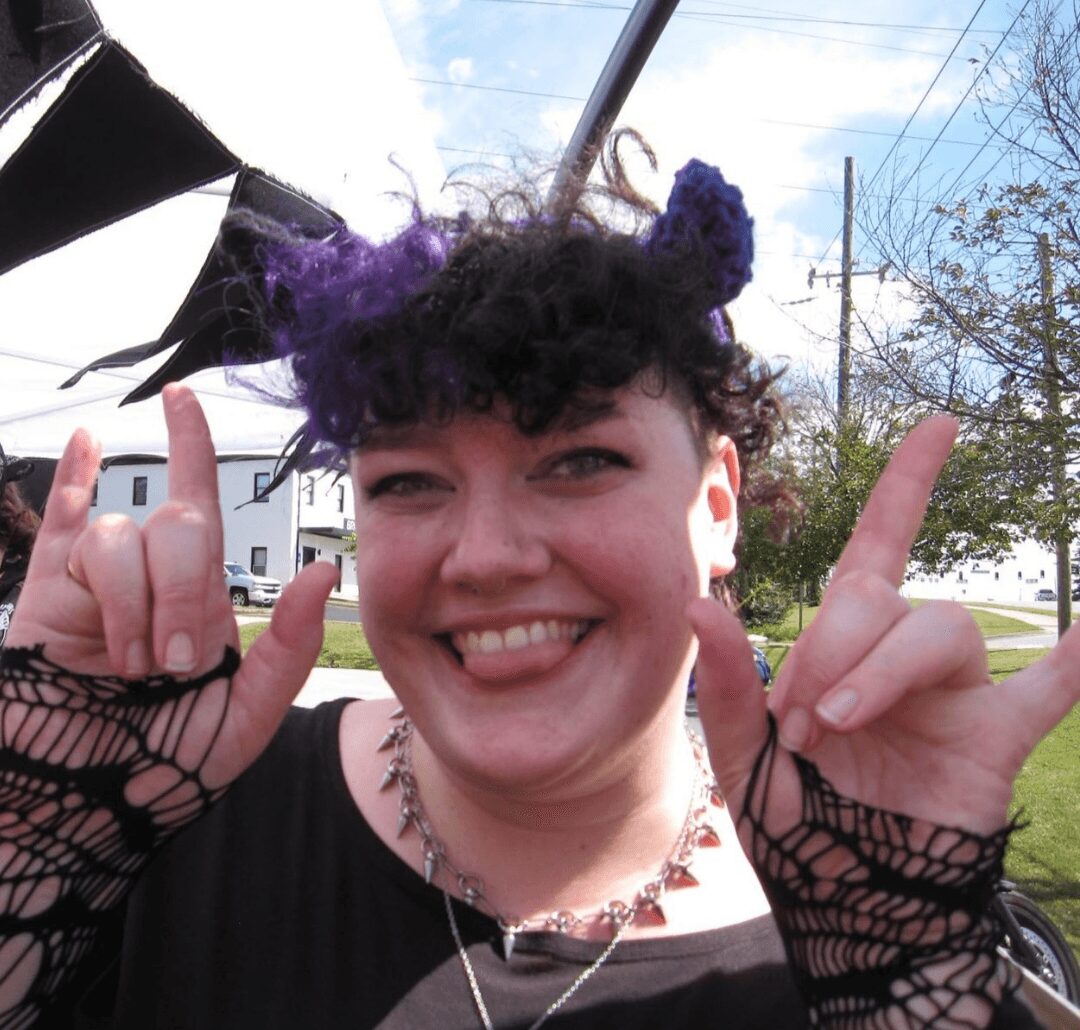
Today we’d like to introduce you to Isabella Banich.
Hi Isabella, we’re thrilled to have a chance to learn your story today. So, before we get into specifics, maybe you can briefly walk us through how you got to where you are today?
I started ceramics a few years ago while I was still working at my traditional 9 to 5 consulting job. I wasn’t feeling very creatively fulfilled, so when my sister mentioned that she and my dad were taking a ceramics class at the county studio, I decided to sign up with them.
It started as a good way to see my family and be creative, but soon it became my favorite part of my week. I eventually signed up with the studio teacher’s community studio, EK’s Art Barn. Her studio is an absolute dream. She hosts so many local potters, some being hobbyists and others being professionals. Being amongst so many creative folks all working in the same medium has absolutely inspired me.
Not long after I joined the studio, I had way too many pieces to keep at my house or give away. I approached the folks down at the newly-opened coffee shop, Mr. Tombstone’s, to see if they could stock some of my plates on a commission basis. They also invited me to their inaugural community market, Summerween. With steady sales and an amazing market crowd, my eyes were opened to ceramics as a profession.
In late 2025, I was face to face with a choice that I didn’t think I would have to make this early as an artist. Do I quit my 9 to 5 to pursue art full time? My 9 to 5 was grueling and I decided I needed an out. I quit! It has been the best decision I have made.
All of a sudden I had 50 hours of my week back, and I threw all of them straight into studio practice and marketing. I spent hours applying to Fall vending opportunities, organizing my space, and prepping for shows. If I was going to “make it” as an artist, I knew I would have to hit the ground running full speed.
I don’t know if I’ll ever find out the definition of “making it”, but I’ve found fulfillment, joy, and meaning in my life since then. I’ve participated in countless markets, community events, and artist opportunities. I’ve made progression in my craft through hours of practice and classes. I’ve made hundreds of connections in the art and vending world with customers and makers alike. I’ve watched my friends get inspired to start or continue vending their own work. And I’ve been able to pay all my bills on this weird dream.
I don’t think I could imagine a better outcome for an art career.
I’m sure it wasn’t obstacle-free, but would you say the journey has been fairly smooth so far?
I think a lot of artists will tell you similar things when asked about obstacles. Most of them are financial, but most of the solutions are made through connections. Ceramics especially is a very difficult medium to get into because of the very high cost to enter. I was very lucky to be connected to Emily and the crew at EK’s Art Barn. She hosts potters for a monthly rental fee and includes everything but clay. I’ve also started working over there as their Kiln Tech in return for my rental fee being waived. This has allowed me access to a kiln, studio space, glazes, and tools that I likely wouldn’t have been able to afford on my own.
Another financial challenge has been the state of the economy. With the prices on everything rising, art is being considered more and more as a luxury. Luckily I’ve been connected to many promoters and market hosts that prioritize vendor sales and have been able to produce profitable markets.
And lastly, a personal obstacle I’ve been struggling with is time management and spending meaningful time with my family, friends, and fiancée. Having a studio outside my house transports me to what I call “the land of focus”. I usually am out there for 8-13 hours a day. My weekend markets also take around 12-16 hours on Friday, Saturday, and Sunday to prep, setup, sell, takedown, and travel. It’s been hard and a continual struggle to make time for others, but because I also stick to my own schedule, I have been able to meet friends for lunch on their break, hiking on random days off, and sometimes surprise work trips in the same area as a market! This career has also allowed me to see long-distant friends more often. I use my travel shows as an excuse to stop through their city, or specifically book shows in their area.
Appreciate you sharing that. What else should we know about what you do?
All of my work is distinctly tied to my personal style and identity. I grew up with artist parents, and now am engaged to my partner who prioritizes community, and this reflects greatly in my style.
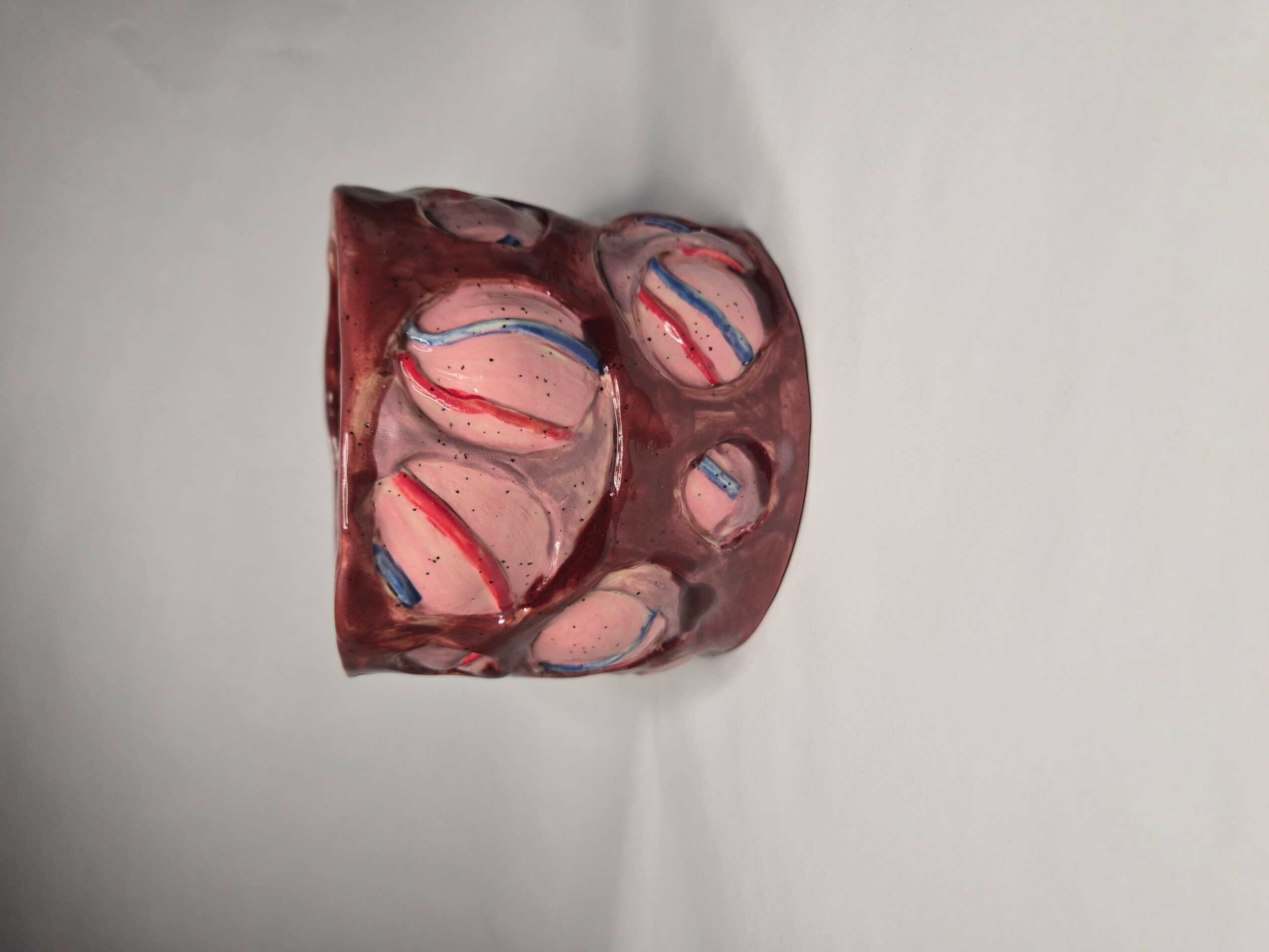
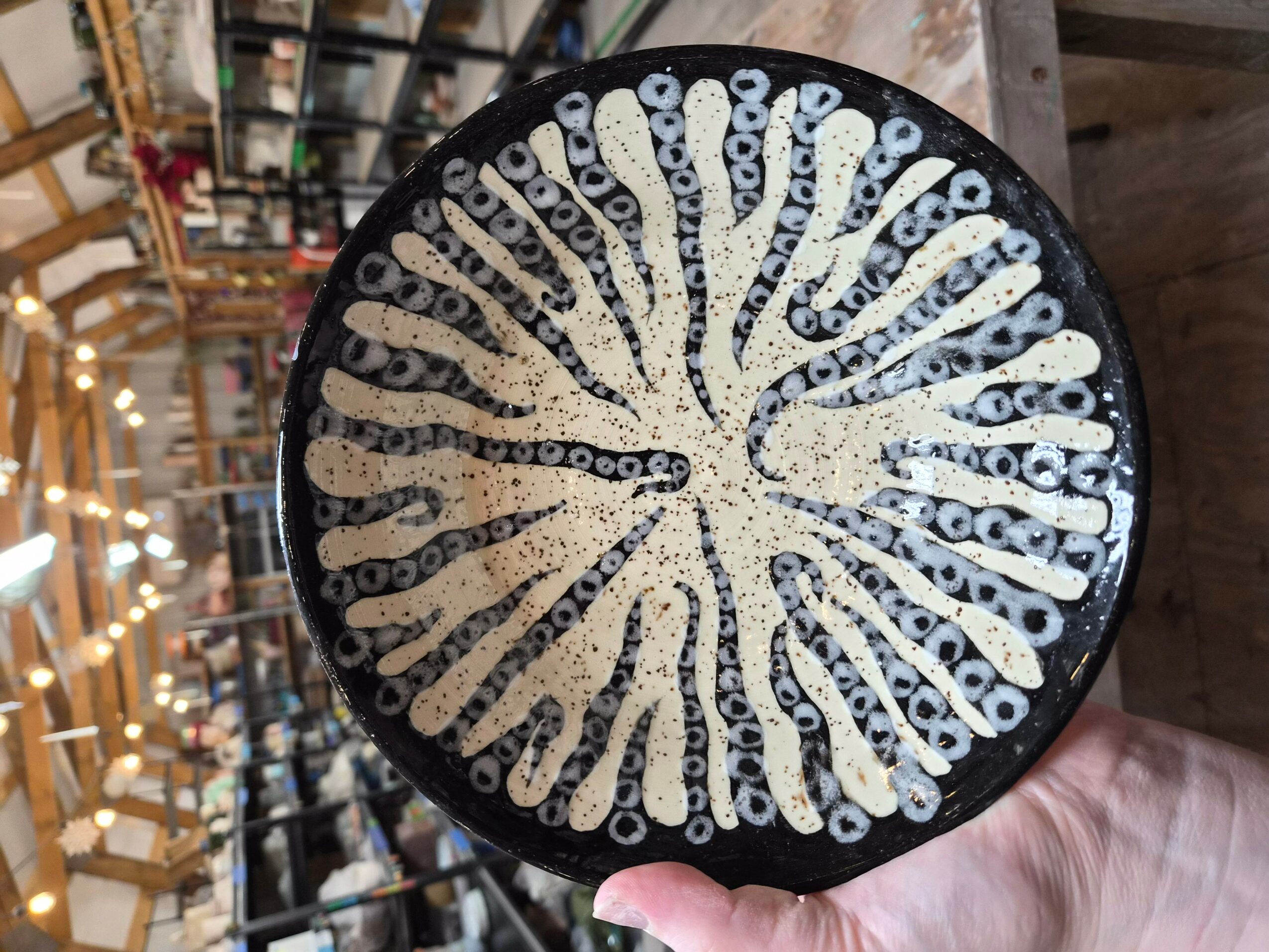
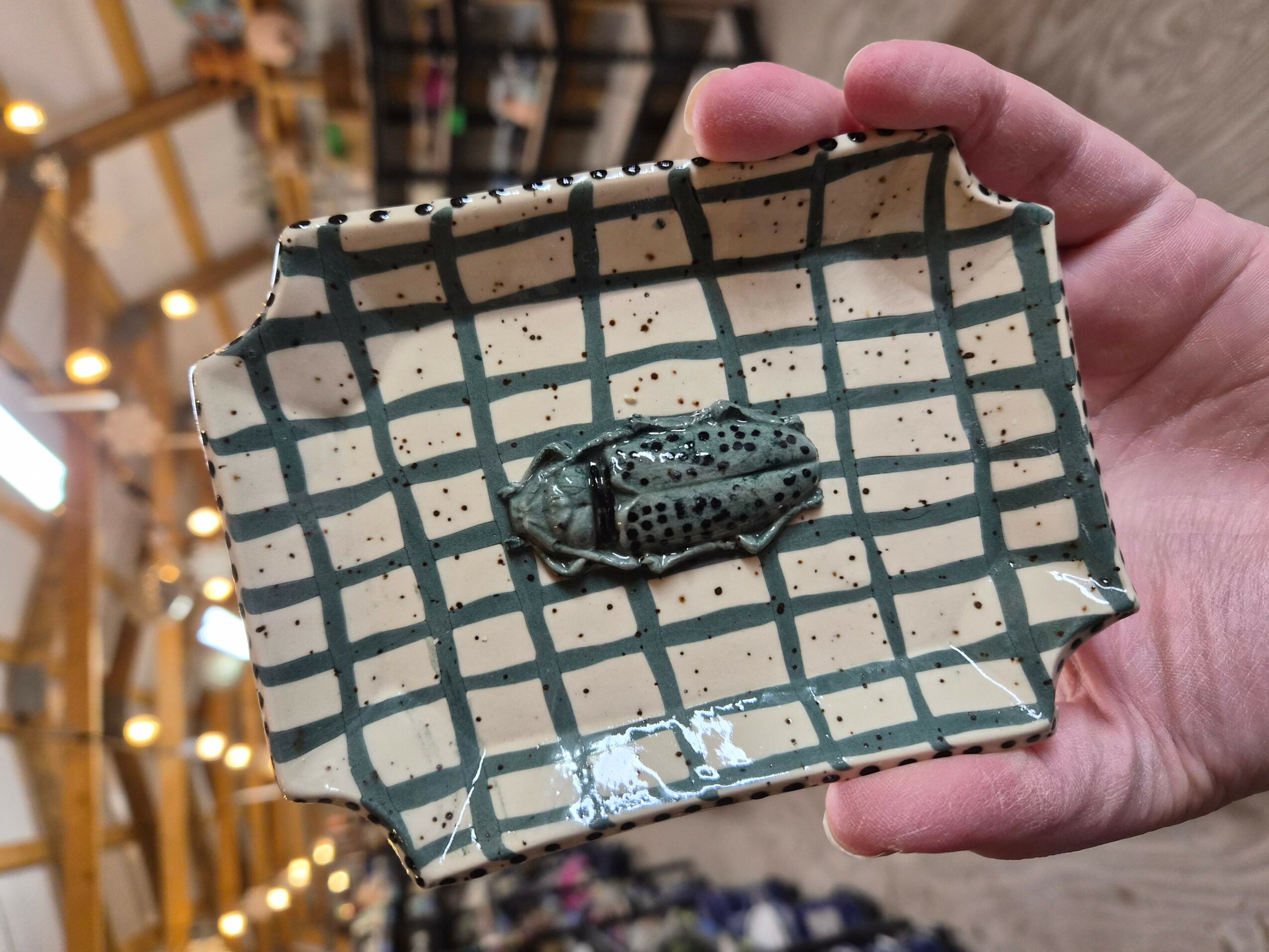
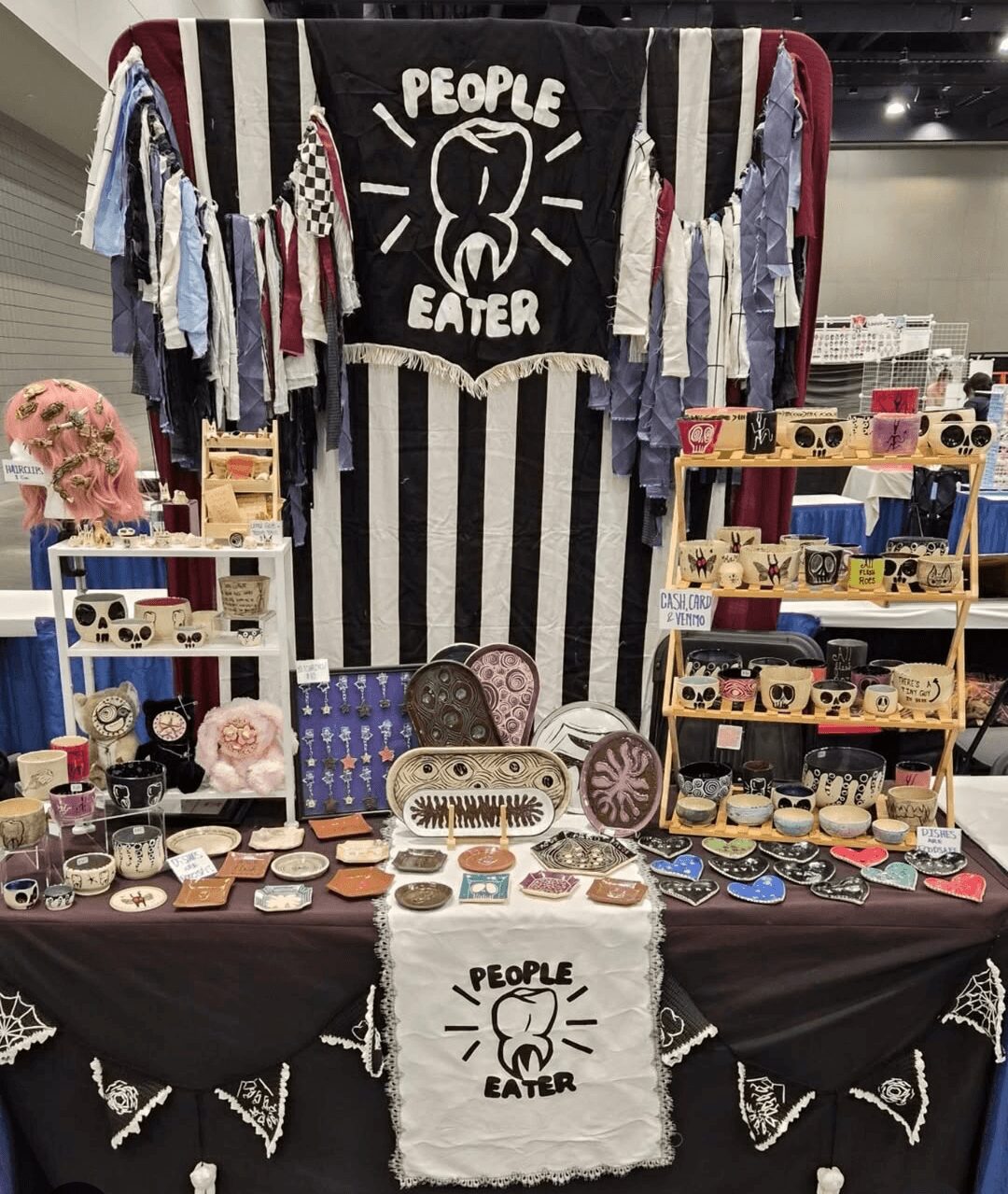
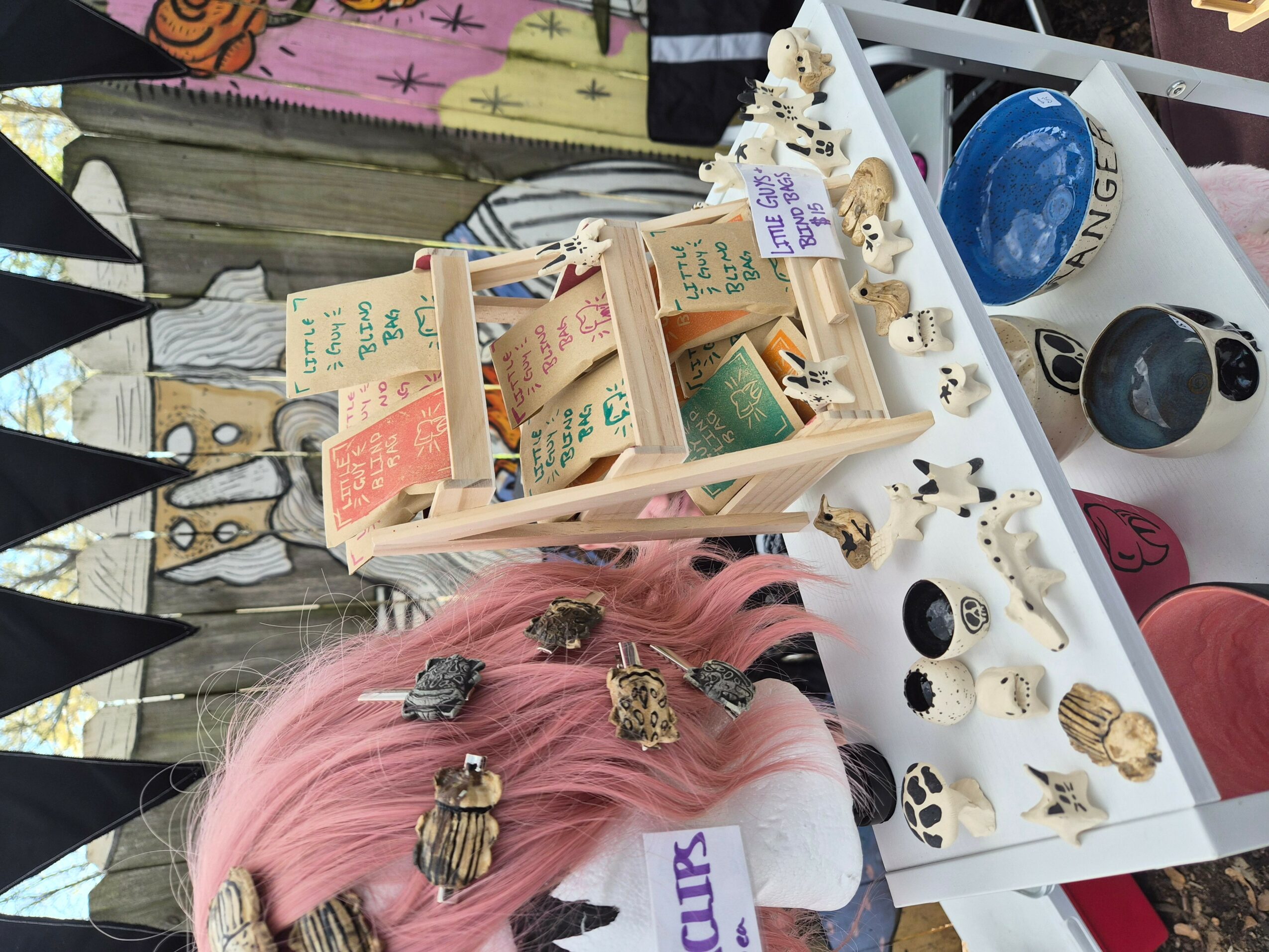
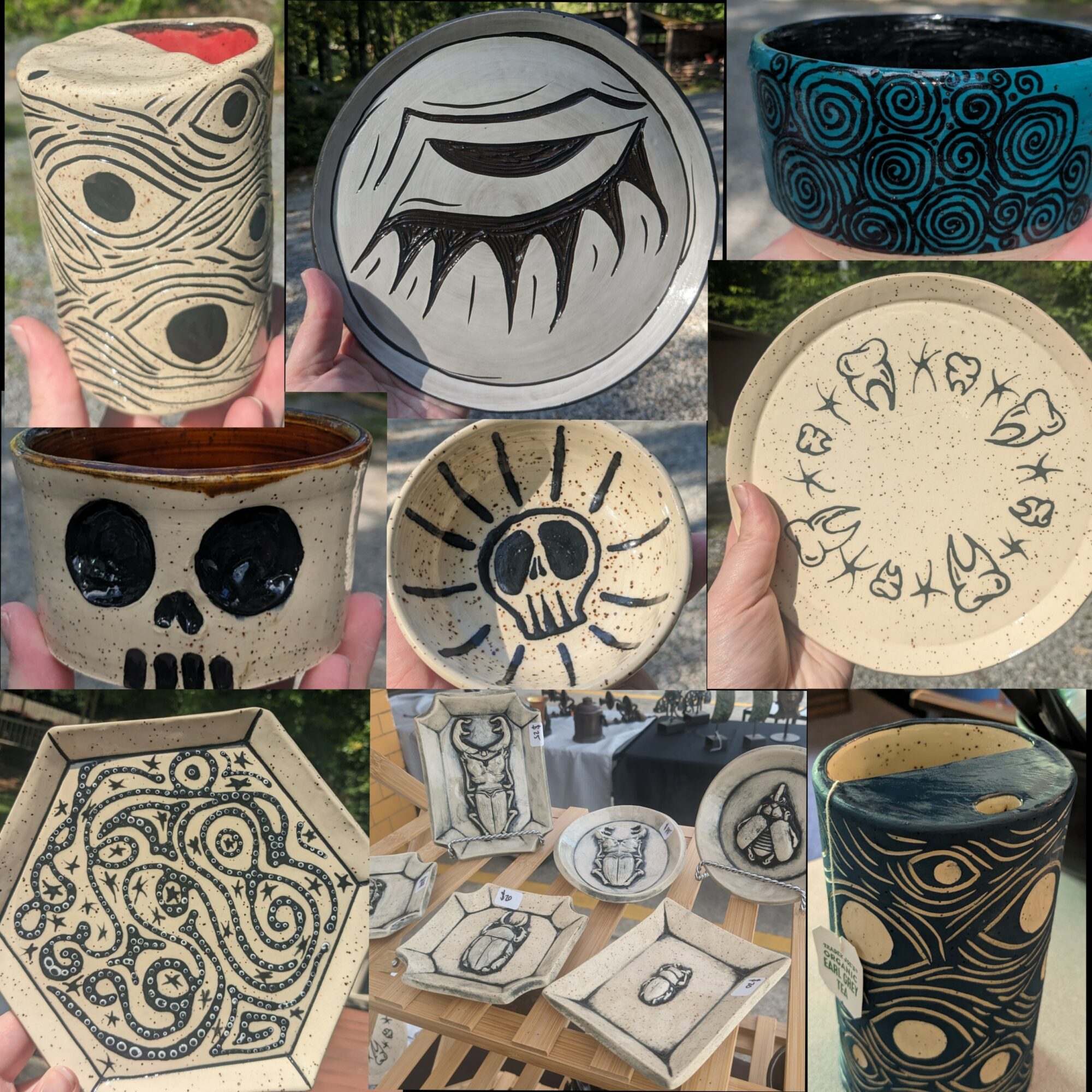
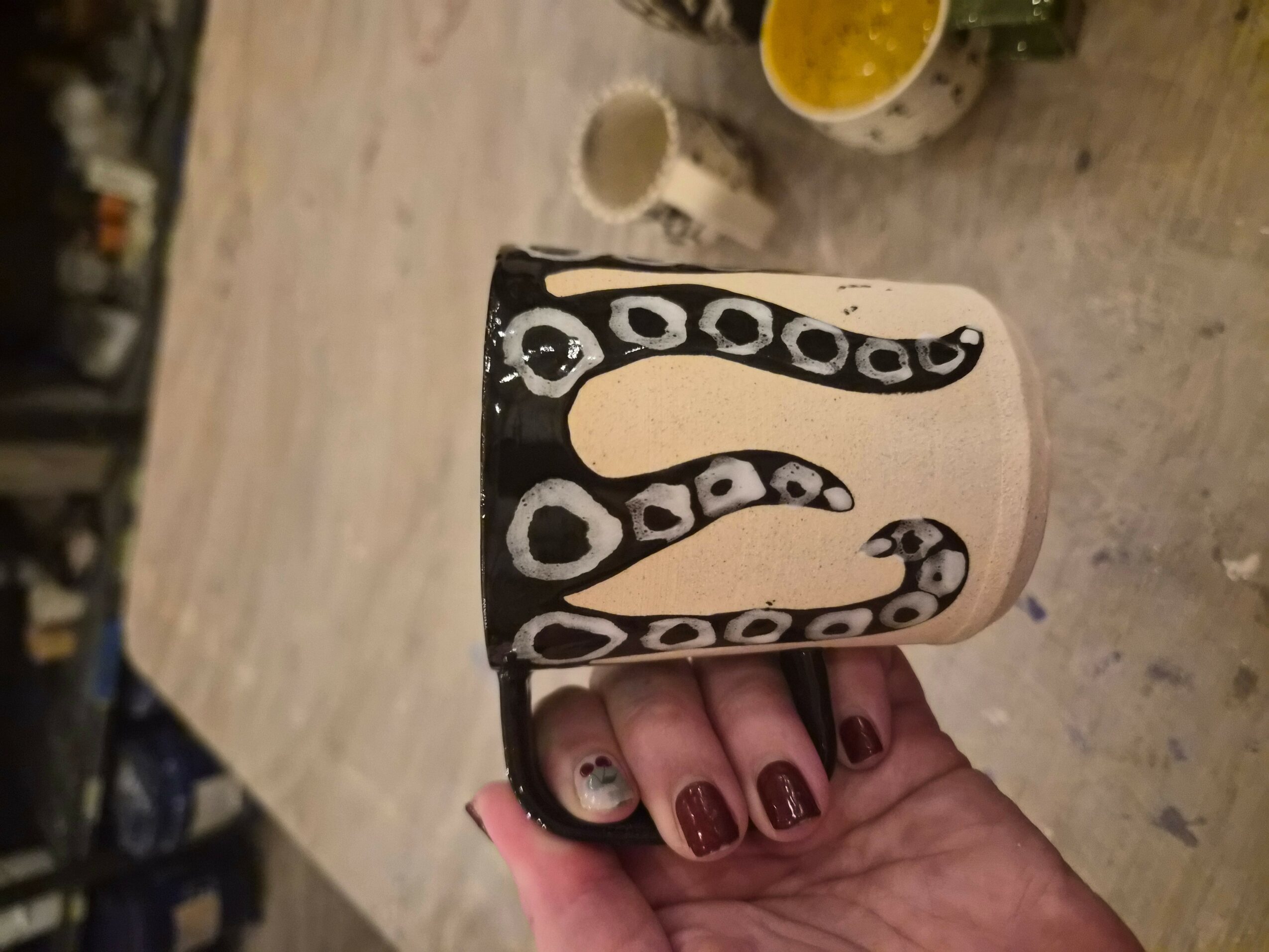
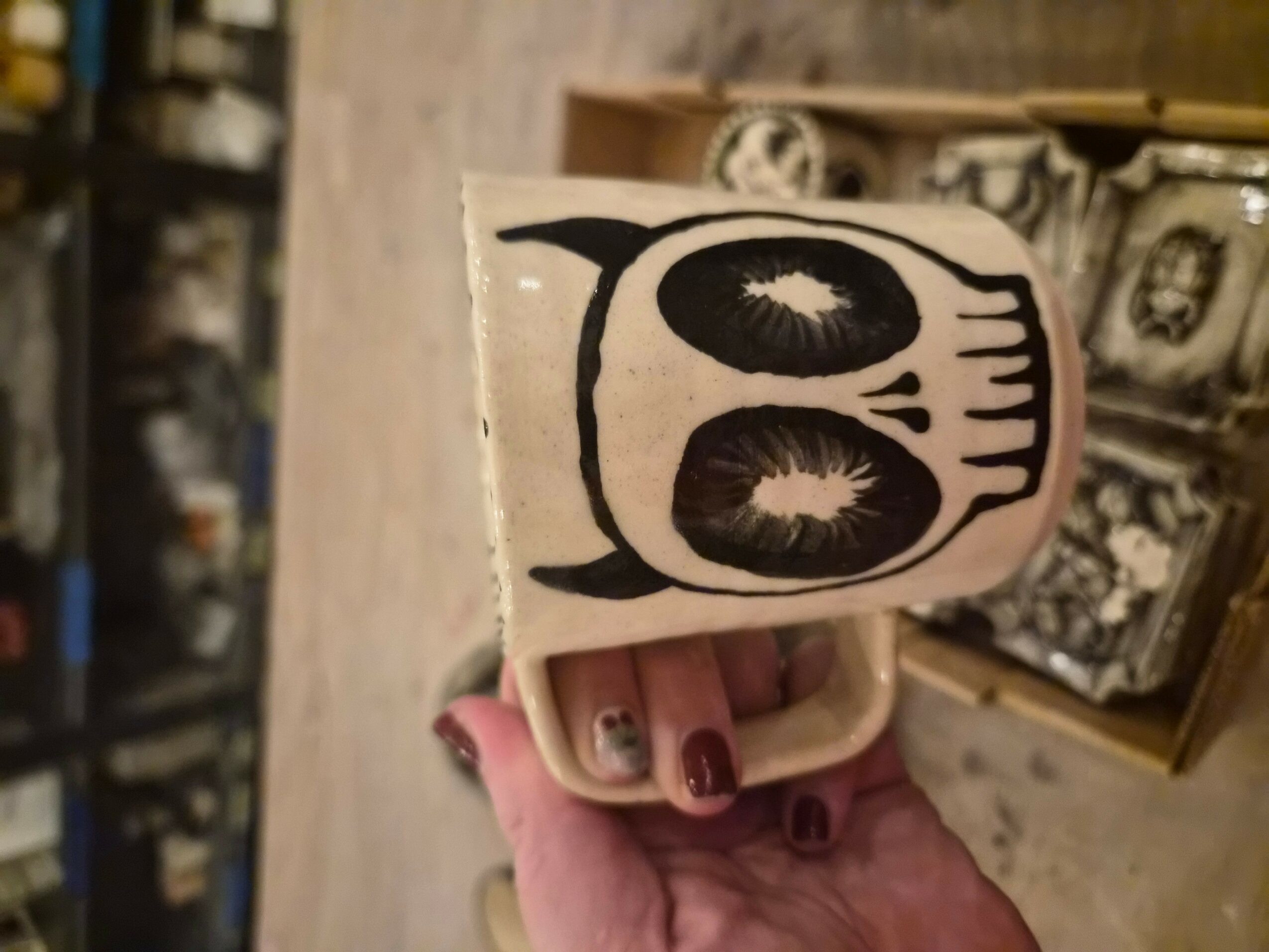
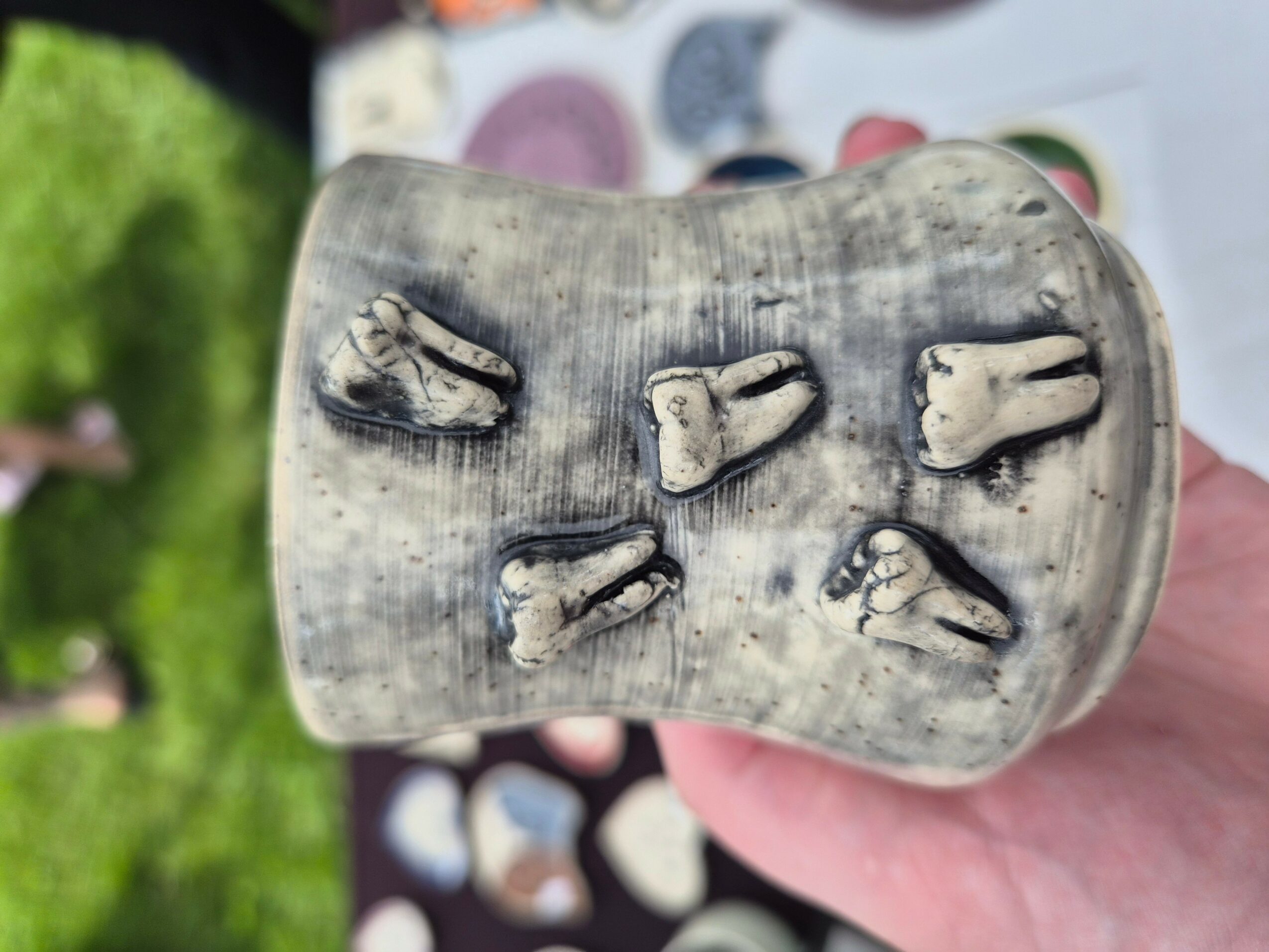
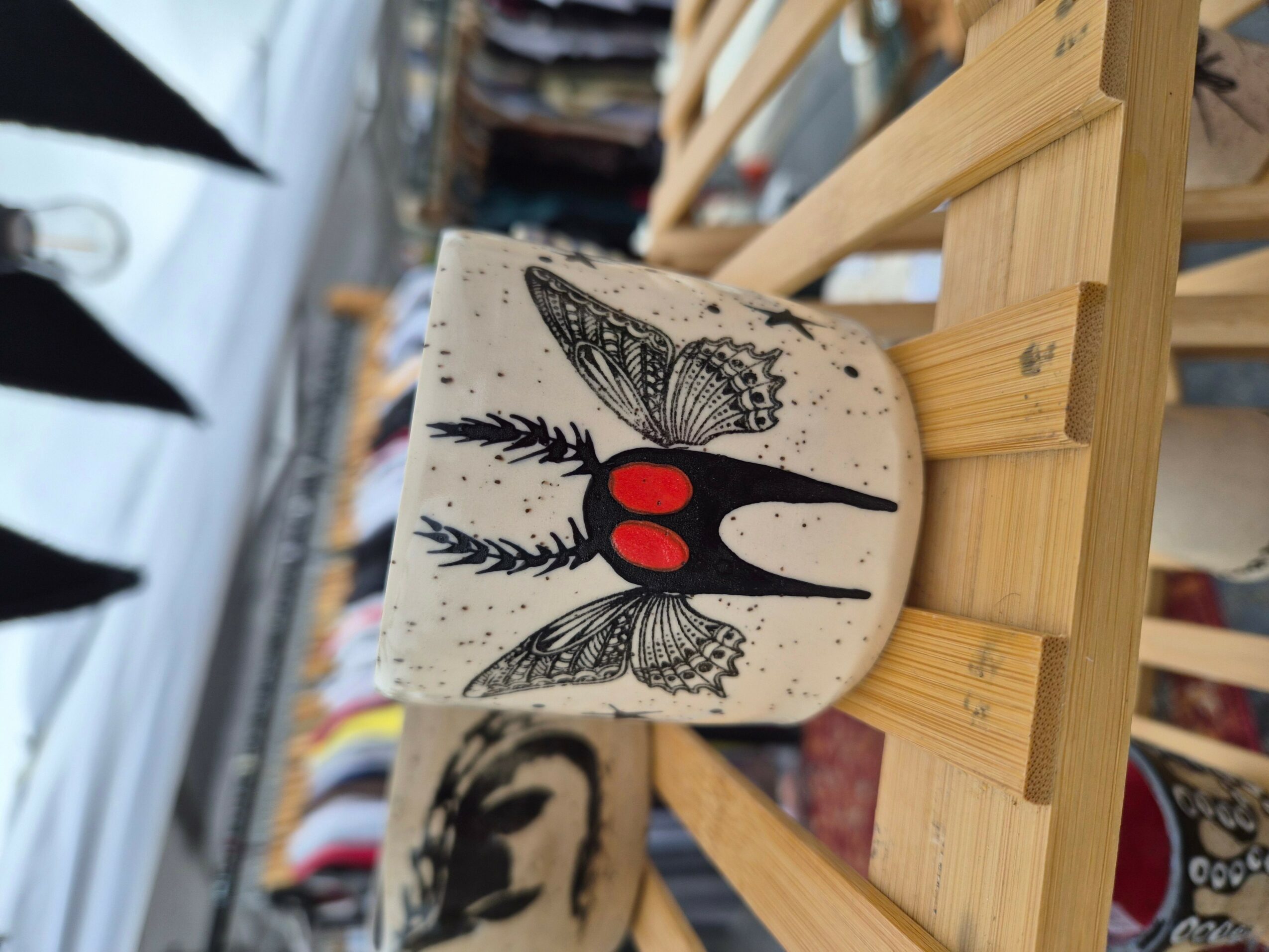
I make functional ceramics with alternative designs. I either throw or hand-build the piece and then alter it using underglaze, carving, or sculpting. I use similar motifs across each piece, and they include bugs, skulls, animals, teeth, cryptids, and anything else along that vein.
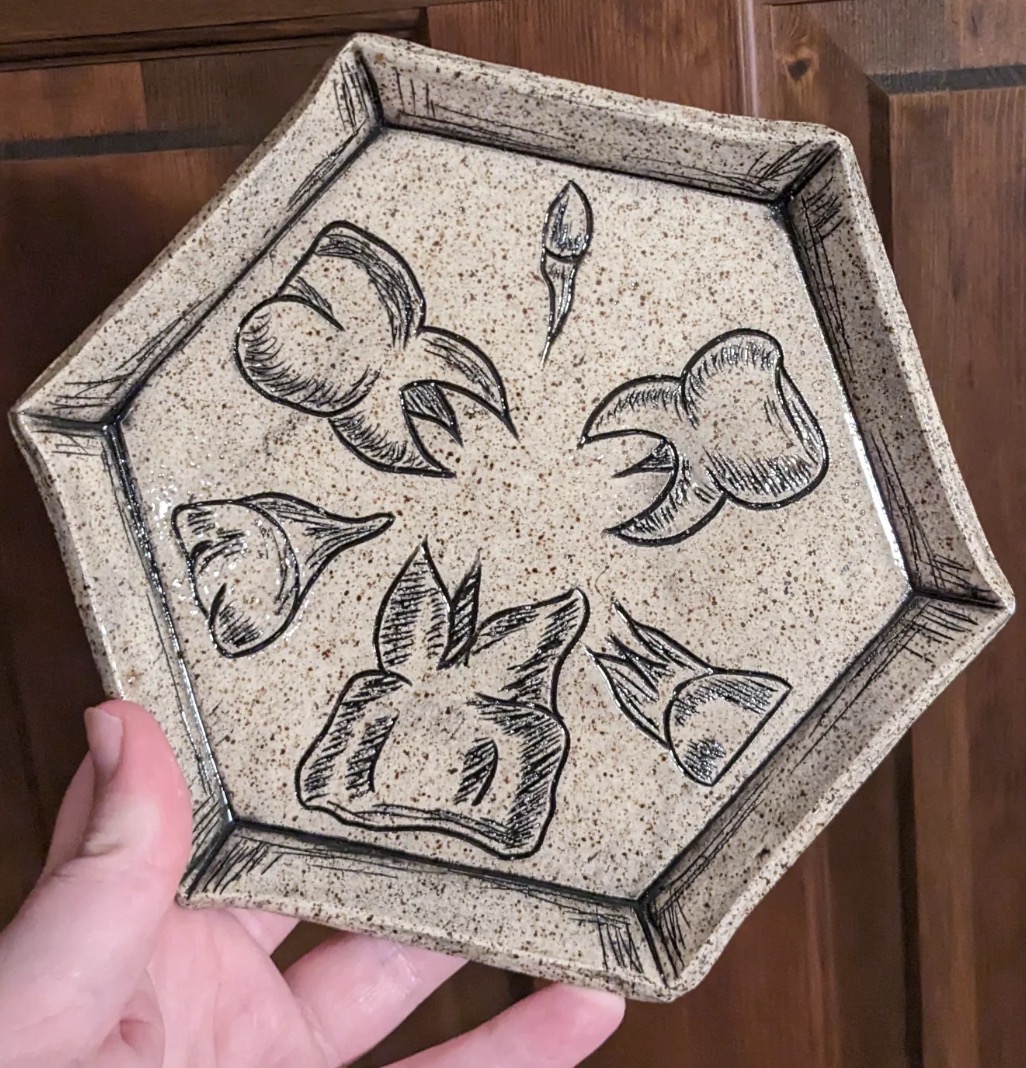
I think that I am known mostly for the teeth, skulls, and cryptids. For the teeth, I carve or paint them on cups, plates, and bowls, and I have started making teeth pendants. For the pendants, I made few molds out of human and coyote teeth, and press clay into these. I also use these castings to decorate my pots.
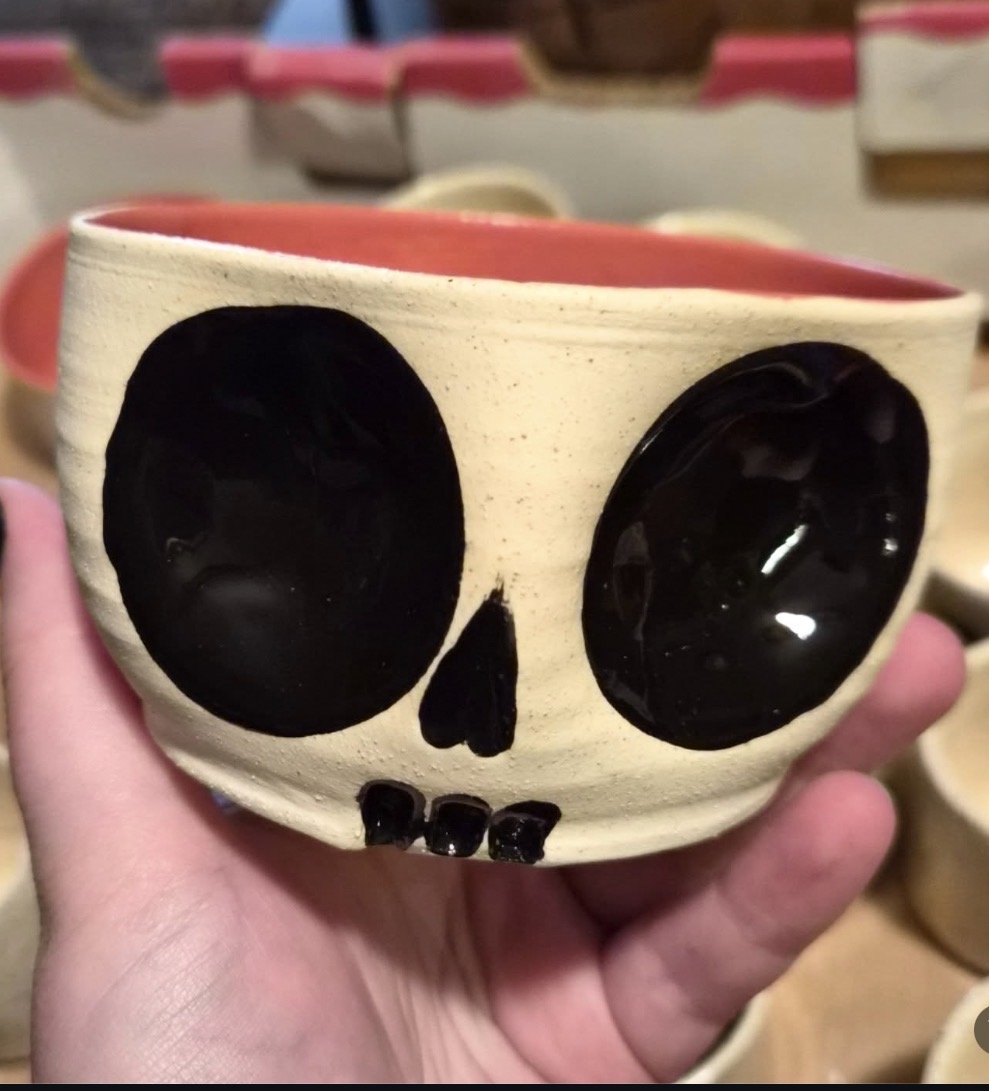
The skulls are also painted or carved onto pieces, but I also make what I call skully mugs. These are 3D skull cups/bowls that I first turn on the wheel, and then press eyes, teeth, and a nose cavity into using my hands,
The cryptids are printed onto cups using a silk-screen method. I created the silk screen by painting drawing fluid directly onto the screen, and then using screen filler. I silkscreen these onto a Gelli plate, and then roll my piece onto the plate, transferring the image from flat to a three dimensional object.
I think that my ceramic work stands out because I use a variety of different art skills to make and decorate pieces that are both thrown and hand-built. I don’t think that anything exists in a vacuum, and if I already have the skill in a different medium, I should be able to use it in ceramics as well!
What would you say have been one of the most important lessons you’ve learned?
I think that the biggest lesson I have learned is the ability to be flexible. Ceramics is a fickle medium and the art world is a fickle business. I can do the best possible job of sculpting, underglazing, and glazing a piece, but when I put it into the kiln at 2200*F, there’s a huge chance that not everything is going to turn out right. It’s quite literally a trial by fire for all of the pieces I make. Witnessing that in the studio has taught me a lot about how to also detach and be flexible in the real world. There’s always a greater than zero chance that something will go wrong. The best possible action is be prepared, observe, pivot, and continue on!
Contact Info:
- Website: https://PeopleEaterCraft.square.site
- Instagram: https://Instagram.com/PeopleEaterCraft
Popular
-

William Nash Believes the Light Within Us Never Truly Goes Out
-

How Cameron Jo’van Turned Uncertainty Into a New Vision for Homeownership
-
How Kundalini Yoga and World Travel Led Trinity Faith to Build Spaces for Transformation
-

Hidden Gems: Local Businesses & Creatives You Should Know
-

ATL’s Most Inspiring Stories
-

Portraits of Atlanta