




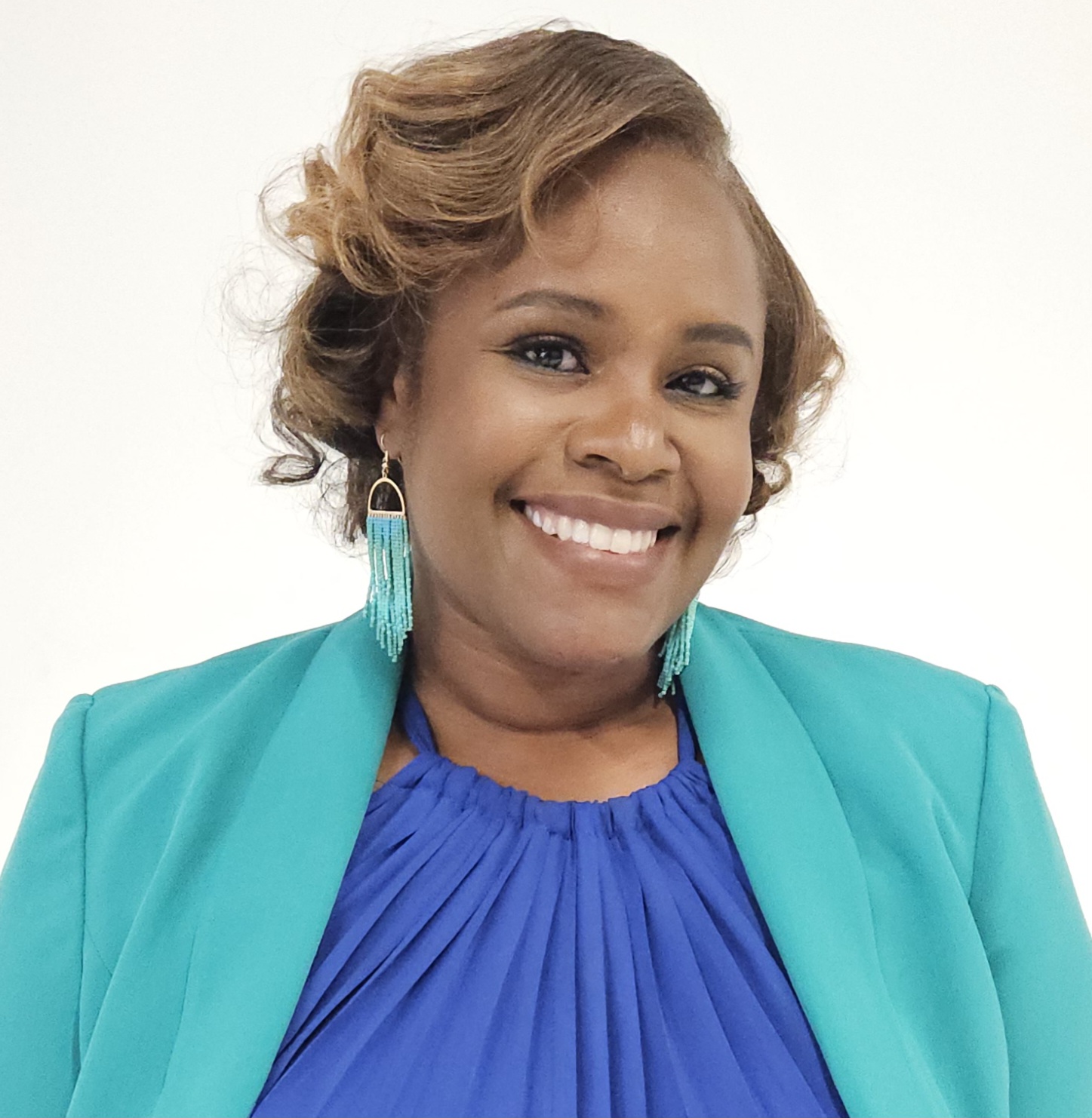
Today we’d like to introduce you to Sasha Ottey.
Alright, so thank you so much for sharing your story and insight with our readers. To kick things off, can you tell us a bit about how you got started?
Many people carry something they wish would change. It may be a problem in their community, a gap in care, a barrier in their profession, or a need that keeps going unmet because everyone assumes someone else will fix it.
My story is about the moment I stopped waiting for “someone else,” not because I understood the whole problem, but because I recognized I had a place to start.
In 2008, I was diagnosed with polycystic ovary syndrome, or PCOS, after going to my OBGYN because I was having irregular menstrual cycles, a common sign of the condition. (On May 12, 2026, a new name for the condition was announced: polyendocrine metabolic ovarian syndrome, or PMOS.)
I expected a real conversation about what the diagnosis meant, how it could affect my health and what I could do next. Instead, I left with a pamphlet, an instruction to lose weight, a directive to come back in six months and a sentence I have never forgotten: “Many women would love not to have a period.”
I was working as a research microbiologist at the time, but my job title did not make the diagnosis easier to understand or the next steps clearer. PCOS was not being explained in the way patients needed. I left that appointment with more questions than answers.
When I tried to take the next step on my own by seeing a registered dietitian, my insurance would not cover the visits because I was not diabetic and did not have cancer. The conditions I was trying to help prevent were the same conditions I would have had to develop before my insurance would cover me.
That experience showed me where to begin. People needed clearer information. They needed support. They needed somewhere to turn after diagnosis.
One of my favorite quotes is from comedian, actor and activist Lily Tomlin: “I always wondered why somebody doesn’t do something about that. Then I realized I was somebody.”
That quote captured the recognition for me. I did not yet see everything PCOS Challenge would become. I did not yet understand all the system-level, community-level and individual-level challenges connected to PCOS. I saw one place to start.
I knew I could do something toward fixing what was broken. With others, we could fix it. Together, we would.
That is how PCOS Challenge began in December 2008.
Today, PCOS Challenge: The National Polycystic Ovary Syndrome Association serves nearly 60,000 members and helps people, professionals and partners work together to close gaps, elevate care, expand access and accelerate progress in PCOS.
Would you say it’s been a smooth road, and if not what are some of the biggest challenges you’ve faced along the way?
Obstacles and Challenges
It has not been a smooth road. The best way to describe it is that we have been building a bridge while crossing it.
When I started, I did not have a complete map of the problem. I had a starting point. As the work grew, the picture became clearer.
PCOS was not only affecting individuals who needed answers after diagnosis. It was affecting families trying to understand what their loved ones were facing. It was affecting healthcare professionals who were being asked to care for a complex condition in settings that often did not give them enough time, training or coordinated support. It was affecting researchers who needed a clearer understanding of patient priorities. It was affecting policymakers who needed to understand why research funding, access to care and public recognition mattered. It was affecting companies trying to develop treatments without enough patient-informed guidance about what people with PCOS actually needed.
That understanding came through the work itself. We learned by listening. We learned by building. We learned by seeing where patients, clinicians, researchers, policymakers and partners were each trying to act, often with real constraints around them.
There was also a personal layer. PCOS can affect health across the lifespan, including reproductive health and pregnancy-related risks. Years after founding PCOS Challenge, that connection became deeply personal for me.
After my daughter was born, I developed postpartum preeclampsia. In the weeks that followed, I knew something was not right. I kept raising concerns. By the time I went to the emergency room alone and was finally taken seriously, I had been hemorrhaging for a month. Doctors found retained placenta, and I needed emergency care that saved my life.
That experience reinforced something I had already learned through PCOS Challenge: when people say something is not right, that has to be the start of care, not the end of the conversation.
The lesson I keep returning to is this: resistance is not a sign to stop. Resistance is the signal to build. Most people misread that signal. They think difficulty means the work is not for them. Difficulty often shows where the bridge is needed most.
Thanks – so what else should our readers know about your work and what you’re currently focused on?
My work is helping people find their place in changing what needs to change.
For some people, that begins with telling their story. For others, it begins with joining a support network, asking a better question in a medical appointment, participating in research, calling a legislator, educating a provider, funding a program, developing a treatment, or helping organize others around a shared need.
PCOS Challenge exists to help more of those actions become possible.
For people with PCOS, that means support, education and pathways to advocacy and research. For healthcare professionals, that means clearer understanding of patient needs and more opportunities to engage with PCOS education. For researchers, that means access to patient priorities that can shape better questions and more meaningful studies. For policymakers, that means understanding the scale and impact of PCOS and the need for stronger research, recognition and access. For companies developing treatments or tools, that means hearing directly from the people whose lives those products are meant to improve.
We have also seen how powerful it can be when public leaders use their position to help create the legislative pathways that make sustained change possible. The late Congressman David Scott did that for PCOS as the lead sponsor of the PCOS Awareness Month Resolution, a founding Co-Chair of the Bipartisan Congressional PCOS Caucus and a key supporter of congressional efforts that helped advance PCOS research transparency, patient-focused treatment development and federal attention to long-overlooked priorities. We honor his great legacy and the doors he helped open by continuing this work.
The work is not only about helping patients speak. It is about helping every part of the field respond better.
That is why PCOS Challenge works across awareness, patient support and empowerment, education, policy, access to care and research. The organization helps turn individual experience into shared progress. It gives people a way to participate from wherever they are.
Some moments make that work highly visible. When PCOS Challenge rang the Closing Bell at the New York Stock Exchange, representing the PCOS community, the point was not ceremony. The point was visibility. It was a moment that helped make patients, researchers, healthcare professionals, industry partners, advocates and supporters visible together as part of the same work.
What matters most to me is that PCOS Challenge has become an instrument of service. It helps people recognize that they can begin, that they do not have to begin alone and that their contribution can matter at the individual, community and system levels.
Alright so before we go can you talk to us a bit about how people can work with you, collaborate with you or support you?
There are many ways to support or collaborate with PCOS Challenge, and they do not all have to look the same.
If you are living with PCOS, you can join the PCOS Challenge Support Network, share your story, attend PCOS Advocacy Day, participate in research opportunities, or help another person feel less alone after diagnosis.
If you are a healthcare professional, researcher or student, you can collaborate through education, research, patient-centered care initiatives and programs that bring patient experience closer to clinical practice and scientific discovery.
If you are a policymaker, donor, foundation, company or community partner, you can help expand awareness, support research, improve access to care, sponsor programs, fund patient support initiatives or bring PCOS education into more communities.
The most important thing is to find a place to start. Not everyone is called to build an organization. Not everyone is called to lead publicly. Telling your story, helping one person, joining a community, funding the work, changing a practice, asking a better question, opening a door or organizing others are all real entry points.
Acting outside the ordinary course is, by definition, extraordinary. We all have the ability to do the extraordinary.
PCOS Challenge began because I recognized that I could do something. It continues because many people have recognized that they can do something too.
Readers can learn more, connect, get involved and support the work at PCOS.org.
Contact Info:
- Website: https://www.pcos.org
- Instagram: https://www.instagram.com/pcoschallenge
- Facebook: https://www.facebook.com/pcoschallenge
- LinkedIn: https://www.linkedin.com/company/pcos-challenge-inc-
- Twitter: https://www.x.com/pcoschallenge
- Youtube: https://www.youtube.com/pcoschallenge


Popular
-

How Kaviar Sundays Is Building a Creative Career Fueled by Purpose, Community, and Staying Focused
-

Hidden Gems: Local Businesses & Creatives You Should Know
-

ATL’s Most Inspiring Stories
-

Portraits of Atlanta
-

How Kimberly D. Worthy Is Redefining Real Estate by Helping People Become Ready From the Inside Out
-

Summer McIntyre Is Building a Career at the Intersection of Sports, Media, Entertainment, and Digital Storytelling