


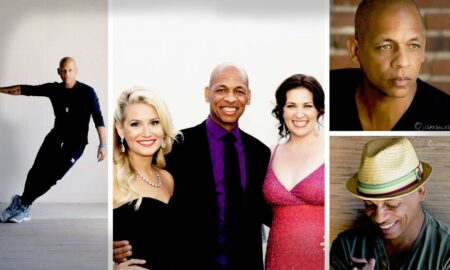



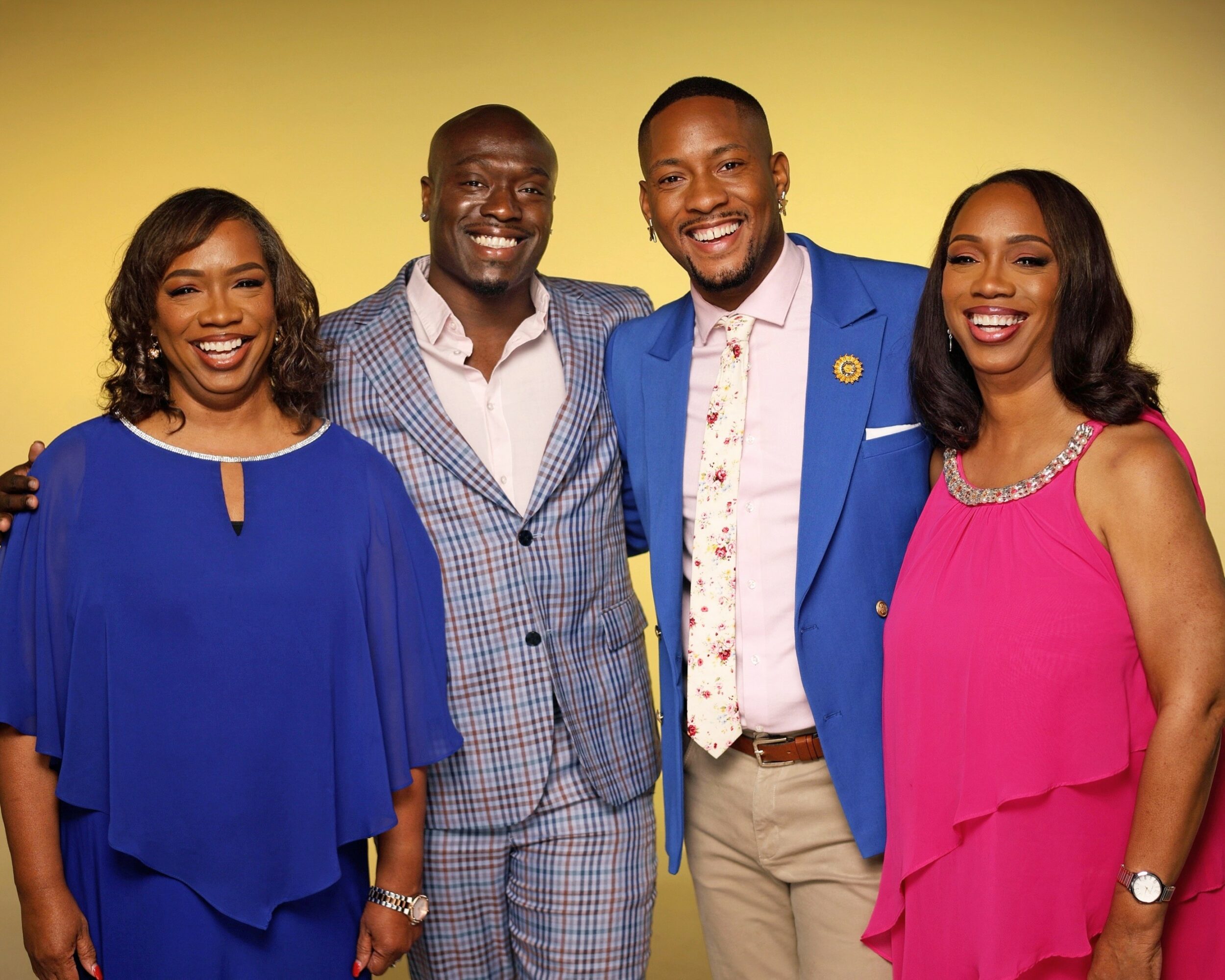
Today we’d like to introduce you to Shervoski Moreland, Antwan Sessions, Lynxes Heard, Denise Latimer.
Hi Shervoski Moreland, Antwan Sessions, Lynxes Heard, Denise Latimer, thanks for joining us today. We’d love for you to start by introducing yourself.
Denise: DanceMakers of Atlanta opened 26 years ago with the mission to create a studio space where we could train dancers who wanted to take it further into professional life. We wanted to provide the level of technique training needed for kids to get into universities and even go on to professional dancing if they wanted to. We just didn’t see that, nor did we find that there were African American studios out there offering that type of training.
Lynise: We also wanted them to be very versatile.
Denise: Yes, we wanted versatility. We also wanted them to understand what was happening in dance, to always stay on top of what was new in dance, and not be stuck in one type of training program, one type of style, or one type of technique all the time. So we wanted to offer outside choreography and expose them to a lot more than what we were seeing in the area. That’s what we did. We started small. Our first year, we had 28 students.
Lynise: Mhmm.
Denise: And we grew to where now we keep somewhere between 250 and 275 students.
Antwan: And we’re looking to grow that even bigger. Well… I had a dream of having a studio for the Black community on Georgia 400. I was also trying to find my place in this community. I knew I could dance, I knew I could teach, but I didn’t know how far I could go. So I wanted to grow more in my teaching skills.
I went to my teacher and asked if I could get a job teaching. She said, “No, but I will let you be on full staff teaching the babies, and you will not be paid.” And I said, “Okay, cool.” So I learned how to teach the babies first. Then, as I got older, I started realizing I had a…
Shervoski: A gift.
Antwan: Yes, a gift for training kids. At first, I only wanted to do summer intensives. So I tried it. I had one person for six weeks. I was like, “I don’t know about this… my head hurts.” However, I decided to try one more time.
The owners of APDA — Atlanta Professional Dance Academy, Jenny and Wei, said, “You need to start a school.” So the first year, they let me rent out a space connected to theirs in Johns Creek. I did that with Dana Hill.
After that year, I was like, “I don’t think there is a market for me out here in Johns Creek.” So I took the one kid I had and went to Sandy Springs.
Even though I had started my own studio, I was still teaching at another studio where I met Ka’iulani McIntosh-Ross when she was 4 years old. She started coming to me full time, and that’s how I started Namari Dance Center.
Denise: So you started with some privates?
Antwan: I started with privates… on Memorial Day! I was also teaching at Orbit Arts Academy, and the kids there started coming to Namari because I went to the owners and said, “Hey, I’m down the street from you. I just wanted to let you know because I’m starting my own small studio.” I was still actively teaching for them, and I wanted to make sure it was okay.
They said yes because they are a musical theatre school, and they wanted to send people to me who needed technical training. So I started getting a lot of white kids. For a long time, I had about two Black kids — Ka’iulani and one other dancer — and about 20-something Jewish kids. That was it. I had that solid for about 2–3 years, but the name Antwan started becoming connected with me being stern. Everybody knows I’m stern but fair.
At the time, I had a style in how I liked to train dancers. So I started writing things down on paper napkins, even though he — Shervoski — got on me about it, and that became Namari Technique: the way I wanted to train kids in ballet.
Ka’iulani’s mom, Michelle, has been such a blessing to me because she allowed me to develop and really see if my technique worked by trusting me to build Namari Technique on Ka’iulani, and it grew from there.
When I teamed up with Shervoski, it became more, “You’ve got to do paperwork this way and that way. You’ve got to do this, you’ve got to do that.”
Denise: He built the business.
Antwan: Yes, he built the business because I was Cash App and cash! LOL! Before he decided to join in, he constantly told me he didn’t want anything to do with the business. So I did it myself… lol. But he brought the structure to Namari Dance Center to make it a real school. I got an EIN number because of him. I didn’t even have one. I just knew I had space and I wanted to teach.
I told my families that I needed at least 20 people to make a competition team.
Shervoski: And yes, the families found those dancers, and the Namari competition team was born.
Can you talk to us a bit about the challenges and lessons you’ve learned along the way. Looking back would you say it’s been easy or smooth in retrospect?
Denise: I don’t know if any small business has a smooth road. There’s always going to be struggle along the way. Of course, there are always ups and downs with finances and enrollment. When you first get started, people see you as new. And in the city of Atlanta, there was a lot of old around us. So trying to build the trust of the community… you’ve got to build that. So while you’re building, you’re struggling.
I worked a full-time job for the first 8 years. I was a mortgage underwriter at a mortgage company.
Lynise: I did the first 6 years.
Shervoski: Oh, you had a job-job!
Denise: Yes, Lynise did the first 6 years, and yes, I had a serious job. I didn’t start off as a mortgage underwriter, I kind of moved into it. Then I was forced to go full-time with Lynise at DanceMakers when the subprime mortgage industry died in 2008.
Antwan & Shervoski: Oh wow!
Lynise: So many companies shut down.
Denise: Every person I knew in the mortgage industry was looking for a job. So that’s when I went full-time. It just so happened to be going into the summertime, so we finally had a full summer intensive, and it was really popular. We made a lot of money when we first had it. People were like, “Oh, it’s going to be during the day? We’re used to y’all only having evening stuff.”
Lynise: We did it for 2 weeks. Then a lady came to us asking if we could do it for one more week, and we were both like, “We’ll do it.” So we ended up doing it for 3 weeks.
Denise: After the first 8 years, we had built up to about 150 students or so. But we had about 60 students come to the summer intensive, so it kind of took off. I think we were just in the right place at the right time.
Lynise and I also had a lot of people who knew us in that community. My family was known in that community in Southwest Atlanta. Our dad knew everybody. He worked for the postal service for 30-something years. He started delivering mail and eventually became EEOC Director of the whole Eastern Conference, but everybody knew him. And I think back in the day, just about every young Black male — and even some Black females — worked at the postal service at some point in life. He was the manager of Maynard Jackson.
So that helped. And then they knew us as dancers too. Our high school was, what, 10 minutes away from where we opened. So the community knew us. Every time somebody was supposed to be dancing, it was us. So yeah.
Antwan: That’s amazing! I do agree with Mrs. Denise and Ms. Lynise — starting a small business definitely comes with obstacles.
The challenge for me was growing to a number where I could actually pay myself. That was the first thing. I was actually blessed to get 10–20 kids as quickly as I did to pay for competition at the prices I was charging.
My struggles came from being a Black gay male on Georgia 400 because, at the time, the area was mostly white and Jewish. Me being stern with these little white kids did not always go over well. But I felt like nobody was coming to my studio for recreational dancing. Everybody was being recommended to my studio. Everybody was being recommended to me for technique and serious training.
The second part was visibility. I always felt like I needed visibility to really be seen. Yeah, it grew over the years, but it never grew to where I knew it could be. I lost a lot of things growing the business. I got two cars repossessed because I had to pay the teachers. I was walking home. I was still teaching at other studios, flipping burgers, and even working at a seafood restaurant.
Lynise: You had to do what you had to do as an artist.
Antwan: Yes!
Denise: I’ve always said small business owners are juggling two things at all times.
Antwan: Once Shervoski and I teamed up, we realized we never had the “big things” on our résumés. We WORKED, but we didn’t have the things people thought made someone a dancer. A lot of the community thought we were too young and didn’t know how to train dancers.
I guess that’s why I went so hard and so stern on my kids because I was like, “Oh no, we’re going to show that we can do this.” That was the thing for a long time.
I mean, some of the same people who are smiling and laughing in our faces now are some of the same people who spoke very negatively about us when we first started. What helped us was that we stayed in Sandy Springs, in our own little corner, growing and doing us. Meanwhile, people continued watching us on Instagram and Facebook and judging us.
Shervoski: For me, because Antwan opened the studio toward the end of 2018, I was still directing other people’s studios and serving as a Director at Dance 411 Studios at the time. I honestly had no desire to join Antwan at the studio until the pandemic came in 2020.
Everything shut down. Dance 411 let us go really quickly; however, they did make sure we received benefits from the government during that time, so I wasn’t mad at that at all.
At the time, Antwan only had about 20 students, and he was like, “What are you going to do?” My plan was to sit on the couch, watch Antwan teach his classes online, enjoy being at home, and watch the news. However, after some time, I was like… “I should really help him. I could teach a class or two.”
While doing that, I had the epiphany: “What if I did for Antwan what these other studios paid me to do for their facilities? What could happen here? What could this become?”
Then the stress came along of, “How are you going to sustain your business during this time? How are you going to pay monthly rent — not just for your home, but for the studio too?”
So we started offering free online classes, and I convinced Antwan to open the classes up for free on Facebook and Instagram. In just over a week, we had over 200 to 300 students joining our Zoom classes to take dance lessons from us.
Once Georgia allowed studios to reopen, we opened back up, and we’ve consistently had more than 50 students in our school ever since. So while people say COVID was a bad thing, it was bittersweet for us.
Because I’m a community person at heart, I’m really big on doing things within the community — that’s how dance found me. We put boots on the ground to get involved in the Sandy Springs community and surrounding areas.
At first, a lot of events turned us away because Antwan was picky about where dancers performed due to injuries that could happen. It wasn’t until Dr. Melody Kelley walked through outdoors and said, “I’ve heard about you and what you’ve been doing.” Since then, she’s been extremely pivotal in helping us become even more involved. She’s the one who got us connected to The Perimeter Juneteenth Celebration in Sandy Springs.
Antwan: And Le’Dor Milteer.
Shervoski: That’s right. Le’Dor has been a delight as well. Both of these African American women have helped Antwan and me tremendously in building a stronger presence in the community. In 2021, we did almost every Juneteenth celebration from South Fulton to North Fulton with just 3 dancers!
Antwan: That’s when the shift happened. We started becoming predominantly Black from that moment.
Shervoski: Another struggle was after the pandemic. We went from having 20 students to over 50-something students, and we were not prepared for it. As Antwan mentioned, he was taking payments through Cash App and cash. So we lost some families because we were in a transition stage trying to figure out new systems, new programs, and everything else needed to accommodate our new enrollment.
Being a small business owner, you learn very quickly that you wear all the hats.
Antwan: Another struggle was parents. We wanted to have a family environment, but when we allowed that…
Shervoski: We got too personal with our clients.
Denise: You can’t help but start off personal. I have to admit that Lynise and I — our first group of kids probably gave us the best group of parents we’ve had in our 26 years.
Lynise: Yeah!
Denise: And a lot of them stayed with us for 10, 12, even 15 years.
Shervoski: We also became a hybrid location for homeschool students because everyone was online at the time. We created the homeschool program because there were so many kids sitting at home alone, and parents liked the fact that we were hybrid. So you learn to maneuver and make things happen according to a need you see.
Denise: It’s funny because when you think about 26 years ago, everybody had just started emailing. We had to do mail-outs when we wanted to get recital information and things out. We mailed everything to everybody.
Shervoski: At the postal service?!
Lynise: We handed some out when they came to the studio too.
Thanks for sharing that. So, maybe next you can tell us a bit more about your work?
Question: What inspired the decision to merge the two companies, and what vision led to this new partnership?
Denise:
Well, after being in business for over 25 years, Lynise and I started having conversations with many of our alumni. We don’t have children, so we were thinking about what the future of DanceMakers would eventually look like. Our alumni are like our children — many of them are now in their late 30s and have been with us since they were kids. But they were building lives in New York City and pursuing so many amazing things outside of owning a dance studio. We were excited for them and wanted them to continue chasing those dreams.
At the same time, we realized we weren’t finding the right people to eventually carry on what we had built once we got to the point where we couldn’t do this at the same pace anymore. We had even shared with Antwan and Shervoski that we were getting tired. Lynise had some health challenges at one point, and we both realized we had been overworking ourselves for years.
Lynise:
Mmhmm.
Antwan:
I remember we were at a convention — I think it was Jump—
Shervoski:
No, I thought it was NYCDA! (lol)
Antwan:
No, it was definitely at the Signia! (lol) We were looking around and saying, “Look at all these kids they have in company,” and Denise said something like, “The only way we could really build something like that is if we merged.” Then y’all walked away and went downstairs.
Denise:
(Lol) Yes! We had been planting little seeds in each other’s ears for a while, but over time it started growing into something real. After my last couple birthdays, I realized I needed to seriously think about the future. I wasn’t looking to completely step away from dance, but I did want the opportunity to gradually ease out over time, and you all gave us the perfect opportunity to do that.
Shervoski:
And for us, Antwan can probably speak more on why we agreed.
Antwan:
For me, the biggest thing was that I had never seen two successful Black dance studios come together to create something this big. Ms. Lynise always says, “This is Atlanta — Black Hollywood.” Something like this should have always existed here.
So I had to tell myself, “Okay Antwan, stop being selfish.” Yes, there’s Namari, and yes, there’s DanceMakers of Atlanta, but think about what this could become together. That mindset shifted everything for me. At first I thought, “Maybe this can work,” but then I realized — no — this will work.
We all shared the same goals. We wanted more for the kids of Atlanta. And beyond that, we all saw a future bigger than just a dance studio.
Denise:
Exactly.
Shervoski:
For me personally, Antwan and I had always admired DanceMakers of Atlanta. Growing up in Athens, I used to travel to Atlanta just to watch their recitals. I remember thinking, “OMG, I need to dance at this studio. This is incredible.”
Over the years, I’ve taught at and directed many studios across Atlanta, and internally I would always compare them to DanceMakers. I’d think, “This is good… but it’s not DanceMakers.” Not in a negative way toward anyone else — every studio has value — but there was always something special about the level of training and excellence they built, especially for Black dancers.
What Denise and Lynise created was important because they believed Black dancers could do ballet, contemporary, and all forms of technical dance at the highest level. They focused not just on performance quality — because naturally, we are performers — but on structure, discipline, and technique refinement so Black dancers could be seriously considered for institutions like Alvin Ailey American Dance Theater, Juilliard School, and the School of American Ballet.
Growing up, I rarely saw people who looked like me in those spaces, and I always wondered why. DanceMakers was one of the few studios showing that it could happen.
Antwan:
And I have to add to that because I grew up primarily training at white studios. I did train with Ms. Axam for a while, but my mom eventually felt like the late-night commute was too much, so I had to stay closer to home. Then when I got to North Springs High School, I met Taylor Page, and she kept telling me, “You need to come to my studio — DanceMakers of Atlanta.”
I spent the night at her house one weekend and went to DanceMakers with her the next day. I walked into that little house studio and was completely blown away. I saw Black dancers with beautiful feet, extensions, turns — technique I had never seen from dancers who looked like me before. I remember thinking, “What is THIS?!”
Denise:
And he never talked to us! We would’ve made that happen! (lol)
Lynise:
He would’ve been dancing with our kids! (lol)
Antwan:
(Lol) I went home and told my mom everything I had just seen. From that point on, I always kept my eyes on DanceMakers and admired what Denise and Lynise were building.
Denise:
It’s interesting because sometimes you have to see something before you realize it’s possible. When Lynise and I came back to Atlanta after college, we noticed there was a gap in Black dance culture — especially in ballet training. A lot of kids thought ballet was boring and didn’t want to stand at the barre.
Then we went to a competition and saw B.B. Dance Productions.
Denise & Lynise:
And we were like, “So it can be done!” (laughs)
Lynise:
Those kids were dancing AND turning!
Denise:
They were clean, polished, and winning. That inspired us. We tried to implement that where we were teaching at the time, but eventually realized we needed to create our own environment to truly build the vision we had.
Antwan:
Honestly, DanceMakers is a huge reason I started helping my own dancers pursue college dance programs. Even now, I still consider myself a fan of Denise and Lynise because there’s still so much to learn from them.
Shervoski:
And before we move on, I really want to say this: Antwan and I were incredibly honored that Denise and Lynise even considered us for this merge. They could’ve partnered with anybody in Atlanta.
There were studios we admired that spoke negatively about us when Namari started gaining recognition, so we learned very quickly to stay focused, stay out of drama, and mind our business.
Lynise:
You have to do that. We experienced the same thing. There was a lot of hate.
Shervoski:
Exactly. So when they approached us about merging, we were honestly shocked. We were like, “Wait… THEY want to merge with US?!”
Antwan:
I literally ran home and told my mom! (laughs)
Shervoski:
We were — and still are — deeply honored by it.
Denise:
(Laughs) We definitely wouldn’t have brought it up if we weren’t serious.
Antwan:
I’ve always been a fan of them, and honestly, I still am. So watching this merger actually come together has felt surreal in the best way possible.
What has been the most important lesson you’ve learned along your journey?
Denise:
One of the most important lessons I’ve learned is to always trust your instincts, trust yourself, and learn how to separate what’s truly important from what’s not.
Shervoski:
I really love that.
Lynise:
Mmhmm… and honestly, if nobody’s talking about you, then you’re probably not doing anything. (lol)
Denise:
Exactly! If people aren’t talking about you, then maybe you’re not doing enough. So when people come to you saying, “They said this,” or “They said that,” you almost have to look at it as, “Wow… they’re talking about us though!” (lol)
Shervoski:
It’s funny you say that because in this industry, people always say whether it’s good press or bad press, it still keeps you relevant. So… keep them talking! (lol)
Denise:
(Laughs) Right!
Shervoski:
For me, one of the biggest lessons I’ve learned goes back to something Denise mentioned earlier — keeping your circle small. Antwan and I are naturally social people. We love connecting with others, and we genuinely move from a pure and passionate place. Especially me — I tend to see the good in everybody. Honestly, someone almost has to show me directly who they are before I can see anything negative.
But as we’ve grown, I’ve learned that everyone’s intentions aren’t always genuine. Sometimes people can say wonderful things to your face, but behind your back it’s something completely different.
My great-grandmother used to always say that in life, if you’re lucky, you’ll have one hand full of truly genuine people around you. When I was younger, that never really resonated with me. But now, with business, growth, and just getting older, I completely understand what she meant. That has probably been one of the biggest lessons this journey has taught me.
Antwan:
For me, I would definitely agree with that. I’ve also learned the importance of separating business from personal relationships.
Lynise:
Exactly!
Antwan:
I’ve learned to become more comfortable saying “no” and setting boundaries without feeling guilty about it. In the past, I would sometimes give in because of emotions or personal connections, but we’ve been burned a lot over the years. So now, protecting the business and standing firm on boundaries has become very important to me, especially over these last few months.
Denise:
You know, I was watching a documentary on Steve Jobs before he passed away, and they asked him how he became so successful in business. He said, “One thing I learned is that you have to say no a thousand times a day.” (lol) And honestly, it’s true. You have to learn how to say no.
Shervoski:
And I’m still bad at that! (lol Somebody comes to me with a sob story and—
Lynise:
I’m bad at it too!
Shervoski:
I’m learning though. I’m really learning that “no” is a complete sentence.
Denise:
Mmhmm. Exactly. That’s why I said one, two, three! (lol)
Contact Info:
- Website: www.DanceMakersofAtlanta.com or www.NamariDanceCenter.com
- Instagram: @NamariDanceCenter | @DanceMakersAtlanta


Popular
-

Makiko Kobayashi on Empowering Young Dancers, Building a Career Across Cultures, and Creating Her Own Path in Atlanta
-

ATL’s Most Inspiring Stories
-

Hidden Gems: Local Businesses & Creatives You Should Know
-

Portraits of Atlanta
-
Natasha Dillard on Redefining Beauty Standards and Empowering Women Through Unapologetic Self-Expression
-

Darren Paltrowitz on Blending Investigation, Media, and Culture to Uncover the Stories Behind the Stories