




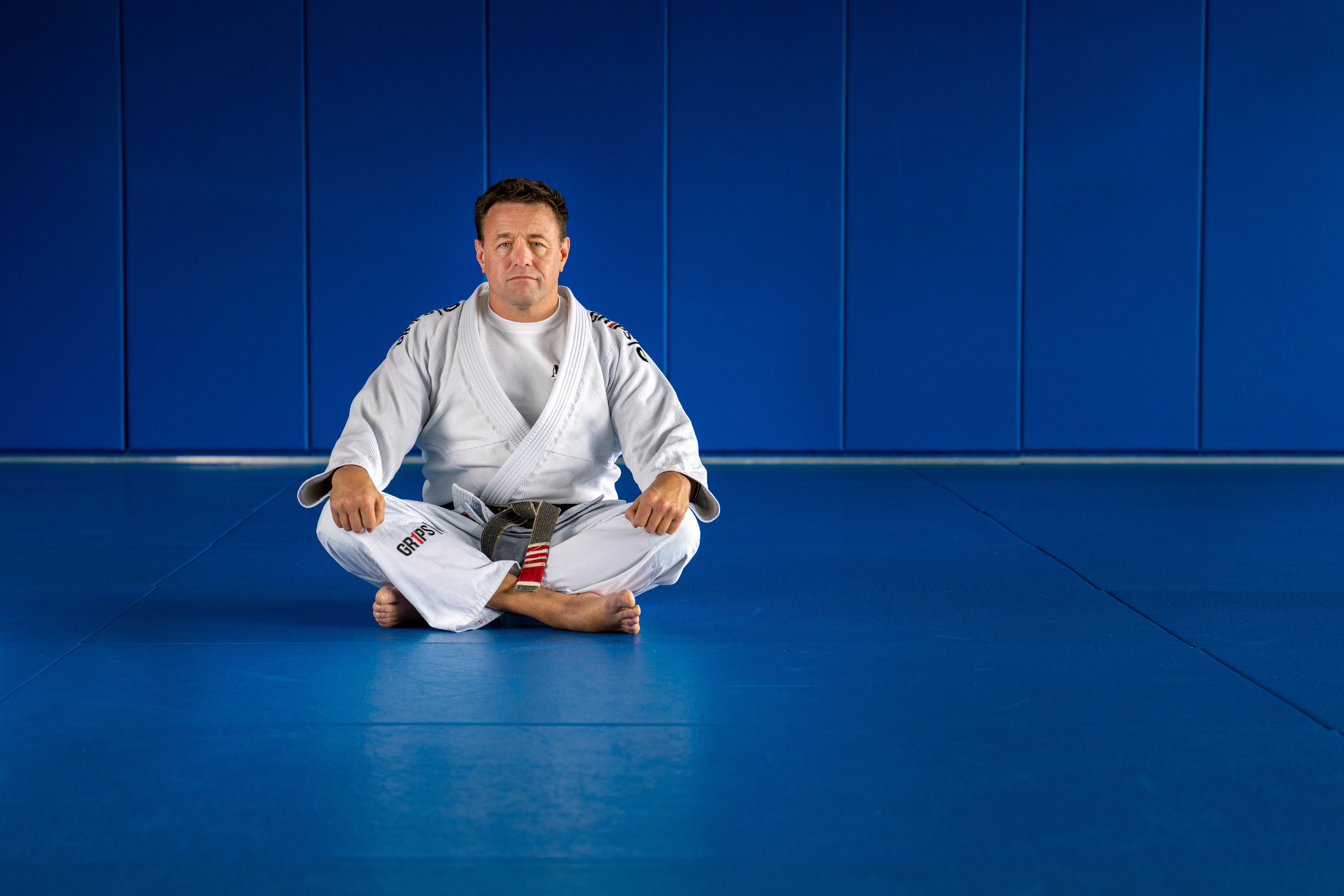
Today we’d like to introduce you to Alan Baker.
Hi Alan , we’d love for you to start by introducing yourself.
I was the kid with the motor that never shut off. I got tagged with ADHD early, and I was full of energy all the time. My mother made a decision that changed the entire direction of my life. Instead of putting me on medication, she put me in the martial arts so I’d have a place to aim that energy and learn how to steer it.
Just before I turned 11, around 1981, I walked into a local Isshin-Ryu Karate dojo and got hooked immediately. Martial arts grabbed me in a way nothing else ever had. Once I was old enough to do odd jobs around the neighborhood and stack a little cash, I started bouncing into every legit training opportunity I could find in our small town. Late 80s into the early 90s, I was exposed to systems like Burmese Bando, Tang Soo Do Moo Duk Kwan, and Shaolin Kung Fu.
Around that same time, one of my mentors ran an expedition company. That connection opened a whole other world for me. Mountaineering, orienteering, climbing, rigging, rappelling, SCUBA, wilderness survival. That stuff grabbed me for the same reason martial arts did. It was real. It demanded competence. It demanded calm under pressure. Those pursuits never left my life, and I’m still actively training and exploring them today.
Then in 1989, life hit me hard. I was in a brutal head-on collision with a large construction vehicle. The damage was catastrophic. Serious facial injuries, major damage to my hands, and a traumatic brain injury. I went through surgeries and ended up with facial implants to rebuild what was shattered. The doctors basically told me the chapter was over. No more ring, no more hard training, and I’d need to be extremely careful moving forward because another head trauma could be devastating.
That was a dark moment because martial arts wasn’t just a hobby for me. It was the foundation of who I was becoming. But here’s the thing. Training teaches you something deeper than technique. It teaches you how to keep going when the plan collapses. It teaches you how to rebuild. So I did what a warrior does. I went to work.
Recovery was not romantic. It was a grind. It required patience, problem-solving, and a willingness to adapt without quitting. I had to modify how I trained. I had to be smart. But I found a way back. That period taught me something I still teach today. The spirit of a warrior isn’t just about fighting. It’s about rising every time life tries to put you on the floor.
Eventually, I landed a full-time teaching position at a Kung Fu studio in Chattanooga. That’s where I met Grandmaster Dana Miller and Master Paul Olivas, and that relationship took me deeper into the U.S. Chuan Fa Association world. Zu Wei Shu, Shaolin Kenpo, Qigong, and Traditional Chinese healing. I also dove into Chen-style Tai Chi, Judo, and the Snow Tiger system. As I grew and had more resources, my world expanded. I started traveling more, training more, and I went deep into Jeet Kune Do, Filipino Kali, and Wing Chun.
In 1993, UFC 1 happened, and it was a turning point for the entire martial arts culture. For me, it lit a fuse. I got obsessed with grappling and Brazilian Jiu-Jitsu. That path led me to Professor Pedro Sauer and Coach Erik Paulson, and I started going down the rabbit hole of Jiu-Jitsu, submission wrestling, and catch wrestling. That became a major pillar of my life and my coaching identity.
Moving to Atlanta was another big shift. I relocated specifically to go deeper in Wing Chun under Sifu Fong, and Atlanta also gave me the opportunity to train with Guro Dan Inosanto. Through that experience, I immersed myself in Jun Fan, JKD, Kali, Silat, and a whole spectrum of functional systems. I also trained Muay Thai under Ajarn Chai Sirisute, got back into Judo under Master Bob Byrd, and kept growing my work under Erik Paulson in Combat Submission Wrestling and the broader MMA world.
Not long after that, I met Paul Vunak and trained in his Progressive Fighting Systems and Rapid Assault Tactics. Later, in 2002, I founded the Atlanta Martial Arts Center, and we ran a full schedule. JKD, Kali, Wing Chun, BJJ, CSW, Muay Thai, Shaolin. Real training, real community.
By 2007 I found my way to Justo Dieguez and the Keysi Fighting Method. Around 2010, I became the association director for the Combat Submission Wrestling Association under Erik Paulson, and over time, Erik became a close friend and a major influence. That era pushed me deeper into MMA, shoot boxing, and STX kickboxing.
During that period, I also did an in-depth study of Chinese Boxing with Professor James Cravens, and I began training privately under Tuhon Tim Waid in Pekiti-Tirsia Kali. Those experiences gave me more depth, more structure, and more clarity on how to build a complete system around principles instead of just techniques.
Around 2010, I was introduced to the Executive Protection Institute and the Vehicle Dynamics Institute. That opened a new lane for me professionally. I earned certification as an Armed Personal Protection Specialist, and I started designing defensive tactics specifically for protection agents. That’s where Protection Response Tactics was born. At the same time, I built Vehicle Centric Defensive Tactics for VDI, because fighting in and around vehicles is its own world, and most people are not training it properly.
As that side of my career grew, I founded Baker Tactical Training and Design Group and began working with a wide range of clients. Corporate security teams, specialized law enforcement units, and organizations that needed practical, defensible training that made sense in the real world.
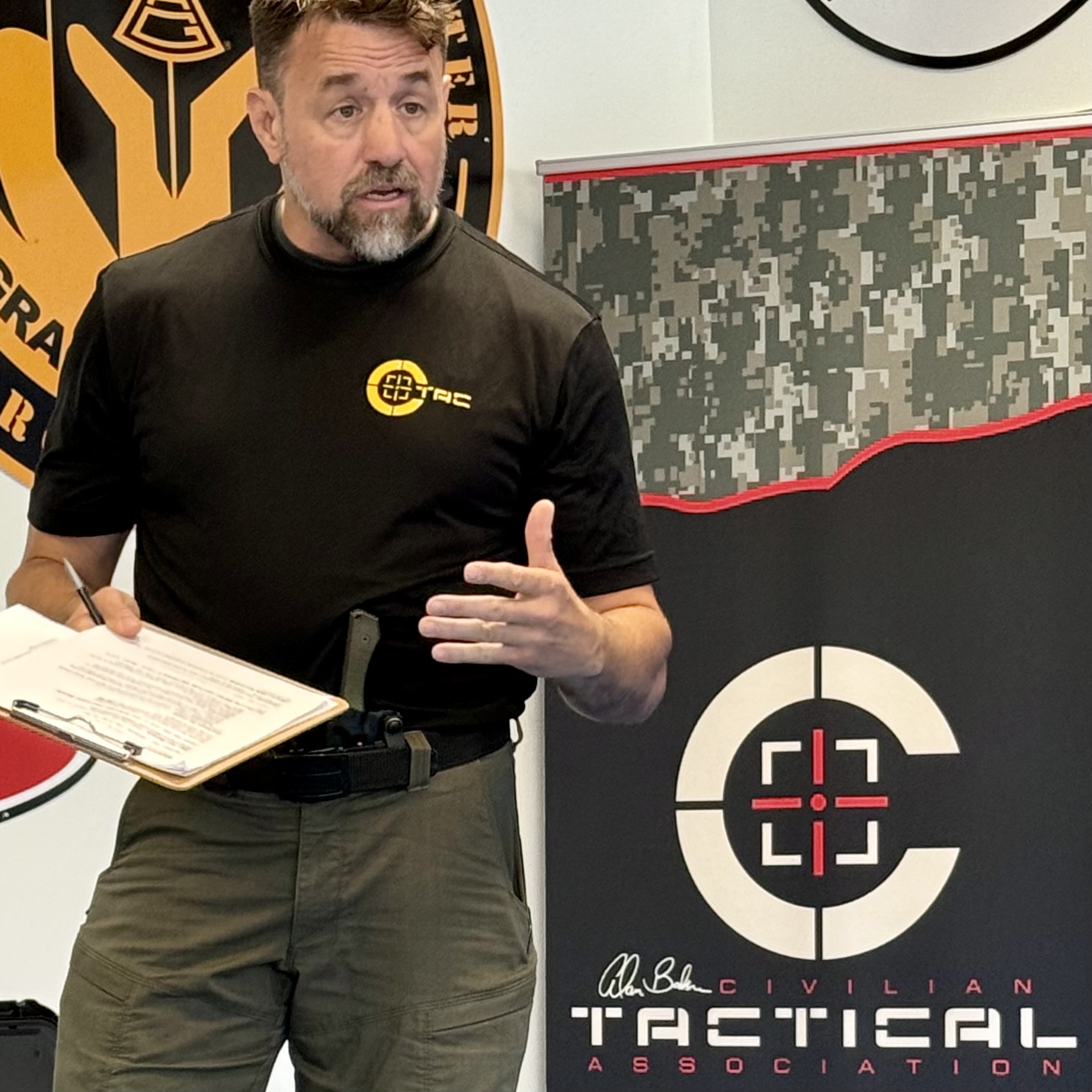
In 2014, the civilian demand became undeniable, and that’s when we founded the Civilian Tactical Training Association. C-Tac was built to give everyday people access to the same kind of intelligent self-protection structure, without fantasy, and without ignoring legal realities.
In 2020, the pandemic forced difficult decisions, and I temporarily shut the school down. I went to the mountains of Virginia, and I wrote The Warrior’s Path. That book came directly out of the self-development program I’d been building for years. Writing it cracked open a new chapter, and it led to The Universal Principles of Change and Morning Mastery.
Toward the end of 2021, I was introduced to Jason Redman, and that relationship led to building a defensive tactics program for his Overcome and Survive work and partnering in the Roger Up event. That opened the door to more speaking, more coaching, and more collaboration, including my role as Defensive Tactics Instructor with Tactical 21.
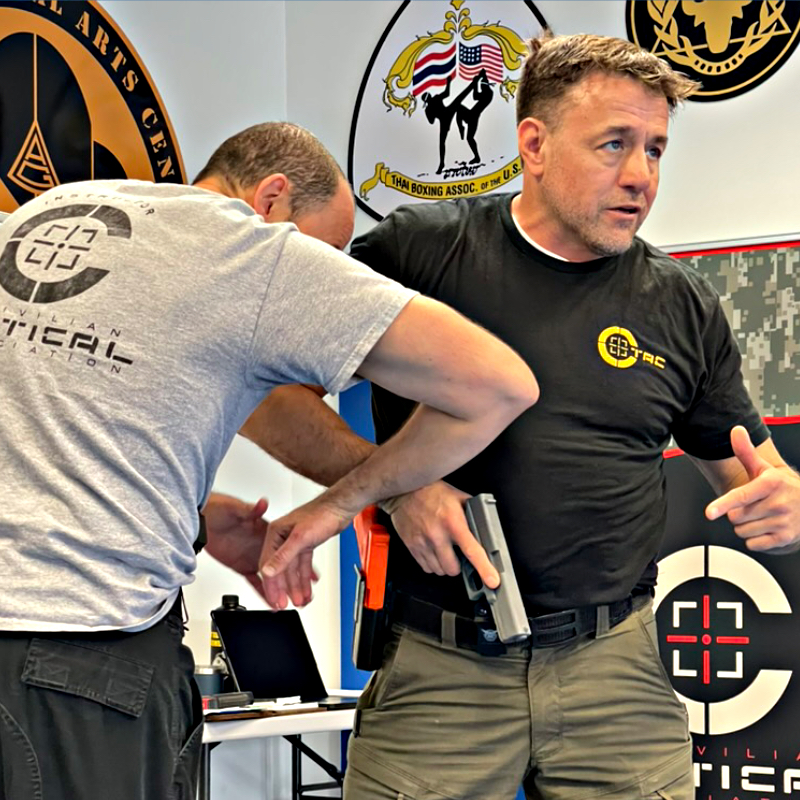
By late 2023 and into 2024, I was developing additional programs and collaborations, including work for Warrior Poet Society and building a defensive tactics and firearm disarmament module with Michael Julian for A.L.I.V.E. instructor training.
And in 2025, I hit two major milestones I’m deeply proud of. I was promoted to Full Instructor in Filipino Martial Arts and in Lee Jun Fan Gung Fu and Jeet Kune Do under Dan Inosanto, and I was promoted to Full Instructor in Combat Submission Wrestling under Erik Paulson. I now travel and teach globally.
We all face challenges, but looking back would you describe it as a relatively smooth road?
It definitely hasn’t been a smooth road. I had a serious car crash at 19, and that was one of those moments that makes you realize life can change fast. Then you add 45 years of training, and I’ve paid some physical prices along the way, especially with severe injuries to my shoulder, elbow, and knee. I’m not complaining; that’s the reality of high output over decades.
On the professional side, building businesses and revenue streams was its own grind. There were years of learning lessons the hard way, investing time and money into the wrong moves, rebuilding, and having to stay disciplined when things were uncertain. But that’s also where the deeper value came from. The setbacks forced me to build an intelligent structure, to focus on principles instead of just techniques, and to think long-term about performance, health, and sustainability. In a strange way, the struggles became the proving ground. They didn’t derail the mission; they refined it.
Alright, so let’s switch gears a bit and talk business. What should we know about your work?
I build training systems that keep people safe in the real world, not just successful in the gym. My work lives at the intersection of defensive tactics, combative skill, and human performance, and I’ve spent decades pressure-testing what actually holds up when the environment is chaotic, the stakes are high, and the rules are real. I specialize in taking complex problems, whether it’s personal protection, team response, or individual development, and turning them into structured programs people can train, retain, and apply under stress.
One of the projects I’m most proud of is creating Protection Response Tactics for the Executive Protection Institute. That program was built for a specific world: protection professionals operating in public, in front of clients, and under constant scrutiny. The standard for force is different there. The optics matter. The legal and social consequences matter. So the goal was never “win the fight.” The goal was to build a professional response system that is visually appropriate, socially executable, and legally defensible, while still being functional when things go bad. PRT is the result of that mindset: a clean, integrated method of dealing with human threat behavior, controlling space and access, managing contact, and solving problems with the right level of force at the right time.
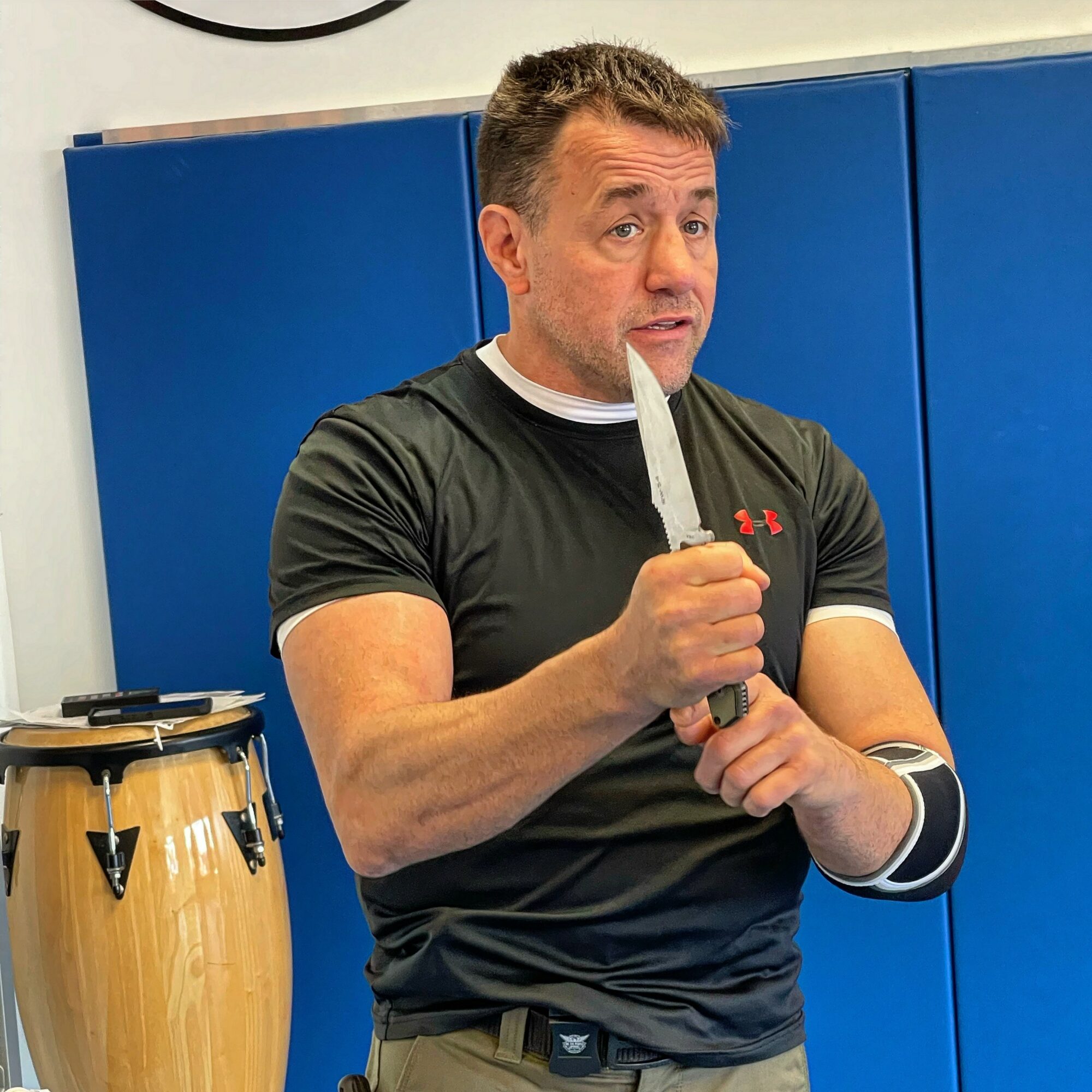
I’m also the creator of the C-Tac program, which is designed for civilians and professionals who want a complete self-protection system that fits modern life. C-Tac is not “martial arts for the street.” It’s a structured framework for awareness, decision-making, and physical capability, built around what people actually face: unknown contacts, confined environments, vehicles, edged weapons, firearms realities, and the legal aftermath. I built C-Tac to be trainable, scalable, and progressive, so students can develop real competence without getting lost in a maze of techniques that don’t connect to a usable system.
The third pillar is the Warrior’s Path program, which is the foundation underneath everything I teach. The Warrior’s Path is about self-leadership, discipline, and the daily practices that build a capable, resilient human being. It’s the internal work that makes the external skills reliable. It gives people an intelligent path to follow, with structure they can live by, not just train with. In my world, capability is a lifestyle, not a weekend identity.
What sets me apart is the way I look at program design, and the fact that my background isn’t built on one martial art or one lane. I don’t just train in multiple disciplines; I actively teach multiple martial arts and combative systems, and that forces a higher standard of understanding. When you teach across different ranges, rule sets, and problem sets, you can’t hide behind style. You have to understand mechanics, timing, pressure, context, and human behavior. That’s why I’m not loyal to a single system; I’m loyal to function. I look at how skills transfer, where they fail, and what has to be trained to make them hold up under pressure.
Because of that, I think in systems, not highlights. I build curricula that develop the person, not just their “moves.” That means layering fundamentals, attributes, and body state control, then pressure-testing them in a way that matches the environment people actually operate in. Most instructors teach content. I build training architecture.
Pricing:
- they can contact me through the website for this
Contact Info:
- Website: https://sifualanbaker.com
- Instagram: https://www.instagram.com/sifualanbaker/
- Facebook: https://www.facebook.com/authoralanbaker
- LinkedIn: https://www.linkedin.com/in/sifualanbaker/
- Youtube: https://www.youtube.com/@SifuAlanBaker
- Other: https://civtaccoach.com
Popular
-

Hidden Gems: Local Businesses & Creatives You Should Know
-

ATL’s Most Inspiring Stories
-

Seeing the Story Between the Moments
-

Portraits of Atlanta
-

Dr. Sinclair N. Grey III on Why Founders Stall—and How Discipline Breaks the Pattern
-

Meet Lee Patterson: Teaching Entrepreneurs How to Build Wealth the Right Way From Day One