






Today we’d like to introduce you to Kirsten Simmons.
Hi Kirsten, thanks for sharing your story with us. To start, maybe you can tell our readers some of your backstory.
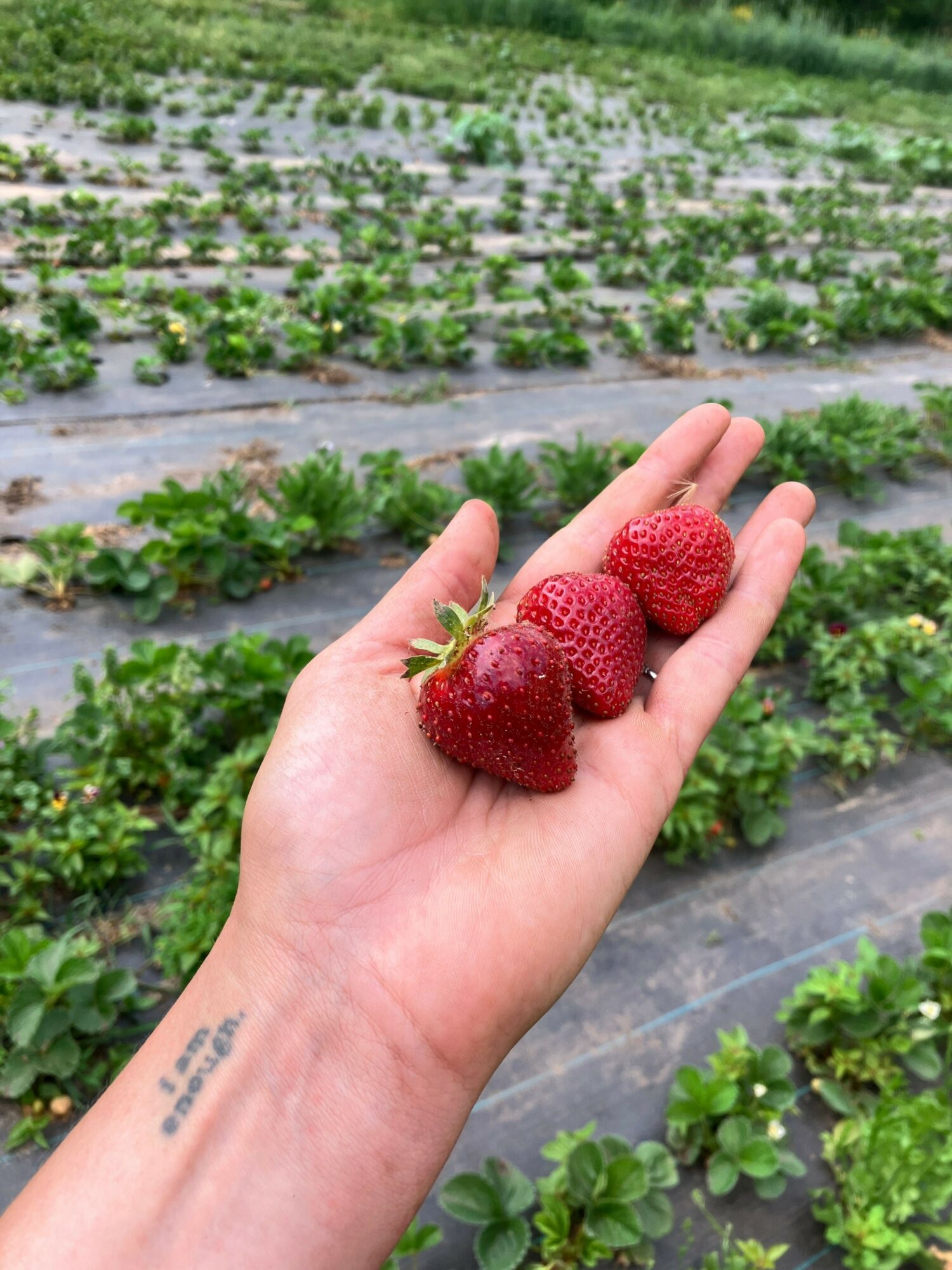
You know the scene in The Lion King where Simba says he’s had some sense knocked into him, and he’s got the bump to prove it? I feel like that’s how I ended up farming, in a roundabout way. I accidentally started a community garden on land I didn’t own in the months after a concussion in grad school left me with difficulty sitting behind a screen – problematic, as my thesis was a mathematical model of disease transmission. That community garden, while unfortunately no longer with us, started me on my path to growing food. Seven years later, after making use of a friendly front yard and renting farm space, led me to my farm’s current location on land I own outright in South Atlanta. Along the way I’ve raised chickens, pigs, flowers, vegetables, mushrooms and strawberries. My farm now has been solely u-pick strawberries for the past few years, and this year I’ve added u-pick flowers and am experimenting with u-pick vegetables.
Can you talk to us a bit about the challenges and lessons you’ve learned along the way. Looking back would you say it’s been easy or smooth in retrospect?
Is it ever easy? There are plenty of times when it would have made more sense for me to walk away from the farm, and there are still months where I pull from other income sources to cover the farm’s expenses. But I remain slightly more stubborn than I am exhausted. And I’m also under a non-disclosure agreement relating to the biggest struggles I’ve had as a farmer. While I may not be able to go into detail, I can say that my experiences have made me a huge advocate of long farm leases and affordable land ownership for farmers – even if you have to fund your land purchase with off farm income.
Great, so let’s talk business. Can you tell our readers more about what you do and what you think sets you apart from others?
Ecosystem Farm is an organic, regenerative u-pick farm located inside Atlanta city limits. Our main crop is u-pick strawberries, with a season from mid-April to mid-June. We also offer u-pick flowers and are experimenting with limited u-pick vegetables.
The last time I checked, Ecosystem Farm was the only u-pick strawberry farm inside Atlanta, and one of only 3 organic u-pick strawberry locations in the state. We aren’t certified, but use a combination of soil testing and sap testing to identify deficiencies in our soil and plant tissues. Then we use directly applied soil minerals and foliar nutrient sprays to directly address those deficiencies and grow healthy plants. Every year I learn more and get better at growing an amazingly tasty strawberry!
Before we let you go, we’ve got to ask if you have any advice for those who are just starting out?
If you plant it without knowing who will buy it, plan to compost it or eat it yourself. So many farmers assume that growing is the hardest part of farming, but selling what you grow is equally as hard. Before you start growing anything, look at the market. Is there a demand for what you’re interested in growing? How much is it selling for? Who are your competitors?
Settle on a few products, and think through the process of growing them. When do they need to be planted? How much can you plant in the space you have? Does it make sense to do successions? If you’ve talked with a chef who wants 100lb of zucchini a week, how many plants would you need to produce that? How long will those plants produce? What pests will you need to worry about? Take your yield estimates and halve them, and know that you still may not meet them. And then, assuming you can produce 100lb of zucchini a week, how much labor will that take? And how much will you need to charge to pay yourself minimum wage for that labor? What about a living wage?
Once you’ve thought through your markets and what you might produce, spend a season growing. If you have folks who will buy, great, but plan that this season is going to be for learning. You won’t learn everything you need to know, but you’ll save yourself the grief of having committed to provide something you can’t possibly meet, and the hit to your reputation that comes with that. A farmers market is not a good long term business plan (too inconsistent, weather dependent, etc) but it’s a great venue for a beginning farmer figuring out how to grow for a few years.
DON’T fall into the trap of trying to grow everything. It’s insidious, and those seed catalogs are so pretty! But if you’re torn in 47 directions trying to manage the differing needs of 47 crops, you won’t do any of it well and you’ll be too exhausted to learn from the experience. Pick five crops, max, and learn to grow them well. That may be all you need.
Pricing:
- Appointments to pick – $15
- Strawberries – $20/basket
- Flowers – $1/stem
- Vegetables – $5/lb
Contact Info:
- Website: https://www.ecosystemfarm.com
- Instagram: https://www.instagram.com/ecosystemfarm
- Facebook: https://www.facebook.com/ecosystemfarmATL/


Popular
-

How Kaviar Sundays Is Building a Creative Career Fueled by Purpose, Community, and Staying Focused
-

Hidden Gems: Local Businesses & Creatives You Should Know
-

ATL’s Most Inspiring Stories
-

Portraits of Atlanta
-

How Kimberly D. Worthy Is Redefining Real Estate by Helping People Become Ready From the Inside Out
-

Summer McIntyre Is Building a Career at the Intersection of Sports, Media, Entertainment, and Digital Storytelling