




Today we’d like to introduce you to Le’Sheala Dawson.
Hi Le’Sheala, please kick things off for us with an introduction to yourself and your story.
I design human infrastructure for elite performers, organizations, and emerging talent.
My work sits at the intersection of:
• Elite Performance Systems
• Talent Procurement
• Leadership Strategy
• Athlete Lifecycle Design
• Operational Architecture
• Identity Development Research Inside High Performance Ecosystems
I help organizations scale and win by designing Human Infrastructure that enables talented people to thrive, transforming hospitality into brand loyalty, relationships into retention, and culture into lasting competitive advantage.
Most people ask me my title and assume my career has been about basketball.
It hasn’t.
It’s always been about people.
For more than twenty years, I’ve had the rare privilege of observing multiple generations of elite athletes, families, coaches, executives, and organizations from inside the highest levels of the sport. Looking back, I realize I’ve been running one of the longest human behavior studies disguised as a job in elite sports. I just didn’t know that’s what I was doing.
Everyone else thought I worked in basketball.
Looking back, I was studying what basketball does to people.
My work has always been difficult to measure because it rarely fit neatly into a job description. While others are measuring wins, rankings, media impressions, and revenue, I found myself paying attention to something else entirely: the invisible forces that shape trust, identity, relationships, belonging, and ultimately, human potential.
It all started at the Jackie Robinson YMCA in San Diego, California.
Basketball wasn’t just something I played beginning at six years old. It was the environment that raised me.
The coaches became my uncles. Parents trusted one another so deeply that they became extended family. Older kids mentored younger ones. After school, everyone knew exactly where they belonged.
Looking back, I realize the YMCA wasn’t simply a place to play sports.
It was infrastructure.
Community wasn’t a program. It was something intentionally designed, nurtured, and protected.
At the time, I thought I had fallen in love with basketball.
Decades later, I realized I had actually fallen in love with what happened around basketball. And what it gave me access to.
That realization quietly guided every decision I made afterward.
Every team I joined.
Every school I attended.
Every role I accepted.
I never chased the biggest title or the highest paycheck. I followed places where culture was evolving and where people were trying to build something that hadn’t existed before.
I worked in youth basketball when camps were the center of the shoe company ecosystem. I worked in scouting & recruiting when relationships became a competitive advantage. I entered the NBA as player experience became just as valuable to a front office and important as player development & performance.
Following my NBA career, I pivoted complete to sports media to architect a new elite athlete pathways, disruptive sports properties like Overtime Elite and Overtime Select, where media became the new front door to youth sports, my little brother Mikey Williams lead the way at the height of the shift. While much of the industry focused on competition and content, my work centered on building trusted relationships with elite talent, parents, partners, and industry leaders. Those relationships became an ongoing source of insight into how young people experience high-performance environments.
Looking back, I wasn’t changing jobs.
I moved every time the culture shifted.
I was studying how systems evolve.
And what I discovered surprised me.
Every organization measured performance.
Very few measured the human being producing it.
Meanwhile that was my obsession. I had brothers inside still.
For more than two decades, I’ve had the privilege of working alongside elite basketball athletes, parents, coaches, executives, and brands. I’ve watched 19-year-olds become professionals. I’ve watched first-round, first overall draft picks struggle with identity after achieving lifelong dreams. I’ve watched parents make impossible decisions without a roadmap. And I’ve watched my own family system fracture into a million pieces trying to navigate the systems complexities. I’ve watched organizations invest and bleed millions into optimizing performance while unintentionally overlooking the human systems that sustain long-term success.
Eventually, I realized something that changed everything.
This isn’t a sports problem.
It’s a human problem.
Or maybe even more accurately…
It’s a human connection problem.
Human connection deserves to be treated as infrastructure, not an afterthought. If organizations expect people to perform at extraordinary levels, then the environments those people inhabit cannot be left to chance. Human Infrastructure should be designed with the same intention as strategy, technology, or operations because it directly influences performance, retention, trust, and long-term organizational health.
The same patterns exist inside Fortune 500 companies, entertainment, creator businesses, elite universities, and nearly every high-performing environment I’ve observed.
We’re remarkably good at building output.
We’re far less intentional about designing environments that build identities capable of surviving beyond that output.
That realization became the foundation for TSDEXP—The Shea Dawson Experience.
TSDEXP isn’t simply a research company.
It’s my response to everything I’ve observed over the last two plus decades.
I believe Human Infrastructure is one of the greatest hidden opportunities inside modern organizations. It’s often the difference between teams that merely perform and teams that create lasting loyalty, resilience, innovation, and culture. When organizations invest intentionally in people, performance becomes more sustainable, retention improves, and brand loyalty follows naturally.
That’s the work I’ve been refining for more than a decade now.
Human Infrastructure is the invisible architecture of trust, identity, relationships, belonging, and community that people rarely notice until it’s missing.
High performance environments need to make people feel something.
They need to make people feel safe enough to expand who they are.
They need to help individuals perform at the highest level without requiring them to lose themselves in the process.
Those elements rarely appear on a balance sheet, yet they determine almost everything about whether people, and organizations, scale over time.
Today, my work as the founder of TSDEXP sits at the intersection of elite sports, leadership, media, AI, the creator economy, and organizational culture.
What began as decades of observation has become a body of research, original frameworks, and intellectual property designed to help high performers build identity inside high-performance systems while helping organizations create stronger cultures, stronger reputations, and pathways that keep key relationships engaged long after their performance role has ended.
One belief continues to guide everything I do.
The next generation doesn’t need more content.
They need better infrastructure.
There’s no reason an elite athlete’s value should end when their playing career does. In fact, I believe we’re overlooking one of the world’s most valuable untapped resources: the lived experience of elite athletes themselves.
For decades, we’ve asked athletes to help build leagues, brands, communities, and fan cultures. Then, when their competitive careers end, we often leave both their wisdom and their audiences behind.
I believe an athlete’s second life can become just as impactful as their first, but only if we invest in it with the same intentionality that we invest in athletic performance.
An athlete who has spent twenty years building niche skills, discipline, resilience, influence, and an audience shouldn’t be expected to start over from scratch at twenty-five years old. They already possess extraordinary assets. The’ve already paid their dues. What’s often missing is the infrastructure to help them translate those assets into long-term leverage.
Their stories.
Their perspective.
Their leadership.
Their creativity.
Their ability to teach what only lived experience can.
That’s why I am creating frameworks and resources, to give athletes language for what they’ve experienced and practical tools to transform that experience into opportunity, purpose, and lasting value. Elite sports should be marketed to young people as a catalyst, not a destination.
Because talent gets people noticed.
Human Infrastructure determines whether people, and the organizations they help build, continue to flourish long after the applause fades.
I am a Human Infrastructure Architect.
My work is the invisible architecture of trust, identity, relationships, and belonging that people rarely notice until it’s missing and cost them millions.
Can you talk to us a bit about the challenges and lessons you’ve learned along the way. Looking back would you say it’s been easy or smooth in retrospect?
It definitely hasn’t been a smooth road.
Not because I lacked opportunities, but because much of my work lived in places traditional organizations didn’t know how to measure.
I’ve spent my career building trust, relationships, culture, belonging, and environments that attract and develop extraordinary people. My work has always been designing human experiences where talented people could truly thrive.
Those outcomes are incredibly valuable, but they’re often invisible on an organizational chart. Organizations can measure revenue, engagement, wins, attendance, and transactions. What they often underestimate is the return on relationships.
I’ve seen firsthand how one trusted relationship can eliminate months of friction. It’s the difference between picking up the phone and saying, “We’re building something—are you in?” versus navigating layers of negotiation because trust was never established. It’s the difference between investing millions in talent and then failing to build an environment where people feel safe, supported, and valued—leading to underperformance, resentment, and costly turnover that organizations often mistake for a talent problem instead of an environment problem.
It’s much harder—or perhaps easier to ignore—to measure the KPI of an athlete feeling seen, a family trusting an organization, a locker room becoming connected, or someone choosing to stay because of how they were treated.
For years, that meant carrying the invisible labor of constantly trying to systematize my work and translate it into language traditional business structures could understand. I was always trying to reduce deeply human work into metrics, presentations, and business cases, even when the impact was obvious to everyone experiencing it.
Looking back, I realize my biggest struggle wasn’t doing the work.
It was finding the language for the work.
Today, I call it **Human Infrastructure**, the invisible systems of trust that determine whether talented people merely perform or truly flourish.
Basketball gave me access. My emotional intelligence gave me understanding.
My background as a player and coach allowed me to speak the language on the surface, but my ability to recognize emotion, build trust, and translate invisible pain into actionable relief allowed me to reach people on a much deeper level. Looking back, I realize I was helping people navigate challenges that neither they nor I fully had language for at the time.
Companies want to win. I want that too.
But if we truly want organizations to scale, we have to understand the human beings creating the results—not just the results themselves. Too often I was hired to scout talent or manage relationships, when my greatest contribution was designing the environments that allowed people to become their best.
Ironically, the very thing that made my journey difficult became the foundation of what I’m building today. Those years of doing work that felt unmeasurable taught me to recognize patterns most people overlook. They taught me that behind every championship team, every high-performing organization, and every enduring brand are human systems that deserve to be designed with the same intention as business systems.
So while the road hasn’t been smooth, I wouldn’t change it. Every challenge gave me the perspective to build something I don’t think I could have built any other way.
As you know, we’re big fans of (TSDEXP) The Shea Dawson Experience. For our readers who might not be as familiar what can you tell them about the brand?
TSDEXP (pronounced TS-Dex-P), short for The Shea Dawson Experience, is a Human Infrastructure company built on more than twenty years of research, observation, and experience inside elite performance systems.
At its core is one belief:
Organizations don’t reach their highest potential until the people inside them do.
TSDEXP is both a company and a philosophy, an intentional approach to designing experiences, environments, and relationships through one guiding principle:
“The Best Possible Human Experience, Person to Person.”
(“Possible” is probably my favorite word in that sentence because excellence is something we continually pursue but not always achieve.)
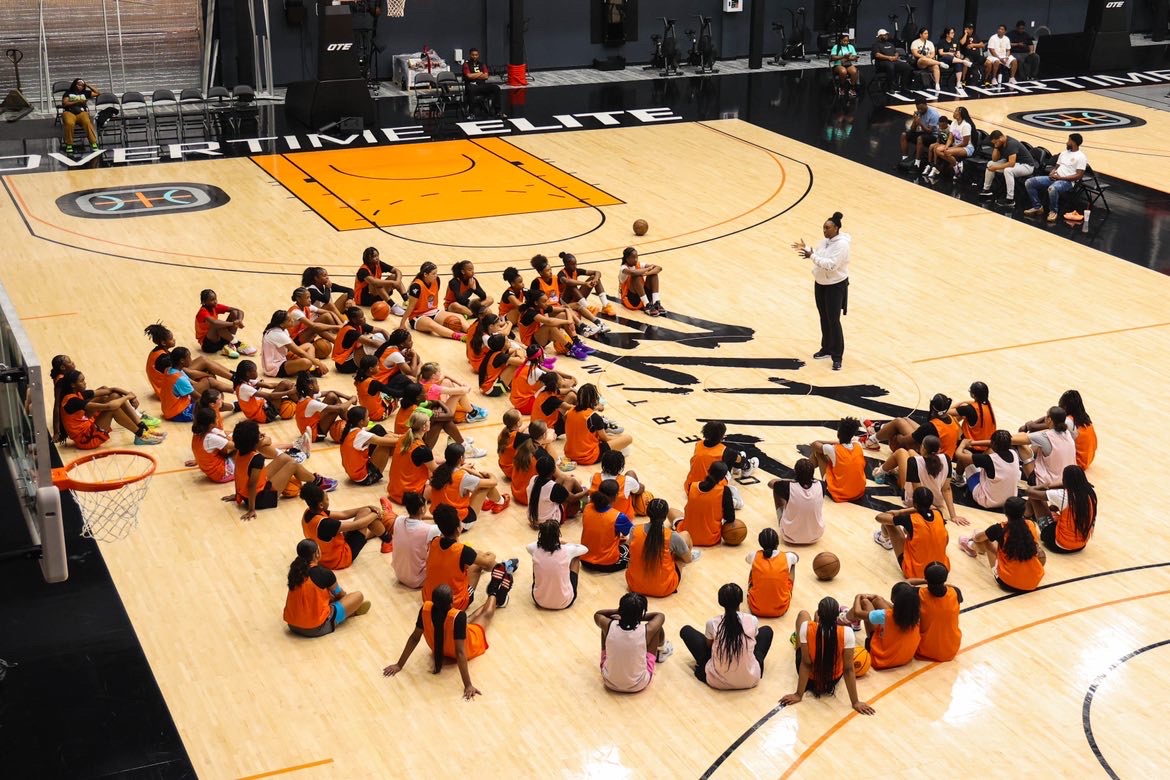
It’s what I teach the elite humans I work with. The middle school and high school girls call me Auntie Shea, an honorary title given to me by the community I serve, not one I gave myself.
And I’ll never take that lightly because aunties are guides. They’re trusted. They’re like second parents. They tell you the truth, protect your potential, and help you navigate life’s biggest transitions.
That responsibility has shaped the work I’ve devoted my career to.
Working behind the scenes at the highest levels of basketball for two decades, is a gold mine of pattern recognition, studying not just elite performance, but the human experience inside elite systems. What I’m honing in on now is based on that research, that organizations invest heavily in talent, technology, and business strategy, yet often overlook the invisible infrastructure that makes high performance sustainable as well as protects the monetary investment: through trust, identity development, belonging, relationships, psychological safety, and hospitality.
That’s where TSDEXP comes in.
I help organizations, brands, universities, teams, and leaders intentionally design Human Infrastructure, the environments and experiences that transform talent into long-term performance, loyalty, retention, innovation, and growth. It’s especially essential an NIL era where accountability is difficult to enforce.
What sets my work apart is that I don’t simply help people perform, I help people, ideas, and organizations gain traction. When Human Infrastructure is designed intentionally, talented people flourish, organizations become destinations, and what we build together has the potential to become culturally relevant because people genuinely want to be part of it. My role is often that of an accelerant, helping meaningful ideas, experiences, and communities grow with authenticity and lasting impact.
Everything I create, from my methodologies to my writing, research, educational resources, and digital products is part of one larger mission: building the language, frameworks, and tools for a world that understands human development is not separate from organizational success, it’s the foundation of it.
If there’s one thing I hope people remember about TSDEXP, it’s this:
The greatest competitive advantage any organization has isn’t its strategy.
It’s how its people experience being there.
Where do you see things going in the next 5-10 years?
I believe we’re entering one of the biggest shifts in modern business, sports, and education.
For decades, organizations competed through products, facilities, technology, and access. Over the next five to ten years, I believe they’ll compete through the quality of the human experience they create.
As AI automates more tasks and information becomes universally accessible, knowledge alone will no longer be the differentiator. The advantage will come from trust, relationships, belonging, identity, creativity, and the ability to design environments where people genuinely want to contribute.
We’re already seeing this shift in sports through NIL. Athletes are no longer just players; they’re brands, founders, investors, creators, and media companies. Their value is expanding far beyond performance, which means organizations must evolve from simply developing athletes to developing whole people.
The same shift is happening across business and education. The future belongs to organizations that understand Human Infrastructure, not as a “nice-to-have,” but as a competitive advantage. The organizations that intentionally design cultures of trust, psychological safety, hospitality, and purpose will attract and retain the best talent because people increasingly choose environments, not just opportunities.
I also believe we’ll see the emergence of new disciplines that bridge human behavior with organizational performance. Human Infrastructure is my contribution to that future, a language and framework for understanding that human development isn’t separate from organizational success; it’s the foundation of it.
I also envision a future where athletes build infrastructure around their performance as intentionally as they build their game. The most successful athletes won’t simply maximize their careers, they’ll maximize the opportunities created because of their careers. They’ll learn how to recognize and capture those rare “lightning in a bottle” moments, navigate elite systems with consciousness and strategy, and build both a performance-based identity and a self-based identity simultaneously. By the time they reach their professional careers, and eventually their Second Life, they’ll have more relationships, more ownership, more purpose, and more opportunities because they built both from the very beginning.
The future won’t belong to the organizations with the most resources.
It will belong to the organizations, and the people, that create the best human experience.
Because in a world where almost everything can be replicated, the way people experience your organization, and the way they experience themselves inside it, cannot.
Contact Info:
- Website: https://substack.com/@auntieshea
- Instagram: https://www.instagram.com/lesheala
- LinkedIn: https://www.linkedin.com/in/le-sheala-dawson-530257163
- Other: https://stan.store/tsdexp


Popular
-

How Kaviar Sundays Is Building a Creative Career Fueled by Purpose, Community, and Staying Focused
-

Hidden Gems: Local Businesses & Creatives You Should Know
-

ATL’s Most Inspiring Stories
-

Portraits of Atlanta
-

How Kimberly D. Worthy Is Redefining Real Estate by Helping People Become Ready From the Inside Out
-

Summer McIntyre Is Building a Career at the Intersection of Sports, Media, Entertainment, and Digital Storytelling