






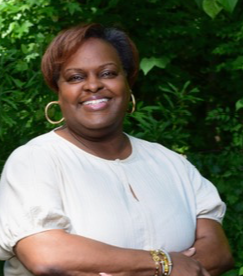
Today we’d like to introduce you to Tera Reid.
Hi Tera, we’d love for you to start by introducing yourself.
I’ve always had a servant heart. It’s something I’ve always known about myself.
In 1996, I graduated with my Bachelor of Social Work degree from North Carolina A&T State University and stepped into the world ready to make a difference. I began my career as a school social worker, and it didn’t take long to discover where I felt most called — working with young people who were from “alternative populations”. Alternative schools, juvenile justice settings, kids the system too often overlooked. That pull toward underserved communities would shape everything that followed.
In 1999, I relocated to Atlanta and quickly recognized that if I wanted to do more, I needed to go further. I enrolled at Clark Atlanta University and earned my Master of Social Work degree in 2003. From there, my career took me across the full landscape of human need — juvenile justice, HIV/AIDS services, group homes, foster care, education, and work supporting survivors of commercial sex trafficking. Each role stretched me. Each population taught me something irreplaceable. And through all of it, one feeling persisted: I wanted to do more.
For several years during that season, I did contract work as a therapist under licensed supervision. A close friend — a licensed therapist — kept nudging me toward licensure. And for years, I pushed back. For some reason, I kept resisting. Until the pandemic hit.
Suddenly, I had time and space. And I had a thought I hadn’t entertained before: Why not? I already had more than enough supervised hours from my nearly 20 years in the field. So I picked up the study materials, sat for the exam, and in June 2021, I became a Licensed Clinical Social Worker in the state of Georgia.
Two months later, I opened Cultivating Peace Therapy.
What I’ve discovered over these nearly five years of independent practice has genuinely surprised me. I have found, with absolute certainty, that I love this work. I love holding space for people navigating trauma, depression, grief, and the complicated terrain of life transitions. There is something sacred about being a vessel for someone else’s healing — helping them unpack what they’re carrying, building the strategies to manage it, and ultimately watching them realize they have the power to carry themselves forward.
When a client experiences a breakthrough, when I can see the shift happen in real time — that is so satisfying.. That has become my ‘Why.”
Today, I am fully licensed in both Georgia and North Carolina, and I am doing the work I believe I was put here to do. It doesn’t feel like a career. It feels like purpose. And that, truly, feels amazing.
Can you talk to us a bit about the challenges and lessons you’ve learned along the way. Looking back would you say it’s been easy or smooth in retrospect?
No road is ever completely smooth — and mine has been no exception.
The most persistent challenge I face isn’t administrative or professional. It’s cultural. The stigma surrounding mental health in the African American community runs deep, and dismantling it is work I take seriously every single day.
For many Black Americans, the idea of seeing a therapist still carries an unfair and damaging label — that needing help somehow means something is fundamentally wrong with you. That you’re “crazy.” That it’s a sign of weakness rather than wisdom. I push back against that narrative constantly, because nothing could be further from the truth.
Within our community, stigma takes on different shapes depending on who you are. Black women have long been cast in the role of the one who holds everything together — for their families, their communities, their workplaces — until carrying it all becomes an identity rather than a burden. The idea of setting that weight down, even briefly, can feel like a betrayal of self. Black men, on the other hand, face a different but equally heavy expectation: that vulnerability is weakness, that emotion has no place in strength. Black parents, meanwhile, often carry a deep distrust of “the system” — a distrust rooted in history — and may resist seeking support out of fear that their child will be labeled, reduced, or misunderstood by the very people meant to help them. Each of these narratives is harmful. Each keeps people from the support they deserve.
As an African American therapist — and we represent only about 4% of therapists nationwide — I understand that my presence in this field matters beyond what happens in my therapy room. Representation is part of the healing. When someone who looks like you, who shares your cultural context, holds space for your pain without judgment, something shifts. Trust becomes possible. And trust is where healing begins.
What many people don’t realize is that the stress they dismiss as “just life” — the pressure they’ve been pushing through for years — often has deeper roots. Unresolved trauma has a way of quietly shaping how we move through the world, how we relate to others, and how we see ourselves. When it goes unaddressed long enough, it can build into something that feels overwhelming and impossible to name. I want people to know that feeling has a source. And there is a way through.
This is a challenge I am absolutely up for.
As you know, we’re big fans of Cultivating Peace Therapy. For our readers who might not be as familiar what can you tell them about the brand?
I own Cultivating Peace Therapy. I’m a Licensed Clinical Social Worker dedicated to providing meaningful therapeutic support and intervention to my clients.
I’m known for my laid-back, no-nonsense approach — one that is both realistic and practical. I genuinely believe in accountability, which means I’ll hold space for my clients when they need it, and challenge them when I know they’re not showing up for themselves. That balance is what sets me apart. My clients often tell me that our sessions feel less like traditional therapy and more like an honest conversation — or, when necessary, a much-needed reality check.
My areas of expertise include trauma, depression, grief, and life transitions. I bring both clinical skill and real talk to each of these spaces because I believe healing doesn’t have to feel clinical to be effective.
At Cultivating Peace Therapy, I offer clinical support and interventions through a lens of empowerment and resilience — because I believe every client already has the strength within them. My role is to help them uncover that strength, cultivate it, and grow into the peace they deserve.
What matters most to you?
The well-being of those who trust their innermost challenges to my care. I take that responsibility seriously and will always give my best to my clients.
Contact Info:
- Website: https://cultivatingpeacetherapy.com
- Instagram: https://instagram.com/growurpeace

Popular
-

Hidden Gems: Local Businesses & Creatives You Should Know
-

ATL’s Most Inspiring Stories
-

Portraits of Atlanta
-

Alexander Lewis on Betting on Himself, Building Momentum at Coco Studios, and Turning Opportunity into Ownership
-

Satoya Hayes on Turning Beauty 2 Extensions into a Platform for Affordable Confidence and Entrepreneurial Opportunity
-

Asha Ford on Building Krystal Klear Motion and Creating Purpose-Driven Design for Women