


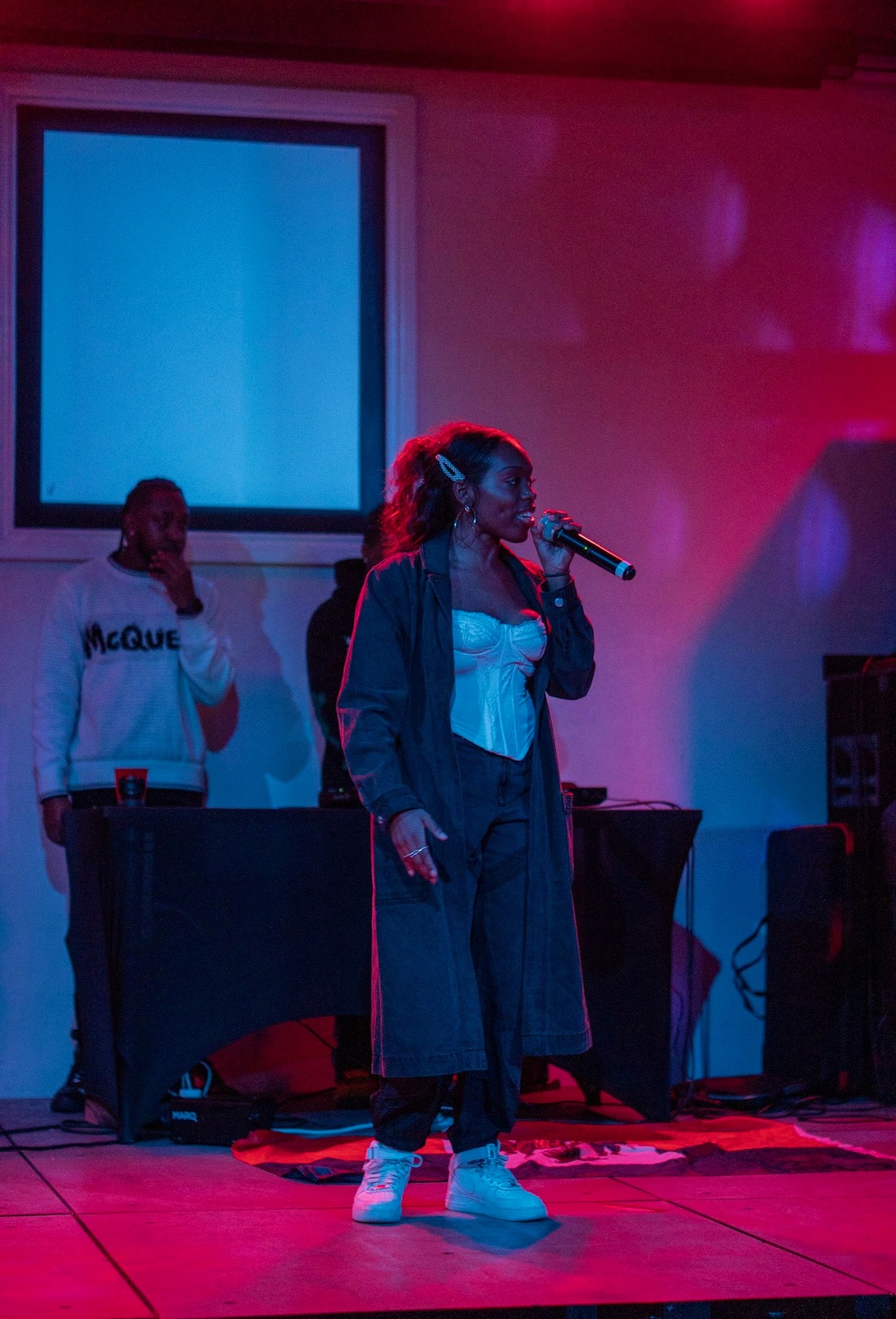
Today we’d like to introduce you to Lisa Belizaire.
Hi Lisa, it’s an honor to have you on the platform. Thanks for taking the time to share your story with us – to start maybe you can share some of your backstory with our readers?
I started writing music at 11, just putting whatever came to mind on paper. Looking back, it taught me how to tell stories and develop my craft before I even realized it.
I evolved with my music. I watched my confidence grow, my honesty deepen, my vulnerability open up. To follow my music journey is to witness my story.
But I was shy. I struggled with terrible imposter syndrome, I’d drop songs anonymously on SoundCloud (@anonymouslygifted) , back out of All State solos my music teachers selected me for, even try to quit choir (my teacher had something to say about that). I loved making music, I just didn’t believe that I would be supported doing it.
What changed things was joining my church’s worship team to support my sister, who had become a worship leader. I joined just to sing her background harmonies, but that experience trained me in ways choir never did. It gave me breath control, live performance fundamentals, and most importantly, it taught me how to translate emotion. That was the missing piece.
So when I finally wrote a song about my father, who passed away, I had everything I needed, the writing skill, the technical foundation, and the ability to carry real feeling through a performance. That song, “Without You”, became my first official single. But my journey started long before that, and I’m grateful to everyone who witnessed any part of the process
Would you say it’s been a smooth road, and if not what are some of the biggest challenges you’ve faced along the way?
I started writing music at 11, just putting whatever came to mind on paper. Looking back, it taught me how to tell stories and develop my craft before I even realized it.
I evolved with my music. I watched my confidence grow, my honesty deepen, my vulnerability open up. To follow my music journey is to witness my story.
But I was shy. I struggled with terrible imposter syndrome, I’d drop songs anonymously on SoundCloud, back out of All State solos my music teachers selected me for, even try to quit choir (my teacher had something to say about that). I loved making music, I just didn’t believe I deserved to be seen doing it.
What changed things was joining my church’s worship team to support my sister, who had become a worship leader. I joined just to sing her background harmonies, but that experience trained me in ways choir never did. It gave me breath control, live performance fundamentals, and most importantly, it taught me how to translate emotion. That was the missing piece.
So when I finally wrote a song about my father, who passed away, I had everything I needed; the writing skill, the technical foundation, and the ability to carry real feeling through a performance. That song, Without You, became my first official single. But my journey started long before that, and I’m grateful to everyone who witnessed any part of the process
My biggest struggle has been myself. I’ve been my harshest critic, and it took a long time to get out of my own head and just do what I love instead of waiting for permission to be seen. I wish I had given myself more grace earlier. Nobody starts out great, and mistakes are part of the process.
The other major struggle has been branding, and honestly it’s layered. I make fun, danceable, diasporic music rooted in faith, but I don’t fit the Christian aesthetic, and I don’t fit the boxes the secular world tries to put me in either. I’ve been compared to SZA and Summer Walker simply for being a Black girl, and that never left room for me to just be me. The truth is, I’m my own blueprint. I’m in a space I haven’t seen done before. I’m not conservative, but I’m modest. I love God, but I love to dance. And I genuinely believe those things can co-exist, because there are people who look like me, move like me, and love God too.
Even something as specific as styling has been a challenge. I’m a feminine tomboy, petite, and I dance, so I need to move freely. But all-baggy reads one way on my frame, and I’m still trying to honor my womanhood within that. At its core though, that tension is my brand: freedom and authenticity, creativity and transparency.
Then there’s the external stuff; rejection, which every artist faces, and I’ve learned to take it and keep moving. What I won’t do is measure myself by follower counts, because I’ve won showcases and performed on bigger stages than people with far larger audiences. Numbers aren’t talent.
And practically: building a team, funding, patience, trusting God through the timeline and navigating spaces where men don’t always show up to work professionally. All of it is real.
Appreciate you sharing that. What else should we know about what you do?
I’m a Haitian-American artist creating music at the intersection of faith and the African diaspora. My sound blends Afrobeat, kompa, dancehall, amapiano, reggae, and other Caribbean influences to tell honest stories about life, relationships, identity, and God. I don’t just want people to hear my music, I want them to feel seen by it.
More than anything, I’m known for being emotionally transparent. Whether I’m writing about grief, healing, faith, or love, I try to create from a place of honesty instead of perfection. My goal is to make music that’s energetic enough to move you, but vulnerable enough to stay with you long after it’s ends.
The moment I’m most proud of wasn’t performing on a big stage or being in rooms with well-known artists and celebrities. It was writing and releasing the song about my dad after he passed away. Before that, I could have easily kept sitting on my music, waiting for the “right time” to release it. But grief pushed me to stop hiding and finally share my heart.
That song became more than my debut, it became a tribute. It’s how I honor my father and keep his memory alive. Releasing something that personal set the tone for the kind of artist I want to be: someone whose music is rooted in truth, emotion, and transparency. If people remember one thing about me, I hope it’s that they always know they’re getting my real heart.
In terms of your work and the industry, what are some of the changes you are expecting to see over the next five to ten years?
I’m in a very specific space, and honestly, it’s growing. I think we’re heading toward a revival of artists who make music rooted in faith, not because it’s trending, but because we were never chasing trends to begin with. And that’s exactly why it’ll last.
When artists like us start getting pushed into wider spaces, it sets the tone for more of us to come out of the shadows. I was misunderstood for a long time, but as more artists who sound and move like me started getting visibility, people began to understand me better too. Representation creates context.
Artists like Anike; Afro-sound, dancing, singing, rapping, gospel. Even Tems, who carries faith into secular spaces without apology, make it easier for someone like me to be seen clearly. That’s the shift I see continuing. The industry is slowly making room for artists who are whole people, not just a marketable aesthetic. And I think that’s only going to expand
Contact Info:
- Website: https://lisajailene.com
- Instagram: https://www.instagram.com/lisajailene/
- Youtube: https://www.youtube.com/@lisajailene
- Soundcloud: https://soundcloud.com/anonymouslygifted
- Other: https://open.spotify.com/artist/4yu0pypW4UP4z4gq1nW1ZD?si=wEHcsKrXQdGEfkAD-J2J2g


Popular
-

How Kaviar Sundays Is Building a Creative Career Fueled by Purpose, Community, and Staying Focused
-

Hidden Gems: Local Businesses & Creatives You Should Know
-

ATL’s Most Inspiring Stories
-

Portraits of Atlanta
-

How Kimberly D. Worthy Is Redefining Real Estate by Helping People Become Ready From the Inside Out
-

Summer McIntyre Is Building a Career at the Intersection of Sports, Media, Entertainment, and Digital Storytelling