





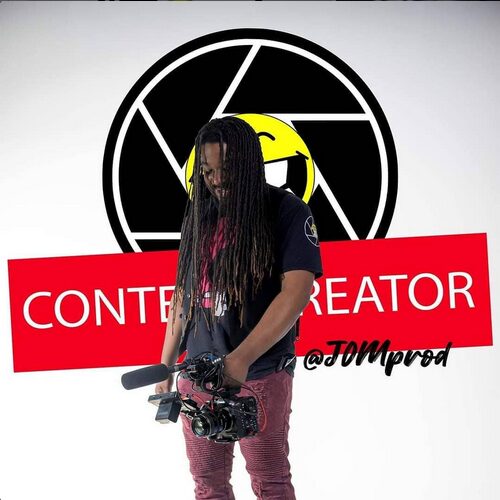
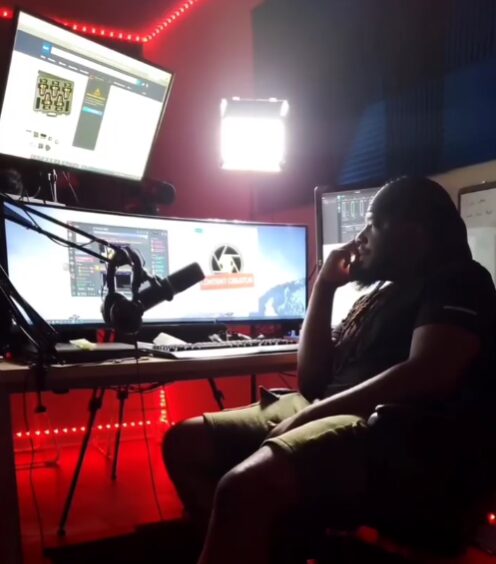
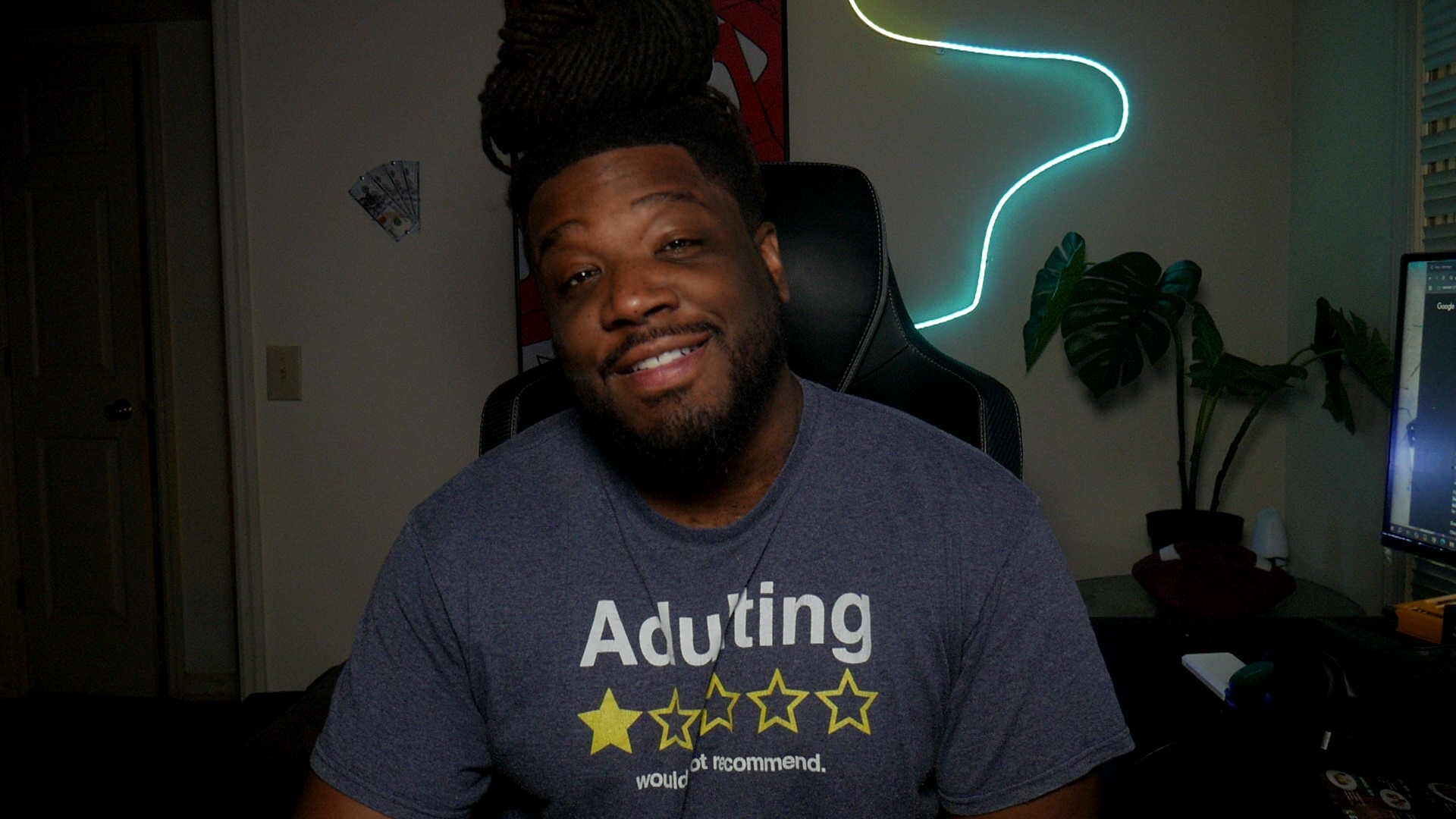
JOM Prod shared their story and experiences with us recently and you can find our conversation below.
JOM, a huge thanks to you for investing the time to share your wisdom with those who are seeking it. We think it’s so important for us to share stories with our neighbors, friends and community because knowledge multiples when we share with each other. Let’s jump in: What do you think others are secretly struggling with—but never say?
Honestly? I think a lot of people are quietly carrying the same few heavy things—and we almost never name them out loud. Things like feeling behind in life while seeing how “successful” others look thru social media, feelings of loneliness, even when surrounded by people, and not knowing how to ask for help without feeling like a burden.
Most people aren’t as confident as they appear—they’re just very practiced at hiding uncertainty.
Can you briefly introduce yourself and share what makes you or your brand unique?
Everyone calls me Jay—also known as JOM.
I’m the founder of Joy Over Money Productions, a creative studio built on a simple truth: if money didn’t exist, I’d still be creating. The name isn’t a slogan—it’s a philosophy. I genuinely love what I do, and that joy shows up in every frame, every project, every story I touch.
I’m Haitian, Cuban, Dominican, and Black American—raised by hardworking island go-getters with an Americanized twist. That blend shaped my perspective: grounded, resilient, expressive, and always hungry to build something meaningful. My work lives at the intersection of culture, cinema, and content, where storytelling feels cinematic but still deeply human.
I specialize in creating visuals that feel—cinematics, branded content, and original projects that don’t just look good, but say something. Right now, I’m focused on developing original media and platforms that give creative voices room to breathe, experiment, and be seen—without losing the joy that made us start in the first place.
Thanks for sharing that. Would love to go back in time and hear about how your past might have impacted who you are today. Who were you before the world told you who you had to be?
Before the world handed me rules, timelines, and expectations, I was just a kid who liked making things.
I was curious. Observant. Always watching how moments felt, not just how they looked. I told stories without realizing that’s what I was doing—through imagination, through play, through creating worlds where possibility mattered more than permission. I even went as far as creating cartoons by drawing powerpoint images frame by frame, then recording the frames while pressing the spacebar fast enough to creating animations.
Before the labels, I was driven by joy, not outcomes. I didn’t think about whether something was “practical” or “marketable.” I cared about whether it moved me. Whether it felt honest. Whether it was mine.
The world eventually says: be realistic, pick one lane, monetize faster, explain yourself.
But the truth is, that earlier version never left. He just learned how to survive in the noise without losing the signal.
So who was I?
Someone who created because it felt necessary—not because it was allowed.
And in a lot of ways, that’s still who I’m fighting to be.
What fear has held you back the most in your life?
The fear that’s held me back the most is the fear of being wrong—and paying a permanent price for it.
As a Black man, there’s an unspoken pressure to succeed “the right way,” to be responsible, to not become a stereotype, to make choices that can’t be questioned later. Failure doesn’t always feel personal—it feels representative. Like if you miss, it confirms something the world was already waiting to believe.
That pressure turns every decision into a calculation. Passion versus responsibility. Calling versus security. Dreaming versus doing what makes sense on paper. I’ve spent a lot of time trying to find that narrow sweet spot where I could honor what I love without betraying what I owe—to my family, my culture, and myself.
What’s scary isn’t just failing. It’s the thought of reaching the end and realizing I gave years of my life to something that didn’t add up. That the risk didn’t redeem itself. That the story didn’t make sense in hindsight.
But I’ve learned that fear doesn’t mean you’re on the wrong path. Sometimes it just means the stakes are real—and that what you’re chasing actually matters.
Sure, so let’s go deeper into your values and how you think. How do you differentiate between fads and real foundational shifts?
I differentiate between fads and real foundational shifts by time, intention, and what happens after the hype dies.
Fads move fast and disappear just as quickly—they’re driven by novelty, algorithms, and attention. Foundational shifts move slower, but they change behavior, language, and expectations. When something reshapes how people work, communicate, create, or see themselves—even when it’s no longer trending—that’s when I pay attention.
I also look at whether people are building systems or just chasing moments. Trends are about visibility. Foundations are about infrastructure. If something can exist without constant validation, it usually has roots.
History helps me stay grounded. Everything moves in cycles—like waves in the ocean. I can’t surf either, but I know waves come and go. Some are just ripples that splash and fade. Others are powerful enough to reshape the shoreline. The mistake is mistaking noise for movement.
So instead of chasing every wave, I try to study the water—what’s pulling back, what’s building momentum, and what keeps returning no matter the era. That’s usually where the real shift is happening.
Okay, we’ve made it essentially to the end. One last question before you go. Have you ever gotten what you wanted, and found it did not satisfy you?
Yeah—absolutely. And I think every grown man has had at least one moment of post-“um” clarity 😂. That’s a canon event. No skips.
But what really matters isn’t the moment itself—it’s what you do after. Some people treat that clarity like a glitch and go right back to the same patterns. Others take it as information. A lesson. A mirror.
I’ve gotten things I thought I wanted and realized the satisfaction was temporary, surface-level, or tied more to ego than alignment. The moment passes and you’re left asking, “Okay… now what?” That’s where growth either happens or doesn’t.
What separates people isn’t the mistake—it’s repetition. Growth looks like recognizing the feeling, naming it, and choosing differently next time. Not shaming yourself, not pretending it didn’t happen, but evolving your standards and your self-awareness.
Clarity isn’t punishment. It’s a checkpoint.
And the people who grow are the ones who don’t ignore it.
Contact Info:
- Website: https://JoyOverMoney.com
- Instagram: https://instagram.com/JoyOverMoneyProductions
- Youtube: https://www.youtube.com/@JOMprodOfficial?sub_confirmation=1
Popular
-

Hidden Gems: Local Businesses & Creatives You Should Know
-

ATL’s Most Inspiring Stories
-

Portraits of Atlanta
-

Dr. Hildiah Martin-Suggs Is Building Second Chances for Youth Who Were Almost Lost in the System
-

From Showing Up to Seeing His Face on a Billboard: Anthony Green Is Just Getting Started
-

Wayne Smith Jr on Survival, Psychological Thrillers, and the Cost of Staying Alive