



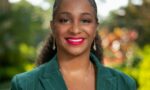
Today we’d like to introduce you to Maya Corneille.
Hi Maya, can you start by introducing yourself? We’d love to learn more about how you got to where you are today?
During the pandemic, I was serving as a professor and Associate Director of Experiential Education at Morehouse College. Like so many families, I suddenly found myself balancing multiple roles at once—teaching college students online while also becoming the online teacher for my first-grade daughter. The challenges were immense, especially as I navigated supporting a child with significant communication differences during a time of isolation and uncertainty.
Not long afterward, I parted ways with Morehouse College and co-created a homeschool collective with another parent raising an autistic child who was a minimal speaker. We were searching for something deeper than traditional schooling—we wanted a space where children could be fully seen, supported, and empowered to communicate in ways that honored who they were.
Along the way, I met an incredibly generous microschool leader, Tiffany Blassingame, from The Ferguson School. She opened her doors to us, shared space with our collective, and became an invaluable mentor as I began building the kind of inclusive learning environment I had always envisioned. Our approach was rooted in the belief that students of all abilities benefit from learning together. We intentionally created spaces where children could interact, collaborate, play, and grow alongside one another—recognizing that inclusion strengthens everyone in the community.
I’m sure it wasn’t obstacle-free, but would you say the journey has been fairly smooth so far?
It has not been a smooth road. One of our greatest challenges has been balancing quality with accessibility. We are deeply committed to providing our students with the highest level of support, specialized instruction, therapies, communication tools, and enriching educational experiences — while also making sure families can realistically access those opportunities.
Schools like ours often charge between $30,000 and $50,000 per year, and while I understand why those costs exist, I also knew from the beginning that I wanted to build something different. I wanted to create a school where children whose parents are educators and public servants, and others doing the essential work that keeps our communities functioning could still have access to communication and education for their children.
Because of that commitment, we operate with significantly lower tuition than many comparable programs, but that choice comes with constant financial challenges. Our full-time tuition is $20,000 and our part time tuition is $15,000. and students are able to offset half of these costs with the Georgia Special Needs Scholarship. We are continually fundraising, applying for grants, building partnerships, and seeking volunteers to help bridge the economic gaps that come from intentionally keeping our program accessible. There are always additional supports, materials, therapies, staff, and opportunities we would love to provide for our students.
And yet, despite the challenges, we continue because the work is too important not to. Every time a child communicates their thoughts, every time a parent hears their child’s voice for the first time, every sacrifice feels worth it. Our families remind us every day why this mission matters.
Appreciate you sharing that. What else should we know about what you do?
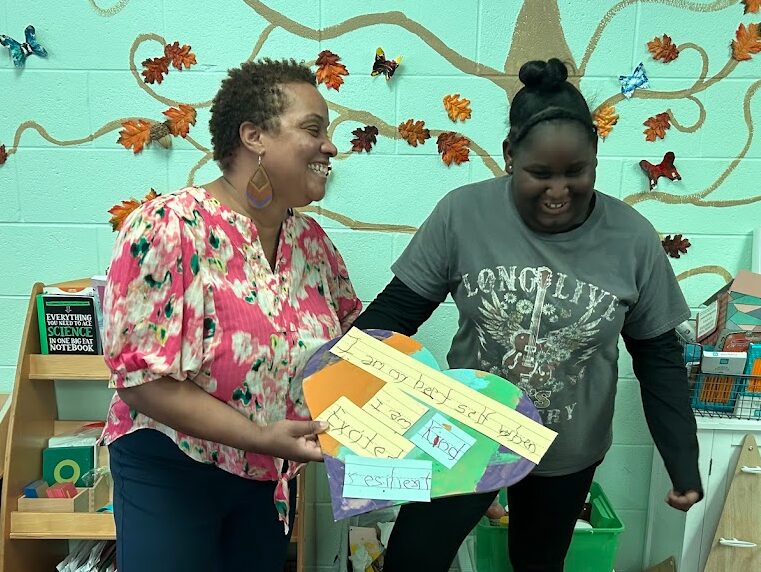
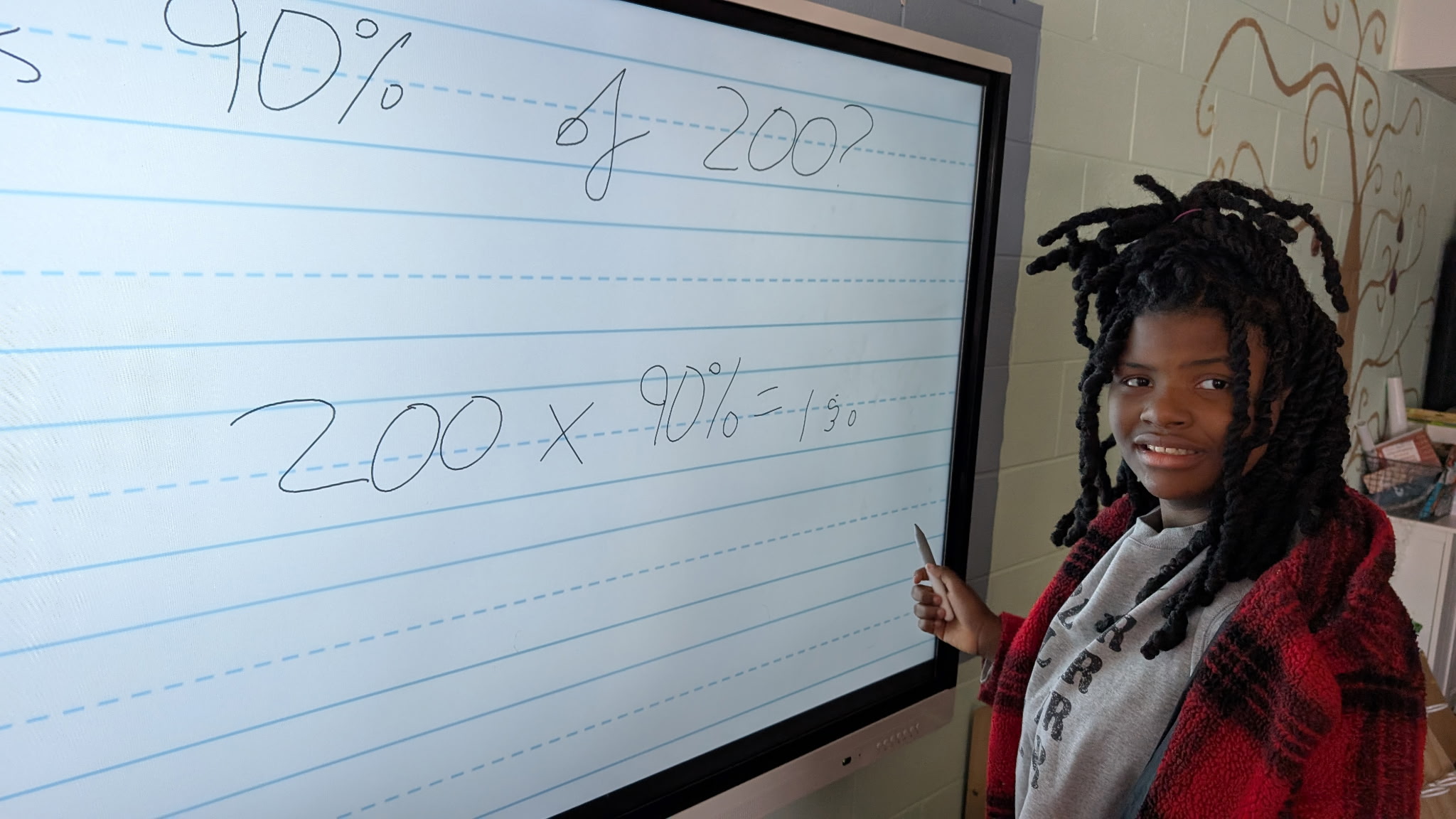
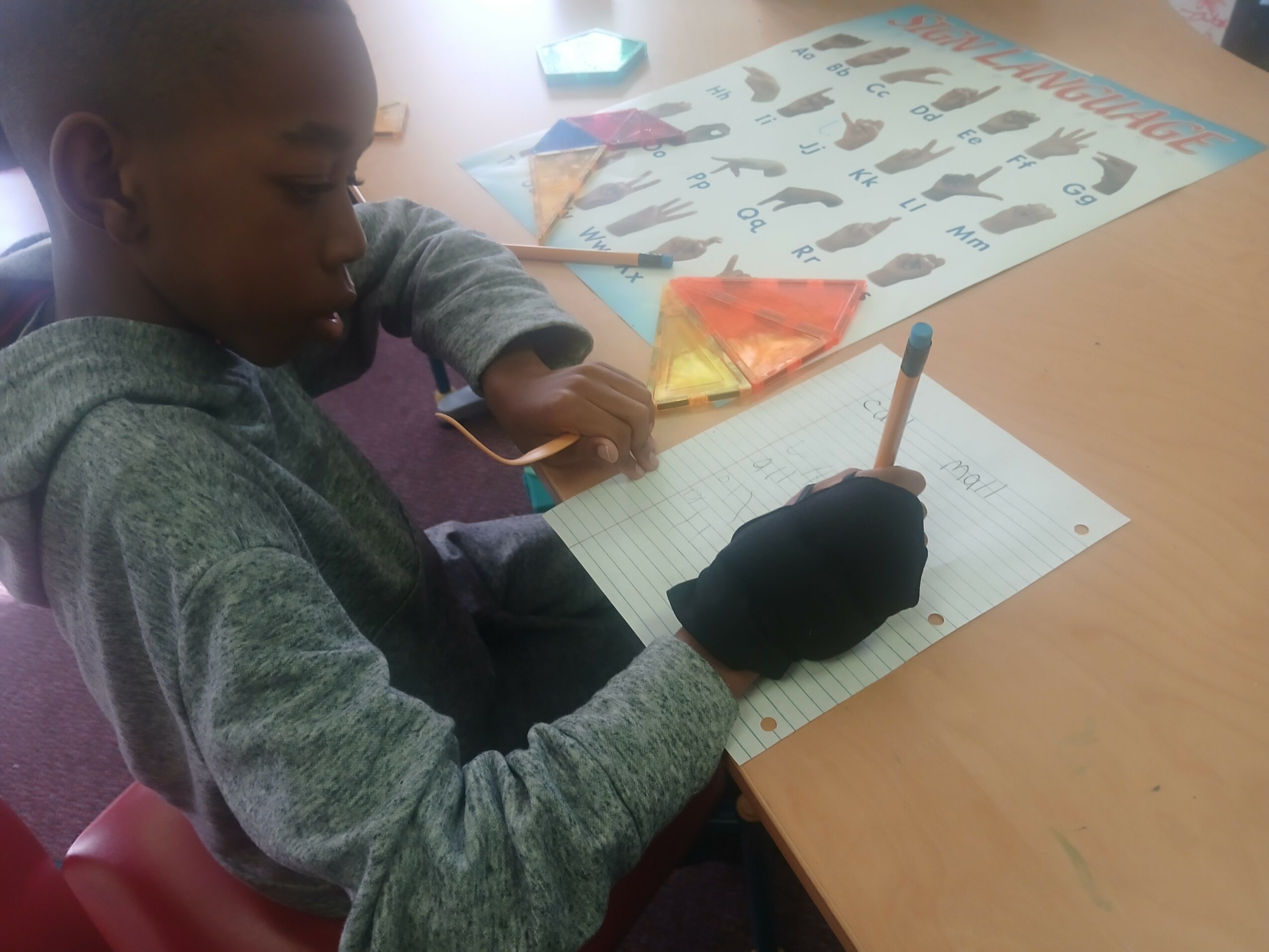
At our school, we believe every child deserves access to rich, engaging, grade-level learning — but before students can fully show what they know, they need the tools to communicate their thoughts, ideas, and intelligence. Many of our students are autistic nonspeakers, minimal speakers, or unreliable speakers who have a condition called dyspraxia, a brain-body disconnect that can make it incredibly difficult to coordinate the muscles involved in speaking, pointing, eye movements, and motor planning. Too often, these challenges are misunderstood as cognitive limitations when, in reality, our students have brilliant minds, deep thoughts, humor, creativity, and insight waiting to be expressed.
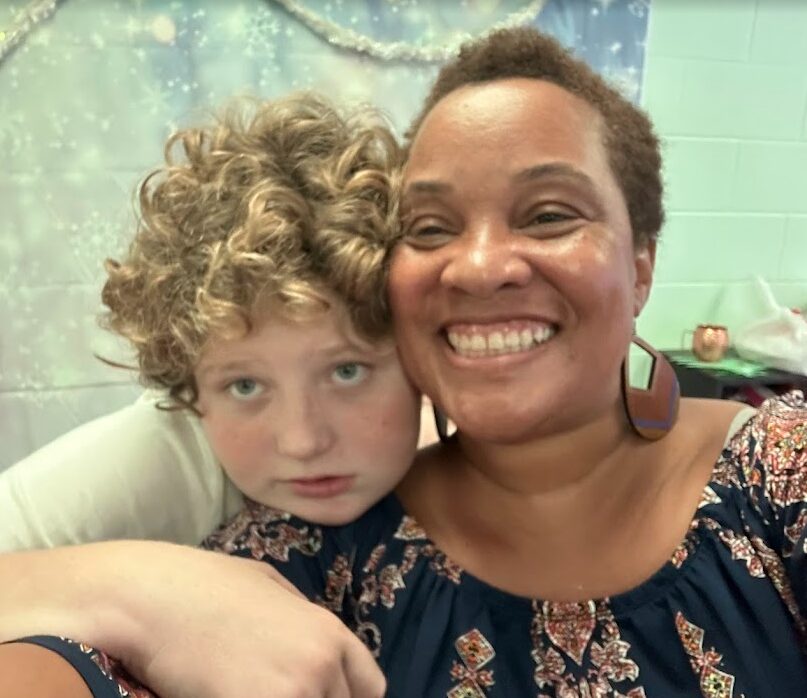
One of the most powerful parts of my work is witnessing a parent have a true conversation with their child for the very first time. Imagine a parent who has spent years being told their 8-year-old, 10-year-old, or 12-year-old has limited understanding suddenly watching their child type out thoughts, opinions, jokes, memories, and feelings. You see their child’s glowing personality emerge in real time. It is life-changing — not only for the child, but for the entire family.
This work is deeply personal to me because I experienced that transformation with my own child. I remember the moment my child was finally able to type the words, “I have seizures,” during an appointment with a neurologist. That moment changed everything. The neurologist confirmed what my child had been trying to communicate all along. Communication became not only empowering, but life-saving.
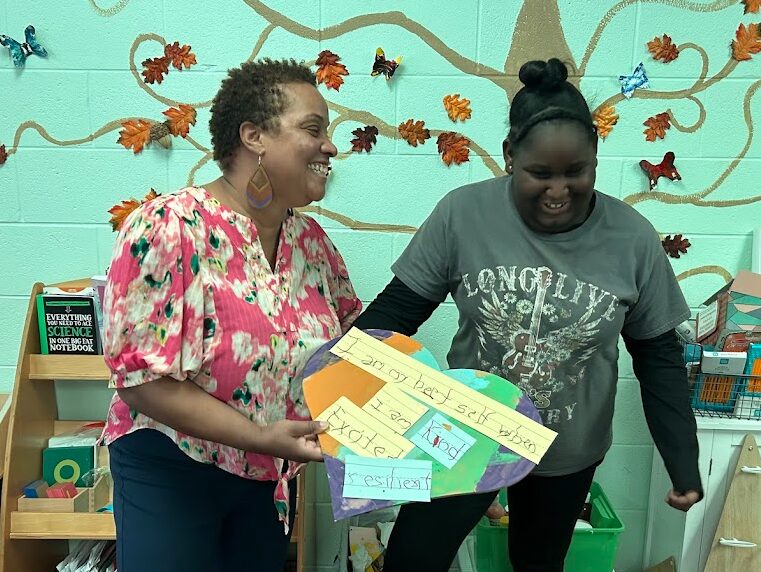
Today, we provide engaging, affirming academics for children ages 7 to 13 in an environment where communication, dignity, and inclusion are at the center. Our students are supported by passionate teachers, occupational therapists, speech therapists, and specialists who believe in their potential and are committed to helping them thrive. We also believe children of all abilities deserve opportunities to play, learn, build friendships, and grow together in community. Every day, we get to witness what becomes possible when children are finally given a reliable way to share the brilliance that has been inside them all along.
Looking back, it feels like my steps were ordered toward this work from the very beginning — long before I even realized it myself. I often say that this work chose me before I consciously chose it.
When I was a graduate student, I worked as a graduate assistant at the renowned Virginia Commonwealth University Autism Center for Education. At the time, I did not yet fully understand what direction my career would take. I cared deeply about children and development, but I had not imagined that autism and communication access would one day become the center of my life’s work.
My path initially moved in a broader direction. I became a professor and taught courses in developmental psychology, psychology of women, Black psychology, and other areas focused on understanding human development and human experience. Much of my work centered on educating future teachers and helping them think critically and compassionately about children and learning. In fact, one of the most full-circle moments in my life was realizing that my own child’s first teacher had once been a student in my classroom.
Academically, my background has always been rooted in children and development. My master’s degree is in child clinical psychology, and I earned my PhD in social psychology from Duke University, with a specialization in developmental psychology and a certificate in education. But it was after becoming the parent of an autistic child that everything I had studied began to take on an entirely new meaning. The theories, research, and teaching suddenly became deeply personal and profoundly practical.
Now, I do not just teach others about children of all abilities — I live this work every day. I get to apply everything I have learned through my own experiences as a mother, educator, advocate, and school leader. And in many ways, all of the different parts of my journey — the scholarship, the teaching, the parenting, the advocacy — have come together to prepare me for this moment and this mission.
We love surprises, fun facts and unexpected stories. Is there something you can share that might surprise us?
One thing that often surprises people about me is that, beyond my work in education and disability advocacy, I am also a writer. Creative writing has always been a part of who I am, and my work has been published in various literary journals over the years. Writing has given me a space to process, imagine, and tell stories that center humanity, connection, and resilience.
That love of writing is something I share with my daughter as well. When she was just seven years old, she had a beautiful poem about the pandemic published — a moment that was incredibly meaningful for both of us. Seeing her thoughts and voice shared with the world was another reminder of the power of communication and the importance of believing in what children have to say.
Right now, my daughter and I are in the process of writing a memoir about our journey as mother and daughter — our experiences navigating disability, communication, advocacy, education, and love. It is a deeply personal project, but also one that I hope will encourage other families to see possibility where the world too often assumes limitation.
Pricing:
- Full time students $19,995
- Part time student $15,000
- Accepts Sb10/ Georgia Special Needs Scholarship
Contact Info:
- Website: www.niaschool.org
- Instagram: @niaschooldecatur
- Facebook: @niaschooldecatur
Popular
-
Dr. Cortnie Baity on Expanding Beyond Therapy to Build Scalable Tools for Intentional Living and Relationships
-

Dr. Shameka Campbell on Embracing a New Identity and Guiding Others Toward Purpose and Spiritual Breakthrough
-

ATL’s Most Inspiring Stories
-

Kareem “Reemo Meerak” Tyson on Building The C.U.T.S. Podcast and Creating a Space Where Culture Lives and Breathes
-

Hidden Gems: Local Businesses & Creatives You Should Know
-

Portraits of Atlanta