





 Today we’d like to introduce you to Nadyah Beasley.
Nadyah, please kick things off for us by telling us about yourself and your journey so far.
Where do I even begin?
So many interesting parts of my life I have to share!
But here it goes.
Growing up in Singapore, henna has always been a part of our culture.
From engagements, weddings, baby blessings, and even our Eid Holidays.
They aren’t complete without henna!
I was pregnant with my first baby in 2014, Ramadan (Muslim fasting month) came and being pregnant with no family around, I was an emotional wreck.
I told my husband I need to find someone to do my henna for Eid.
Which ended up with me Googling one night and reading on natural henna and chemical henna.
The next day, I found a reputable supplier of natural henna cones and from then started doing my own henna.
After which, I made friends and in turn by word of mouth I was known as the henna lady in my area.
Can you give our readers some background on your art?
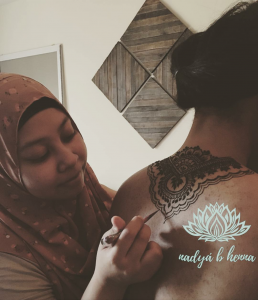
I have been a professional henna artist since 2014 and have been advocating for the use of natural henna instead of the chemical cones that can be bought from local Indian grocery stores.
Henna is made of plants and is perishable. Therefore, the henna I make have to be frozen instead of the chemical cones that have been left on the store shelf for a long time.
Those are filled with chemicals and dyes such as those found in hair dyes which contain p-Phenylenediamine or more commonly known as PPD.
It’s always best to know what the henna artist put in their henna paste.
I have seen many so-called artists using black dye. Even though some people may claim it doesn’t affect them, what most of them do not know is it takes a few times for it to turn into an allergic reaction. Frequent use of chemical cones may affect kidneys, or even worse scar you for life.
I get inspirations from a lot of henna artists far and wide. More so from browsing through my Instagram page.
Practicing almost daily using henna on paper or acrylic board.
It helps with your hand getting used to the pressure and building muscle memory and skill set.
Henna stains for about 7-15 days depending on how long you kept it on and how well you follow aftercare instructions of flaking them off instead of washing them and putting coconut oil or Shea butter to create a barrier every time before you wash your hands.
In your view, what is the biggest issue artists have to deal with?
For henna artists, the biggest challenge would be to approach other henna artists who are using chemical cones to switch to making and using their own henna paste.
There is a whole lot of henna “recipes” available online, and you just have to make them to your own desired consistency.
We, as advocates of natural henna, are more than happy to teach you how to make them if you’re willing to learn.
But because so many chemical cone products come in bold fonts saying how “organic” or “natural” they are, don’t mean they are.
As I said, henna is perishable, and just like any other perishables, it needs to be frozen or at least kept in the fridge for the stain to be dark.
What’s the best way for someone to check out your work and provide support?
Have parties! Have lots of parties and have a henna artist to adorn your guests with henna!
Be sure to support by knowing what your henna artist is using.
And if you’re ever in South Jersey, hit me up for some Coffee Henna Session!
Contact Info:
- Address: South Jersey and surrounding areas, Philadelphia included
- Website: www.nadyabhenna.com
- Phone: 6092511640
- Email: nadyabhenna@gmail.com
- Instagram: https://www.instagram.com/nadyabhenna/
- Facebook: https://m.facebook.com/nadyabhenna/


 Image Credit:
Nadyah Beasley
Getting in touch: VoyageATL is built on recommendations from the community; it’s how we uncover hidden gems, so if you know someone who deserves recognition please let us know here.
2 Comments
Leave a Reply
Popular
-

Hidden Gems: Local Businesses & Creatives You Should Know
-

ATL’s Most Inspiring Stories
-

Satoya Hayes on Turning Beauty 2 Extensions into a Platform for Affordable Confidence and Entrepreneurial Opportunity
-

Portraits of Atlanta
-

Asha Ford on Building Krystal Klear Motion and Creating Purpose-Driven Design for Women
-

Truth in Every Verse: Jay Erve on Identity, Experience, and Creating Art That Lasts






Rose cain
April 17, 2019 at 2:44 pm
I love nadyah work me and my daughter was one of the first people to get the henna done by nadyab I love her I a sister 😘
Rose cain
April 17, 2019 at 2:44 pm
Like a sister