



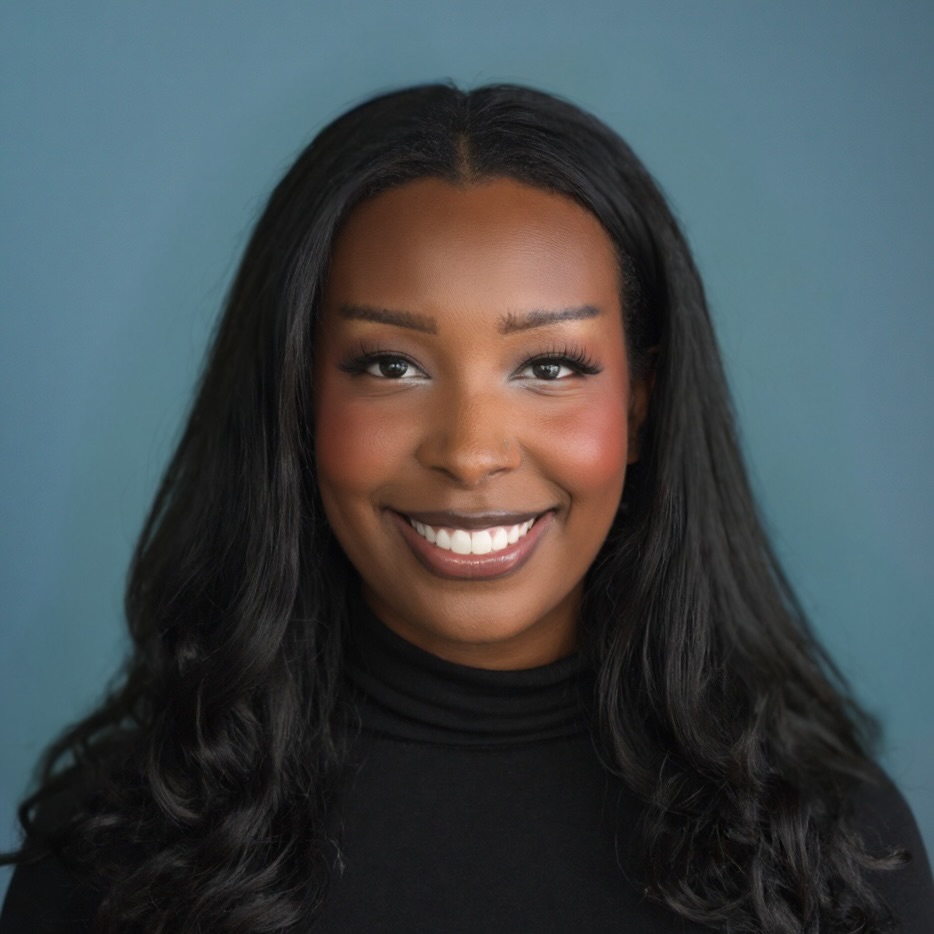
Today we’d like to introduce you to Adrielle Turner.
Hi Adrielle, thanks for joining us today. We’d love for you to start by introducing yourself.
I began my journey in the art world as an educator, and that foundation continues to shape everything I do today. My work has always been rooted in learning, understanding, and asking questions. When you approach art through an educational lens, you naturally develop a habit of analysis and critique—two skills that are essential to curatorial practice.
Alongside teaching, I was also an observer and a collector. My entry into the art world came through purchasing work, often from emerging artists whose pieces were accessible to me at the time. Through that process, I began building relationships and gaining a deeper understanding of the ecosystem. As both my career and my collection grew, I realized that my acquisitions weren’t random—they were guided by an instinct and a set of criteria I had developed over time.
That realization led me to reflect more critically on my decision-making process: what was I responding to, and how was I identifying value. From there, I became inspired to share that knowledge with others, particularly communities of color, by helping them understand how to engage with and invest in art.
While there are certainly financial and tax advantages to collecting, what I find most important is the agency it provides in shaping and preserving our own narratives. At a time when we’re seeing increasing cultural erasure, collecting becomes a powerful tool for storytelling and legacy-building.
We can look at artists like Amy Sherald, Kerry James Marshall, and Rashid Johnson, whose work has reached blue-chip status and is exhibited in major institutions, as examples of how our stories are being elevated, but also how the financial benefits often circulate within systems that remain inaccessible to the communities those stories come from.
Their presence in those spaces is critical, but it also highlights the need for greater participation in the art economy at every level. My work as a curator and advisor is rooted in helping bridge that gap; empowering others not just to appreciate art, but to actively participate in its ownership, valuation, and legacy.
I’m sure it wasn’t obstacle-free, but would you say the journey has been fairly smooth so far?
Absolutely not- it has not been a smooth road. Nothing I’ve done has been linear or easy.
As a Black, Afro-Indigenous woman, the way I see the world and the way the world receives me are often in tension. That disconnect has shaped many of my experiences, both academically and professionally.
My educational journey alone reflects that. I started in linguistics, then moved into speech pathology, but faced multiple rejections when trying to complete my externship. That led me to pursue a master’s in special education. Even within that process, there were clear disparities. Before being accepted into the accelerated Master’s Program for Aural Rehab and Special Education, I was required to take board exams that I realized on my first day, no one else in my cohort had to take. I became only the second African American woman to graduate from that program and when I was hired by the Los Angeles School District, the last black woman in my role was hired 25 years prior. She became my mentor. Those moments made it clear that the path I was on would be uphill.
When I moved to New York City to begin my PhD, I was working full-time as a preschool teacher. At every stage, I had to advocate for myself. Fighting for respect, for recognition of my intelligence, and for validation of my work. And those challenges didn’t just come from institutions; they also came from within the community. Sometimes, the very spaces you hope will support you can present their own barriers, where not everyone is invested in your growth.
What has sustained me through all of this is mentorship and community. Being connected to people who are navigating similar challenges has been critical. It reminds me that these experiences aren’t isolated, and that there is power in shared knowledge and support. We’ve been able to exchange strategies, affirm one another, and continue pushing forward.
I’ve also learned the importance of doing both: showing up, gaining real-world experience, and putting myself in the right rooms; while also building a strong academic and professional foundation. I’ve held four executive roles while pursuing my work in the arts, so my practice is supported not just by passion, but by scholarship, leadership, and lived experience.
So no, it hasn’t been smooth! However, every challenge has sharpened my purpose and strengthened my commitment to the work I do.
Can you tell our readers more about what you do and what you think sets you apart from others?
My artistic practice is interdisciplinary…I often say I do a lot of things, but at the core, my work is about access, education, and storytelling through art.
I’m the founder of Art by Adrielle, a nonprofit that began as a project-based learning initiative for BIPOC children. The goal was to help young people better understand their identities through art, something that deeply shaped my own journey. I’ve always believed that while history can be erased from books, art remains a portal to stories that can’t be silenced.
I developed a curriculum based on my doctoral research and translated it into a format that was accessible for children. What I quickly realized, though, was that this knowledge was just as impactful for adults. So the work expanded beyond the classroom. I began supporting entire families. Offering museum tours, transportation vouchers, meals, educational resources, and books; creating a more holistic, community-centered model. From there, Art by Adrielle evolved into a broader, arts-based community-building organization.
In parallel, I founded The Collectors Club, an LLC that grew out of my work as a collector and curator. I started by independently organizing exhibitions—investing my own resources to create thoughtful, immersive shows that challenged audiences to engage more critically with art and with themselves. Much of my curatorial focus centers on authorship, Black narratives, Afro-Indigenous storytelling, asking who gets to define our stories and how those narratives are circulated.
The Collectors Club was born from recognizing a gap in the art world. There are exclusive spaces, dinners, fairs, and private events where access is limited to those already inside the system. At the same time, there are people on the outside who may have the interest or even the capital, but lack access and guidance. I wanted to create a space that satisfies both worlds.
Through The Collectors Club, I host intentional, community-centered gatherings where culture is the foundation. These are spaces rooted in African and Indigenous ways of being, prioritizing learning over competition and connection over gatekeeping. At the same time, I’m very intentional about maintaining a sense of luxury and excellence. Too often, experiences created for communities of color are diminished or simplified. My work challenges that by creating environments that are just as refined—if not more so—than traditional high-end art spaces. Black tie, thoughtful details, elevated presentation: these elements matter because they place us in the rooms where conversations, opportunities, and acquisitions are happening.
I am also an advisor for private collections. As a collector of 10 years specializing in emerging artists, I have seen my collection grow, and I use my academic background, market knowledge, and personal success to guide collectors of all levels in making great acquisitions. I also educate on cataloging, keeping the works safe, and the process of adding art to your investment portfolio.
What I’m most proud of is my ability to build ecosystems. Spaces where people can learn, connect, and see themselves reflected in both the art and the experience of engaging with it.
Most recently, I’ve founded an art tech company around my newest project: The Collectors Cödex. This is a private intelligence, focused on guiding collectors’ art experiences, providing language to their taste and opportunities to deepen understanding which will lead to making more intentional decisions.
At every level, my practice is about shifting access, deepening understanding, and creating spaces where our stories are not only preserved, but owned and valued.
What quality or characteristic do you feel is most important to your success?
I would say the characteristic that’s been most useful to my success is execution.
Not everything I do is perfect, and I’m not someone who believes everything I touch turns to gold, but if I have an idea or feel called to try something, I act on it. I don’t wait for the perfect timing or for external validation to tell me it’s the right move.
I also don’t really believe in bucket lists. I believe in plans. I tend to think in three year increments, where I decide what I want to see exist in the world, and then I take steps to create it. Once I make that decision, I move.
A lot of people get stuck waiting. Waiting to feel ready, waiting for approval, waiting for the right moment. In my experience, that moment never comes. You are never fully ready, and it is never the perfect time.
So for me, it is about doing. Trying, building, learning in real time, and refining along the way. That willingness to execute without overthinking or seeking permission has been one of the most important drivers of my growth.
Contact Info:
- Website: https://artbyadrielle.com
- Instagram: adrielle_le_belle
Image Credits
Gifted Illusionz
Popular
-

Hidden Gems: Local Businesses & Creatives You Should Know
-

ATL’s Most Inspiring Stories
-

Portraits of Atlanta
-

Satoya Hayes on Turning Beauty 2 Extensions into a Platform for Affordable Confidence and Entrepreneurial Opportunity
-

Asha Ford on Building Krystal Klear Motion and Creating Purpose-Driven Design for Women
-

Truth in Every Verse: Jay Erve on Identity, Experience, and Creating Art That Lasts