

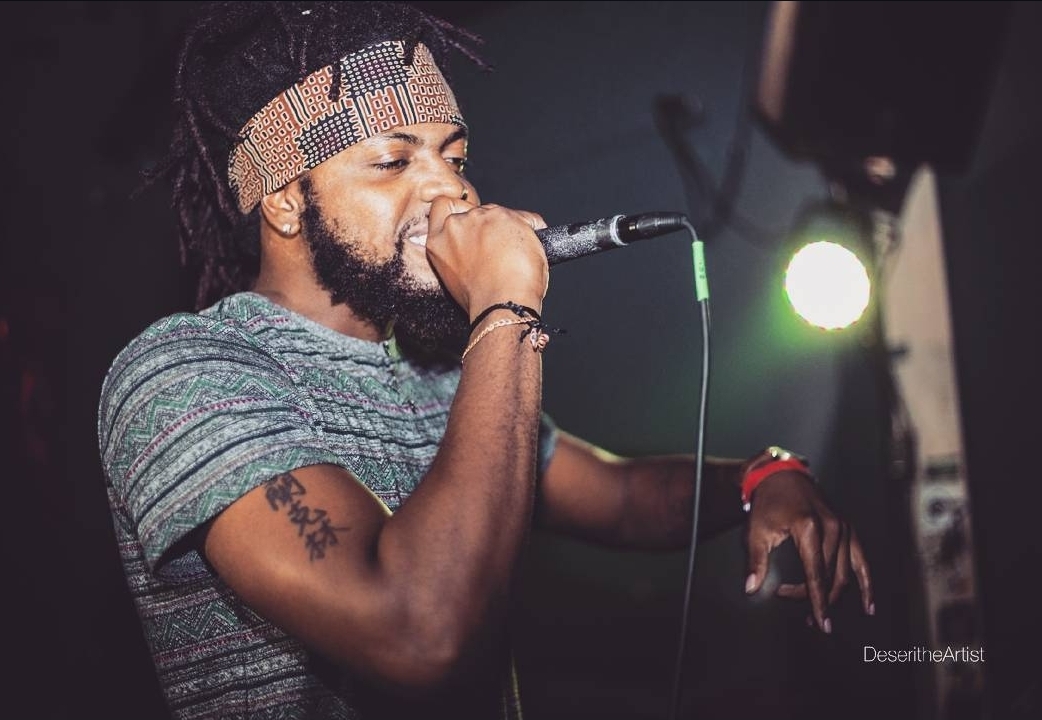
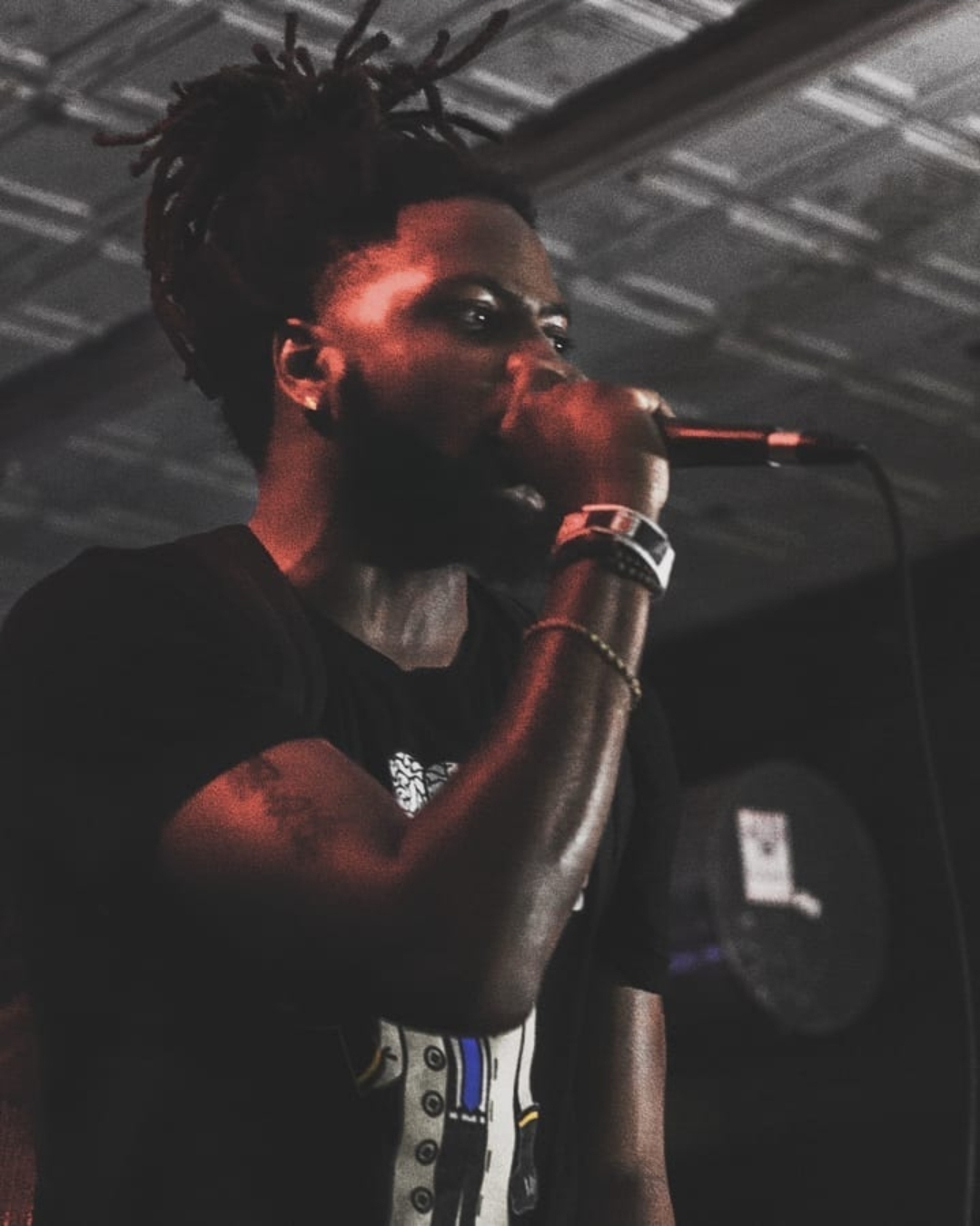
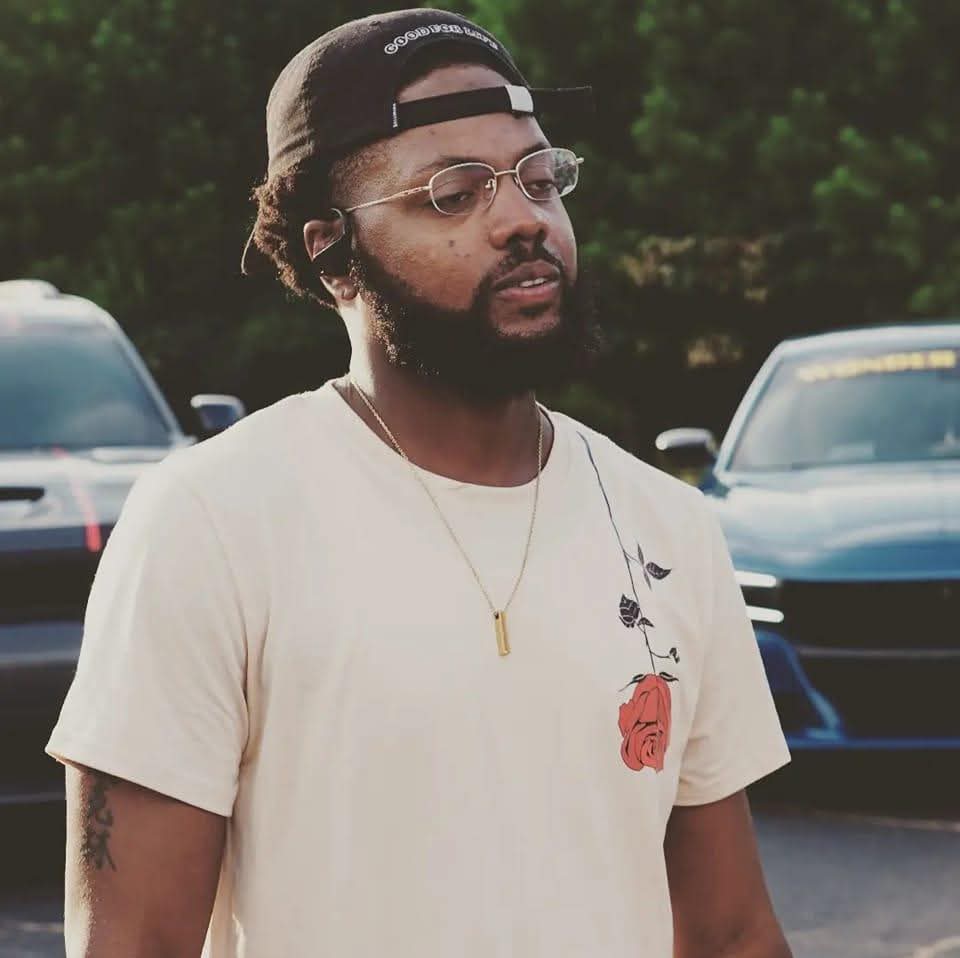
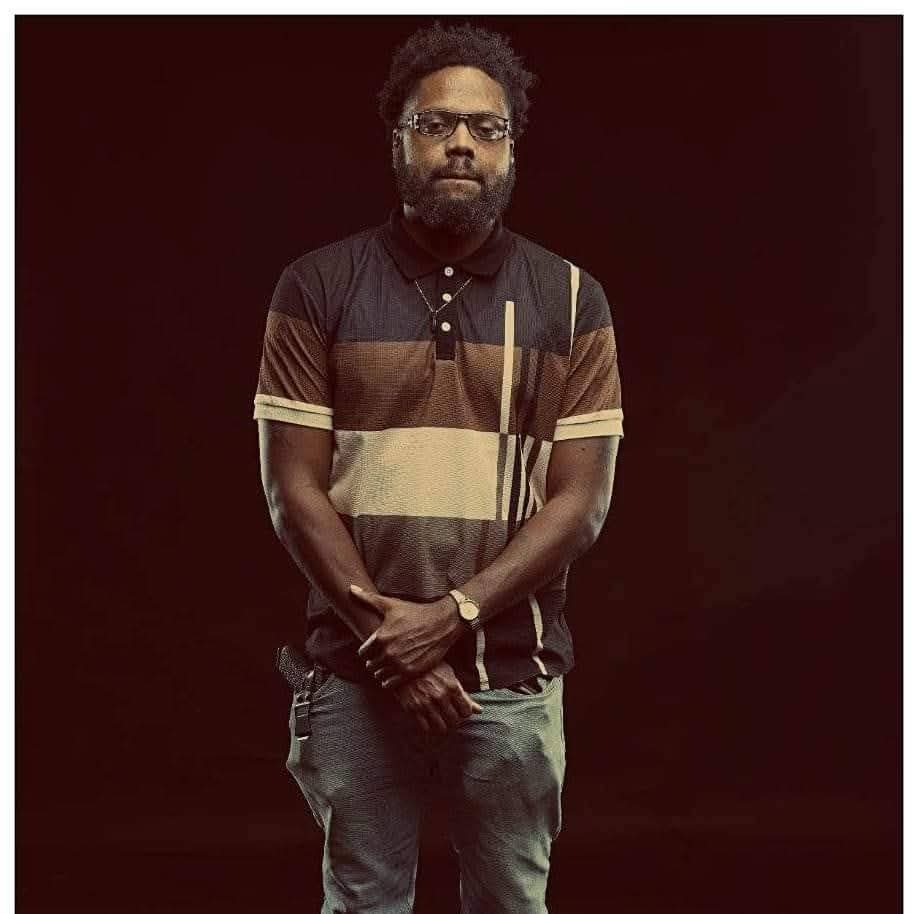
Today we’d like to introduce you to Barz Damu.
Hi Barz, can you start by introducing yourself? We’d love to learn more about how you got to where you are today?
My journey as an artist started when I was around seven or eight years old. My twin brother and I were introduced to music in the simplest way possible—our mother showed us how to press record on the tape deck. From there, we started mimicking songs we heard on the radio, recording ourselves, experimenting with melodies, and really just playing with it all at the time. We didn’t know it then, but those moments definitely planted seeds for everything that would come later.
Through childhood, from College Park all the way to Clayco, music was always something that lived in my bones, but it was more of a hobby than anything serious. That same energy carried into high school, except by then we had started recording ourselves on a Walmart microphone plugged into a PC, using early software like n-Track Studio and Cool Edit Pro. We used whatever was at our disposal to create. If we couldn’t afford the ideal setup, we still found a way to make something happen.
In college, we continued making music with different people we met along the way, but it was also a pivotal time for me personally. I was gaining a lot of insight through my own internal struggles and trying to figure out how to project myself into the world. That season pushed me to really study Tupac’s work on a deeper level. I had already grown up listening to Bone Thugs-N-Harmony, Three 6 Mafia, OutKast, No Limit, T.I., Jeezy, Lil Wayne, Dipset, and a lot of Southern influence, but Tupac introduced me to another dimension of artistry—music with meaning, truth, depth, and purpose. That inspired me to become more authentic in my own writing and lean further into storytelling.
At the point where I dropped out of college, I realized there had been a gift sitting right under my nose the whole time—something I had been playing with for years without fully recognizing it. That’s when I chose to pursue the craft with real intention. I dove deeper into the art form, studying greats like Jay-Z, Nas, Eminem, Kanye West, Nipsey Hussle, Boosie, and revisiting OutKast with even greater appreciation. I spent hours and hours writing, experimenting with flows, song structures, concepts, and sharpening my pen.
My brother and I released our first project, The Vision, on DatPiff around 2011, which helped us build a grassroots following online. From there, we continued releasing solo records and collaborations. Later we dropped an EP called Over the Blue with producer Shama One, followed by Fly Minds EP with producer Z Three. Those projects helped us continue growing our fanbase and developing our sound.
Through networking, we connected with artist iBeast, who believed in our vision. That led to the creation of a collective called NewGa, and we began traveling throughout the South, performing in places like Augusta, Georgia and San Antonio, Texas. From there, we became active in Atlanta’s live music circuit, performing regularly at venues like Apache Café, The Union, The Music Room, and many other showcases.
We later released Nation Leakz, a project that brought local recognition and helped us win Conscious Artists of the Year at the 2015 YGEA Awards. During that same stretch, I was also building toward my solo path while continuing features, cyphers, and collaborations. I was featured on the BNG Magazine cover and cypher, which was another meaningful milestone for me.
Behind the scenes, I also developed the technical side of my craft. Since we always recorded in-house, I learned how to mix and shape records myself so we could control our own pace, sound, and direction. That independence became a major part of who I am as an artist.
I also opened for Cyhi Da Prynce in 2013, toured in 2017 on the Spectacular Vernacular Tour across the South, later joined another run with Audible Hustle Entertainment, and performed at Culture Fest in Augusta in 2018.
Over time, FlyMind Nation developed as a collective that includes my brother Frank’o Shack, and Blk Mermaiiid, who joined in 2020. After releasing my single ‘And One’ in 2019—which gained strong support and momentum—I stepped more into an administrative and creative director role for the team, focusing on marketing, promotion, website development, and video direction. I also studied sales and business systems, learning how to better market and position art in today’s world.
Now I’m at one of the most important moments of my career: preparing to release my debut solo album ‘The X-Hell Project.’ It’s a project that took years to build because it’s layered, intentional, and deeply personal. It reflects dark side alliance, ambitious reflection, growth, and transformation. It’s the type of project designed to reveal more with every listen.
Now where I am, I’m focused, prepared, and getting ready to introduce the world to a body of work that represents a very complex soul
Would you say it’s been a smooth road, and if not what are some of the biggest challenges you’ve faced along the way?
It definitely hasn’t been a smooth road, but I believe the challenges were necessary because they sharpened me as both an artist and a person.
One of the earliest struggles was simply being in a market like Metro Atlanta, where certain sounds naturally dominate. You have trap, party records, dance-driven music, country rap tunes—styles that move the city and culture. Coming in with a more lyrical, conscious, and introspective approach wasn’t always the easiest fit. There were times when the environment would subtly push artists to sound more mainstream or follow what was already working. My goal was never to chase trends. My goal was always to master the craft enough to create whatever I wanted, while still staying true to myself. I’ve always knew my music has to come from the soul first.
At the same time, that challenge helped me grow. It forced me to look at the art from different angles—how to communicate deeper ideas in ways that still connect, how to refine my songwriting, how to make records that move people without losing authenticity. So even resistance became part of the training.
Another struggle came during certain collaborative phases, especially when I was working within group settings with in-house production. There were talented people involved, but sometimes the available sound palette felt limiting for me creatively. I’ve always been the type of artist who likes to experiment. I’d place myself more in the alternative hip-hop lane, where I can blend different energies, ideas, and sounds. So when people tried to box me into one category—whether boom bap, Southern, conscious, or any one lane—it felt restrictive. I’ve never wanted to be defined by one sound. If the production speaks to me, I can create on it.
Another major challenge has been the path itself. I’m the type of person who feels called to carve a lane rather than simply walk one that already exists. With the style I have and the city I come from, there wasn’t a clear blueprint laid out in front of me. A lot of this journey has been about learning how to navigate independently while protecting the integrity of my art. I was never someone obsessed with chasing a record deal or needing outside validation. If the right opportunity came and it made sense, I’d consider it—but I never wanted to accept terms that would compromise creativity or ownership.
One of the biggest long-term challenges was the technical side of music. I’ve always liked to work at my own pace, record when inspiration hits, and have direct access to the creative process. Because of that we recorded ourselves for years while teaching ourselves how to engineer, mix, and shape records. That took real time—close to a decade of learning through trial, error, patience, and repetition. But now, having that skillset gives me much more control over the final product and allows me to bring ideas to life exactly how I hear them.
So no, it hasn’t been smooth—but I’m grateful for that. Every obstacle taught me something about music, business, patience, branding, and belief in self. A lot of what I learned through those struggles is being poured directly into this next project—not just sonically, but in how it’s presented to the world.
Alright, so let’s switch gears a bit and talk business. What should we know about your work?
When it comes to my work as an artist, what sets me apart starts with perspective. I’m interested in a lot more than just music—fitness, human behavior, self-development, metaphysics, business, sales psychology, and how people think and move through life. I study a wide range of subjects, and all of that naturally feeds into the art. So when people hear my music, they’re not just hearing songs—they’re hearing layers of observation, experience, and ideas shaped through a broader lens.
I also spend a lot of time studying greatness. I study geniuses across different fields—music, business, creativity, leadership, innovation. Because of that, I approach music intentionally. Every detail matters to me: album titles, song titles, sequencing, themes, emotion, replay value, and the overall experience. I don’t just make records—I build worlds and concepts.
One thing that really sets me apart is that I understand the power of intrigue. In an oversaturated market, standing out requires more than just dropping songs. I take titles seriously because they should spark curiosity and make people want to lean in. I like creating what you could call a “curiosity gap”—where the title alone makes you wonder what it means, then the music reveals deeper layers over time. My upcoming project is built with that same mindset. ‘The X-Hell Project’….what would you assume that means?
Musically, I don’t box myself into being “just a rapper.” Yes, lyricism matters to me, and I take pride in writing at a high level, but I care about the full experience more than anything. Melodies matter. Song structure matters. Energy matters. Atmosphere matters. Replay value matters. I see myself as an artist first—someone creating complete bodies of work rather than just showcasing bars for the sake of bars.
I feel akin to artists like Kanye West, Isaiah Rashad, ScHoolboy Q, Vince Staples, Mos Def, A$AP Rocky, and OutKast—in a sense that they are recognized for creating experiences, worlds, and unique identities. That’s closer to how I view myself creatively.
What I’m most proud of is my authenticity. When you hear my music, you can tell it wasn’t built by copying trends or mimicking someone else’s formula. You can hear that I developed my own voice and my own style. I’m proud that I think outside the box naturally and fearlessly. That’s not something I force—it’s who I am. I couldn’t exist any other way.
I’d rather be remembered as the greatest Hip Hop artist than the greatest rapper. To me, artistry is bigger—it’s vision, originality, risk-taking, emotion, and creating something that leaves a dent.
If you had to, what characteristic of yours would you give the most credit to?
It’s important remain a student, garner attention to detail, and embrace failure. Another quality that is important is to not be afraid of embarrassment because I am the type of artist that loves to try a lot of things. And so I must be willing to be all the way out there confidently and ten toes without steering away. Sometimes the result isn’t the best, but I get a lot of data that I can utilize to evolve as an artist and all other endeavors I am tackling with full force.
Contact Info:
- Website: https://linktr.ee/barzdamu
- Instagram: https://instagram.com/barzdamu
- Facebook: https://www.facebook.com/share/17NhCug5zi/
- Other: https://linktr.ee/barzdamu
Popular
-

Hidden Gems: Local Businesses & Creatives You Should Know
-

ATL’s Most Inspiring Stories
-

Portraits of Atlanta
-

Satoya Hayes on Turning Beauty 2 Extensions into a Platform for Affordable Confidence and Entrepreneurial Opportunity
-
Asha Ford on Building Krystal Klear Motion and Creating Purpose-Driven Design for Women
-

Truth in Every Verse: Jay Erve on Identity, Experience, and Creating Art That Lasts