






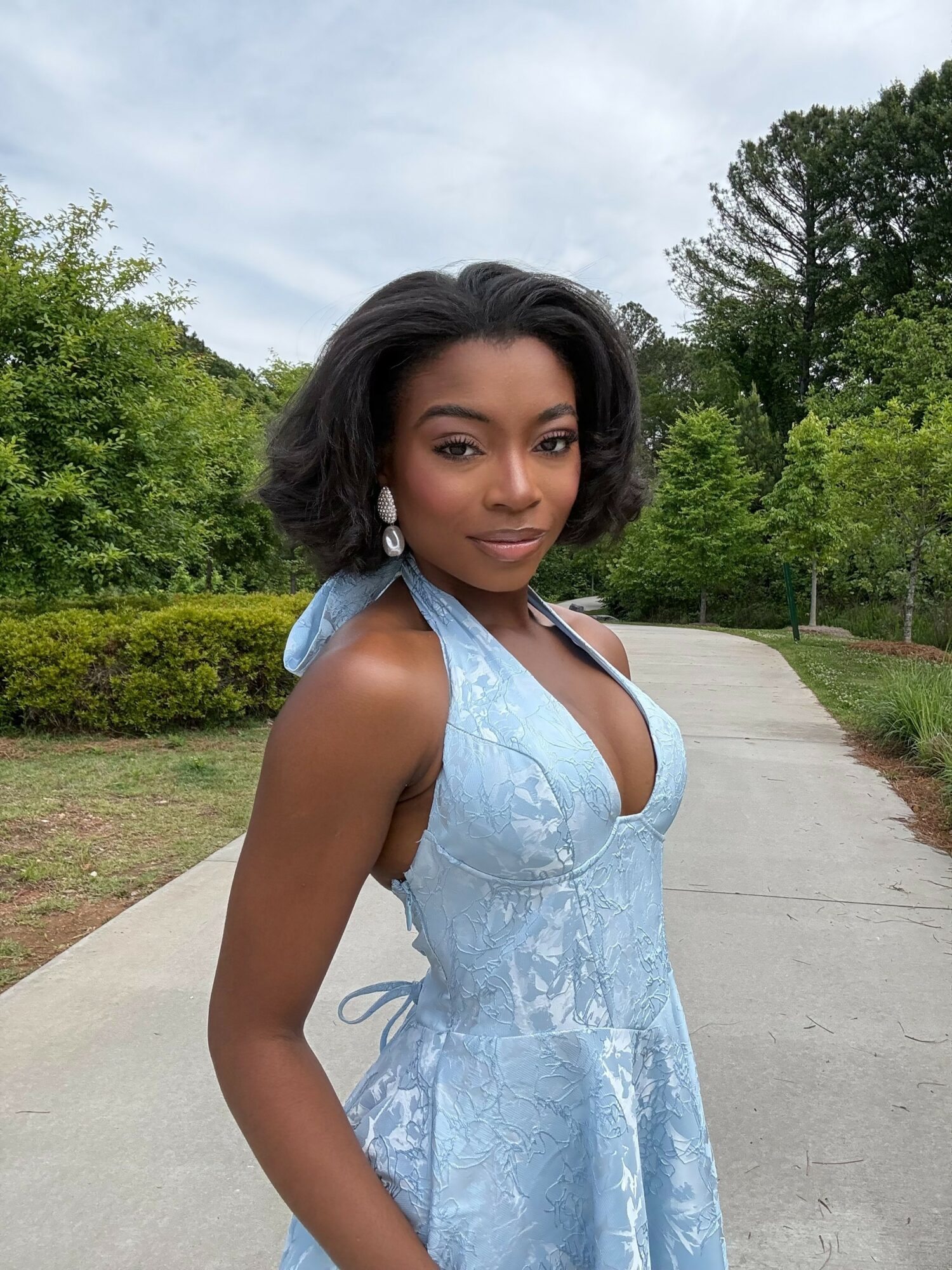
Today we’d like to introduce you to Kiara “Kiki” Tompkins.
Hi Kiara “Kiki”, thanks for sharing your story with us. To start, maybe you can tell our readers some of your backstory.
I’m a 27-year-old legal professional based in Atlanta, Georgia, and my journey has always been rooted in service, discipline, and storytelling through presence.
I started out with a strong interest in public service and communication, which led me to study political science and later step into the legal field as a paralegal. Working in law offices gave me a front-row seat to how systems operate behind the scenes—everything from drafting legal documents and managing discovery to supporting attorneys through litigation and trial preparation. It taught me precision, resilience, and how to stay composed under pressure.
Alongside my professional path, I’ve always had a deep passion for performance and leadership. I’ve been involved in dance since I was a teenager, including majorette-style performance and ballet, which eventually led me into the pageant world. I currently hold the title as Miss Fulton County in the Miss America organization, and that experience has allowed me to grow in confidence, public speaking, and community engagement. Pageantry, for me, is not just about competition—it’s about platform-building, representation, and using visibility to create impact.
One of the most meaningful parts of my work outside the legal field is my nonprofit initiative, The Second Suit, a sustainable image consulting program that helps individuals present themselves confidently using donated and gently used professional clothing. It was born from my belief that access and presentation can change the trajectory of someone’s opportunities.
Today, I’m continuing to build a career that bridges law, advocacy, and public-facing leadership. I’m currently preparing for law school, where I hope to further develop my ability to serve communities through policy and legal reform. Everything I do—from the courtroom support work to pageantry to community service—connects back to a single goal: helping people show up fully in rooms where they deserve to be seen and heard.
I’m sure it wasn’t obstacle-free, but would you say the journey has been fairly smooth so far?
It definitely hasn’t been a completely smooth road. A lot of my growth has come from learning how to navigate uncertainty while still showing up fully in every space I’m in.
One of the biggest ongoing challenges has been balancing multiple demanding paths at once—working full-time in the legal field while also pursuing pageantry, building my nonprofit, and preparing for law school. Each of those areas requires a different version of me, and there have been seasons where I’ve had to learn how to manage time, energy, and emotional capacity very intentionally.
Another challenge has been learning how to advocate for myself while working in high-pressure environments. In the legal field, you’re often expected to be precise, fast, and unshakably composed, but as someone early in my career, I’ve had to grow into my confidence and trust my voice in rooms where experience levels vary widely.
On a more personal level, I’ve also had to unlearn the idea that I always have to carry everything alone. Whether in leadership, relationships, or service, I used to equate strength with doing everything independently. Over time, I’ve learned that sustainable success actually comes from boundaries, support systems, and knowing when to pause and recalibrate.
Even with those challenges, each season has shaped me in a very intentional way. Nothing I’ve gone through has stopped me—it’s just refined how I move, how I lead, and how I define success for myself.
Can you tell our readers more about what you do and what you think sets you apart from others?
I work in public interest law, specifically in legal aid and litigation support, where my focus is helping bridge the gap between individuals and meaningful access to justice. In my role, I support attorneys through all stages of a case—drafting legal documents, managing discovery, organizing case materials, coordinating depositions, and assisting with trial preparation. While much of my work happens behind the scenes, it directly contributes to whether clients are properly prepared, represented, and heard within the legal system.
What I’ve come to specialize in is the structure that makes justice accessible. In public interest law, many clients are navigating systems without the resources, guidance, or familiarity that others may take for granted. My role is to help close that gap by ensuring that cases are not only moving forward, but are also fully and thoughtfully built. That level of preparation can meaningfully change how someone experiences the justice system.
What I’m most proud of is the consistency and care I bring to work that often carries real human stakes. I’ve learned to be meticulous under pressure, adaptable in fast-moving environments, and intentional about the fact that every document, deadline, and detail connects back to a person who is relying on the system to be fair and responsive.
What sets me apart is that I don’t see legal support as purely administrative—I see it as access work. Public interest law has shaped the way I understand impact: justice is not just about what happens in the courtroom, but also about the preparation, organization, and advocacy support that happens long before anyone steps in front of a judge. My goal is always to help close that gap between people and the justice they deserve.
What sort of changes are you expecting over the next 5-10 years?
Over the next 5–10 years, I see public interest law and the broader legal field continuing to shift toward greater accessibility, technology integration, and client-centered service. A major change is already underway with the rise of e-discovery tools, AI-assisted legal research, and digital case management systems, which are streamlining how legal teams process information and prepare cases. While these tools increase efficiency, they also raise an important question about ensuring that human judgment, ethics, and advocacy remain at the center of legal decision-making.
In public interest law specifically, I think there will be a continued push toward addressing access-to-justice gaps more intentionally—whether through expanded legal aid resources, remote/virtual legal services, or community-based legal education. More organizations are recognizing that access to justice isn’t just about representation in court, but also about early intervention, education, and simplifying how people navigate legal systems.
At the same time, I think the demand for culturally competent, trauma-informed legal support will continue to grow. Clients in public interest spaces often come from vulnerable or under-resourced communities, and the future of the field will require legal professionals who can combine technical skill with empathy and clarity in communication.
Overall, I see the industry becoming more efficient and tech-enabled, but also more aware that true progress depends on closing—not widening—the gap between systems and the people they’re meant to serve.
Contact Info:
- Instagram: @therealkikinicole
- Facebook: https://www.facebook.com/KeepinUpWithKiki
- LinkedIn: https://www.linkedin.com/in/kntompkins
Popular
-

Hidden Gems: Local Businesses & Creatives You Should Know
-

ATL’s Most Inspiring Stories
-

Summer McIntyre Is Building a Career at the Intersection of Sports, Media, Entertainment, and Digital Storytelling
-

DeAnna McIntosh Is Helping Entrepreneurs Move Bold Ideas From Vision to Reality Through Strategy, Innovation, and Execution
-

Portraits of Atlanta
-

Dr. Nicole Brown Expands Her Vision Beyond Design to Inspire Women Through Storytelling, Reinvention, and Intentional Living