






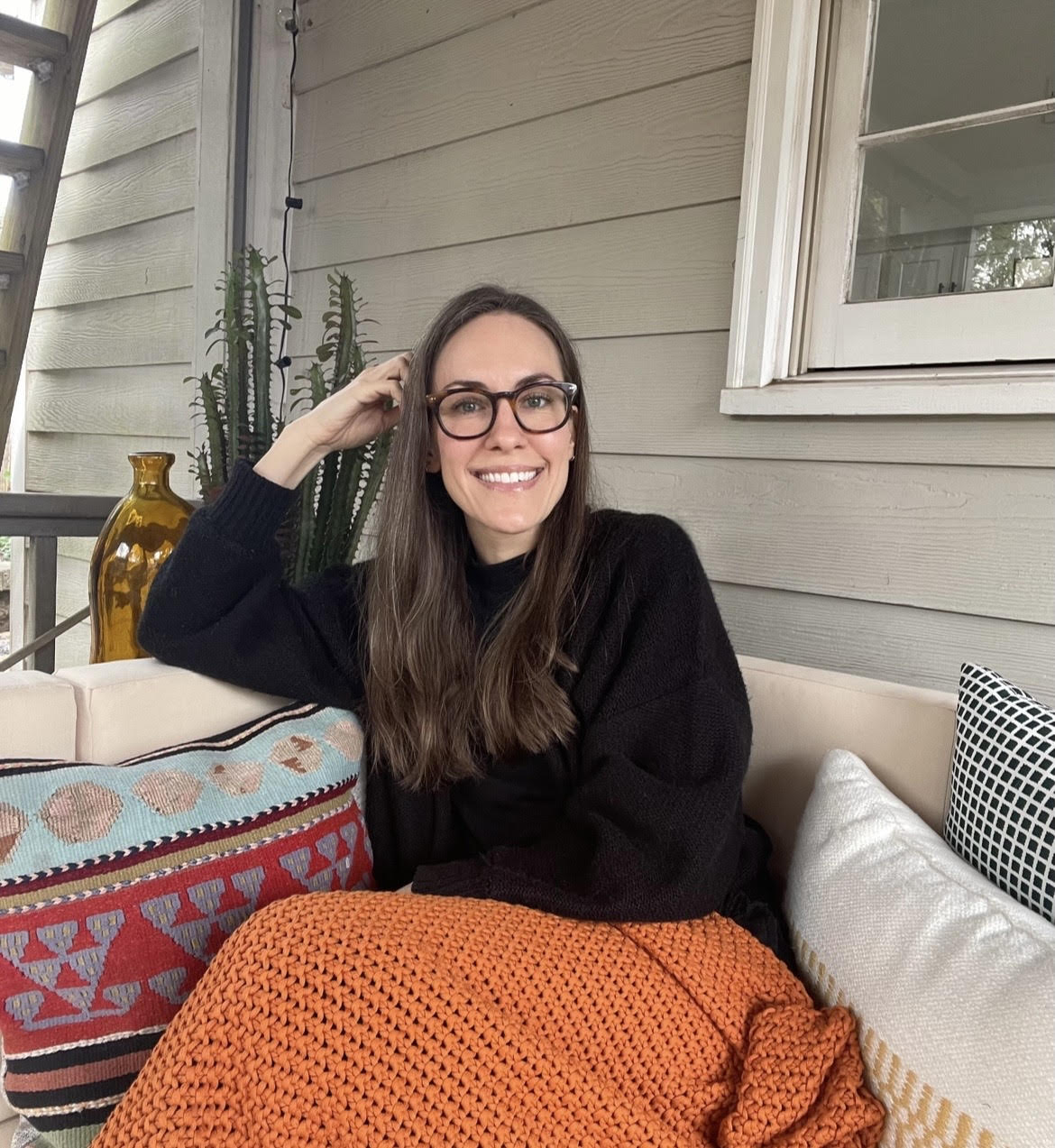
Today we’d like to introduce you to Sara Bateman.
Sara, we appreciate you taking the time to share your story with us today. Where does your story begin?
My name is Sara and I’m a Licensed Clinical Social Worker and therapist. My path to becoming a therapist has certainly not been linear! As a teenager with ADHD, PMDD, and other learning challenges, I spent most of my energy just trying to get through school. I didn’t receive the support I needed and I didn’t believe I was capable of finding something I’d be good at. I studied studio art in college but found my way into sociology classes toward the end, and that was the first time I really started thinking about society and how people are forced to function within it.
After college I moved to New York City and fell into working in the world of food access, community gardens and farms, and neighborhood organizations. It was through that work that I found a mentor for the first time in my life, someone who helped me find confidence in myself and in working with people. I loved that work deeply, but I felt a growing pull toward mental health and working with people one on one, to understand what was happening in someone’s inner life and help them through it.
I came back to Georgia and got my Master of Social Work from UGA. I chose social work because I wanted to understand the bigger picture, how institutions, policies, and ways of thinking fail so many people, particularly those who have been historically marginalized, and how individuals are left trying to survive in a world that was never designed with them in mind. As a white person, that education was foundational for me. I wish I had been exposed to it sooner and understood it more deeply earlier in my life.
I went into grad school scared but certain this was what I was meant to do. After graduating, I worked as a group counselor in a mental health treatment setting while building a caseload in a group private practice. Three years later I started my own private practice. Today, I work with adults and couples who are really trying to shift patterns in their lives.
What drives me most is helping people learn how to work with themselves. The world is hard and I think most of us are feeling the collective weight of that right now. I want my clients to find a way through that feels true to who they are, not just how to cope better, but how to actually know and trust themselves.
We all face challenges, but looking back would you describe it as a relatively smooth road?
No, it has not been a smooth road! Making a truly livable wage in the mental health field, especially in those first few years before licensure, is really hard. The standard path for many therapists after graduation is to work in a group practice to accumulate the hours needed for licensure, while a significant portion of your income goes to the practice. It is often presented as just part of the process. Like many therapists, I worked two jobs and it still wasn’t enough.
I also made the decision early on not to take insurance. Managing insurance billing and reimbursements on top of doing good clinical work and admin work takes more than I feel able to give. Fighting to get paid fairly and on time through insurance can feel like a second job, and there are now large companies entering the mental health space that are more interested in volume and profit than in taking care of therapists, and that is reshaping the field in ways that concern me. I would rather build something on my own terms if I can.
Alongside all of that, access has always weighed on me. A lot of the messaging I received before I was fully licensed was around “charging what you are worth” and raising your fees. I understood the intent but it always felt disconnected from reality, both from where I was financially and from the clients I wanted to be able to serve. Therapy is expensive and the people who most need support are often the ones who can’t afford it. If my rate is out of reach for most people, something about that doesn’t sit right with me. And it still doesn’t. I am still figuring out that balance, but my worth as a therapist and what I charge for my time are not the same thing to me. I promised myself early on that I would never be locked into only seeing clients who can pay my full rate. Over half of my clients use my sliding scale and I try to work with people as much as I can based on where they are financially. It is an ongoing struggle figuring out how to take care of myself and my clients within a system that kind of fails both of us, but this is what I have found to be sustainable for me, at least for now.
We’ve been impressed with Sara Bateman Therapy, but for folks who might not be as familiar, what can you share with them about what you do and what sets you apart from others?
I’m a queer therapist and I run a private practice called Sara Bateman Therapy. I especially love working with women and people assigned female at birth, as well as couples and LGBTQIA+ folks. I tend to be known for working with neurodivergent clients, particularly those with ADHD, autism, or PMDD, as well as people navigating chronic health conditions, hormonal health, life transitions, and relationship patterns. But I work with a pretty wide range of people and I genuinely like it that way. Every person brings their own combination of things they are trying to make sense of and that is what keeps this work interesting.
My clients often come in feeling overwhelmed, stuck, or like their brain or the world is working against them. They may be struggling with daily functioning, emotional regulation, repetitive patterns in relationships, identity or sexuality, adjusting to upcoming change in their life, or anxiety and depression.
I draw from a range of modalities depending on what each person needs, things like IFS (parts work), somatic work, DBT, and attachment work. Not every approach works for every brain and that is especially true for neurodivergent clients. For me, this also means I don’t usually follow rigid protocols. I like moving along with a client at their own speed, gently and sometimes playfully, in a way that is continually tailored to them.
I think what I’m most known for is being open and real. Honestly my brain doesn’t really know how to be anything other than that. When I first meet with potential clients I ask what they liked about past therapy and what they didn’t. A lot of the time people tell me they wanted more direct feedback, that their therapist spent more time reflecting what they said. I think therapy can be incredibly powerful when it becomes a real collaboration, where there is space to laugh at something awkward, sit with something hard, say the weird thing out loud, and actually work through it together. That realness also means being transparent every step of the way. I want clients to understand what is happening in their therapy so they feel empowered to speak up and shift things if something isn’t working for them.
As for my brand, I don’t really have one. Building a brand is something a lot of therapists have to do now to reach clients and I completely understand that. There is a lot of pressure in this field to become an influencer and I respect that hustle. When I’m being honest with myself, branding and influencing is just not something I can keep up with. If you go to my Instagram and see only one post, it’s because I’m either dilly dallying soaking up life, connecting with colleagues and in the community, or locked in with my clients. Maybe that will change, but I feel proud of trusting where I’m at.
What makes you happy?
So many things make me happy! Plants and gardening, my cat, laying about doing nothing. Visiting somewhere I’ve never been. Little treats. Being gay. House music, funk music, weird music, all music. Scary movies and friend dates and getting to see my people just living their lives. Being myself around my family. I love anything that is really human and unfiltered. The kind of storytelling where people are messy and funny and relatable, think PEN15, that kind of thing. It makes me feel less alone and I think that is kind of the whole point.
A lot of that happiness came from learning how to actually be present in my life. I have always felt a little behind, like I can’t quite keep up, and for a long time that made it hard to fully access joy. That overwhelm is often still there, but I have learned how to sit with my frustrations and still access gratitude at the same time, despite my learning challenges. And there is a lot to be grateful for. Getting to do this work, watching my clients slowly become a little bit nicer to themselves, and then going to play and fight for things that matter in between. That never gets old.
Pricing:
- Individual sessions are $160
- Couples sessions are $185
- I use a sliding scale if needed based on financial situation that ranges from $40-160 per session
Contact Info:
- Website: https://www.sarabatemantherapy.com
- Instagram: @sarabatemantherapy
Popular
-

Hidden Gems: Local Businesses & Creatives You Should Know
-

ATL’s Most Inspiring Stories
-

Portraits of Atlanta
-

Quinetta Ashford on Reinventing Her Creative Journey, Fighting for Better Healthcare Advocacy, and Finding Healing Through Art and Voice
-

Miguel Carmona III on Democratizing Trucking Knowledge, Helping Operators Avoid Costly Mistakes, and Building Smarter Transportation Businesses
-

Kiara Gardner on Using Storytelling, Mental Wellness, and Creative Media to Build Spaces for Healing and Human Connection