




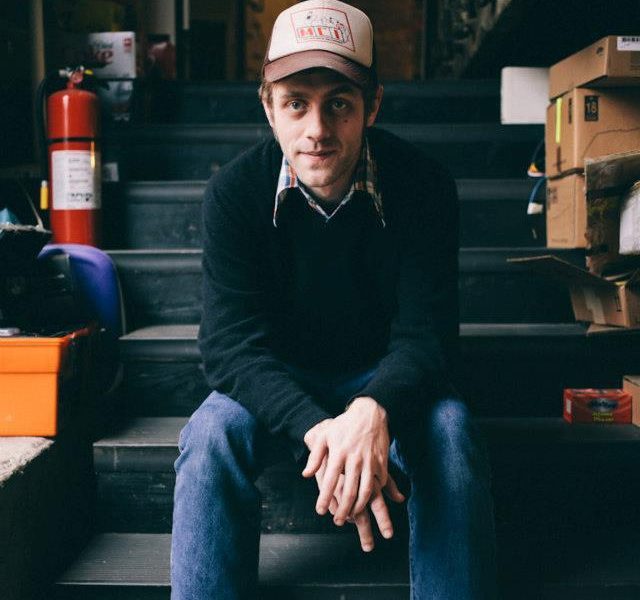
Today we’d like to introduce you to Jason Kingsland.
So, before we jump into specific questions about the business, why don’t you give us some details about you and your story.
I can recall the exact moment I knew I wanted to be a record producer. I was around 12, riding in the back of my dad’s Chrysler Concord, listening to the radio. It occurred to me: Somebody has to make this music. That could be me. I was already a music nerd who played a ton of instruments, but at that point, I began positioning myself to have a more technical, behind-the-scenes role. I read everything I could about production and even recorded stuff in my house in high school. When I got to college, I focused on music and audio engineering, but it quickly became apparent the program wasn’t for me — the professors weren’t challenging me, and I knew I could learn more by getting out and doing the work.
After I left school, I recorded bands in my house while interning under Will Loftin at Shangri-La, an early 2000s all-analog studio in south Atlanta, where I had a very mop meets bucket introduction to studio life. Eventually, a friend connected me with a job at Atlanta Pro Audio, a local pro audio company, which is where I met drummer/producer Vic Stafford. He and his business partner had just taken over a lease at Exocet Studios. I worked under those guys for two years before they dissolved their partnership with Exocet’s owner, at which point I became the manager and chief engineer. I spent two years developing relationships with clients like India. Arie, Kristian Bush, and the person that helped me transition to freelancing, Bill Reynolds, the bass player for Band of Horses.
Several years go by, I’m building some actual real skillsets, the owner of the building refinances the building with Lehman Brothers, and I think we know how that ends. This leads me to go independent and start freelancing. I leased a room at Matt Goldman’s Glow in the Dark studio over on Cheshire Bridge, where I continued working with Bill Reynolds on some projects he was producing, in addition to working on a whole slew the members of Band of Horses solo projects. Through working on Band of Horses “Georgia” with Bill, I met Drew Vandenberg, who at the time was the house engineer at Chase Park studios in Athens as well as engineering for Atlanta producer, Ben Allen, at the time.
Drew wasn’t able to work on a Reptar record with Ben, he recommended me — a gig that turned into a five-year-long engineering relationship with Ben at Maze Studios. In the meantime, I’ve taken on several independent mixes, doing work for great folks like Carl Broemel of My Morning Jacket and Ben Bridwell of Band of Horses; bands like Iron and Wine and Myna Birds; and local bands like Dasher and Culture Culture. Most recently, I engineered and did some production the latest record from Trevor Powers, Mulberry Violence, not to mention a stack of mixing projects.
Has it been a smooth road?
It’s been a smooth road in that I love the road on I’m on, and I’m still traveling it. But it’s a lot of work — there are a lot of 16-hour days for seven days a week for months on end, which means there’s not a lot of room in your life for anything, that’s not work. But even those stretches can be easy if you really enjoy what you’re working on.
We’d love to hear more about what you do.
Most succinctly, I’m known for engineering, mixing and producing records. When it comes to what sets me apart from other producers, that’s honestly a little hard to say. I don’t often get to go sit in control rooms with other producers or engineers; we’re all so busy that we never know exactly what everybody’s doing. I do have a knack for understanding the personalities behind the music and working to bring those out.
I’m proudest of my work with Trevor Powers on his record, Mulberry Violence because it’s this challenging, beautiful, avant-garde record that’s couched in pop. Trevor and I spent weeks out in the middle of the Texas desert to create the record.
We were working long nights at Sonic Ranch outside of El Paso and made something that’s very true to his vision and high standards. Trevor had been known as Youth Lagoon — a project I’d also worked with him on — and was in the process of shedding that identity. He never really does the same thing twice, and yet he hired me to work with him, which was both flattering and a little intimidating.
How do you think the industry will change over the next decade?
With the modernization of music distribution and home-recording tech, a lot of the recording process is becoming more accessible. I know to a lot of folks it seems like the sky is falling, but I don’t see those developments or streaming music platforms to necessarily be a death knell for the industry. I think it’s just shifting.
My gut feeling is that while people with reasonable toolsets can get more done on their own — and compensate for lower record-company budgets — making records ultimately will still be a process of sitting down and collaborating, getting perspective, relying on other people’s ears and insights.
That’s the human condition and will forever be the nature of this business. After all, it’s never fun to wear all the hats. You can change the infrastructure and the cash flow, but the human need to work together will be no different than it was 35, 50, even 100 years ago. Also, I hear Bed Bath & Beyond is hiring.
Contact Info:
- Website: www.JasonKingsland.com
- Email: inquiry@jasonkingsland.com
- Instagram: JasonKingsland


Getting in touch: VoyageATL is built on recommendations from the community; it’s how we uncover hidden gems, so if you know someone who deserves recognition please let us know here.
Popular
-

Alexander Lewis on Betting on Himself, Building Momentum at Coco Studios, and Turning Opportunity into Ownership
-

Hidden Gems: Local Businesses & Creatives You Should Know
-

ATL’s Most Inspiring Stories
-

Portraits of Atlanta
-

Satoya Hayes on Turning Beauty 2 Extensions into a Platform for Affordable Confidence and Entrepreneurial Opportunity
-

Asha Ford on Building Krystal Klear Motion and Creating Purpose-Driven Design for Women